눈 속에서 석탄 포대를 나르는 여인들 Women Carrying Sacks of Coal in the Snow
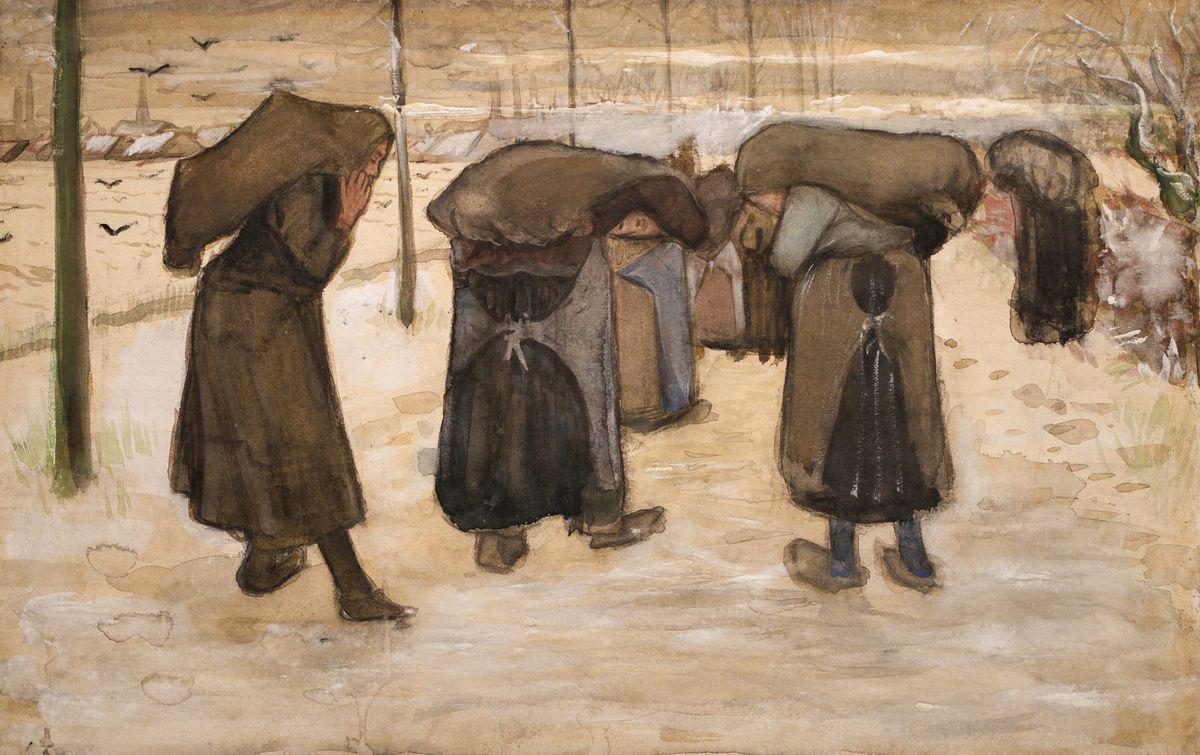
이 작품은 네덜란드의 후기 인상주의 거장 빈센트 반 고흐가 1884년 11월 네덜란드 뉘넨(Nuenen) 지역에 머물며 제작한 수채화 및 과다시 작품입니다. 공식 소장품 등록번호는 F1077이며 (존 홀스커 분류 기준 JH 533), 종이 위에 과채와 수채, 목탄으로 그려진 실제 실측 규격은 38 x 59 cm입니다. 현재 이 작품은 스위스 취리히에 위치한 취리히 미술관에 공식적으로 소장되어 있으며, 빈센트 반 고흐 재단의 기증을 통해 오늘날 전 세계 관람객들을 만나고 있습니다.
작가의 고뇌와 창작 비하인드
네덜란드 뉘넨 시절 반 고흐는 혹독한 추위와 가난 속에서도 하루하루 생계를 이어가기 위해 석탄 포대를 지고 눈길을 걷는 하층민 여성들의 굽은 등에서 처절한 삶의 무게를 발견하고 이를 화폭에 담아내는 데 몰두했습니다. 당시 그는 화려한 기교 대신 거친 목탄선과 어두운 수채 물감을 사용하여 노동자들이 겪는 고된 현실을 가감 없이 기록하고자 했으며, 추운 겨울 대지 위에서 서로 의지하며 걷는 이들의 모습을 통해 인간의 끈질긴 생명력을 표현하고자 했습니다.
작품 전경에는 눈이 하얗게 쌓인 길을 따라 어두운 외투를 입고 무거운 석탄 포대를 등에 짊어진 여성들이 몸을 깊숙이 숙인 채 앞으로 나아가는 실루엣이 차례로 이어집니다. 중경에는 두꺼운 앞치마와 나이테가 묻어나는 나뭇가지 같은 신발을 신고 고단하게 발걸음을 옮기는 여성들의 투박한 뒷모습과 옆모습이 묵직한 부피감을 형성합니다.
배경으로는 눈 덮인 황량한 들판 너머로 굴뚝의 연기가 아스라이 피어오르는 공장 지대의 실루엣과 차가운 겨울 하늘이 펼쳐져 있으며, 화면 전체를 감싸는 스산한 대기감이 노동의 서글픈 정서를 고스란히 전해줍니다.
무의식 속 시선 및 심리 흐름
관람객의 시선은 가장 먼저 화면 왼쪽에서 눈보라를 맞으며 얼굴을 감싸듯 고개를 숙이고 걷는 첫 번째 여성의 구부정한 자세로 향하며, 매서운 추위 속의 고통을 생생하게 마주하게 됩니다. 이어지는 시선은 차례대로 줄지어 무거운 짐을 지고 걸어가는 다른 여성들의 지친 등과 중경의 눈길로 이동하여, 끝없이 반복되는 가난한 삶의 무게를 묵직하게 체감하게 됩니다.
시선이 다시 배경의 황량한 설원과 차가운 회색빛 하늘로 확장될 때, 관람객은 고단한 민중의 삶을 향해 따뜻한 연민의 눈물을 흘렸던 작가의 애틋한 내면세계에 온전히 동화됩니다. 이 일련의 시선 이동은 단순한 풍경 묘사를 넘어, 가장 낮은 곳에서 인간의 존엄을 지키며 살아가던 이들의 숭고한 발자취를 따라가는 깊은 감정적 여정을 선사합니다.
미술계의 평가 및 조형미
미술사학계와 평단은 본 작품을 고흐가 네덜란드 초기 시절에 이룩한 사실주의 수채화의 정수이자, 인간 노동의 비극성과 숭고함을 가장 극적으로 포착한 걸작으로 평가합니다. 종이 위에 겹겹이 얹어진 수채와 과슈, 그리고 목탄의 거친 터치는 눈 덮인 대지의 질감과 무거운 석탄 포대의 양감을 손에 잡힐 듯 생생하게 살아나게 완성했습니다.
화면 전반을 지배하는 어두운 갈색조의 인물들과 차가운 흰색 설원의 대비는 시각적인 쓸쓸함과 뛰어난 조형적 균형을 동시에 선사합니다. 하층민의 삶을 향한 진솔한 애정과 정직한 시선을 독창적인 매체 운용으로 빚어낸 이 작품은, 시대를 초월해 관람객의 마음에 깊은 울림을 전하는 불멸의 예술적 가치를 지닙니다.
Women Carrying Sacks of Coal in the Snow
Executed in November 1884 during his formative period in Nuenen, Netherlands, this watercolor and gouache work is a powerful and deeply moving masterpiece by the Dutch Post-Impressionist master Vincent van Gogh. Officially cataloged under inventory number F1077 (JH 533) and measuring 38 x 59 cm on paper, the work is housed in the permanent collection of the Kunsthaus Zürich in Switzerland, having entered the museum through the collection of the Vincent van Gogh Foundation.
The Artist's Turmoil and Creative Background
During his years in Nuenen, Van Gogh became deeply immersed in depicting the harsh, unglamorous realities of the rural working class, finding profound human dignity in the daily struggles of impoverished laborers. Moved by the sight of women enduring bitter winter conditions to transport heavy sacks of coal for survival, he utilized rugged charcoal outlines and somber watercolor washes to capture the physical toll and relentless hardship of their labor without idealization.
The foreground features a procession of women bent double under the crushing weight of heavy coal sacks, trudging through a snowy pathway with bowed heads and bundled garments. In the middle ground, their heavy cloaks, dark aprons, and traditional wooden clogs are rendered with earthy tones, grounding their heavy movements within the frozen, unforgiving landscape.
The background recedes into a bleak, snow-dusted horizon punctuated by the faint silhouettes of distant industrial chimneys and bare trees, enveloping the entire scene in the chilling, desolate atmosphere of a northern winter.
Psychological Flow and the Unconscious Gaze
The viewer's gaze is initially drawn to the stooped figure of the leading woman on the left, whose posture conveys an immediate sense of biting cold, exhaustion, and quiet suffering. The eye then migrates across the horizontal sequence of figures following in line, absorbing the rhythmic, trudging movement of the women as they carry their heavy burdens across the middle ground.
As the gaze expands outward into the snowy plain and the pale, overcast sky, the observer is enveloped in a profound sense of isolation and empathetic sorrow that reflects the artist's deep identification with the marginalized. This deliberate visual progression moves the viewer from an intimate encounter with individual hardship into a broader, meditative reflection on human endurance against poverty.
Critical Acclaim and Formal Analysis
Art historians and critics widely celebrate this work as a crowning achievement of Van Gogh's early Dutch period, recognizing it as a triumph of social realism executed with exceptional mastery in watercolor and gouache. The vigorous application of dark washes combined with bold charcoal marks imparts a tangible, heavy reality to the sodden clothing, the rough coal sacks, and the slushy snow.
The sophisticated orchestration of somber earth tones against the pale winter whites generates a balanced visual gravity charged with emotional resonance. Transmuting humble peasant labor into an immortal monument of resilience, this masterpiece endures as an essential testament to Van Gogh's early humanitarian vision.
본 컨텐트의 저작권은 팔렛트제주에 있습니다. 허가없는 무단전제를 금지합니다.
Copyright © Palette Jeju. All rights reserved. Unauthorized reproduction or redistribution is strictly prohibited.