울고 있는 노인(영원의 문턱에서) - At Eternity's Gate (Sorrowing Old Man)
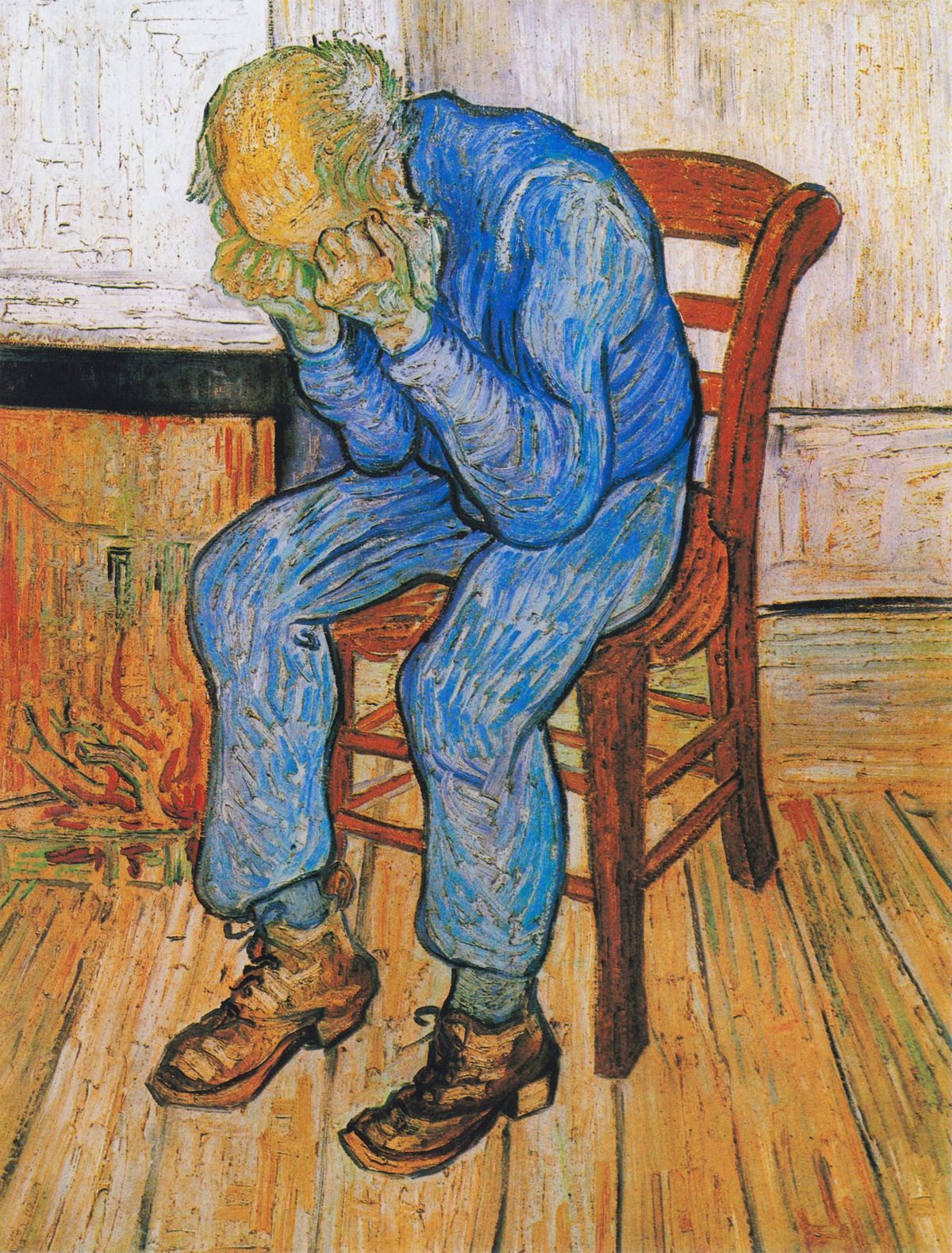
네덜란드의 후기 인상주의 거장 빈센트 반 고흐가 1890년 5월 프랑스 남부 생레미 드 프로방스의 생폴 드 모졸 수도원 정신병원에서 제작한 유화 작품으로, 캔버스에 유채 기법으로 완성되었으며 크기는 세로 80cm, 가로 64cm입니다. 현재 네덜란드 오테를로의 크뢸러 뮐러 미술관에 영구 소장되어 있습니다. 화면을 지배하는 짙은 코발트 블루의 작업복과 벽난로 및 바닥의 따뜻한 황갈색 톤, 그리고 노인의 웅크린 신체 윤곽을 따라 격정적으로 새겨진 임파스토 붓터치는 반 고흐 후기 회화가 도달한 인간 실존에 대한 비극적 서정과 표현주의적 깊이의 절정을 보여줍니다.
이 작품은 반 고흐가 1882년 헤이그 시절 석판화와 드로잉으로 처음 탐구했던 노인 모티프를 생애 마지막 해 생레미에서 유화로 재해석하여 완성한 기념비적인 걸작입니다. 당시 심각한 정신적 발작과 병세의 악화 속에서 요양 생활의 막바지를 보내던 고흐는 두 손으로 얼굴을 감싸 쥔 채 절망에 빠진 노인의 모습에 자신의 깊은 고독과 실존적 고뇌를 고스란히 투영했습니다. 미술사학계와 평단에서는 단순한 노년의 슬픔을 넘어, 필멸의 인간이 마주하는 영혼의 한계와 영원성을 향한 절박한 갈망을 시각화한 작품으로 평가합니다. 뼈아픈 절망 속에서도 벽난로의 불빛과 따뜻한 색채를 통해 꺼지지 않는 신성한 위로의 가능성을 남겨둔 근대 미술사의 독보적인 인간 찬가로 인정받고 있습니다.
작품을 마주하는 관람자의 무의식적인 시선은 두 주먹으로 얼굴을 감싼 채 고개를 떨군 노인의 강렬하고 극적인 포즈에 가장 먼저 머뭅니다. 삶의 모든 무게를 짊어진 듯 웅크린 인물의 형태는 보는 이의 내면에 잠재된 연민과 깊은 감정적 공명을 단숨에 이끌어내며 마음속 번잡한 상념을 멎게 합니다. 이어 시선은 묵직한 푸른색 옷자락의 굴곡을 타고 내려와 오랜 세월의 굴곡을 견뎌낸 낡은 구두와 소박한 나무의자의 단단한 구조로 자연스럽게 이동합니다.
마지막으로 시선은 노인의 곁에서 은은하게 타오르는 좌측 벽난로의 따스한 주황빛과 바닥의 밝은 황토색 결을 지나 화면 전체로 확장됩니다. 인물의 깊은 슬픔에서 출발해 그를 묵묵히 데워주는 따뜻한 온기로 귀결되는 이 시각적 여정은 관람자의 뇌파를 안정시키고 깊은 심리적 정화와 카타르시스를 선사합니다. 고통의 극한에서 피어난 인간에 대한 숭고한 이해는 보는 이의 무의식 속에 쌓인 피로와 불안을 씻어내고, 상처받은 마음을 어루만지는 따스한 위로와 내면의 회복 탄력성을 불어넣어 줍니다.
At Eternity's Gate (Sorrowing Old Man) - At Eternity's Gate (Sorrowing Old Man)
Painted in May 1890 during his final days at the Saint-Paul-de-Mausole asylum in Saint-Rémy-de-Provence, France, this masterwork by Dutch Post-Impressionist Vincent van Gogh is an oil on canvas measuring 80 by 64 centimeters. It is currently preserved in the permanent collection of the Kröller-Müller Museum in Otterlo, Netherlands. Defined by the stark emotional contrast of intense cobalt blues against the warm ochres of the floor and fireplace, rendered through a heavy and sculpted impasto, the painting captures the expressive summit of Van Gogh's late existential figuration.
This poignant canvas is an oil reinterpretation of a motif Van Gogh first developed in lithograph and pencil drawings during his 1882 Hague period. Convalescing from severe psychological breakdowns and sensing the fragility of his own existence, the artist revisited the sorrowing figure of the elderly pensioner Adrianus Jacobus Zuyderland, projecting his own inner grief and yearning for spiritual solace onto the subject. Modern art historians and critics celebrate this work not merely as a portrait of physical despair, but as a profound theological and philosophical reflection on mortality, enduring faith, and the threshold of eternity. Van Gogh transformed personal vulnerability into a universal monument of human empathy and resilience.
Upon engaging with the canvas, the viewer's subconscious gaze is instantly arrested by the weeping elder burying his face in clenched fists upon the simple rush-bottomed chair. This visceral gesture of grief immediately disarms emotional barriers, fostering deep empathy and a profound state of quiet introspection. The eye then follows the rhythmic, sculpted folds of the blue trousers down to the worn leather shoes firmly planted on the timber floorboards.
Finally, the visual journey sweeps across the comforting glow of the hearth on the left, whose amber and golden tones cast a subtle warmth around the suffering figure. Moving from the intense isolation of the sitter to the quiet refuge of the sheltering room, this organic flow of sight instills a profound feeling of psychological grounding, cathartic release, and emotional equilibrium. The sacred empathy embedded within the composition offers the observer an enduring sanctuary of peace, restoring mental vitality and inspiring gentle fortitude.
본 리뷰에서 작품을 제외한 컨텐츠의 저작권은 팔렛트제주에 있습니다.
"퍼블릭도메인 고전명화"를 제외한 모든 창작 콘텐츠는 저작권법 제4조 및 제10조에 의거하여 보호됩니다. 무단 도용시 저작권법 제136조(벌칙)에 의거, 당사의 사전 서면 승인 없는 저작권 침해 행위를 금지합니다.