우체부 조셉 룰랭의 초상 - Portrait of the Postman Joseph Roulin
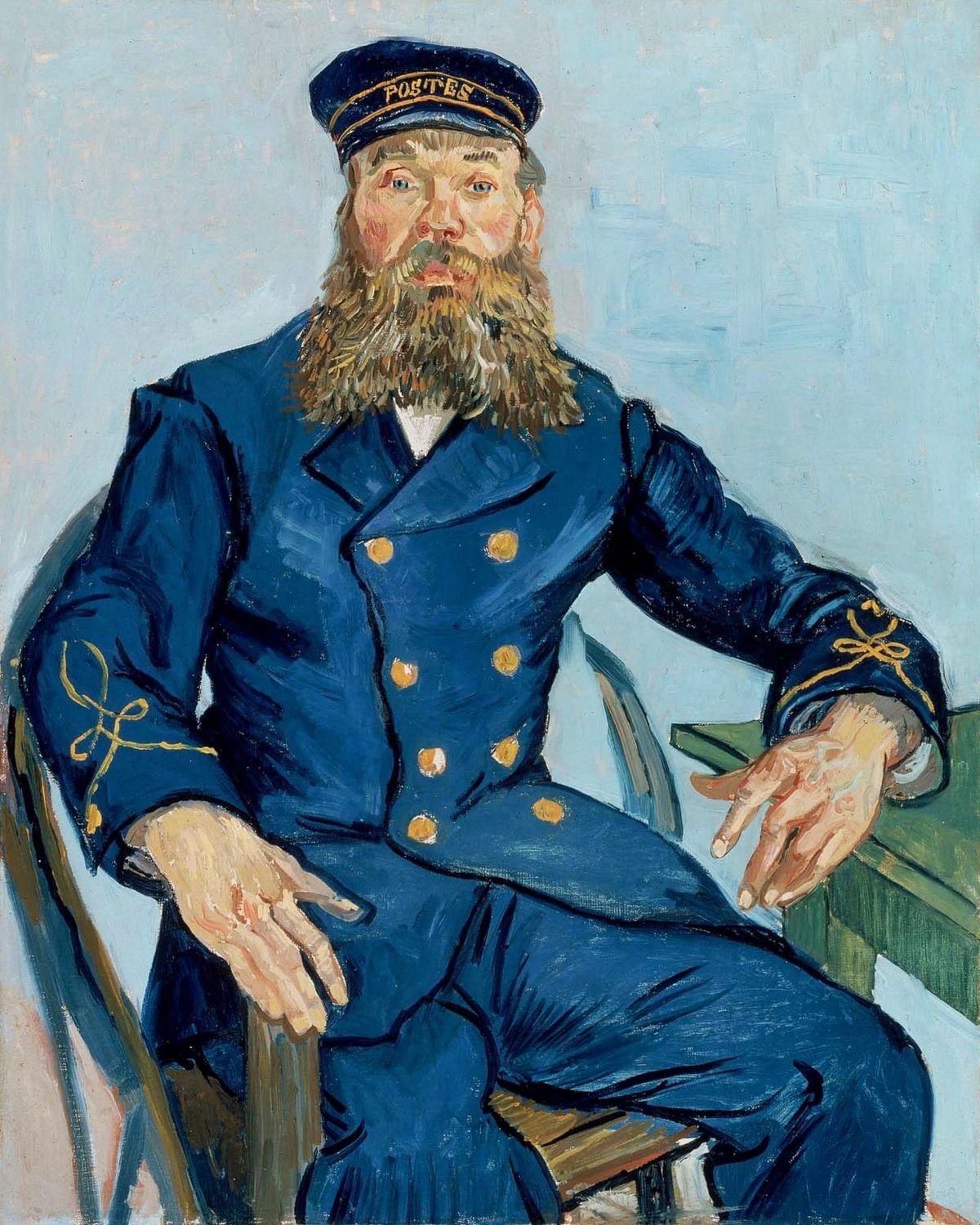
빈센트 반 고흐(Vincent van Gogh, 1853–1890)가 1888년 8월 초 프랑스 남부 아를(Arles)에서 완성한 '우체부 조셉 룰랭의 초상(Portrait of the Postman Joseph Roulin)'은 캔버스에 유채(Oil on canvas)로 제작된 인물화입니다. 작품의 실제 규격은 세로 81.2cm, 가로 65.3cm이며, 현재 미국 보스턴 미술관(Museum of Fine Arts, Boston)에 영구 소장되어 있습니다.
고흐는 이 작품에서 형태를 규정하는 대담하고 굵은 청록빛 윤곽선과 함께 물감을 조각하듯 거칠게 얹어 올리는 특유의 임파스토(Impasto) 기법을 강렬하게 구사했습니다. 룰랭이 착용한 짙은 울트라마린 블루의 제복과 금빛 단추, 그리고 은은한 파스텔톤의 옥빛 하늘색 배경은 극적인 보색 대비를 이루며 인물의 형상을 화면 앞으로 성큼 튀어나오게 만듭니다. 특히 풍성하게 굽이치는 황갈색 턱수염과 금빛 견장 장식은 율동감 넘치는 필치로 묘사되었으며, 큼직하고 투박한 손마디는 정직한 노동자의 묵직한 실재감을 고스란히 전달합니다.
이 그림에는 낯선 타향 아를에서 고립되어 있던 반 고흐에게 유일한 안식처가 되어준 조셉 룰랭과의 눈물겨운 우정과 인간적인 에피소드가 깊게 배어 있습니다. 1888년 여름, 아를역에서 우편물 분류 작업을 하던 조셉 룰랭(Joseph Roulin, 1841–1903)은 동생 테오에게 매일 편지와 그림을 부치러 우체국을 드나들던 고흐를 처음 만났습니다. 마을 주민들이 붉은 머리의 괴짜 이방인이라며 고흐를 손가락질하고 피할 때, 룰랭은 편견 없이 고흐에게 다가가 먼저 따뜻한 술 한잔을 건넸습니다.
열렬한 공화주의자이자 대식가였던 룰랭은 고흐와 함께 동네 선술집에서 밤새도록 정치와 예술, 인생에 대해 토론하며 고흐의 지독한 외로움을 달래주었습니다. 당시 고흐는 가난해서 전문 모델을 구할 돈이 없었지만, 룰랭은 자신의 정복을 번듯하게 차려입고 기꺼이 고흐의 의자에 앉아 흔들림 없이 포즈를 취해주었습니다. 고흐는 동생 테오에게 보낸 편지에서 "룰랭은 소크라테스처럼 지혜롭고, 표도르 도스토옙스키의 소설 속에 나오는 성자처럼 따뜻하고 거룩한 사람이다. 제복을 입은 그의 모습은 그 어떤 귀족보다 위엄차다"라며 그를 향한 깊은 존경과 애정을 쏟아냈습니다.
룰랭의 헌신적인 우정은 1888년 12월, 고흐가 자신의 귀를 자르는 비극적인 사건이 터졌을 때 절정에 달했습니다. 온 마을 사람들이 고흐를 '미치광이 살인마' 취급하며 정신병원에 가두라고 청원서를 돌릴 때, 피범벅이 된 고흐를 병원으로 데려가 치료받게 하고 피 묻은 노란 집을 묵묵히 청소해 준 사람이 바로 룰랭이었습니다. 룰랭은 고흐가 입원해 있는 동안 매일 병실을 찾아가 곁을 지켰으며, 파리에 있는 동생 테오에게 고흐의 상태를 전하는 편지를 매일 쓰며 끝까지 친구의 곁을 지킨 진정한 수호자였습니다. 고흐는 조셉 룰랭뿐만 아니라 그의 아내와 세 아이까지 온 가족의 초상화를 연달아 그리며 이 따뜻한 가족에게 평생의 감사를 표했습니다.
후대의 미술사학자들과 평단은 이 보스턴 미술관 소장본을 반 고흐 초상화 예술의 절대적 정점으로 평가합니다. 지위가 높은 부르주아가 아닌 평범한 우체부의 모습을 군주나 성자처럼 당당하고 위엄 있게 승화시킨 이 작품은, 20세기 표현주의 초상화의 지평을 열었으며 인간에 대한 반 고흐의 숭고한 휴머니즘을 웅변하는 걸작으로 추앙받고 있습니다.
관람자의 시선은 가장 먼저 정면을 묵묵히 응시하는 룰랭의 푸른 눈빛과 'POSTES(우편)'라는 금빛 글자가 새겨진 모자에 안착합니다. 이어 폭포수처럼 쏟아져 내리는 풍성한 황갈색 턱수염과 금빛 단추가 달린 단단한 푸른 제복의 양감을 훑은 뒤, 팔걸이에 얹어진 거칠고 큼직한 손마디의 노동 흔적으로 이동합니다. 마지막으로 인물을 감싸고 있는 차분한 옥빛 배경의 은은한 붓 터치를 따라 화면 전체로 유려하게 순환하게 됩니다.
심리적으로 관람자는 짙푸른 제복의 단단한 안정감과 룰랭의 듬직하고 자애로운 표정 속에서 무의식중에 깊은 심리적 안전감과 정서적 온기를 느끼게 됩니다. 편견 없는 사랑으로 상처 입은 영혼을 품어주었던 한 인간의 따스한 인류애는 보는 이의 내면에 자리한 고독과 피로를 부드럽게 감싸 안아주며, 지친 마음에 든든한 신뢰감과 삶을 지탱하는 깊은 평온의 힘을 풍성하게 채워줍니다.
Portrait of the Postman Joseph Roulin
Painted by Vincent van Gogh (1853–1890) in Arles in early August 1888, Portrait of the Postman Joseph Roulin is an iconic oil on canvas masterpiece measuring 81.2 cm in height and 65.3 cm in width. This celebrated work is permanently preserved in the prestigious collection of the Museum of Fine Arts, Boston, United States.
Van Gogh constructed the portrait through bold teal contours and dense, tactile impasto that charges the surface with monumental presence. The deep ultramarine blue of Roulin's postal uniform, accented with gleaming golden buttons and sleeve braids, forms an electric complementary harmony against the pale, atmospheric aquamarine background. The flowing, curling mass of his beard is rendered with rhythmic vitality, while his large, weathered hands convey the honest physical reality of a dedicated working-class man.
The canvas holds an extraordinary history of unwavering friendship and human compassion. In the summer of 1888, Joseph Roulin (1841–1903), who sorted mail at the Arles railway station, met Van Gogh during the artist's frequent visits to dispatch letters and canvases to his brother Theo. While local townsfolk shunned the eccentric Dutch painter, Roulin embraced Van Gogh without judgment, routinely inviting him for drinks and warm conversation.
An ardent republican with a generous spirit, Roulin spent long evenings debating politics and life, relieving Van Gogh's crushing loneliness. Recognizing that Van Gogh could not afford professional models, Roulin proudly donned his official uniform and sat patiently for hours. Writing to Theo, Van Gogh praised Roulin passionately: "He has a head like Socrates, interesting to paint... A man who is not bitter, not melancholy, not perfect, but so good and so wise."
Roulin's profound loyalty proved indispensable during Van Gogh's darkest hour. Following the catastrophic ear-severing incident in December 1888, when panicked locals petitioned to have the artist locked away, Roulin personally escorted Van Gogh to the hospital, cleaned his bloodied studio, and visited his bedside daily. Roulin kept Theo informed through constant letters, standing as Van Gogh's solitary guardian. Deeply moved, Van Gogh eventually painted portraits of Roulin's entire family, immortalizing their kindness.
Modern art historians celebrate this Boston portrait as a defining triumph of Post-Impressionist portraiture. By depicting a humble postal worker with the majestic dignity typically reserved for monarchs and saints, Van Gogh subverted academic hierarchies, offering a timeless monument to human empathy and working-class nobility that deeply inspired twentieth-century Expressionism.
A viewer’s gaze instinctively settles upon Roulin’s clear blue eyes and the gold-lettered 'POSTES' cap crowning his brow. The eyes then cascade down the textured waterfall of his majestic beard and across the robust structure of his blue coat, lingering upon the heavy, expressive hands resting calmly on the chair and table, before circulating effortlessly through the luminous aquamarine field behind him.
Psychologically, the grounded solidity of the uniform paired with Roulin's paternal warmth induces an immediate sensation of emotional safety, comfort, and deep reassurance. The enduring memory of genuine friendship woven into the portrait dispels internal fatigue and isolation, enveloping the observer in an atmosphere of profound human solidarity, steadfast trust, and restorative peace.
본 리뷰에서 작품을 제외한 컨텐츠의 저작권은 팔렛트제주에 있습니다.
"퍼블릭도메인 고전명화"를 제외한 모든 창작 콘텐츠는 저작권법 제4조 및 제10조에 의거하여 보호됩니다. 무단 도용시 저작권법 제136조(벌칙)에 의거, 당사의 사전 서면 승인 없는 저작권 침해 행위를 금지합니다.