우체부 조셉 룰랭 - Portrait of the Postman Joseph Roulin
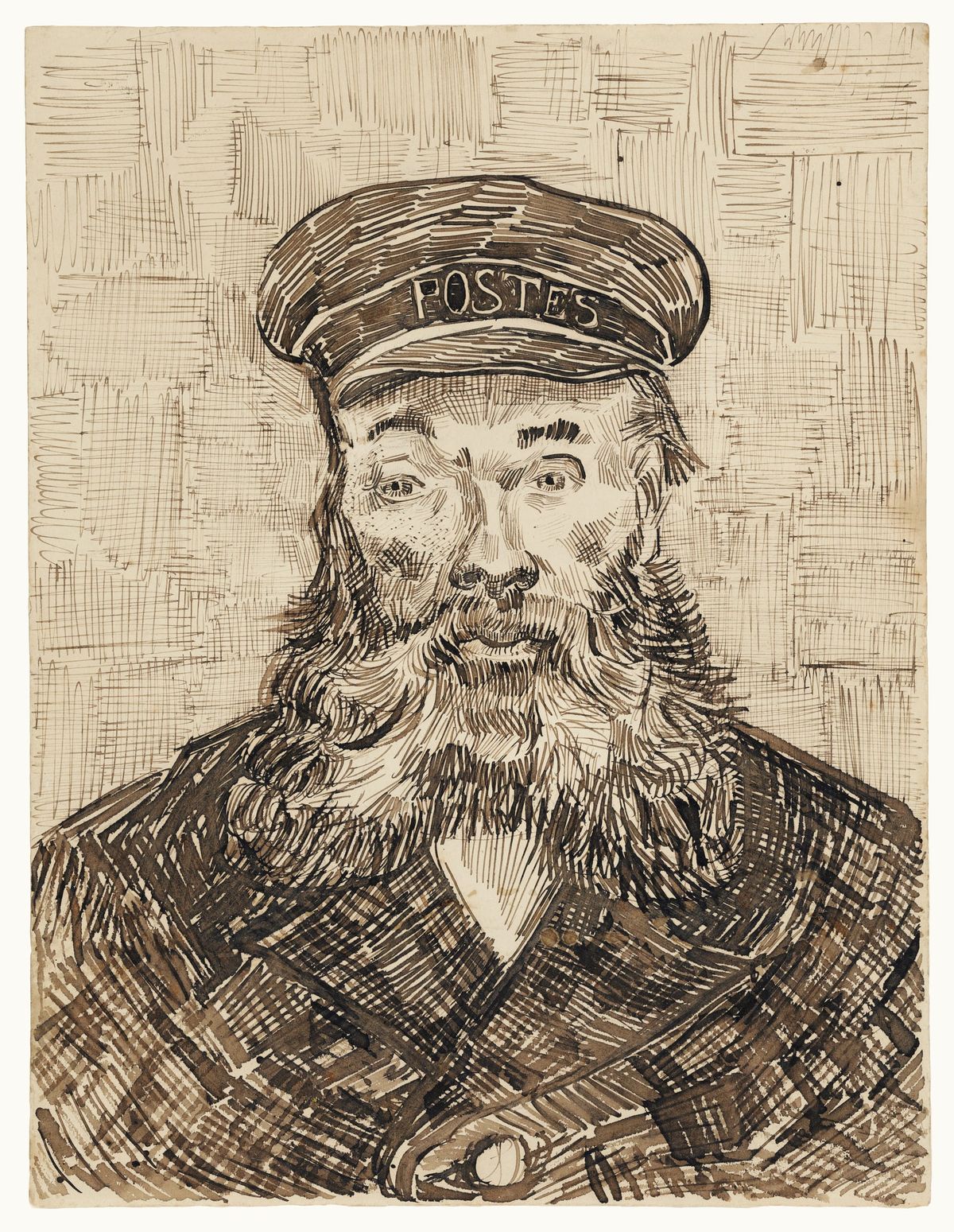
빈센트 반 고흐(Vincent van Gogh)가 남프랑스 아를(Arles)에 머물던 1888년 8월 초에 완성한 대표적인 갈대펜 소묘 걸작입니다. 현재 미국 로스앤젤레스의 J. 폴 게티 미술관(J. Paul Getty Museum)에 소장되어 있으며, 종이 위에 잉크와 갈대펜, 깃펜으로 제작된 이 작품의 실제 사이즈는 약 51.5 × 40.5 cm입니다. '우체부(POSTES)'라는 글자가 선명히 새겨진 제모와 풍성하게 물결치는 턱수염, 그리고 흔들림 없이 정면을 응시하는 우체부 조셉 룰랭의 얼굴을 농밀한 흑갈색 선묘와 다채로운 교차 해칭(Cross-hatching) 기법으로 조각하듯 담아냈습니다.
고흐는 직접 깎아 만든 갈대펜을 사용하여 배경의 직조 무늬 격자 해칭과 인물의 얼굴 윤곽, 수염의 유기적인 곡선을 놀라운 밀도로 구축했습니다. 인물의 이마와 뺨에 드리운 촘촘한 평행선들은 굳건한 입체감을 부여하며, 어깨를 감싸는 제복의 두터운 격자무늬 터치는 펜촉의 강약에 따라 짙은 명암 대비를 형성합니다. 일본 우키요에 판화의 선명한 선묘에서 영감을 받은 대담하고 구조적인 필선은 단색의 드로잉임에도 불구하고 강렬한 촉각성과 살아 숨 쉬는 실존적 생명력을 뿜어냅니다.
1888년 여름, 아를에서 홀로 창작에 매진하던 고흐는 아를 기차역의 우편 담당관이었던 조셉 룰랭(Joseph Roulin)과 깊은 우정을 나누었습니다. 타인에게 쉽게 마음을 열지 못했던 고흐에게 따스한 인간미와 확고한 공화주의 신념을 지닌 룰랭은 고립된 타향살이의 유일한 안식처이자 가장 든든한 후원자였습니다. 고흐는 룰랭을 성서 속 현자나 철학자 소크라테스에 비유하며, 소박한 노동자 계층의 얼굴 속에 깃든 거룩한 인간적 위엄과 깊은 영혼의 온기를 화폭에 기록했습니다.
정면을 묵묵히 응시하는 인물의 굳건한 자태와 배경의 촘촘한 직물 구조는 인간과 세계의 끈질긴 유대감을 상징합니다. 미술사에서는 유화 버전의 초상화 제작에 앞서 그려진 이 갈대펜 소묘를 고흐의 데생 기법이 절정에 달했음을 증명하는 서양 드로잉 역사의 기념비적 명작이자, 인간에 대한 깊은 연민과 숭고한 경외를 담아낸 걸작 초상으로 평가하고 있습니다.
관람객의 무의식적인 시선은 화면 상단 중앙에서 '우체부(POSTES)'라는 문자가 또렷하게 박힌 단단한 제복 모자와, 그 아래로 정면을 맑고 고요하게 응시하는 룰랭의 눈매에서 자연스럽게 출발합니다. 세상의 풍파를 겪어낸 인물의 진솔하고 정직한 눈빛에 시선이 머무는 순간, 보는 이는 찰나의 침묵과 함께 깊은 인간적 신뢰와 따스한 위로 속으로 단숨에 몰입하게 됩니다.
이어 시선은 광대뼈와 콧날의 다부진 펜선들을 지나, 턱 아래로 폭포수처럼 풍성하게 흘러내리며 소용돌이치는 거대한 턱수염의 율동적인 곡선으로 이동합니다. 펜촉의 거침없는 궤적이 빚어낸 수염의 입체적인 질감과 마주하며, 삶을 묵묵히 지탱해 온 성실한 노동자의 숭고한 품격과 생명력을 깊이 체감하게 됩니다.
이후 시선은 화면 하단을 묵직하게 받치고 있는 짙은 제복의 교차 격자 해칭을 타고 어깨 양옆으로 확장된 뒤, 배경 전체를 촘촘하고 균일하게 채우고 있는 바구니 직조 모양의 배경 해칭을 훑어 다시금 인물의 이마와 눈매로 부드럽게 회귀합니다.
단단한 선과 여백이 빚어내는 장엄한 흑백의 순환을 따라 순환한 시선이 편안히 안착할 때, 관람객의 내면에는 복잡한 일상의 번뇌와 피로가 정돈되고, 진실한 벗이 건네는 흔들리지 않는 지지와 함께 깊은 심리적 안도감이 가득 차오르게 됩니다.
Portrait of the Postman Joseph Roulin
Created by Vincent van Gogh in early August 1888 during his inspired residency in Arles, France, this monumental reed pen drawing is preserved in the permanent collection of the J. Paul Getty Museum in Los Angeles, California. Executed in brown iron-gall ink and pen on wove paper, the actual size of the work is approximately 51.5 × 40.5 cm. Capturing the frontal, commanding presence of his close friend, the Arles postal worker Joseph Roulin, the composition orchestrates dense cross-hatching, rhythmic linear textures, and graphic clarity into a profound testament to human dignity and comradeship.
Van Gogh carved reed pens with his own hands to achieve the varied, sculptural strokes animating the paper, from the delicate linear hatching across the brow to the heavy, slashing lines sculpting the shoulders. The cap, proudly bearing the inscription 'POSTES', establishes an authoritative horizontal axis above the intense, candid gaze of the sitter. The rich, swirling contours defining the flowing beard contrast against the woven, brick-like grid pattern of the background, giving the black-and-white portrait extraordinary tactile density and psychological resonance.
During the high summer of 1888, living in isolation at the Yellow House, Van Gogh found a loyal companion and paternal confidant in Joseph Roulin. To the painter, Roulin was not merely a local civil servant, but a living embodiment of republican virtue, honest labor, and philosophical warmth, reminiscent of Socrates. While preparing a series of painted portraits of the Roulin family, Van Gogh created this drawing to send to his brother Theo, demonstrating the absolute mastery and emotional power of his graphic medium.
Art historians celebrate this portrait as one of the definitive pinnacles of 19th-century draftsmanship, showcasing how Van Gogh synthesized the graphic vitality of Japanese woodcuts with European portrait traditions to monumentalize working-class integrity.
A viewer's subconscious gaze is intuitively anchored first by the firm visor of the uniform cap inscribed with 'POSTES', descending immediately into the frank, benevolent gaze of Roulin’s wide-set eyes. Lingering upon the weathered contours of the forehead and the steadfast clarity of his expression, the observer is drawn into an immediate atmosphere of solemn quietude, emotional honesty, and genuine warmth.
The gaze then travels downward past the structured cheekbones into the magnificent, flowing torrent of the patriarchal beard, whose curling, directional penstrokes evoke a cascade of organic energy. Encountering the sculptural weight and textural density of the facial hair, the viewer experiences a reassuring sense of wisdom, endurance, and human strength.
The eye continues outward across the heavy cross-hatching of the broad shoulders, taking in the structured geometric pattern of the woven background before ascending smoothly back to the upright poise of the cap.
Completing this visual and psychological circulation, the observer feels a profound release of modern tension. The unshakeable authenticity and moral warmth of the portrait leave the viewer restored with a lasting sense of grounding fortitude, deep clarity, and enduring psychological peace.
본 리뷰에서 작품을 제외한 컨텐츠의 저작권은 팔렛트제주에 있습니다.
"퍼블릭도메인 고전명화"를 제외한 모든 창작 콘텐츠는 저작권법 제4조 및 제10조에 의거하여 보호됩니다. 무단 도용시 저작권법 제136조(벌칙)에 의거, 당사의 사전 서면 승인 없는 저작권 침해 행위를 금지합니다.