우아즈강의 범람, 퐁투아즈 - The Flood of the Oise, Pontoise
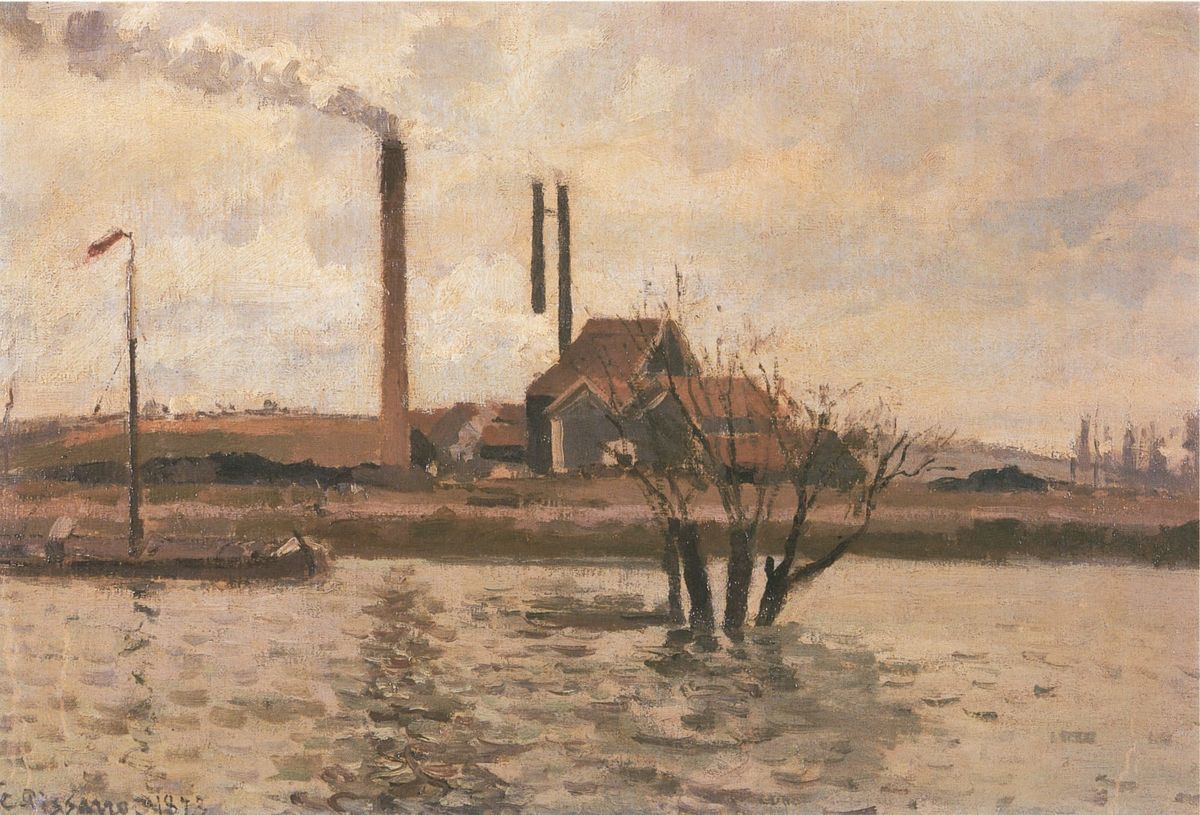
프랑스 인상주의의 위대한 스승이자 근대 풍경의 정직한 관찰자였던 카미유 피사로(Camille Pissarro)가 1873년에 완성한 '우아즈강의 범람, 퐁투아즈(La Crue de l'Oise, Pontoise / The Flood of the Oise, Pontoise)'는 캔버스에 유채(Oil on canvas)로 제작된 기념비적인 풍경화 걸작입니다. 가로 65cm, 세로 46cm 크기의 이 작품은 강물이 불어난 퐁투아즈 수변의 차분하고 은은한 대기광을 담아냈으며, 현재 개인 소장처(Private Collection)에 소중히 보관되어 있습니다.
이 그림에는 제1회 인상주의 전시회를 1년 앞두고 새로운 회화적 혁신을 모색하던 1873년 피사로의 치열한 창작열과 근대 산업화 풍경에 대한 열린 시선이 깃들어 있습니다. 당시 퐁투아즈에 머물던 피사로는 전통적인 풍경화가들이 외면하던 강변의 공장 굴뚝과 연기를 화폭의 당당한 주인공으로 끌어들였습니다. 보수적인 아카데미 화단은 매연을 뿜어내는 굴뚝을 추하고 저급한 소재로 여겼지만, 피사로는 자연의 섭리인 강의 범람과 인간 문명의 상징인 산업 건축물이 빚어내는 새로운 시대의 조화에 깊이 매료되었습니다.
특히 1873년은 폴 세잔이 피사로의 곁에서 야외 사생을 본격적으로 배우며 거친 붓질과 색채 구성을 연마하던 시기였습니다. 피사로는 겨울 끝자락의 차가운 강물이 둔치를 삼키며 나무 밑동까지 차오른 순간을 포착하여, 캔버스 위에 물감을 굵고 단단하게 쌓아 올리는 임파스토 기법과 유려한 수면 붓 터치를 조화롭게 펼쳐냈습니다. 훗날 미술사학자들과 평단은 이 작품을 두고 자연의 위력 앞에 순응하면서도 근대 산업 문명의 맥박을 가장 솔직하고 시적인 조형 언어로 승화시킨 초기 인상주의의 독보적인 이정표로 높이 평가하고 있습니다.
작품을 마주할 때 우리의 시선은 화면 전면에서 불어난 강물에 잠겨 나뭇가지를 앙상하게 드러내고 있는 버드나무의 독특한 실루엣과 잔잔하게 일렁이는 수면의 물결에 가장 먼저 닿습니다. 물결 위에 비친 차분한 은회색 반사광을 확인한 시선은, 좌측 수면 위에 떠 있는 소박한 바지선과 깃대 끝의 붉은 깃발을 스치며 건너편 둑길의 수평선으로 자연스럽게 이동합니다.
이어 화면 중앙에 자리 잡은 붉은 기와지붕의 공장 건물들과 하늘을 향해 곧게 솟아오른 굴뚝을 타고 시선이 위로 상승합니다. 굴뚝 끝에서 뿜어져 나와 바람을 타고 부드럽게 흩어지는 잿빛 연기를 따라가며, 화면 상단을 은은하게 채우고 있는 연분홍빛과 크림빛이 감도는 겨울 하늘의 투명한 대기 속으로 시선이 넓게 확장됩니다.
이러한 시각적 흐름은 관람자의 무의식 속에 깊은 정서적 안정감과 고요한 침묵의 안도감을 선사합니다. 차분한 은빛 수면과 따뜻한 흙빛, 은은한 하늘빛이 이루는 절제된 색채의 조화는 일상의 번잡한 스트레스와 곤두선 신경을 평온하게 가라앉혀 줍니다. 거친 범람 속에서도 결코 흔들리지 않고 자연과 공존하는 산업 풍경의 담담한 정경은, 바라보는 이의 무의식 깊은 곳에 있는 삶의 불안을 씻어내며 내면의 깊은 쉼과 단단한 위로를 선물합니다.
The Flood of the Oise, Pontoise - La Crue de l'Oise, Pontoise
Painted in 1873 by Camille Pissarro, the revered patriarch and empathetic soul of French Impressionism, The Flood of the Oise, Pontoise (La Crue de l'Oise, Pontoise) is an oil on canvas masterwork measuring 46 by 65 cm. Capturing the swollen waters and subtle atmospheric light of late winter in Pontoise, this profound landscape is preserved in a prestigious private collection.
Behind this captivating canvas lies an inspiring narrative of artistic daring and modern realism on the eve of the historic First Impressionist Exhibition of 1874. While residing in Pontoise, Pissarro boldly rejected conventional Salon expectations that favored idyllic, untouched landscapes, choosing instead to embrace modern industrial factory chimneys alongside the rising natural elements. Traditionalists dismissed industrial smoke as anti-aesthetic, yet Pissarro recognized the quiet poetry and structural strength of human progress coexisting with the changing rhythms of the river.
During this fertile period, Paul Cézanne painted side by side with Pissarro en plein air, absorbing the master's tactile surface execution and keen compositional balance. Pissarro observed the seasonal floodwaters rising past the riverbank to submerge the roots of riverside willows, applying rich impasto touches to build the earthen textures and fluid horizontal strokes across the rippling surface. Today, art historians revere this painting as a pioneering milestone where the timeless forces of nature and the steady heartbeat of modern industry merge into a unified, luminous vision of modern life.
Upon viewing the canvas, the spectator's gaze instinctively alights on the submerged willow trees rising out of the water in the right foreground, their delicate bare branches casting soft shadows across the swollen river. Following the rhythmic horizontal brushstrokes of the reflective water, the eye drifts toward the rustic barge anchored on the left before traveling across the embankment.
The gaze then ascends along the solid brick facades of the riverfront factory and its commanding smokestacks, following the soft plumes of gray smoke drifting gently with the wind. Finally, our attention expands into the vast sky brushed with creamy ochres, pale pinks, and silvery winter light, taking in the expansive breath and quiet coolness of the open atmosphere.
This visual journey awakens a profound sense of psychological grounding and tranquil spaciousness within the subconscious. The soothing harmony of muted river tones, earthen ochres, and diffused pearlescent skies gently dissolves mental fatigue, inviting the mind into a sanctuary of quiet contemplation. Observing the steady resilience of the landscape amidst the rising floodwaters restores the spirit with timeless serenity, simplicity, and enduring peace.
본 리뷰에서 작품을 제외한 컨텐츠의 저작권은 팔렛트제주에 있습니다.
"퍼블릭도메인 고전명화"를 제외한 모든 창작 콘텐츠는 저작권법 제4조 및 제10조에 의거하여 보호됩니다. 무단 도용시 저작권법 제136조(벌칙)에 의거, 당사의 사전 서면 승인 없는 저작권 침해 행위를 금지합니다.