톨로메이의 피아 La Pia de Tolomei
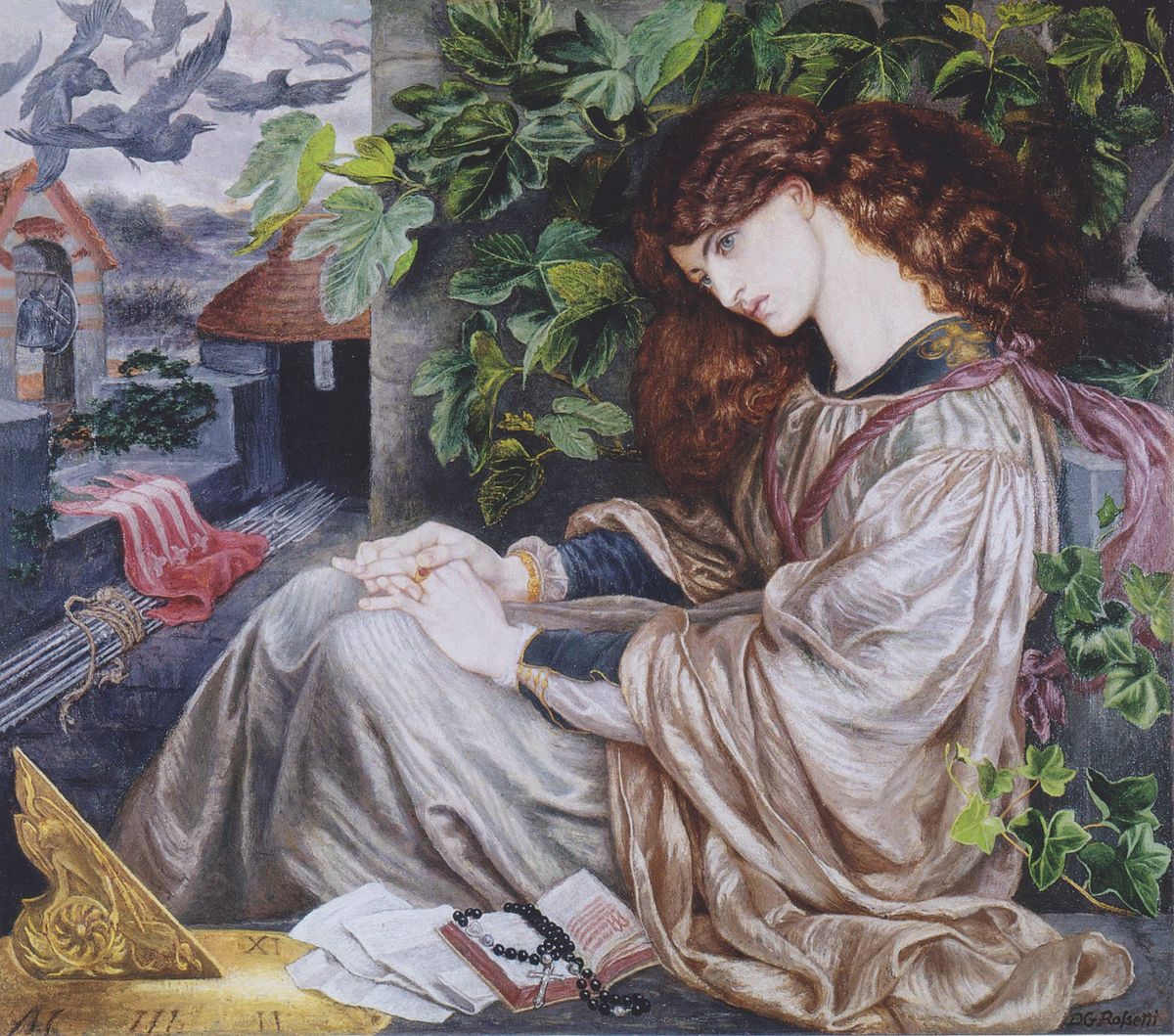
19세기 영국 라파엘로 전파의 거장 단테 가브리엘 로세티(Dante Gabriel Rossetti, 1828–1882)가 1868년부터 1880년에 걸쳐 완성한 기념비적 상징주의 유화 톨로메이의 피아(La Pia de Tolomei, 공식 소장품 등록번호: 1956.0031)는 104.8 cm × 120.6 cm 크기의 가로형 캔버스에 유채로 그린 대표적인 후기 회화 최고 걸작입니다.
미술품 수집가들의 소장을 거쳐 현재 미국 캔자스주의 세계적인 스펜서 미술관(Spencer Museum of Art, University of Kansas)에 영구 소장되어 보존되어 오고 있습니다.
작가의 고뇌/비하인드
1860년대 후반 런던에서 활동하던 단테 가브리엘 로세티는, 단테 알리기에리의 서사시 신곡의 연옥편에 등장하는 비극적 인물 피아 데 톨로메이의 이야기를 바탕으로 부당하게 감금된 채 쓸쓸히 죽음을 맞이하는 여인의 처절한 고독을 화폭에 담고자 깊은 몰두에 빠졌습니다.
화가는 단순한 역사적 삽화를 넘어 질투심에 사로잡힌 남편에 의해 말라리아가 들끓는 마렘마의 성채에 유폐된 피아의 처연한 모습을 자신의 마음속 연인이었던 제인 모리스의 얼굴로 재현하며 치열하게 번민했습니다.
스펜서 미술관의 공식 소장 도록 및 학술 기록에 따르면, 이 작품은 로세티가 완성한 가장 거대한 규모의 유화 중 하나로 손꼽히며, 화면 속 피아가 슬픈 눈빛으로 결혼반지를 만지작거리는 동작과 전경에 놓인 해시계, 편지 더미, 그리고 묵주와 기도서는 각각 시간의 소멸, 남편으로부터 온 옛 편지, 그리고 그녀의 이름이 지닌 경건한 의미를 상징하는 도상학적 핵심 장치로 분석됩니다.
화가는 덩굴이 우거진 성벽과 황혼이 지는 성채의 창가를 배경으로, 갇힌 채 상념에 잠긴 피아의 숭고한 순간을 화폭에 담았습니다.
화면 중앙에는 풍성하고 짙은 갈색 머리칼을 늘어뜨린 피아가 창가에 쓸쓸히 기대어 앉아 결혼반지를 낀 손가락을 가만히 매만지고 있으며, 그녀의 창백하고 고혹적인 뺨과 굳게 다문 입술이 비장한 아름다움을 자아냅니다.
몸에는 부드러운 회갈색 드레스를 입고 두 손을 나란히 포개어 앉아 있으며, 화면 하단에는 펼쳐진 기도서와 검은색 묵주, 그리고 시간이 흐름을 알리는 화려한 황금빛 해시계가 정갈하게 놓여 있습니다.
화면 왼쪽 멀리 보이는 성벽 위로 날아오르는 어두운 까마귀 떼와 저녁 노을은 불길한 운명과 자유를 향한 갈망을 손에 잡힐 듯 생생하게 웅변합니다.
무의식 속 시선 및 심리 흐름
그림을 마주하는 순간 관람객의 무의식적 시선은 화면 중앙에서 짙은 우수와 애원 어린 슬픔을 품은 채 아래를 내려다보는 피아의 창백한 얼굴과 결혼반지를 낀 두 손의 애처로운 동작으로 가장 먼저 빨려 들어갑니다.
세상의 부당한 폭력 속에서 홀로 남겨진 인물의 처연한 표정은 보는 이에게 강렬한 시각적 몰입감과 함께 깊은 연민의 감정을 선사합니다.
이어 시선은 그녀의 무릎 부근에 놓인 붉은 책, 묵주, 그리고 남편이 보낸 낡은 편지 더미와 해시계의 정교한 텍스처로 자연스럽게 이동합니다.
시간이 멈춘 듯 감금된 공간의 답답함과 과거의 흔적을 체감하는 순간, 관람객은 14세기 이탈리아의 음산한 성채 속으로 온몸이 빨려 들어가게 됩니다.
마지막으로 시선은 화면 왼쪽 멀리 성벽 위를 날아오르는 검은 까마귀 떼의 거친 날갯짓과 황혼의 대기감을 거쳐, 화면 전체를 짓누르는 묵직한 비극의 정서로 멈춥니다.
전면 인물의 매혹적인 심리적 깊이와 후면 상징적 풍경의 조화를 마주하며, 관람객은 금지된 사랑과 영원한 상실의 아픔을 예술로 승화시킨 거장 로세티의 압도적인 조형 의지를 가슴 깊이 마주하게 됩니다.
미술계의 평가 및 조형미
미술계와 스펜서 미술관 공식 도록은 톨로메이의 피아를 로세티가 말년에 이뤄낸 가장 야심 차고 문학적 깊이가 남다른 대표적인 최고봉 마스터피스로 평가합니다.
단순한 문학적 삽화를 넘어 19세기 후반 라파엘로 전파가 지닌 극도의 장식적 완성도와 인간 내면의 심리적 비극을 가장 완벽한 유화 기법으로 융합해 냈기 때문입니다.
인간의 영원한 자유와 억압된 영혼의 슬픔을 가장 격조 높은 시각 예술로 승화시킨 로세티의 이 소중한 화폭은, 오늘날까지도 전 세계 수많은 감상자들에게 깊한 감탄과 잊을 수 없는 시각적 전율을 전해주는 불멸의 명작으로 손꼽히고 있습니다.
La Pia de Tolomei
Painted between 1868 and 1880 by the master of the Pre-Raphaelite Brotherhood Dante Gabriel Rossetti (1828–1882), La Pia de Tolomei (Accession No. 1956.0031) is a monumental symbolist masterpiece in oil on canvas measuring 104.8 cm × 120.6 cm (41 1/4 in × 47 1/2 in).
Preserved through esteemed private collections, it is housed today in the celebrated permanent collection of the Spencer Museum of Art at the University of Kansas in Lawrence, United States.
Historic Context & Arcadian/Genre Depth
During the late 1860s in London, Dante Gabriel Rossetti drew profound inspiration from the fifth canto of Dante Alighieri’s Purgatorio, seeking to capture the tragic plight of La Pia, an Italian noblewoman imprisoned and left to die in a desolate Maremma fortress by her jealous husband.
Moving beyond literal narrative, the master meditated deeply on how to portray the lonely, contemplative heroine trapped in a malaria-infested swamp, utilizing his ultimate muse and love, Jane Morris, to embody La Pia's sorrow.
According to curatorial records from the Spencer Museum of Art, this grand canvas stands as one of Rossetti's final major oil paintings, incorporating rich symbolic elements such as the wedding ring she toys with, the sundial signifying passing time, old love letters from her husband, and a devotional rosary reflecting her pious name.
Rossetti staged the heavy-hearted composition against a dense background of dark ivy leaves and a distant fortress tower at twilight.
In the center, La Pia is depicted seated near a stone ledge with her rich dark hair cascading over her shoulders, her melancholic gaze directed downward as she fingers her wedding ring.
She is dressed in a soft greyish robe, her hands resting gracefully in her lap near a scattered pile of letters, a red prayer book, and a black rosary.
In the upper-left background, a flock of dark rooks wheels across the evening sky, completing a poignant visual allegory of captivity, lost freedom, and tragic isolation.
Subconscious Trajectory of the Gaze
The observer's subconscious gaze is immediately magnetized by the central register, drawn to La Pia's pale, sorrowful expression, her delicate profile, and her hand anxiously turning her wedding ring.
Her profound vulnerability and tragic beauty establish an instant focal point of psychological intensity, emotional gravity, and narrative suspense.
The visual path then shifts downward toward the foreground ledge, taking in the tactile details of the golden sundial, the red devotional book, and the dark rosary beads.
Taking in the rich textural contrasts between the soft fabrics, polished metal, and organic foliage, the viewer directly experiences the oppressive, melancholic atmosphere of a medieval prison.
Finally, the visual trajectory moves toward the distant fortress and the soaring rooks in the upper-left sky, before sweeping across the harmonious chromatic background.
Observing the harmonious equilibrium between literary symbolism, figural emotion, and precise Pre-Raphaelite draftsmanship, the spectator perceives the timeless poetry of grief and the profound aesthetic brilliance Rossetti embedded within the canvas.
Critical Legacy
Art historians revere the Spencer Museum of Art's La Pia de Tolomei as a supreme milestone in Rossetti’s late oeuvre, illustrating his consummate ability to unite complex literary allegory with breathtaking painterly mastery on canvas.
By orchestrating delicate textural contrasts between rich garments, gleaming metal, soft flesh tones, and shifting atmospheric shadows within a unified horizontal format, Rossetti transformed a medieval purgatorial verse into an exquisite aesthetic treatise on love, captivity, and artistic immortality.
This magnificent historical canvas endures as an inspiring testament to the master's creative fortitude, celebrating the quiet poetry of human endurance and the transformative grace of living art.
본 컨텐트의 저작권은 팔렛트제주에 있습니다. 허가없는 무단전제를 금지합니다.
Copyright © Palette Jeju. All rights reserved. Unauthorized reproduction or redistribution is strictly prohibited.