타오르는 모닥불과 담뱃대 끝에 맺힌 정겨운 밤, 담배 피우는 남자 Man Smoking
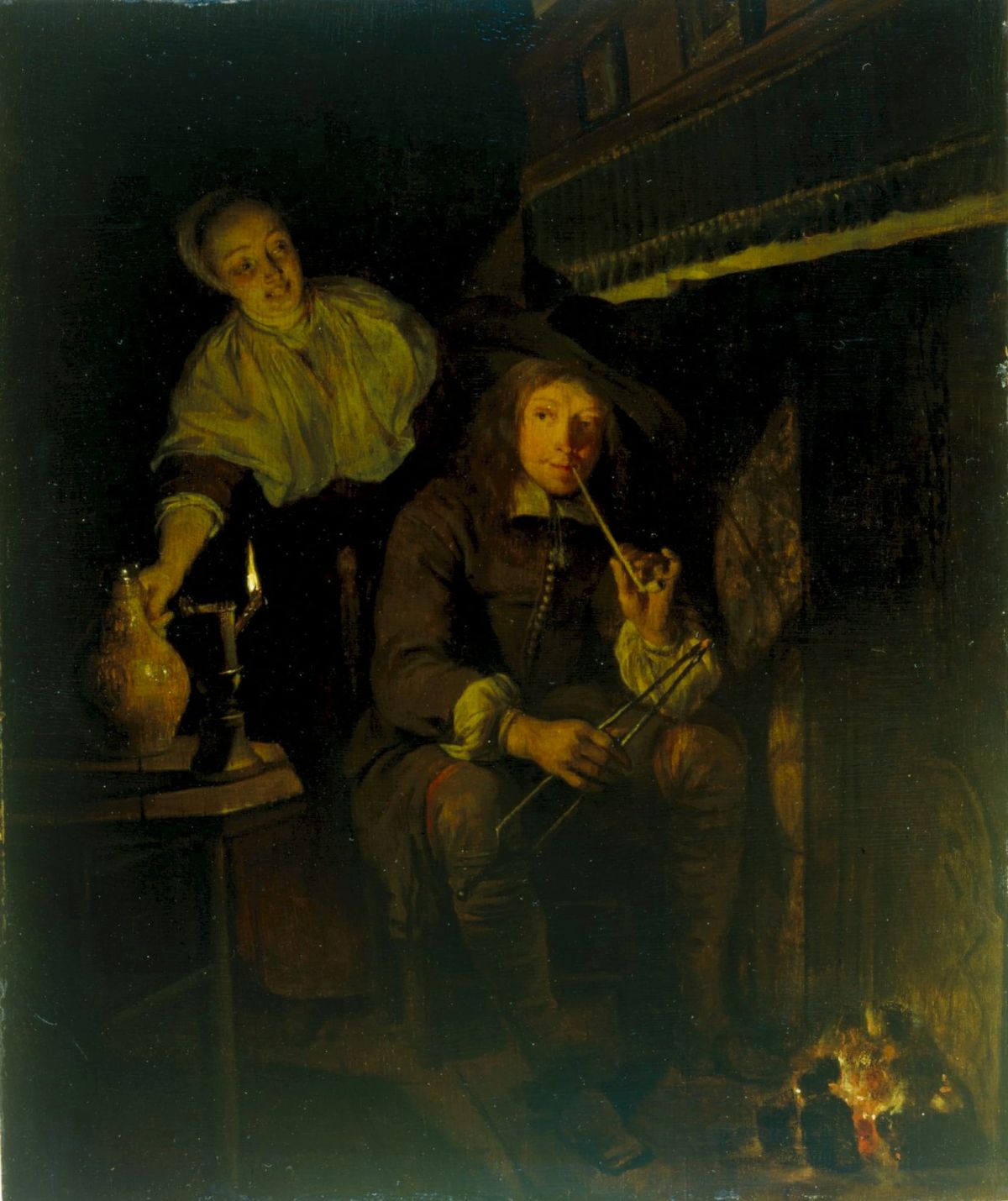
17세기 네덜란드 황금시대의 풍속화 거장 가브리엘 메추(Gabriel Metsu, 1629–1667)가 1650년대 후반에서 1660년대 초반 사이에 완성한 유화 담배 피우는 남자(Man Smoking, 또는 A Man Smoking at a Fireplace with a Maidservant)는 35.5 cm × 29.5 cm 크기의 패널에 유채로 그린 대표적인 야경 풍속화 걸작입니다. 현재 독일 드레스덴의 알베르티눔 드레스덴 근대 거장 미술관(Galerie Neue Meister, Staatliche Kunstsammlungen Dresden)에 소장되어 있습니다.
화로의 숯불을 집어 든 화가와 맥주 단지를 들고 웃음을 터뜨린 하녀
1650년대 후반 암스테르담의 겨울밤, 매서운 북해의 바닷바람이 창문을 흔들 때면 가브리엘 메추는 어두운 방 안에서 벽난로 불빛 하나에 의지해 그림을 그리곤 했습니다. 당시 화가는 낮 동안 귀족들의 차갑고 딱딱한 초상화를 그리느라 잔뜩 굳어 있던 마음을 풀기 위해, 밤이 되면 화실 벽난로 앞에 옹기종기 모여 앉아 담배를 피우고 맥주를 나누어 마시는 서민들의 푸근한 밤 풍경에 깊이 몰두했습니다. 촛불과 모닥불의 은은한 불빛이 사람들의 얼굴에 드리우는 따스한 음영은 화가의 지친 영혼을 위로해 주는 가장 아름다운 빛의 마법이었습니다.
이 그림을 준비하던 날 저녁, 화실 벽난로 앞에서는 유쾌한 실랑이가 벌어졌습니다. 메추는 담뱃대에 불을 붙이는 순간의 극적인 빛과 표정을 실감 나게 담아내기 위해, 친구를 벽난로 앞 의자에 앉히고 쇠집게로 이글거리는 숯불을 직접 집어 들게 했습니다. 포즈를 취하던 친구가 숯불의 뜨거운 열기에 깜짝 놀라 엉덩이를 들썩이자, 뒤에서 도자기 맥주 단지를 들고 서 있던 하녀가 그 모습을 보고 그만 참지 못해 소리 내어 웃음을 터뜨렸습니다.
친구가 멋쩍은 표정으로 헛기침을 하며 담뱃대를 입에 물자, 메추는 바로 그 장난기 어린 눈빛과 방 안을 감도는 훈훈한 온기야말로 화폭에 담아야 할 진짜 삶의 순간이라며 감탄했습니다. 화가는 쇠집게 끝에서 타오르는 숯불의 붉은 열기와 탁자 위 촛불의 노란 불꽃, 그리고 도자기 단지의 매끄러운 유약 질감을 놀라운 솜씨로 캔버스에 얹어갔습니다. 잦은 병치레 속에서도 평범한 이웃들의 따뜻한 인간미와 일상의 소박한 행복을 놓치지 않으려 했던 화가의 다정한 시선이 이 어두운 화폭 속에서 영롱하게 반짝이고 있습니다.
숯불을 쥔 쇠집게에서 미소 짓는 하녀와 촛불로, 시선의 심리적 여정
그림을 마주하는 순간 관람객의 무의식적 시선은 화면 중앙 짙은 어둠 속에서 벽난로의 붉은 불빛을 받아 화사하게 드러난 남자의 얼굴과 입에 문 긴 점토 담뱃대로 가장 먼저 빨려 들어갑니다. 편안하게 모자를 비스듬히 쓰고 짓궂은 미소를 머금은 채 관람객을 지그시 응시하는 남자의 눈빛은 보는 이에게 깊은 친근함과 아늑한 밤의 정취를 선사합니다.
이어 시선은 남자가 두 손으로 쥐고 있는 긴 쇠집게와, 그 끝에 아슬아슬하게 집혀 있는 붉은 숯불 덩어리로 이동합니다. 담뱃대 안으로 불씨를 옮겨 붙이려는 조심스러운 손놀림과 바닥 벽난로에서 타오르는 모닥불의 따스한 열기를 확인하는 순간, 관람객은 타닥타닥 타들어 가는 장작 소리와 함께 방 안 가득 퍼지는 구수한 담배 향기를 온몸으로 체감하게 됩니다.
마지막으로 시선은 남자의 등 뒤에서 도자기 단지를 들고 정겹게 미소를 짓고 있는 하녀의 둥근 얼굴을 지나, 작은 테이블 위에서 조용히 타오르는 촛불과 그 곁에 놓인 묵직한 맥주 단지에 멈춥니다. 어두운 방 안을 포근하게 밝혀주는 촛불과 모닥불의 이중 불빛, 그리고 고단한 하루 끝에 정다운 이야기를 나누는 두 사람의 다정한 교감을 마주하며, 관람객은 평범한 일상의 밤이 품고 있는 소박한 위안과 메추가 건네는 따스한 삶의 온기를 가슴 깊이 마주하게 됩니다.
17세기 네덜란드 야경 풍속화의 정점과 명암의 조형미, 미술계의 평가
미술계는 담배 피우는 남자를 가브리엘 메추가 렘브란트와 헤라르트 판 혼트호르스트로 대표되는 네덜란드 촛불 야경화의 전통을 자신만의 섬세하고 서정적인 화풍으로 훌륭하게 계승한 대표작으로 평가합니다.
촛불과 벽난로라는 두 개의 서로 다른 인공 조명이 빚어내는 복합적인 그림자와 하이라이트를 정교하게 조율하고, 금속, 도자기, 모직 옷의 다채로운 질감을 완벽한 촉각적 생동감으로 구현했기 때문입니다. 화려한 궁정의 사치 대신 어두운 밤 벽난로가 전해주는 소박한 일상의 평화를 찬양했던 메추의 이 서정적인 화폭은, 오늘날까지도 수많은 감상자들에게 깊은 평온과 따뜻한 감동을 선사하는 불멸의 명작으로 손꼽히고 있습니다.
The Intimate Solace of the Evening Hearth, Man Smoking
Painted around 1658–1660 in Amsterdam by the preeminent Dutch Golden Age master Gabriel Metsu (1629–1667), Man Smoking (also titled A Man Smoking at a Fireplace with a Maidservant) is an oil on panel measuring 35.5 cm × 29.5 cm (14.0 in × 11.6 in), preserved in the permanent collection of the Galerie Neue Meister (Staatliche Kunstsammlungen Dresden) in Dresden, Germany.
The Glowing Coal in the Studio Tongs and the Maidservant's Laughter
On chilly winter evenings in late 1650s Amsterdam, as cold North Sea winds rattled the studio shutters, Gabriel Metsu preferred painting by the warm, flickering illumination of the open hearth. Weary from fulfilling formal society portraits during daylight hours, the master sought spiritual refuge in the intimate evening rituals of common folk gathering around the fireplace to share a pipe and a jug of ale. The warm chiaroscuro cast across weathered faces offered a restorative aesthetic that comforted his delicate health.
A delightfully humorous incident occurred while arranging the models before the studio hearth. Eager to capture the precise glow of embers lighting a clay pipe, Metsu asked a visiting companion to hold a live coal from the grate using iron hearth tongs. When the sudden radiant heat caused the sitter to squirm uncomfortably in his chair, the domestic maid standing behind with a stoneware beer jug burst into unrestrained laughter.
As the sheepish smoker cleared his throat and resumed his pose with an amused glance, Metsu marveled that this unscripted, good-humored domestic moment was the exact emotional soul the painting required. The master meticulously recorded the fiery red coal clamped in the tongs, the bright candle flame perched on the side table, and the smooth glazed sheen of the ceramic pitcher. Preserving the simple warmth of human companionship against personal fatigue, Metsu infused this darkened cabinet picture with boundless domestic affection.
Subconscious Trajectory of the Gaze: From Hearthlit Visage to the Tongs of Fire
The observer's subconscious gaze is immediately captivated by the central seated figure, drawn to the warm, luminous contours of the gentleman's face illuminated by the hearth fire against the enveloping dark interior. His relaxed smile, tilted hat, and direct engagement with the viewer establish an instant atmosphere of companionable intimacy and unpretentious evening leisure.
The visual path then descends along his dark doublet to the slender iron tongs held firmly in his hands, focusing upon the glowing red ember clamped near the bowl of his white clay pipe. Observing the careful coordination required to light the tobacco and the crackling logs burning in the open grate in the lower right, the viewer directly experiences the physical warmth of the fireside and the soothing aroma of the hearth.
Finally, the visual trajectory ascends toward the smiling maidservant emerging softly from the shadows with a stoneware jug, before resting upon the candle flickering on the rustic wooden side table. Observing the nuanced harmony between the dual light sources—the gentle candle flame and the radiant fireplace—and the quiet camaraderie of the figures, the spectator perceives the timeless nobility of everyday life and the enduring spiritual solace Metsu embedded within the home.
The Monument of Dutch Nocturnal Genre: Critical Legacy
Art historians celebrate Man Smoking as a supreme achievement of Metsu’s nocturnal genre painting, demonstrating his command of atmospheric illumination and psychological warmth in the tradition of Gerrit van Honthorst and Rembrandt.
By harmonizing the complex shadows cast by two distinct light sources with refined textural descriptions of glazed pottery, wrought iron, and wool, Metsu transformed a humble domestic vignette into a luminous visual poem. This captivating cabinet picture stands as an inspiring testament to the master's enduring humanism, celebrating the quiet sanctity of ordinary existence and the restorative grace of living art.
본 컨텐트의 저작권은 팔렛트제주에 있습니다. 허가없는 무단전제를 금지합니다.
Copyright © Palette Jeju. All rights reserved. Unauthorized reproduction or redistribution is strictly prohibited.