탕기 영감의 초상 - Portrait of Père Tanguy
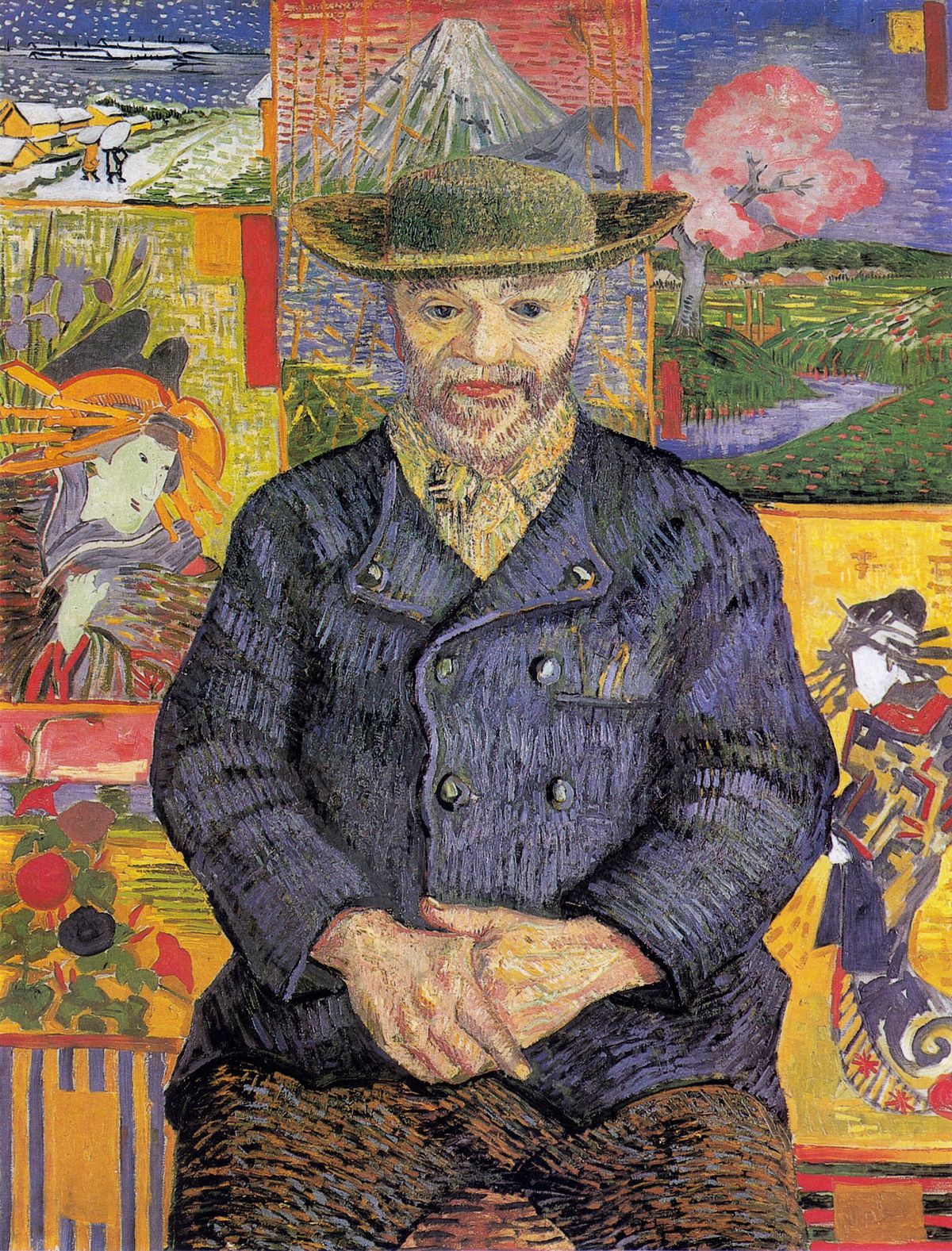
빈센트 반 고흐(Vincent van Gogh, 1853–1890)가 1887년 가을 프랑스 파리 체류 시절 완성한 '탕기 영감의 초상(Portrait of Père Tanguy)'은 캔버스에 유채(Oil on canvas)로 제작된 인물화입니다. 작품의 실제 규격은 세로 92.0cm, 가로 75.0cm이며, 현재 프랑스 파리의 로댕 미술관(Musée Rodin)에 영구 소장되어 있습니다.
고흐는 이 작품에서 인물의 단단한 형태감과 배경의 평면적인 그래픽 요소를 독창적으로 결합했습니다. 주인공 탕기 영감의 얼굴과 푸른색 재킷, 밀짚모자에는 짧고 리드미컬하게 끊어 치는 붓질과 두터운 임파스토(Impasto) 기법을 집중시켜 인물의 소박하고 강직한 양감을 빚어냈습니다. 반면 인물을 감싸고 있는 배경 전체에는 히로시게, 에이센 등 일본 우키요에 대가들의 목판화 도상을 원색 그대로 화려하게 병치하여 서양 초상화와 동양 판화 예술의 전례 없는 조형적 융합을 완성했습니다.
작품 속 주인공 쥘리앵 프랑수아 탕기(Julien François Tanguy, 1825–1894)는 파리 몽마르트르의 클로젤 거리에서 화구점을 운영하던 인물로, 가난한 무명 화가들에게는 단순한 상인을 넘어 자애로운 아버지이자 수호성인 같은 존재였습니다. 1871년 파리 코뮌에 가담했다가 체포되어 사형 위기를 겪기도 했던 그는, 평생 사회적 약자와 혁신적인 예술가들에 대한 깊은 애정을 간직한 열렬한 사회주의자였습니다. 탕기는 고흐를 비롯해 세잔, 모네, 피사로, 고갱 등 돈 없는 가난한 화가들에게 물감과 캔버스를 외상으로 내주고, 대신 그들의 팔리지 않던 그림을 화구 대금으로 받아 가게에 걸어주었습니다.
당시 탕기의 완고한 아내는 "저런 쓸모없는 쓰레기 캔버스를 받고 비싼 물감을 퍼준다"며 남편을 호되게 구박하곤 했습니다. 하지만 탕기는 고흐의 천재성을 한눈에 알아보고 "언젠가 온 세상이 자네의 빛을 찬양할 것"이라며 끝까지 고흐에게 최고급 유화 물감을 아낌없이 쥐여주었습니다. 이에 깊은 감동과 감사를 품은 고흐는 탕기 영감을 성자처럼 존경하며 그의 초상화를 세 번이나 그렸는데, 그중 배경에 자신이 열광하던 일본 우키요에 판화 컬렉션을 빼곡하게 채워 넣은 이 로댕 미술관 소장본이 가장 완성도 높은 최종 역작입니다.
탕기 영감과 고흐의 인연은 고흐가 세상을 떠난 후에도 묵직한 감동으로 이어집니다. 1890년 고흐가 비극적으로 생을 마감했을 때, 아를에서 열린 그의 쓸쓸한 장례식장에 파리에서 기차를 타고 직접 내려와 고흐의 마지막 길을 눈물로 배웅했던 몇 안 되는 진정한 친구 중 한 명이 바로 탕기 영감이었습니다. 훗날 탕기가 세상을 떠났을 때, 그의 가게에 남아있던 이 걸작을 알아보고 직접 구입해 간 인물이 바로 당대 최고의 조각가 오귀스트 로댕(Auguste Rodin)이었으며, 덕분에 이 그림은 오늘날까지 로댕 미술관의 핵심 소장품으로 빛을 발하고 있습니다.
후대의 미술사학자들과 평단은 이 작품을 19세기 말 서양 회화에 거대한 충격을 안긴 '자포니즘(Japonisme)'의 결정판이자, 반 고흐 파리 시대 예술의 최고 걸작으로 평가합니다. 엄숙한 인물화의 배경에 이국적인 대중 판화를 모자이크처럼 배치한 파격적인 구성과 강렬한 원색의 조화는 20세기 콜라주 기법과 팝아트, 야수파의 탄생에 직접적인 영감을 준 선구적 조형 혁명으로 추앙받습니다.
관람자의 시선은 가장 먼저 화면 정중앙에서 정면을 응시하는 탕기 영감의 온화하면서도 통찰력 넘치는 푸른 눈빛과 소박한 밀짚모자에 안착합니다. 이어 굵은 노동의 흔적이 배어 있는 깍지 낀 두 손과 단단한 푸른 재킷의 양감으로 시선이 내려온 뒤, 그를 에워싸고 있는 배경의 눈 덮인 후지산, 붉은 벚꽃 나무, 화려한 기모노를 입은 게이샤의 우키요에 도상들을 따라 시계 방향으로 유려하게 회전하며 화면 전체를 탐색하게 됩니다.
심리적으로 관람자는 복잡하고 화려한 배경의 시각적 자극 속에서도 화면 중심을 굳건히 지탱하는 인물의 정좌(正坐)한 자세와 따뜻한 눈빛에서 깊은 심리적 안정감과 온기를 느끼게 됩니다. 가난한 예술가를 조건 없이 품어주었던 한 인간의 숭고한 인간애와 단단한 내면의 평정은 보는 이의 무의식중에 내재된 삶의 불안과 피로감을 녹여내며, 마음 깊은 곳에 든든한 신뢰감과 따스한 정서적 안식을 풍성하게 채워줍니다.
Portrait of Père Tanguy
Painted by Vincent van Gogh (1853–1890) in Paris during the autumn of 1887, Portrait of Père Tanguy is an oil on canvas portrait measuring 92.0 cm in height and 75.0 cm in width. This iconic masterpiece is permanently housed in the collection of the Musée Rodin in Paris, France.
Van Gogh brilliantly harmonized structural sculptural volume with vibrant, graphic two-dimensionality. The head, rustic straw hat, and deep blue workman’s jacket of Julien Tanguy are rendered with short, deliberate brushstrokes and heavy impasto, creating an earthy, grounded presence. In striking contrast, the entire background is densely covered with colorful, flattened reproductions of Japanese ukiyo-e woodblock prints by masters such as Hiroshige and Eisen, marking an unprecedented synthesis between Western portraiture and Eastern visual aesthetics.
The sitter, Julien François Tanguy (1825–1894), ran a small art supply shop on Rue Clauzel in Montmartre, serving as a benevolent father figure and patron saint to impoverished avant-garde painters. An ardent socialist who had narrowly escaped execution following his participation in the 1871 Paris Commune, Tanguy maintained a profound compassion for struggling creatives. He routinely supplied expensive pigments, brushes, and canvases on credit to penniless artists—including Van Gogh, Cézanne, Monet, Pissarro, and Gauguin—accepting their then-unsellable paintings as payment and proudly hanging them on his shop walls.
Tanguy’s practical wife frequently scolded him for trading precious art supplies for what she deemed worthless canvases. However, Tanguy intuitively recognized Van Gogh’s raw genius, famously reassuring him that the world would one day celebrate his radiant light. Deeply touched by this unwavering kindness, Van Gogh revered Tanguy like a modern secular saint and painted three portraits of him; this celebrated version at the Musée Rodin stands as the most ambitious and sophisticated culmination of the series.
Their bond endured until the very end. When Van Gogh died tragically in July 1890, Tanguy was one of the few loyal friends who traveled all the way from Paris to attend the solitary funeral in Auvers-sur-Oise. Years after Tanguy's death, the renowned sculptor Auguste Rodin recognized the profound artistic and human value of this portrait, acquiring the canvas directly from the Tanguy estate, which is why it remains an indispensable treasure of the Musée Rodin today.
Modern art historians and scholars celebrate this painting as the crowning masterpiece of nineteenth-century Japonisme and a pivotal milestone in Post-Impressionism. By surrounding an austere, seated figure with a kaleidoscopic collage of exotic prints, Van Gogh dismantled classical spatial hierarchy, directly anticipating the compositional breakthroughs of twentieth-century Collage, Fauvism, and Pop Art.
A viewer’s gaze instinctively settles upon the serene, penetrating eyes and humble straw hat of Père Tanguy at the center of the canvas. The eyes then move downward along the heavy blue coat to the weathered, clasped hands resting in his lap, before radiating outward into the colorful tapestry of the background—exploring the snow-capped peak of Mount Fuji, the blossoming cherry branches, and the vibrant kimono motifs in a fluid, circular rhythm.
Psychologically, the juxtaposition of an energetic background with the centered stillness of the subject induces an immediate feeling of emotional equilibrium and profound reassurance. Tanguy’s benevolent countenance and grounded posture gently dissolve internal anxieties and fatigue, enveloping the observer in an enduring atmosphere of human warmth, spiritual security, and quiet, restorative peace.
본 리뷰에서 작품을 제외한 컨텐츠의 저작권은 팔렛트제주에 있습니다.
"퍼블릭도메인 고전명화"를 제외한 모든 창작 콘텐츠는 저작권법 제4조 및 제10조에 의거하여 보호됩니다. 무단 도용시 저작권법 제136조(벌칙)에 의거, 당사의 사전 서면 승인 없는 저작권 침해 행위를 금지합니다.