씨뿌리는 사람 The Sower
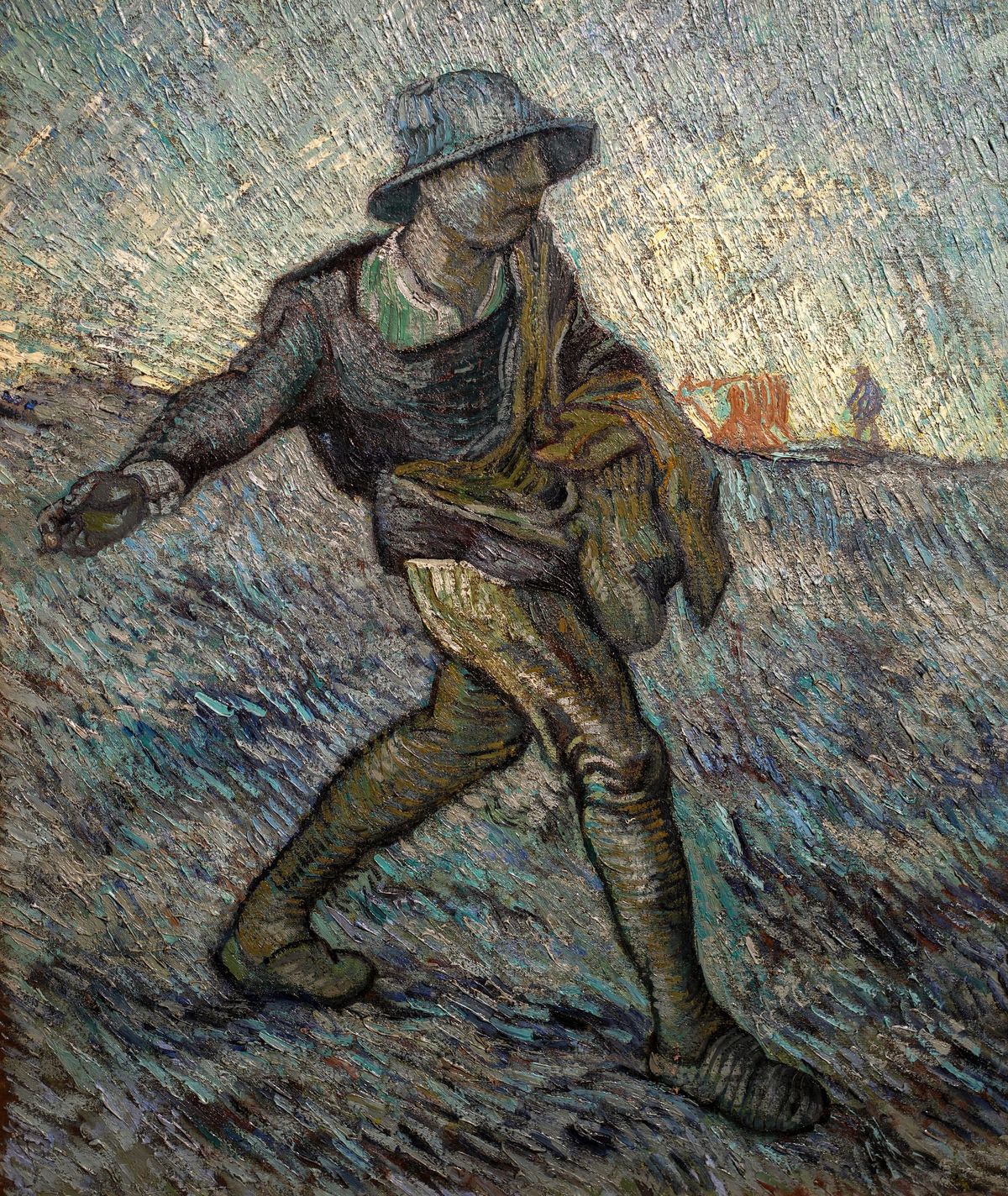
빈센트 반 고흐(Vincent van Gogh, 1853–1890)는 1888년 프랑스 남부 아를에 정착한 후 자연의 강렬한 생명력과 농부들의 숭고한 노동에 매료되어 씨뿌리는 사람 주제를 집중적으로 탐구했습니다.
이 작품은 그가 아를에 체류하던 1888년 10월에 제작된 유채화로, 야콥 바르트 드 라 파이유의 전작 도록 기준 공식 등록번호는 F422이며, 실제 작품의 실측 규격은 64.2 곱하기 80.3 센티미터입니다.
현재 네덜란드 오테를로에 위치한 크롤러 뮐러 미술관에서 소장하고 있습니다.
작가의 고뇌와 비하인드
고흐는 밀레에 대한 깊은 존경심을 바탕으로 씨뿌리는 사람을 대지의 생명력과 영원한 순환을 상징하는 구원자의 모습으로 재해석하고자 했습니다.
당시 그가 동생 테오에게 보낸 편지에서 언급했듯, 태양이 지는 거대한 대지 위에서 씨앗을 던지는 농부의 모습은 인간의 굳센 의지와 삶의 근원을 향한 화가의 뜨거운 갈망을 투영한 것입니다.
화면 전면에는 둥근 모자를 쓰고 어두운 작업복과 바지를 입은 농부가 힘찬 동작으로 씨앗을 멀리 뿌리며 앞으로 나아가는 역동적인 형상이 중심을 압도합니다.
중경에는 짙은 청회색빛으로 거칠게 갈아엎어진 밭의 고랑들이 대각선 방향으로 깊이감 있게 펼쳐지며 대지의 묵직한 무게감을 전달합니다.
원경의 지평선 너머에는 강렬한 노을빛 하늘 아래 마차와 일하는 인부의 실루엣이 작게 자리 잡고 있어, 광활한 공간 속에서 울려 퍼지는 노동의 경건함을 완성합니다.
무의식 속 시선 및 심리 흐름
관람객의 시선은 가장 먼저 화면 중앙을 가로지르며 씨앗을 쥐고 팔을 뻗은 농부의 단단한 손끝과 역동적인 몸짓에 강렬하게 사로잡힙니다.
이어지는 시선은 농부의 걸음을 따라 거칠게 소용돌이치는 청회색빛의 밭고랑과 대지의 질감을 타고 화면 전체로 넓게 확산합니다.
마지막으로 화면 상단 배경의 은은한 노을빛 대기감으로 시선이 자연스럽게 올라가면서, 고된 노동 속에서도 대지와 하나 되어 영원한 생명을 심어가는 숭고한 평온함과 깊은 심리적 몰입을 경험하게 됩니다.
미술계의 평가와 조형미
미술사학계에서는 이 작품을 두고 고흐가 후기 인상주의의 대담한 색채 대비와 굵은 붓질을 통해 단순한 농부의 풍경을 넘어 인간 영혼의 거대한 에너지를 시각화한 최고 시기의 역작으로 평가합니다.
화면을 가득 채운 두꺼운 임파스토 기법과 청색 및 보라색의 밭이랑 위로 퍼지는 황금빛 노을의 조화는 화가 특유의 독창적인 시각 언어를 완벽하게 보여줍니다.
눈에 보이는 사실적 재현을 뛰어넘어 대지와 인간이 맺는 원초적이고 신성한 관계를 캔버스 위에 영원히 각인시킨 위대한 미술사적 성취입니다.
The Sower
Vincent van Gogh, deeply inspired by the elemental forces of nature and the dignity of rural labor, intensively explored the theme of the sower after settling in Arles, southern France, in 1888.
Created in October 1888 during his Arles period, this oil on canvas is cataloged as F422 in J.B. de la Faille's catalogue raisonné and measures 64.2 by 80.3 centimeters.
The painting is currently housed in the Kröller-Müller Museum in Otterlo, Netherlands.
Grounded in his profound admiration for Jean-François Millet, Van Gogh sought to elevate the figure of the sower into a universal symbol of spiritual renewal and the eternal cycle of life.
In letters to his brother Theo, the artist frequently reflected on how the sweeping gesture of sowing against a monumental setting sun embodied human resilience and an unbreakable connection to the earth.
The foreground is dominated by the powerful silhouette of a peasant wearing a wide-brimmed hat and dark work attire, striding forward with intense momentum while casting grain.
In the middle ground, deeply furrowed fields rendered in rich blue-gray and purple strokes sweep diagonally across the canvas, conveying the heavy, tangible mass of the soil.
In the distant background, beneath a glowing atmospheric sky, the faint outlines of a cart and a worker near the horizon evoke a vast, contemplative spatial depth.
The viewer's gaze is initially drawn toward the outstretched arm and powerful stride of the central sower, capturing immediate psychological focus.
The perspective then follows the swirling, energetic brushstrokes of the plowed earth outward across the middle ground.
Finally, the eye ascends toward the luminous sky in the background, allowing the observer to experience a profound psychological transition from raw physical tension to an enduring sense of spiritual harmony and reverence.
Art historians regard this canvas as a defining masterpiece of Van Gogh's Arles period, where bold color contrasts and dynamic brushwork transcend mere landscape depiction to externalize the raw energy of the human soul.
The thick impasto application and the vibrant interplay between dark earthy tones and glowing twilight hues demonstrate the artist's mature visual vocabulary.
It stands as an eternal artistic achievement that captures the sacred, primal bond between humanity and the natural world.
본 컨텐트의 저작권은 팔렛트제주에 있습니다. 허가없는 무단전제를 금지합니다.
Copyright © Palette Jeju. All rights reserved. Unauthorized reproduction or redistribution is strictly prohibited.