소년의 초상 - Portrait of a Boy
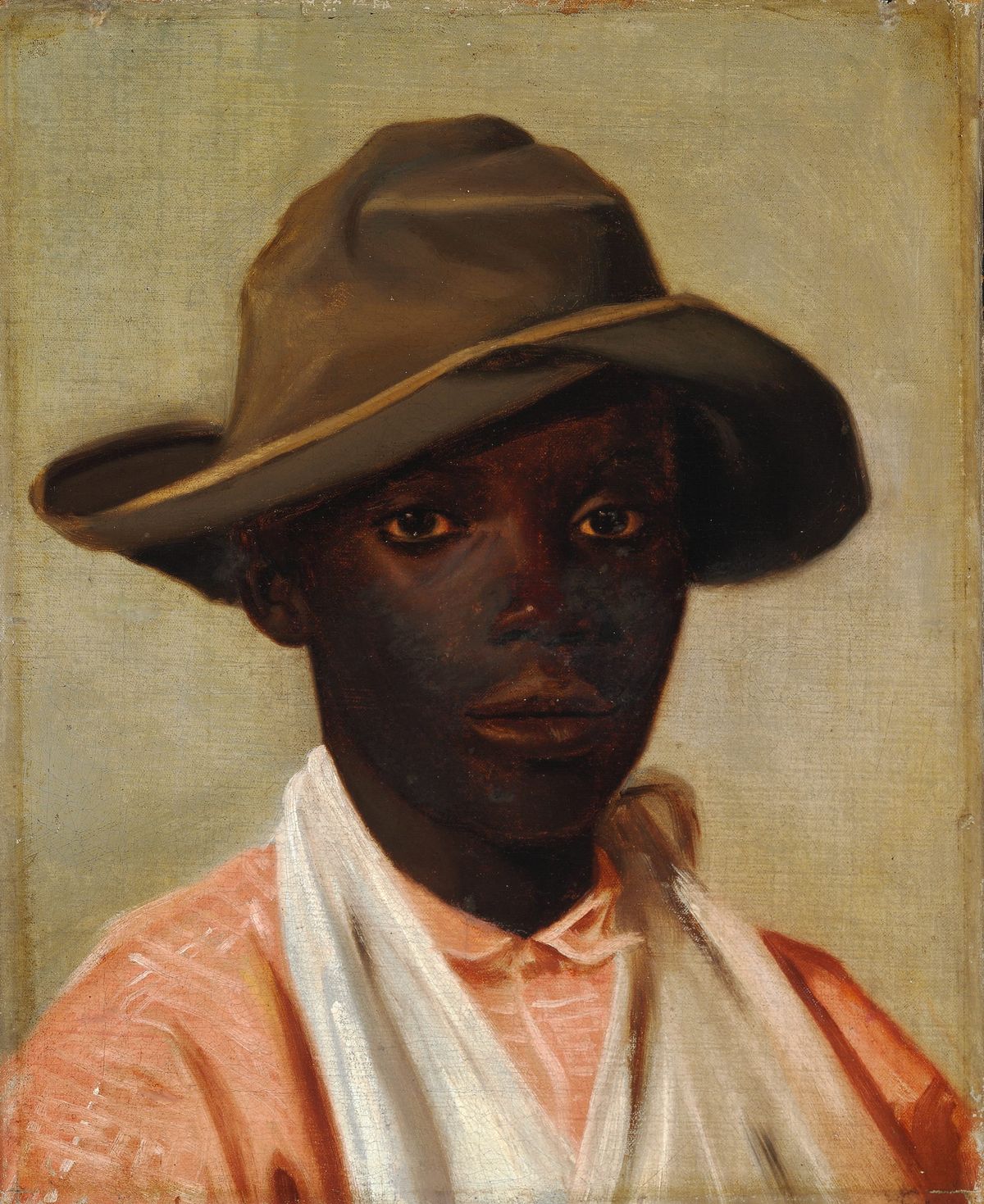
프랑스 인상주의의 위대한 스승이자 따뜻한 휴머니스트였던 카미유 피사로(Camille Pissarro)가 화가로서 첫발을 내딛던 청년 시절인 1852년에서 1855년 사이에 완성한 '소년의 초상(Portræt af en dreng / Portrait of a Boy)'은 캔버스에 유채(Oil on canvas)로 제작된 희귀한 초기 걸작입니다. 가로 31cm, 세로 39cm 크기의 이 작품은 덴마크 국립 미술관(Statens Museum for Kunst, SMK)에 영구 소장되어 있습니다.
이 그림에는 피사로의 파란만장한 청년기와 예술을 향한 뜨거운 열정에 얽힌 극적인 비하인드 스토리가 담겨 있습니다. 당시 카리브해의 덴마크령 세인트토머스 섬에서 유복한 상인의 아들로 자란 피사로는 가업을 잇기를 바라는 완고한 아버지의 강요로 상점 점원으로 일하고 있었습니다. 하지만 장부를 적어야 할 종이에 늘 항구의 노동자들과 풍경을 스케치하던 그는 결국 1852년, 가족들의 완강한 반대를 뒤로하고 덴마크 출신의 화가 프리츠 멜비(Fritz Melbye)와 함께 베네수엘라로 무작정 탈출을 감행했습니다.
베네수엘라의 카라카스에서 자유로운 예술가로서의 첫 삶을 시작한 20대 초반의 피사로는 원주민과 흑인 노동자 등 현지 사람들의 진솔한 삶을 편견 없는 애정 어린 시선으로 화폭에 담았습니다. 당시 19세기 유럽 미술계에서 비백인 인물을 다룰 때 흔히 나타나던 이국적인 과장이나 인종차별적인 왜곡을 완전히 배제하고, 한 인간으로서의 순수한 개성과 내면의 영혼을 정직하게 담아냈습니다. 부드러우면서도 밀도 높은 고전적 붓 터치로 소년의 눈빛과 피부의 미묘한 광택을 탁월하게 살려낸 이 시기의 작업은, 훗날 파리로 건너가 모든 인상주의 화가들에게 존경받는 스승이 될 피사로의 깊은 인도주의적 세계관이 이미 청년 시절부터 확고히 자리 잡고 있었음을 증명하는 귀중한 미술사적 유산으로 평가받고 있습니다.
작품을 마주할 때 우리의 시선은 소년의 커다랗고 깊은 눈망울에 가장 먼저 머물게 됩니다. 살짝 고개를 갸우뚱한 채 관람자를 물끄러미 응시하는 맑고 투명한 시선과 마주한 눈길은, 짙은 피부 위에 섬세하게 내려앉은 햇살의 온기를 따라 이마와 콧날, 다정한 입술로 부드럽게 이어집니다.
이어 머리에 자연스럽게 얹힌 넓은 챙 모자의 단단한 굴곡을 타고 올라간 시선은, 아래로 흘러내려 낡았지만 정갈한 흰 천 붕대와 화사한 살구빛 셔츠의 질감으로 내려앉으며 소년의 꾸밈없는 체온을 생생하게 체감하게 합니다.
이러한 시각적 여정은 관람자의 무의식 속에 깊은 정서적 교감과 편안한 안도감을 불러일으킵니다. 어떠한 선입견이나 위계도 없이 인간의 본질을 따뜻하게 응시하는 화가의 진실한 붓길은 지친 현대인의 내면을 포근하게 어루만져 줍니다. 맑은 소년의 눈빛과 조화를 이루는 차분한 배경의 은은한 색조는 관람자의 마음속 번잡한 생각을 가라앉히고, 잊고 지냈던 순수함에 대한 그리움과 따뜻한 인간적 위로를 선물합니다.
Portrait of a Boy - Portræt af en dreng
Painted between 1852 and 1855 by Camille Pissarro, the revered mentor and deeply compassionate soul of French Impressionism, Portrait of a Boy (Portræt af en dreng) is an exceptionally rare early oil on canvas masterpiece measuring 39 by 31 cm. This intimate work from the master's formative years is proudly preserved in the permanent collection of the National Gallery of Denmark (Statens Museum for Kunst) in Copenhagen.
Behind this poignant canvas lies a thrilling tale of youthful rebellion and profound artistic awakening. Born on the Caribbean island of Saint Thomas, Pissarro was expected by his strict father to take over the family commerce business. Instead of balancing financial ledgers, the young artist constantly filled notebooks with candid sketches of local port workers. In 1852, defying familial expectations, Pissarro made the daring choice to run away to Venezuela alongside Danish painter Fritz Melbye to pursue a life entirely devoted to art.
Living and working in Caracas during his early twenties, Pissarro captured the honest humanity of local Afro-Caribbean and Venezuelan inhabitants with extraordinary empathy. Completely avoiding the exoticized cliches or racial stereotypes prevalent in nineteenth-century European academic art, he rendered this young boy with immense dignity, individuality, and psychological depth. Modern art historians celebrate these early Venezuelan portraits as pivotal historical testaments, proving that Pissarro's lifelong egalitarian values, humanist warmth, and keen observation of the working class were already deeply forged long before he arrived in Paris to help found Impressionism.
Upon viewing the canvas, the spectator's gaze is instantly captivated by the boy's large, luminous eyes gazing candidly outward. After establishing this intimate connection, the eye follows the delicate play of light caressing his dark, radiant skin, moving gracefully across the contours of his brow, cheekbones, and gentle expression.
The gaze then rises along the organic brim of his weathered felt hat before descending toward the soft white sling around his shoulder and the warm coral-tinted tunic, feeling the authentic tactile presence and vulnerability of the young sitter.
This visual progression inspires a profound sense of inner quietude and empathetic connection within the subconscious. The unpretentious sincerity and tender gaze of the boy soften psychological barriers, dissolving everyday tension. Experiencing the artist's pure, unprejudiced embrace of human dignity wraps the viewer in an enduring sense of comfort, timeless innocence, and profound emotional peace.
본 리뷰에서 작품을 제외한 컨텐츠의 저작권은 팔렛트제주에 있습니다.
"퍼블릭도메인 고전명화"를 제외한 모든 창작 콘텐츠는 저작권법 제4조 및 제10조에 의거하여 보호됩니다. 무단 도용시 저작권법 제136조(벌칙)에 의거, 당사의 사전 서면 승인 없는 저작권 침해 행위를 금지합니다.