송아지 머리와 우설 Calf's Head and Ox Tongue
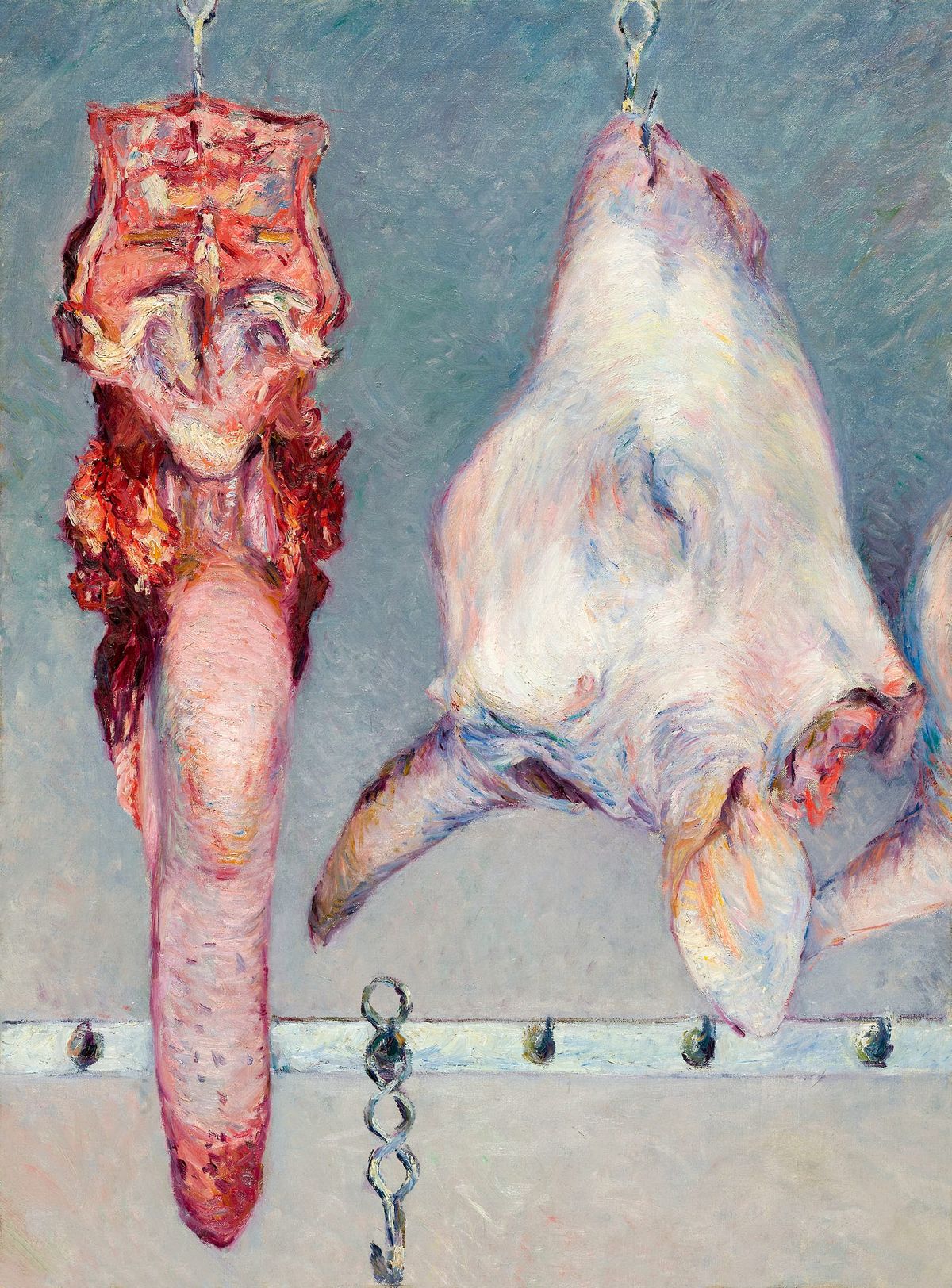
차가운 푸른빛의 금속성 배경 위로 붉은 날고기의 질감이 날카롭게 대비되는 이 충격적인 작품은, 귀스타브 카유보트가 1882년경에 완성한 명작입니다. 세로 73cm, 가로 54cm의 실제 캔버스 크기를 지닌 이 그림은 당시 화려하고 우아한 정물화에 익숙해져 있던 파리 시민들에게 날것 그대로의 생생한 시각적 충격을 안겨주었습니다.
그림 앞에 선 관람자의 시선은 가장 먼저 화면 우측에 매달린 창백하고 거대한 송아지 머리에 꽂히게 됩니다. 생명을 잃고 축 늘어진 이 거친 형태는 우리가 일상에서 애써 외면하고 살아가는 피할 수 없는 육체적 한계와 차가운 죽음이라는 의식의 충격을 대변합니다.
하지만 이내 우리의 눈길은 화면 좌측에 길게 늘어진 붉고 선명한 우설의 역동적인 핏빛 질감으로 옮겨갑니다. 창백한 송아지 머리와 대비되는 이 강렬하고 날것 그대로의 붉은 살코기는, 겉으로 보이는 세련된 삶의 장막 이면에 숨겨진 인간의 가장 원초적이고 본능적인 무의식의 덩어리를 시각화합니다.
그리고 종국에는 시선이 이 고깃덩어리들을 지탱하는 차가운 쇠갈고리와 서늘한 회백색 배경으로 향하게 됩니다. 이 서늘한 심리적 흐름은 감상자로 하여금 부르주아 사회의 위선적인 포장을 벗겨내고, 생명과 죽음이 교차하는 날카롭고 다듬어지지 않은 삶의 본질을 정면으로 마주하게 하는 매우 치밀한 심리적 장치입니다.
이처럼 파격적인 정물화가 탄생한 비하인드 스토리에는 당시 프랑스 문학계를 휩쓸던 자연주의 문학의 깊은 영향이 자리 잡고 있습니다. 특히 카유보트는 파리 중앙시장의 적나라한 모습을 묘사한 에밀 졸라의 소설에 큰 감명을 받았습니다.
그는 우아한 요트와 파리 도심의 화려함을 그리던 평소의 세련된 모습에서 벗어나, 자신이 직접 푸줏간에서 피가 뚝뚝 떨어지는 날고기를 사들여와 완벽하게 정돈된 부르주아 아파트 작업실 한가운데에 매달아 두었습니다. 자신의 고상한 일상 속으로 가장 날것의 현실을 과감히 끌어들여 진실을 탐구하고자 했던 카유보트의 지독한 예술적 집념이 돋보이는 대목입니다.
오늘날 미술사학자들은 이 작품을 인상주의를 넘어 근대 자연주의의 진수를 보여주는 걸작으로 평가합니다. 1882년 인상파 전시회에 출품되었을 당시 보수적인 평론가들은 이 끔찍한 주제에 경악하며 비난을 퍼부었습니다.
하지만 아름다운 꽃이나 과일 대신 인간 생존의 바탕이 되는 날고기의 죽음을 과감히 조명한 이 시도는, 과거 렘브란트의 명맥을 잇는 동시에 훗날 카임 수틴이나 프랜시스 베이컨 같은 현대 미술 거장들의 표현주의적 시각을 완벽하게 예고한 선구적인 발자취로 굳건히 인정받고 있습니다.
This shocking artwork, where the texture of red raw meat sharply contrasts against a cold, bluish metallic background, is a masterpiece completed by Gustave Caillebotte around 1882. With actual canvas dimensions of 73 by 54 centimeters, this painting delivered an incredibly raw, vivid visual shock to the citizens of Paris, who were accustomed to glamorous and elegant still lifes at the time.
The viewer's gaze standing before the painting is first struck by the pale, massive calf's head hanging on the right side of the canvas. This lifeless, limp, and rough form represents the shock of consciousness—the unavoidable physical limitations and cold reality of death that we constantly try to ignore in our daily lives.
However, our eyes soon shift to the left, drawn to the dynamic, bloody texture of the long, vividly red ox tongue. Sharply contrasting with the pale calf's head, this intense, raw red flesh visualizes the mass of humanity's most primal and instinctive unconsciousness, hidden beneath the refined veil of external life.
Eventually, the gaze moves toward the cold iron hooks supporting these slabs of meat and the stark, icy gray-white background. This chilling psychological flow is a highly meticulous device that strips away the hypocritical packaging of bourgeois society, forcing the observer to confront the sharp, unrefined essence of life and death head-on.
The behind-the-scenes story of how such an unconventional still life was born lies in the profound influence of the Naturalist literary movement sweeping the French literary scene at the time. Caillebotte was particularly deeply moved by Émile Zola's novels, which unflinchingly described the stark realities of the central markets of Paris.
Departing from his usual sophisticated repertoire of elegant yachts and glamorous Parisian cityscapes, he personally purchased dripping raw meat from a local butcher and hung it right in the middle of his perfectly immaculate, bourgeois apartment studio. This vividly highlights Caillebotte's fierce artistic tenacity as he sought to explore the truth by boldly pulling the most raw reality into his highly refined everyday life.
Today, art historians evaluate this artwork as a masterpiece that showcases the absolute essence of modern Naturalism, reaching far beyond Impressionism. When it was presented at the Impressionist exhibition in 1882, conservative critics were utterly horrified by the gruesome subject matter and showered it with condemnation.
However, this bold attempt to illuminate the death of raw meat—the very foundation of human survival—instead of beautiful flowers or fruits is now firmly recognized as a pioneering footprint. It not only continued the legacy of past masters like Rembrandt but also perfectly foreshadowed the expressionist visions of modern art giants like Chaim Soutine and Francis Bacon.
ⓒ 본 리뷰의 저작권은 "팔렛트제주"에 있으며, 무단 전재 및 재배포를 엄격히 금합니다. / Copyright 2026 by Palette Jeju. All rights reserved. Unauthorized reproduction or distribution is strictly prohibited.