실내의 시골 여인 (Paysanne dans un intérieur, 1882)
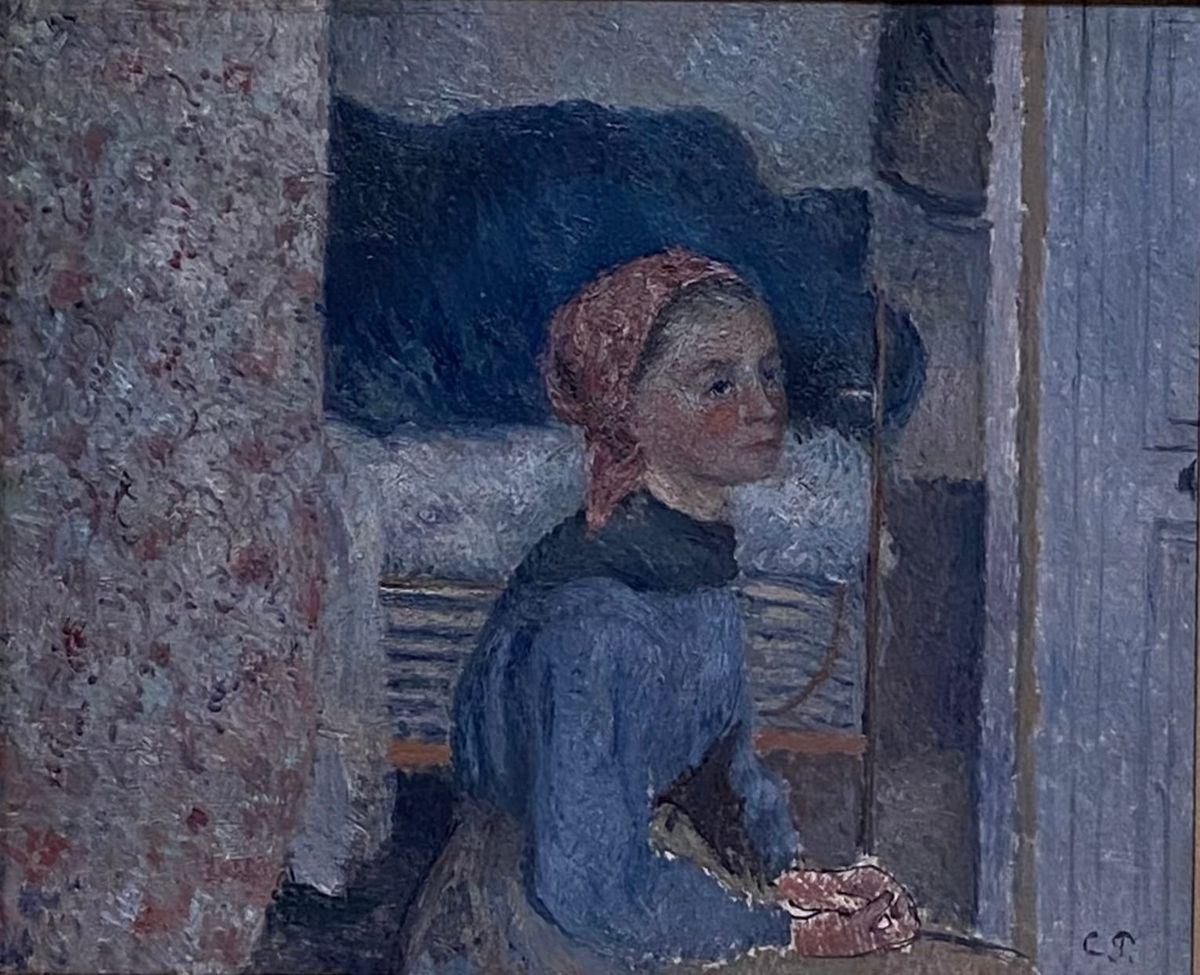
1880년대 초반 퐁투아즈 시절, 카미유 피사로는 광활하게 트인 야외 풍경에서 잠시 시선을 돌려 소박한 농가의 실내로 스며드는 은은한 빛과 인물의 내면적 고요를 화폭에 담아냈습니다. 화려하고 부유한 부르주아 계층의 사교 생활이나 장식적인 살롱풍 초상화가 주를 이루던 시대에, 피사로는 거친 벽면과 단출한 침대가 놓인 소박한 방 안에서 잠시 일손을 멈추고 사색에 잠긴 어린 시골 여인의 일상을 기념비적인 품격으로 끌어올렸습니다. 가로 54cm, 세로 65cm 크기의 캔버스에 유채로 완성된 이 작품은, 촘촘하게 직조된 독창적인 마티에르와 온화한 색채의 조화를 통해 노동의 틈새에서 피어나는 순수한 인간 실존의 평화를 포착한 피사로의 대표적인 실내 인물화입니다.
관람자의 시각 인지 체계는 화면 중앙에서 차분한 푸른빛 작업복을 입고 붉은 두건을 쓴 채 옆모습을 드러낸 소녀의 온화한 얼굴에 가장 먼저 닻을 내립니다. 발그레한 뺨과 살포시 모아 쥔 두 손의 따스한 살구빛 톤은 주변의 서늘한 푸른색 및 보랏빛 음영과 부드러운 명암 대비를 이루며 시각 피질의 중심와를 즉각 포획하고, 화면 전체의 서정적인 구심점을 확립합니다.
이어서 시선은 소녀의 맑고 우수 어린 눈빛의 방향을 따라 열린 문틈과 그 너머로 스며드는 은은한 실내 자연광의 궤적을 훑어내는 도약 안구 운동을 진행합니다.
소녀의 시선 축을 확인한 눈길은 화면 좌측 전면을 두텁게 채우고 있는 질감 풍부한 꽃무늬 벽면의 촉각적인 붓터치를 스쳐, 배경에 자리 잡은 짙푸른 침구류의 묵직한 볼륨감과 우측 문틀의 수직적인 건축적 선율로 자연스럽게 확장됩니다.
밀폐된 실내 공간의 아늑함과 미세하게 흩뿌려진 대기광의 입자들이 망막 위에서 하나의 조화로운 온기로 통합되는 순간, 관조자는 번잡한 일상의 긴장을 내려놓고 고요한 농가의 안식처에 오롯이 머무는 듯한 깊은 심리적 안도감과 내면의 평온을 체험하게 됩니다.
이 그림을 그릴 당시 피사로는 제7회 인상주의 전시회를 준비하며 절친한 동료 화가 에드가 드가 및 메리 카사트와 함께 인물과 실내 공간이 맺는 빛의 유기적인 관계를 치열하게 탐구하고 있었습니다. 그는 전통적인 명암 대조법의 인위적인 극적 효과를 배제하고, 짧고 굵은 붓질을 수없이 덧발라 대기 속에 부유하는 빛과 벽면의 거친 질감을 일체화시켰습니다.
이러한 피사로의 성실한 조형적 모색은 당시 젊은 후배 화가였던 폴 고갱과 빈센트 반 고흐에게 지대한 영향을 미쳤으며, 평론가들은 "화려한 수식 없이도 가장 정직하고 고결한 민중의 영혼을 울리는 붓"이라며 아낌없는 찬사를 보냈습니다.
소박한 일상 공간 속에서 피어난 인간의 순수한 존엄성과 대지의 따뜻한 온기를 단단한 조형 언어로 승화시킨 피사로의 이 실내 인물화는, 현대 미술사에서 인상주의가 감각적 찰나를 넘어 인간 실존에 대한 깊은 사색과 휴머니즘의 정점에 도달했음을 증명하는 불멸의 걸작으로 확고하게 평가받고 있습니다.
Peasant Woman, Interior (Paysanne dans un intérieur, 1882)
During the early 1880s in Pontoise, Camille Pissarro frequently turned his empathetic gaze away from panoramic valleys to explore the quiet sanctuary of rustic domestic interiors, capturing the gentle play of filtered daylight upon the humble lives of rural folk. At a time when Parisian salons favored grand aristocratic portraits and fashionable genre scenes, the master elevated a simple peasant girl resting peacefully in her modest, unadorned room into an enduring monument of human dignity. Measuring 65 by 54 cm, this vertical oil on canvas balances richly woven impasto with muted, harmonious tones, celebrating the contemplative quietude of agrarian life through profoundly tender draftsmanship.
The observer’s perceptual framework instantly anchors upon the gentle profile of the young woman in the center, whose rose-colored headscarf and muted blue bodice stand out against the cool interior shadows. The warm flush of her cheek and her clasped hands provide an intuitive emotional and structural nucleus, arresting the fovea with serene psychological gravity.
From this tender human anchor, the ocular trajectory tracks the subtle direction of her contemplative gaze as she looks toward the open doorway, following the soft stream of ambient daylight penetrating the room.
Scanning across the tactile, heavily textured patterned wall on the left, the eye moves toward the deep cobalt mass of the draped bed in the background before ascending along the vertical frame of the wooden door on the right, allowing the visual cortex to synthesize these layered, interlocking planes into an intimate three-dimensional space.
As the quiet domestic shadows and the delicate particles of natural light coalesce into a unified sensory whole within the observer's mind, active visual navigation dissolves into profound contemplative stillness, wrapped in the comforting refuge of rural simplicity.
While executing this canvas ahead of the Seventh Impressionist Exhibition, Pissarro was engaged in deep creative exchanges with Edgar Degas and Mary Cassatt, investigating how ambient indoor light could define figurative form without theatrical academic contrivances. By building the surface through cross-hatched, dense strokes of pigment, the master unified the physical presence of the sitter with the living atmosphere of her humble surroundings.
This rigorous yet empathetic approach profoundly inspired Paul Gauguin and Vincent van Gogh, while progressive critics ardently praised Pissarro for revealing the unvarnished soul and moral grace of ordinary working people.
Masterfully harmonizing structural weight with deep humanist tenderness, Pissarro's intimate interior remains celebrated throughout art history as an enduring pinnacle of nineteenth-century figurative masterworks.
본 콘텐츠의 저작권은 저작권자에게 있으며, 무단 전재 및 재배포를 금합니다.