시골 결혼식 Village Wedding
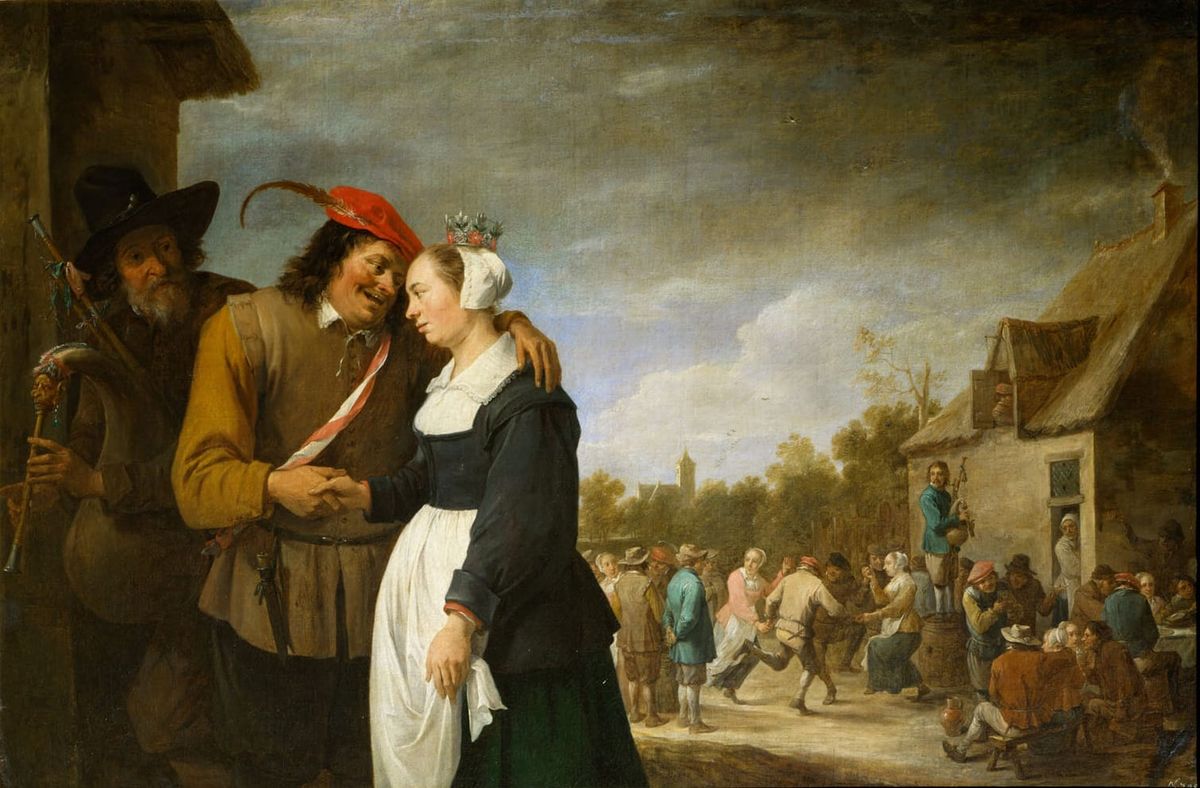
17세기 플랑드르 바로크 풍속화 및 전원 축제화의 거장 소 다비드 테니어르스(David Teniers le Jeune, 1610–1690)가 1648년 안트베르펜과 브뤼셀 시기에 완성한 기념비적 야외 결혼식 대작 유화 시골 결혼식(Village Wedding, 또는 신랑과 신부가 있는 농가 잔치, 독일어: Bauernhochzeit, 소장품 번호: GG 708)은 76.5 cm × 114.0 cm 크기의 웅장한 가로형 캔버스에 유채로 그린 대표적인 북유럽 민속 혼례화 최고 걸작입니다.
합스부르크 왕가의 유서 깊은 황실 컬렉션을 거쳐 현재 오스트리아 빈의 빈 미술사 박물관(Kunsthistorisches Museum, Vienna)에 영구 소장되어 보존되어 오고 있습니다.
피터르 브뤼헐의 농가 결혼식 전통과 순박한 사랑의 서약을 향한 화가의 고뇌
1640년대 후반 플랑드르 화단의 독보적인 대가로 우뚝 선 테니어르스는, 플랑드르의 위대한 선배 피터르 브뤼헐 1세가 남긴 유구한 농민 결혼식 풍속화 전통을 계승하면서도 자신만의 우아하고 서정적인 화풍으로 새롭게 승화시키고자 깊이 고민했습니다.
화가는 서민들의 혼례를 다루면서 거친 술주정이나 희화화된 풍자를 걷어내고, 새로운 인생의 출발선에 선 젊은 신랑 신부의 설레는 눈빛과 온 동네 이웃들이 모여 축복을 나누는 따뜻한 인간미를 어떻게 맑은 은빛 대기(Silvery manner) 속에 조화롭게 담아낼지 치열하게 번민했습니다.
당시 플랑드르 농촌 풍습에서 신부는 머리에 은빛 또는 종이로 만든 꽃 왕관을 쓰고, 신랑은 붉은 모자에 긴 깃털과 가슴에 축하 리본을 달아 혼례의 주인공임을 당당히 드러냈습니다.
화가는 주막과 초가 농가가 보이는 넓은 마을 마당에서, 백파이프 연주에 맞춰 손을 맞잡은 신랑 신부와 마당 가득 춤을 추며 잔치를 즐기는 하객들의 행복한 순간을 화폭에 담았습니다.
화면 왼쪽 전면에는 깃털 꽂힌 붉은 모자와 축하 리본을 맨 건장한 신랑이 수줍어하는 신부의 손을 꼭 쥐며 어깨를 감싸 안고, 곁에 선 나이 든 백파이프 악사는 연주를 준비하며 흐뭇한 눈빛으로 부부를 바라보고 있습니다.
작은 왕관과 흰 두건, 순백의 앞치마를 두른 신부는 다소 부끄러운 듯 고개를 숙이면서도 신랑을 향해 은은한 미소를 보내고 있습니다.
화면 오른쪽 마당에서는 또 다른 백파이프 악사가 나무통 위에 올라서서 신나는 축하곡을 연주하고 있고, 남녀 하객들은 둥글게 원을 그리며 신명 나게 춤을 추고 있습니다.
초가 주막 창문과 문가에서 내다보는 구경꾼들과 긴 탁자에 둘러앉아 술과 음식을 나누는 이웃들, 그리고 저 멀리 언덕 위 교회 종탑과 은빛 뭉게구름은, 공동체의 진솔한 사랑과 축복이 넘치는 17세기 플랑드르 전원의 평화로운 삶을 손에 잡힐 듯 생생하게 웅변합니다.
맞잡은 두 손과 신랑의 환한 미소에서 춤추는 하객들과 백파이프 악사로, 시선의 심리적 여정
그림을 마주하는 순간 관람객의 무의식적 시선은 화면 왼쪽 전면에서 눈부신 햇살을 받아 선명하게 떠오르는 신부의 순백 앞치마와 신랑의 강렬한 붉은 깃털 모자로 가장 먼저 빨려 들어갑니다.
신부의 손을 다정하게 감싸 쥐고 세상을 다 얻은 듯 활짝 웃는 신랑의 믿음직한 눈빛과, 볼을 붉히며 수줍게 미소 짓는 신부의 단아한 얼굴은 보는 이에게 깊은 시각적 온기와 함께 벅찬 혼례의 설렘을 선사합니다.
이어 시선은 신랑 신부의 바로 뒤에서 커다란 백파이프를 든 노인 악사의 푸근한 시선을 지나, 화면 오른쪽 마당 한가운데서 손을 맞잡고 빠르게 발을 구르며 춤을 추는 하객들의 역동적인 움직임으로 이동합니다.
흙먼지를 날리며 신명 나게 스텝을 밟는 춤꾼들과 나무통 위에 서서 볼을 부풀려 연주하는 악사의 흥겨운 모습을 확인하는 순간, 관람객은 웃음소리와 음악 소리가 메아리치는 17세기 플랑드르 시골 마을 잔치 한복판 속으로 온몸이 빨려 들어가게 됩니다.
마지막으로 시선은 주막 벽 그늘 아래 옹기종기 모여 앉아 맥주잔을 기울이며 이야기꽃을 피우는 동네 주민들의 정겨운 얼굴을 지나, 초가지붕 위 굴뚝 연기와 저 멀리 푸른 지평선 위로 희미하게 솟아오른 교회의 뾰족탑, 그리고 하늘을 가득 채운 은빛 구름에 멈춥니다.
전면 신랑 신부의 친밀한 서약과 후면 축제마당의 떠들썩한 활기가 빚어내는 완벽한 공간적 조화를 마주하며, 관람객은 평범한 서민들의 일상 속에 깃든 축복의 소중함과 거장 테니어르스가 건네는 묵직한 인간적 위로를 가슴 깊이 마주하게 됩니다.
17세기 플랑드르 전원 혼례 풍속화의 정점과 조형미, 미술계의 평가
미술계는 빈 미술사 박물관의 시골 결혼식을 테니어르스가 야외 대형 인물 군상과 섬세한 감정 묘사, 그리고 투명한 대기 원근법을 최고조의 원숙미로 결합해 완성한 대표적인 최고봉 명작으로 평가합니다.
단순한 결혼식 행사를 넘어 신랑 신부의 사랑과 이웃 공동체의 화합을 완벽한 대각선 구도 속에 조화시켰을 뿐만 아니라, 신부의 하얀 린넨 천 질감, 신랑의 가죽 조끼와 깃털 모자의 부드러움, 거친 초가지붕과 흙마당의 생생한 표면감을 극도로 섬세한 북유럽 사실주의 유화 기법으로 완벽하게 구현했기 때문입니다.
인생에서 가장 눈부신 축제의 기쁨을 따뜻하고 품격 높은 시각 교향곡으로 승화시킨 테니어르스의 이 걸작 화폭은, 오늘날까지도 전 세계 수많은 감상자들에게 깊은 감탄과 잊을 수 없는 시각적 안식을 전해주는 불멸의 명작으로 손꼽히고 있습니다.
Village Wedding
Painted in 1648 by the master of Flemish Baroque genre and festive narrative painting David Teniers the Younger (1610–1690), Village Wedding (also titled Peasant Wedding, German: Bauernhochzeit, Inventory No. GG 708) is a monumental pastoral wedding masterpiece in oil on canvas measuring 76.5 cm × 114.0 cm (30.1 in × 44.9 in).
Preserved through the imperial collections of the House of Habsburg, it is housed today in the distinguished permanent collection of the Kunsthistorisches Museum in Vienna, Austria.
The Bruegelian Wedding Heritage, Nuptial Vows, and Rural Camaraderie
During the late 1640s, having achieved immense renown across European courts, David Teniers the Younger revisited the monumental peasant wedding tradition established by Pieter Bruegel the Elder, redefining it through his signature silvery atmosphere and refined psychological empathy.
Rather than portraying rural nuptials with crude caricature or drunken excess, the master meditated deeply on how to convey the authentic tenderness, mutual devotion, and communal warmth between a youthful bridal couple and their rejoicing village neighbors beneath an expansive, light-filled Flemish sky.
According to 17th-century Netherlandish bridal customs, the bride wore a delicate crown of silver or floral wire over her white linen cap, while the groom was distinguished by a jaunty red beret with a long feather and festive celebration ribbons pinned across his chest.
Teniers staged the joyous celebration in the open courtyard outside a thatched country tavern bordering rolling fields.
In the left foreground, the proud young groom tenderly holds his bride’s hand and places his arm around her shoulder, while a companionable elderly bagpiper stands beside them ready to play.
The bride, dressed in a black bodice, dark skirt, and radiant white apron, casts a bashful yet affectionate downward glance.
To the right across the sunlit courtyard, a second bagpiper perched upon a wooden barrel fills the air with dance melodies as peasant couples reel in lively circles, while seated guests feast and converse by the tavern wall, celebrating the timeless social harmony and unpretentious joy of Flemish rural life.
Subconscious Trajectory of the Gaze: From the Bride's White Apron to the Village Church
The observer's subconscious gaze is immediately magnetized by the lower-left foreground, drawn to the luminous, light-struck expanse of the bride’s pristine white apron, her delicate wedding crown, and the groom’s vibrant scarlet cap.
His proud, smiling gaze and the firm, protective grasp of their interlaced hands establish an instant focal point of physical tenderness, marital devotion, and emotional warmth.
The visual path then shifts toward the right, sweeping across the sunlit clearing where energetic villagers kick up dust in synchronized reels and celebratory circles.
Taking in the acoustic rhythm of the elevated bagpiper and the hearty cheers of the seated patrons, the viewer directly experiences the authentic, heartwarming atmosphere of a 17th-century rustic wedding feast.
Finally, the visual trajectory moves toward the background, observing the spectators leaning out of the tavern dormers, before lifting toward the church tower silhouetted against the sweeping silvery-blue sky and radiant cumulus clouds.
Observing the harmonious equilibrium between foreground nuptial intimacy, expansive crowd choreography, and precise Netherlandish draftsmanship, the spectator perceives the timeless nobility of simple human happiness and the profound aesthetic solace Teniers embedded within the canvas.
The Monument of Flemish Festive Narrative: Critical Legacy
Art historians revere the Vienna Village Wedding as an absolute triumph of Teniers’s mature career, illustrating his consummate ability to choreograph multi-figure narratives within an expansive pastoral landscape.
By orchestrating delicate textural contrasts between starched linen aprons, rough leather jerkins, weathered straw thatch, glazed ceramic jugs, and radiant moisture-filled clouds within a unified perspectival space, Teniers elevated a seasonal celebration into an exquisite aesthetic treatise on peace and human vitality.
This grand historical canvas endures as an inspiring testament to the master's creative fortitude, celebrating the triumph of community spirit and the transformative grace of living art.
본 컨텐트의 저작권은 팔렛트제주에 있습니다. 허가없는 무단전제를 금지합니다.
Copyright © Palette Jeju. All rights reserved. Unauthorized reproduction or redistribution is strictly prohibited.