십자가에서 내려진 그리스도 Descente de croix
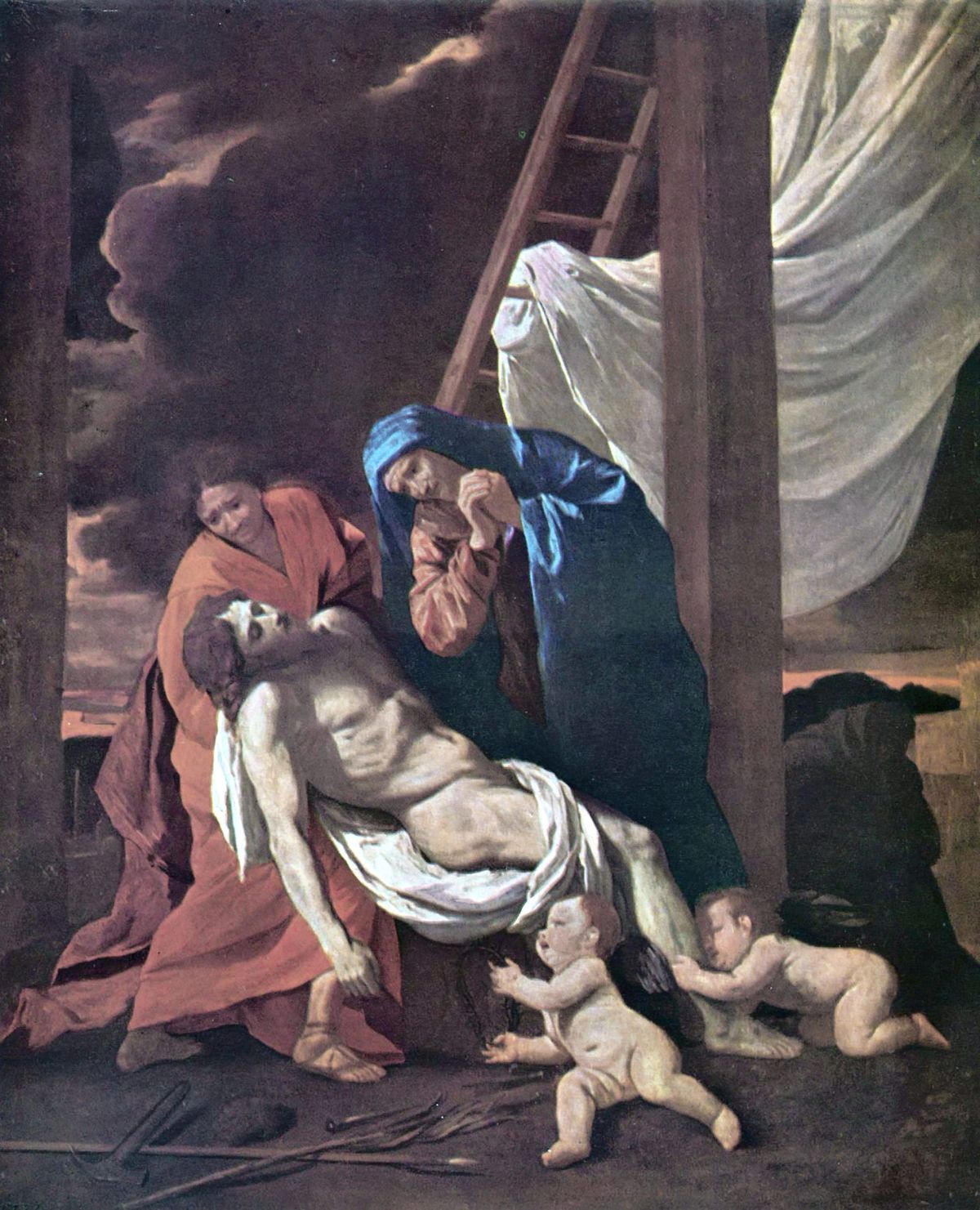
17세기 프랑스 고전주의 회화의 시조이자 서양 미술사 불멸의 거장 니콜라 푸생(Nicolas Poussin, 1594–1665)이 1630년경 로마 체류 초기에 완성한 기념비적 수난 유화 십자가에서 내려진 그리스도(The Descent from the Cross, 또는 Deposition, 프랑스어: Descente de croix, 소장품 번호: D 1957.1.1)는 119.5 cm × 99.0 cm 크기의 세로형 캔버스에 유채로 그린 대표적인 신약성경 제단화 최고 걸작입니다.
현재 러시아 상트페테르부르크의 예르미타시 미술관(Hermitage Museum, Saint Petersburg)에 소장되어 있습니다.
로마 초기 극심한 빈곤과 카라바조의 명암법을 넘어선 화가의 고뇌
1624년 서른 살의 나이에 로마에 도착한 푸생은, 든든한 후원자 없이 낯선 타향에서 극심한 생활고와 매독 등의 치명적인 질병을 앓으며 생사의 갈림길을 넘나들어야 했습니다.
당시 로마 화단은 카라바조의 강렬한 명암 대비와 극적인 감정 표출이 지배하고 있었습니다. 푸생은 이러한 유행 속에서 방황하면서도, 단순한 시각적 충격을 넘어 고대 그리스 로마의 엄격한 기하학적 균형과 스토아 철학의 숭고한 절제미를 기독교의 가장 비극적인 순간에 결합하고자 치열하게 고뇌했습니다.
화가는 십자가형이 끝난 직후 골고다 언덕에서 예수 그리스도의 시신을 막 내려놓은 가슴 미어지는 순간을 화폭에 담았습니다.
화면 중앙에는 십자가에서 내려진 그리스도의 창백한 나신이 흰 수의 위에 비스듬히 뉘어져 있고, 성모 마리아는 푸른 망토를 두른 채 두 손을 모아 쥐고 말 못 할 깊은 슬픔으로 아들을 응시합니다.
그 뒤에서 붉은 옷을 입은 사도 요한(또는 아리마대 요셉)이 그리스도의 상체를 조심스럽게 받쳐 안고 있으며, 십자가 기둥에 걸쳐진 거대한 사다리와 바람에 흩날리는 흰 천은 십자가형의 긴박했던 흔적을 고스란히 증언합니다.
특히 화면 앞쪽에서 순진무구한 표정으로 피 묻은 가시면류관과 대못을 만지며 엉엉 우는 날개 달린 아기 천사들의 처연한 모습은, 신의 아들이 인간을 위해 짊어진 거룩한 희생의 무게를 보는 이의 가슴에 눈물겹도록 시리게 새겨 넣습니다.
창백한 그리스도의 육신에서 손을 모은 성모와 우는 아기 천사들로, 시선의 심리적 여정
그림을 마주하는 순간 관람객의 무의식적 시선은 화면 중앙 짙은 먹구름의 어둠 속에서 천상의 빛을 받아 백옥처럼 하얗게 빛나는 예수 그리스도의 벗겨진 상체와 축 늘어진 오른팔로 가장 먼저 빨려 들어갑니다.
십자가의 혹독한 수난을 견뎌내고 영원한 침묵에 잠긴 구원자의 창백한 옆얼굴과 평온한 가슴선은 보는 이에게 깊은 시각적 충격과 함께 숨이 멎을 듯한 비장미를 선사합니다.
이어 시선은 그리스도의 상체를 받쳐 든 붉은 겉옷의 주름을 지나, 짙푸른 망토를 머리까지 덮어쓰고 애절하게 두 손을 모아 쥔 성모 마리아의 일그러진 얼굴로 이동합니다.
아들의 차가운 시신을 마주하며 흐르는 눈물을 삼키는 어머니의 거룩한 비통함을 확인하는 순간, 관람객은 가족과 구원자를 잃어버린 인간들의 처절한 슬픔과 상실의 한복판 속으로 온몸이 빨려 들어가게 됩니다.
마지막으로 시선은 화면 오른쪽 위 십자가에 걸쳐진 거대한 사다리와 펄럭이는 수의의 웅장한 곡선을 지나, 화면 아래쪽 흙바닥에서 피 묻은 못과 가시면류관을 쥐고 흐느끼는 아기 천사들의 통통한 발과 저 멀리 황혼이 저물어가는 어두운 하늘에 멈춥니다.
거대한 수직의 나무 십자가와 인물들의 조각 같은 배치가 빚어내는 완벽한 조화를 마주하며, 관람객은 죽음을 초월하는 거룩한 구원의 은총과 젊은 거장 푸생이 건네는 묵직한 영혼의 위로를 가슴 깊이 마주하게 됩니다.
17세기 프랑스 고전주의 수난화의 정점과 조형미, 미술계의 평가
미술계는 예르미타시 미술관의 십자가에서 내려진 그리스도를 푸생이 초기 로마 시절 카라바조풍의 테네브리즘(극적인 명암법)과 티치아노의 색채 감각, 그리고 라파엘로의 완벽한 조형 질서를 최고조로 융합해 낸 대표적인 수난화 걸작으로 평가합니다.
단순한 슬픔의 묘사를 넘어 십자가의 수직선과 그리스도 육신의 대각선이 만들어내는 엄격한 기하학적 안정감을 구축했을 뿐만 아니라, 성모의 푸른 망토와 사도의 붉은 외투, 펄럭이는 흰 천의 촉각적 질감을 극도로 섬세한 명암법으로 완벽하게 구현했기 때문입니다.
인류의 가장 장엄한 구원 서사를 품격 높은 고전주의 시각 언어로 승화시킨 푸생의 이 걸작 화폭은, 오늘날까지도 전 세계 수많은 감상자들에게 깊은 감동과 잊을 수 없는 시각적 전율을 전해주는 불멸의 명작으로 손꼽히고 있습니다.
The Descent from the Cross
Painted around 1630 in Rome by the founder of French classicism and immortal master Nicolas Poussin (1594–1665), The Descent from the Cross (also titled Deposition, French: Descente de croix, Accession No. D 1957.1.1) is a devotional oil on canvas measuring 119.5 cm × 99.0 cm (47.0 in × 39.0 in).
It is preserved in the distinguished permanent collection of the Hermitage Museum in Saint Petersburg, Russia.
Early Roman Destitution, the Challenge of Tenebrism, and Classical Tragic Restraint
Arriving in Rome in 1624 at age thirty, Nicolas Poussin endured crushing poverty, social isolation, and debilitating illness while struggling to establish his artistic reputation.
During this transformative decade, Roman art was dominated by the theatrical chiaroscuro of Caravaggio and the monumental energy of the Counter-Reformation.
Poussin navigated these influences with extraordinary intellectual rigor, seeking to temper dramatic emotionalism with antique sculptural gravity and Stoic restraint to create a sublime devotional statement.
Staged against a turbulent, storm-swept twilight on Golgotha, the composition captures the raw immediacy following the deposition of Christ’s body from the cross.
In the center, the Savior's pale, muscular corpse rests upon a white burial shroud, supported gently from behind by Saint John (or Joseph of Arimathea) cloaked in vibrant terracotta orange.
Beside him, the Virgin Mary, wrapped in an intense lapis lazuli mantle, clasps her hands in silent maternal agony as she gazes upon her dead son.
In the foreground, two weeping putti mourn beside the discarded Crown of Thorns and iron nails, while the monumental wooden ladder and billowing shroud hanging from the cross establish a profound vertical rhythm of sacred sacrifice.
Subconscious Trajectory of the Gaze: From Pallid Savior to the Weeping Putti
The observer's subconscious gaze is immediately magnetized by the central register, drawn to the luminous porcelain flesh and classical modeling of Christ’s reclining torso.
His tilted head, sunken features, and motionless arm descending toward the earth establish an instant focal point of physical mortality, sacred sacrifice, and solemn tragedy.
The visual path then ascends along the terracotta drapery of Saint John to the grief-stricken countenance of the Virgin Mary.
Taking in her clasped hands, bowed posture, and the deep sculptural folds of her dark blue mantle, the viewer directly experiences the profound internal weight of maternal bereavement and stoic Christian faith.
Finally, the visual trajectory sweeps upward across the monumental wooden beams of the cross and the sweeping arc of the suspended shroud, before descending to the weeping putti examining the bloodstained instruments of the Passion in the lower foreground.
Observing the harmonious equilibrium between dramatic tenebristic contrast, sculptural draftsmanship, and spiritual clarity, the spectator perceives the timeless nobility of sacred redemption and the profound aesthetic solace Poussin embedded within the canvas.
The Monument of Early French Classical Devotion: Critical Legacy
Art historians revere the Hermitage Descent from the Cross as a consummate masterpiece of Poussin’s early Roman maturity, illustrating his seamless synthesis of Venetian colorism, Caravaggesque lighting, and Raphael’s architectural discipline.
By orchestrating delicate textural contrasts between sunlit marble flesh, heavy woolen draperies, rough timber beams, and billowing linen shrouds within a unified compositional scheme, Poussin elevated a traditional Passion episode into an exquisite aesthetic treatise on mortality and grace.
This magnificent devotional canvas endures as an inspiring testament to the master's creative fortitude, celebrating the victory of sacred love over death and the transformative grace of living art.
본 컨텐트의 저작권은 팔렛트제주에 있습니다. 허가없는 무단전제를 금지합니다.
Copyright © Palette Jeju. All rights reserved. Unauthorized reproduction or redistribution is strictly prohibited.