십자가에서 내리심(The Descent from the Cross: A Sketch)
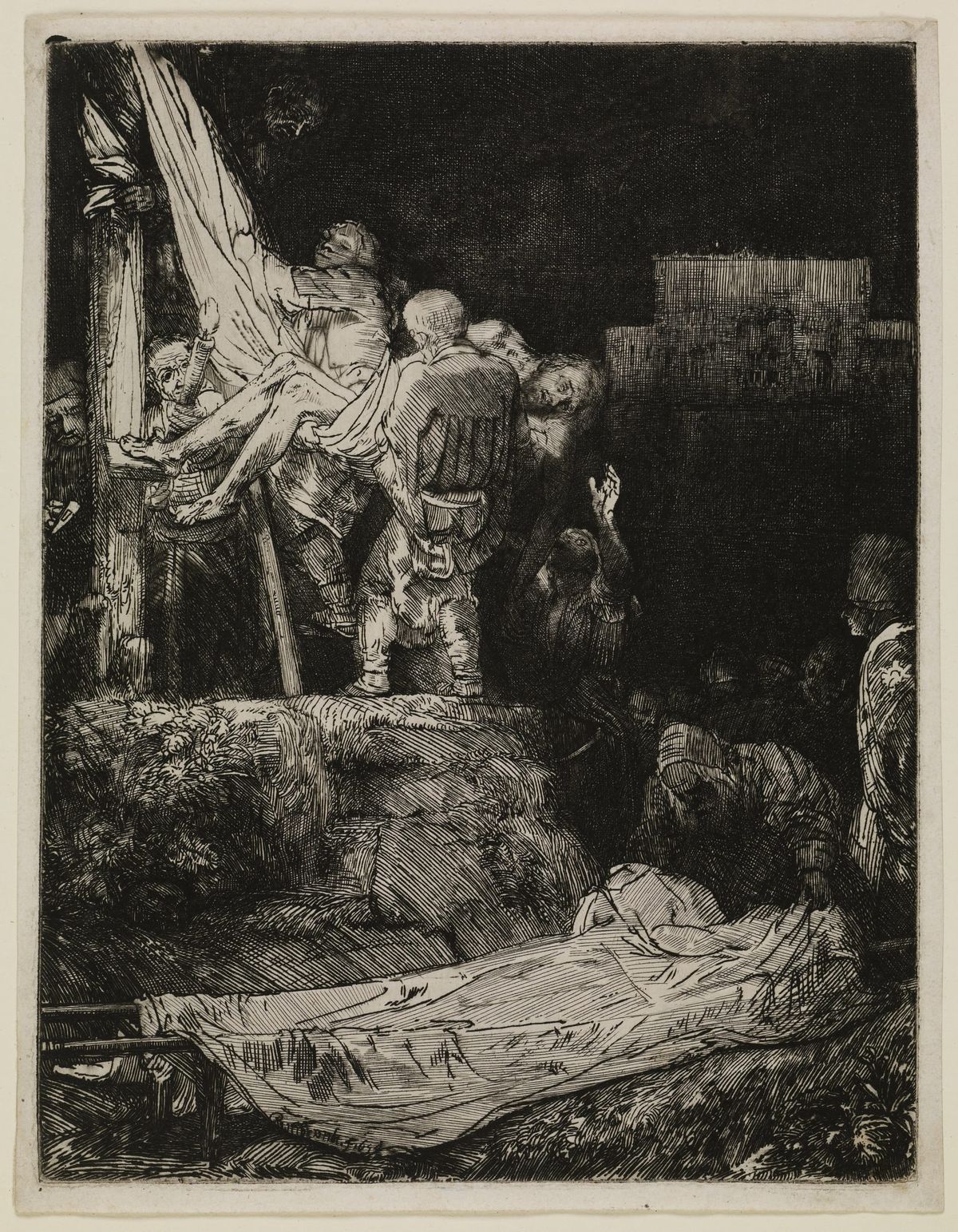
십자가에서 내리심 스케치 - The Descent from the Cross A Sketch
1642년 17세기 네덜란드 미술의 거장 렘브란트 반 레인(Rembrandt van Rijn)이 제작한 판화 작품 《십자가에서 내리심 스케치》는 에칭 기법으로 완성된 종교 역사화로, 현재 암스테르담 국립미술관(Rijksmuseum)과 런던 대영박물관(British Museum) 등에 원본 판화가 소장되어 있으며 실제 크기는 약 14.9 × 11.6 cm입니다.
이 화면은 십자가 처형 이후 예수의 시신을 아래로 수습하는 정숙하고도 비장한 순간을 마치 즉흥 스케치처럼 자유롭고 얇은 동판화 선으로 포착해 낸 수작입니다. 렘브란트는 완성도를 극대화한 정교한 판화들과 달리, 선의 즉흥성과 윤곽의 생동감을 그대로 살려 인물들의 동세와 사건의 역동성을 감각적으로 담아냈습니다.
작품 속에는 렘브란트의 판화 실험 정신이 돋보이는 비하인드 스토리가 존재합니다. 이 작품은 완성된 정식 에칭이라기보다, 구도와 인물의 배치를 즉흥적으로 동판에 그어나간 일종의 에칭 스케치 판본입니다. 사다리에 올라타 예수의 손에서 못을 빼내는 인물, 시신을 받아내기 위해 천을 받쳐 든 사람들의 긴박한 동작은 거친 윤곽선 그대로 노출되어 오히려 현장의 실시간적인 긴장감을 극대화해 줍니다.
후대 평단과 관객들은 이 판화를 렘브란트가 선의 자유로움과 동판화 고유의 표현 한계를 어디까지 확장할 수 있는지를 보여주는 뛰어난 드로잉 판화의 걸작으로 평가합니다. 다듬어지지 않은 얇은 선들의 교차가 만들어내는 거친 에너지와 서정성은 정형화된 고전 미술의 틀을 깨뜨리며 오늘날까지 큰 감동을 전합니다.
이 그림을 마주하는 관람객의 무의식적 시선은 화면 중앙 상단, 높은 십자가에 기운 채 매달려 있는 그리스도의 신체와 왼쪽에서 집게로 못을 빼내고 있는 인물의 손길로 가장 먼저 끌려갑니다. 수직과 수평으로 뻗은 십자가의 구조적 틀은 관람객의 시선에 강력한 시각적 중심점과 긴장감을 제공합니다.
이어 시선은 사다리와 받침 천을 따라 아래로 흐르며, 예수의 시신을 받아들일 준비를 하는 우측 하단의 인물들과 십자가 발치에 엎드려 있는 성모 마리아의 슬픈 포즈로 자연스럽게 이동합니다. 거칠게 그어진 선들 속에서 드러나는 인물들의 묵직한 윤곽은 처형 직후의 허망함 속에서도 따뜻한 인간적 연민과 심리적 안정감을 느끼게 합니다.
마지막으로 시선은 바닥에 놓인 해골과 십자가 발치의 어두운 해칭 선들, 그리고 배경의 맑은 여백으로 떨어져 정착합니다. 이러한 무의식적 시선의 흐름은 죽음과 구원이 교차하는 성서적 사건의 정수를 깊이 생각하게 만들며, 감상자의 마음속에 오랫동안 지워지지 않는 숭고한 정서적 여운을 남깁니다.
In 1642, Rembrandt van Rijn, one of the paramount masters of the Dutch Golden Age, created the expressive etching titled "The Descent from the Cross A Sketch." Preserved in world-renowned collections such as the Rijksmuseum in Amsterdam and the British Museum in London, this original print measures approximately 14.9 × 11.6 cm. This artwork finely captures the solemn, urgent moment of Christ's body being lowered from the cross through a remarkably fluid and sketch-like arrangement of etched lines.
The etching visually manifests the immediate aftermath of the Crucifixion, capturing mourners and attendants carefully maneuvering upon ladders. Historical context highlights Rembrandt's spirit of printmaking experimentation; by leaving contours unrefined and lines light and spontaneous, he imparted an extraordinary sense of immediacy to the scene. The unpolished nature of the copper plate draftsmanship conveys the raw emotional tension of the sacred event.
Art historians and critics continuously extol this sheet as a masterpiece of graphic freedom, celebrating Rembrandt's ability to render dramatic momentum through minimalist yet expressive draftsmanship. The dynamic interplay between rapid line work and open paper space offers a profound reflection on tragedy, devotion, and sacred dignity.
The moment an observer encounters this artwork, their gaze is subconsciously drawn straight to the upper center, where the limp body of Christ rests against the cross as an attendant removes the nails. The bold structural lines of the wooden timber establish an immediate point of dramatic tension and narrative focus.
Next, the eye glides smoothly down the diagonal vectors of the ladders and draped linen to the figures waiting below. The expressive postures of the mourners, including the grief-stricken figure at the base of the cross, soften the initial intensity, instilling a comforting sense of shared human empathy.
Finally, the viewer's gaze drifts toward the skull resting near the foot of the cross before coming to rest upon the expansive paper tone surrounding the scene. This natural visual journey guides the spectator into a state of quiet, reverent reflection, leaving a lasting impression of grace, sacrifice, and timeless peace.
본 리뷰에서 작품을 제외한 컨텐츠의 저작권은 팔렛트제주에 있습니다.
"퍼블릭도메인 고전명화"를 제외한 모든 창작 콘텐츠는 저작권법 제4조 및 제10조에 의거하여 보호됩니다. 무단 도용시 저작권법 제136조(벌칙)에 의거, 당사의 사전 서면 승인 없는 저작권 침해 행위를 금지합니다.