십자가 아래서 혼절하는 어머니의 처절한 통곡, 죽은 그리스도에 대한 애도 Mourning over the Dead Christ
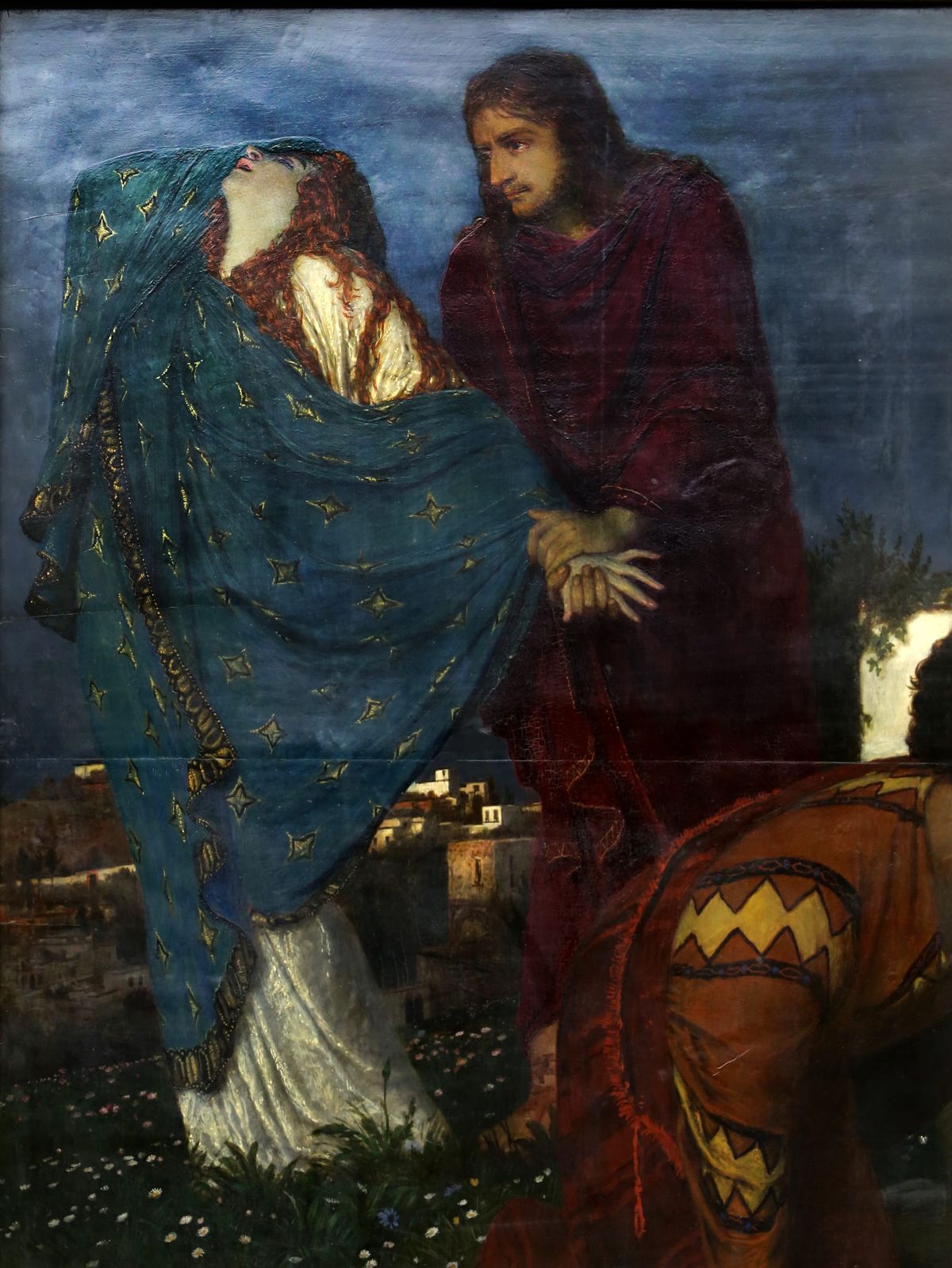
스위스 출신의 상징주의 거장 아놀드 뵈클린(Arnold Böcklin, 1827–1901)이 1876년에 피렌체에서 완성한 유화 죽은 그리스도에 대한 애도(Mourning over the Dead Christ, 독일어: Trauer am Leichnam Christi, 또는 Compianto sul Cristo morto)는 147.0 cm × 110.0 cm 크기의 캔버스에 유채로 그린 대작입니다. 현재 스위스 바젤 미술관(Kunstmuseum Basel)에 소장되어 있습니다.
피렌체 이주와 자식들을 잃은 아비의 찢어지는 가슴
1870년대 중반 뵈클린은 독일 뮌헨을 떠나 이탈리아 피렌체로 거처를 옮겼습니다. 겉으로는 따뜻한 지중해의 풍광을 찾아 떠난 여정이었지만, 화가의 내면은 지독한 가난과 가족의 참혹한 비극으로 산산이 부서져 있었습니다. 뵈클린은 평생 14명의 자녀 중 무려 8명을 어린 나이에 질병과 사고로 먼저 떠나보내는 참척의 고통을 겪었습니다. 피렌체에 정착한 직후에도 사랑하는 아이들의 죽음을 지켜보아야 했던 화가는, 세상을 떠난 아들의 시신 앞에서 넋을 잃고 오열하는 어머니의 슬픔을 성경 속 성모 마리아의 고통에 빗대어 화폭에 쏟아부었습니다.
뵈클린은 화려하고 성스러운 후광이 감도는 전통적인 종교화의 형식을 완전히 거부했습니다. 십자가에서 내려진 예수의 싸늘한 시신 앞에서, 성모 마리아는 금빛 별이 수놓인 청록색 베일을 뒤집어쓴 채 목을 뒤로 젖히고 실신하듯 쓰러지고 있습니다. 제자 사도 요한은 붉은 옷을 입고 비통한 표정으로 쓰러지는 마리아의 차가운 손을 필사적으로 붙잡아 부축하며, 앞쪽의 여인은 시신 위에 엎드려 통곡합니다. 자식을 가슴에 묻어야 했던 화가 자신의 피눈물과 인간적 절망이 고스란히 투영된 이 장면은, 신성한 기적의 이야기가 아니라 살이 찢기는 듯한 인간의 원초적 사별의 아픔을 보여주는 눈물겨운 애가입니다.
뒤로 꺾인 성모의 목선에서 꽉 쥐어 잡은 손끝으로, 시선의 심리적 여정
그림을 마주하는 순간 관람객의 무의식적 시선은 화면 왼쪽 위에서 고통을 이기지 못하고 허공을 향해 뒤로 꺾여버린 성모 마리아의 창백한 얼굴과 반쯤 벌어진 입술로 가장 먼저 빨려 들어갑니다. 별빛 무늬가 새겨진 푸른 베일 아래로 드러난 붉은 머리카락과 넋을 잃은 듯한 그녀의 표정은 보는 이의 가슴을 서늘하게 옥죄어옵니다.
이어 시선은 마리아의 축 늘어진 창백한 손과, 이를 굳은 얼굴로 꽉 붙잡아 지탱하고 있는 사도 요한의 슬픔 어린 눈동자로 이동합니다. 피와 살이 빠져나간 듯 창백하게 굳어버린 여인의 손가락과 자주색 옷을 입은 요한의 비통한 침묵을 확인하는 순간 관람객은 숨 막히는 비극의 현장 한가운데로 빨려 들어갑니다.
마지막으로 시선은 화면 아래쪽 들판에 피어난 작고 하얀 들꽃들과, 엎드려 통곡하는 인물의 기하학적 옷자락을 지나 저 멀리 어둠 속에 잠겨 있는 예루살렘 성벽의 불빛에 멈춥니다. 아무 일도 없었다는 듯 잔잔하게 피어난 봄 들꽃과 그 위로 무너져 내리는 인간의 거대한 슬픔의 대조를 마주하며, 관람객은 삶에서 마주하는 가장 참혹한 상실의 무게와 깊은 연민의 정을 가슴 깊이 체감하게 됩니다.
신성함을 넘어선 인간 실존의 슬픔, 미술계의 평가
미술계는 죽은 그리스도에 대한 애도를 전통적인 종교적 도상을 19세기 상징주의와 표현주의적 비극의 정점으로 승화시킨 걸작으로 평가합니다.
박제된 교리 대신 상처 입은 인간의 날것 그대로의 감정을 과감한 명암 대비와 역동적인 신체 언어로 포착했기 때문입니다. 수많은 자식을 먼저 묻어야 했던 고통을 예술적 숭고함으로 승화시킨 뵈클린의 이 어두운 대작은 오늘날까지도 인류가 겪는 가장 깊은 상실과 슬픔을 어루만져 주는 불멸의 명작으로 손꼽힙니다.
The Agony of the Bereaved Mother, Mourning over the Dead Christ
Painted in 1876 in Florence by the preeminent Swiss Symbolist master Arnold Böcklin (1827–1901), Mourning over the Dead Christ (German: Trauer am Leichnam Christi, also titled Compianto sul Cristo morto) is an oil on canvas measuring 147.0 cm × 110.0 cm (57.9 in × 43.3 in), preserved in the permanent collection of the Kunstmuseum Basel in Switzerland.
Florentine Transition and the Agony of Parental Bereavement
In the mid-1870s, Arnold Böcklin left Munich to establish his studio in Florence. While the move offered respite in the gentle Mediterranean climate, the artist's soul was scarred by persistent poverty and overwhelming domestic tragedies. Over his lifetime, Böcklin was forced to bury eight of his fourteen children due to fatal infant illnesses. Immersed in fresh mourning following another familial loss in Italy, the painter channeled his raw paternal anguish into the biblical lamentation, finding a profound parallel in the inconsolable grief of the Virgin Mary weeping over the corpse of her son.
Rejecting conventional academic sentimentality and detached theological dogmatism, Böcklin reimagined the scene as an unvarnished human trauma. Before the unseen body of Christ, Mary collapses backward in total psychological rupture, her pale neck arched under a starry turquoise mantle. Saint John, wrapped in heavy crimson drapery, steps forward with an agonized countenance to catch her limp, bloodless hand, while Mary Magdalene weeps over the feet of the deceased. By stripping the figures of radiant halos, Böcklin transformed the holy mourning into an existential outcry of parental bereavement, giving monumental form to the devastating wound of mortal loss.
Subconscious Trajectory of the Gaze: From Arched Throat to Clasping Hands
The observer's subconscious gaze is instantly captured by the illuminated contour of Mary's neck arching back in sheer emotional exhaustion against the darkened sky. Her parted lips, closed eyes, and the vibrant red curls spilling beneath the gold-starred veil deliver an immediate shock of unmediated grief.
The trajectory of sight then descends along the heavy folds of the blue mantle to Mary’s lifeless, skeletal fingers, caught securely in the calloused hands of Saint John. Confronted with the contrast between her marble pallor and John’s grim, heavy-lidded sorrow, the viewer is drawn into the suffocating emotional reality of the tragic vigil.
Finally, the visual movement drifts downward across the carpet of delicate white wildflowers dotting the dark grass, sweeps past the angular patterns on the mourner kneeling in the foreground, and retreats toward the distant, shadowy battlements of Jerusalem on the horizon. Observing the quiet indifference of the blooming meadows juxtaposed with the catastrophic collapse of a mother’s world, the spectator experiences a profound resonance with the universal vulnerability of the human heart before untimely death.
The Pinnacle of Psychological Tragedy: Critical Legacy
Art historians revere Mourning over the Dead Christ as one of Böcklin’s most uncompromising achievements, synthesizing sacred narrative with modern psychological expressionism.
By prioritizing physiological authenticity, saturated tonal contrasts, and expressive anatomical distortion over polite academic decorum, Böcklin anticipated the emotionally charged modern religious works of early 20th-century masters. This monumental canvas endures as a timeless monument to human sorrow and the transformative power of art to articulate the deepest chambers of grief.
본 컨텐트의 저작권은 팔렛트제주에 있습니다. 허가없는 무단전제를 금지합니다.
Copyright © Palette Jeju. All rights reserved. Unauthorized reproduction or redistribution is strictly prohibited.