스키피오의 절제 La Continence de Scipion
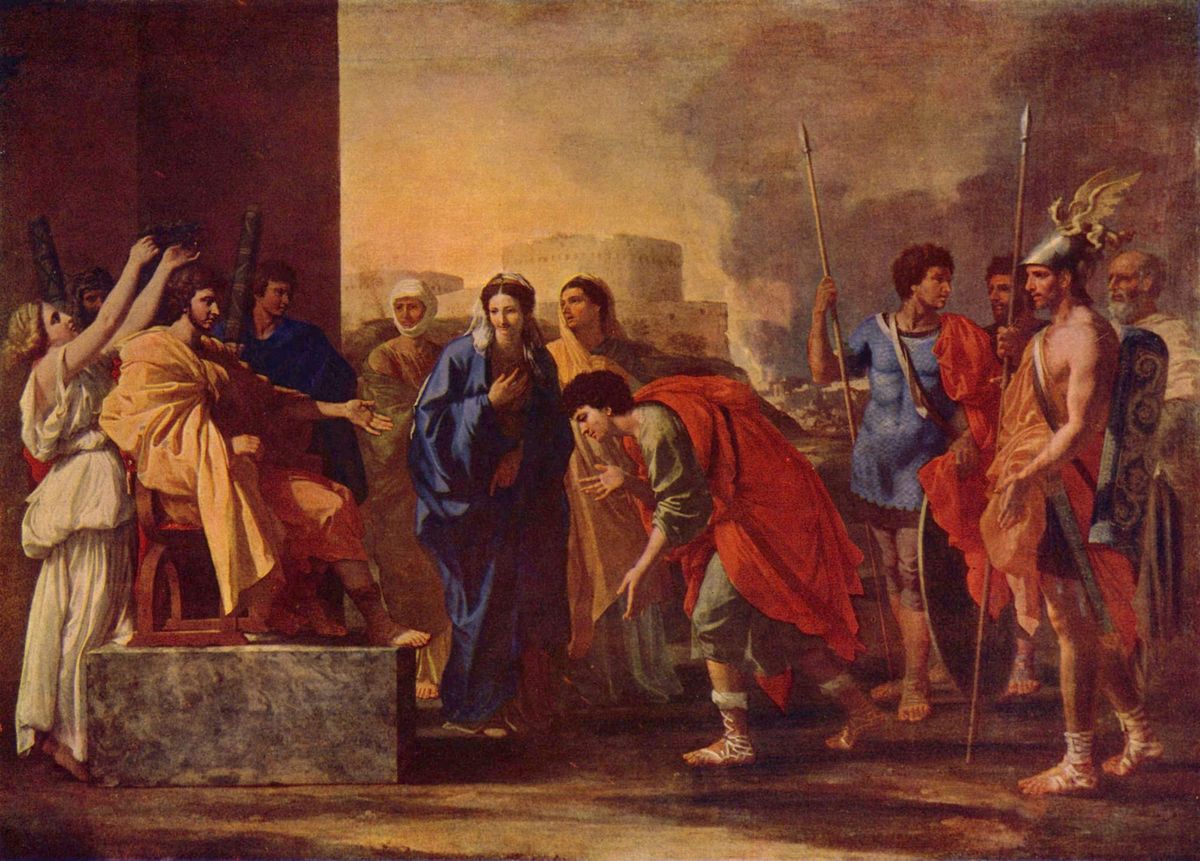
17세기 프랑스 고전주의 회화의 거장 니콜라 푸생(Nicolas Poussin, 1594–1665)이 1640년에 완성한 기념비적 고대 로마 역사화 유화 스키피오의 절제(The Continence of Scipio, 프랑스어: La Continence de Scipion, 러시아어: Великодушие Сципиона, 소장품 번호: ГЭ-1153)는 114.5 cm × 163.5 cm 크기의 캔버스에 유채로 그린 대표적인 도덕적 영웅 서사화 최고 걸작입니다.
현재 러시아 상트페테르부르크의 예르미타시 미술관(Hermitage Museum, Saint Petersburg)에 소장되어 있습니다.
리슐리외 추기경의 관용과 고대 로마의 도덕적 절제를 향한 화가의 고뇌
1640년경 파리의 루이 13세 국왕과 실권자 리슐리외 추기경으로부터 수석 궁정 화가로 공식 초빙을 앞두고 있던 푸생은, 세속적 권력자들에게 진정한 통치자의 덕목이 무엇인지 일깨워주기 위해 고대 로마의 숭고한 역사 일화를 화폭에 담기로 결심했습니다.
로마에서 티투스 리비우스의 로마사와 폴리비오스의 역사서를 깊이 연구하던 화가는, 기원전 3세기 제2차 포에니 전쟁 당시 카르타고 노바(신 카르타고)를 함락시킨 로마의 명장 대 스키피오 아프리카누스(Scipio Africanus)의 거룩한 도덕적 일화에 주목했습니다.
전쟁에서 대승을 거둔 젊은 장군 스키피오는 부하들로부터 빼어난 미모를 지닌 켈트이베리아 귀족 처녀를 전리품으로 바쳐 받았습니다. 당시 전쟁의 관습대로라면 그녀를 첩으로 삼거나 노예로 팔아넘길 수 있었지만, 스키피오는 그녀에게 알루키우스라는 정혼자 약혼남이 있다는 사실을 알게 되었습니다.
스키피오는 그녀의 정절을 지켜주었을 뿐만 아니라, 약혼남을 진영으로 불러 그녀를 아무런 대가 없이 온전히 돌려보내 주었습니다. 심지어 그녀의 부모가 딸의 몸값으로 가져온 막대한 양의 황금 보물을 두 사람의 결혼 지참금으로 흔쾌히 보태주며 적국의 마음까지 감복시켰습니다.
푸생은 이 고결한 일화를 통해 물리적인 정복보다 자신의 욕망을 다스리는 도덕적 절제가 진정한 승리라는 스토아 철학의 이상을 화면 가득 구현하고자 깊이 고뇌했습니다.
옥좌에 앉은 스키피오의 자애로운 손짓에서 감격하는 연인들과 월계관으로, 시선의 심리적 여정
그림을 마주하는 순간 관람객의 무의식적 시선은 화면 왼쪽 높은 석조 기단 위 옥좌에 앉아 황금빛 외투를 두르고 오른손을 관대하게 내밀고 있는 로마 장군 스키피오의 온화하고 위엄찬 옆얼굴로 가장 먼저 빨려 들어갑니다.
권력과 정복욕을 내려놓고 자비를 베푸는 젊은 영웅의 고결한 표정과 부드러운 손짓은 보는 이에게 깊은 시각적 감동과 함께 도덕적 지도자가 지녀야 할 성숙한 품격을 선사합니다.
이어 시선은 스키피오의 내민 손끝을 따라 화면 중앙으로 이동하여, 푸른 겉옷을 걸치고 가슴에 조용히 손을 얹은 채 수줍은 감사함을 표하는 신부와, 붉은 망토를 두르고 허리를 깊이 굽혀 경의를 표하는 약혼남 알루키우스의 벅찬 몸짓으로 옮겨갑니다.
포로였던 연인을 기적처럼 되돌려받고 감격에 겨워 허리를 숙이는 청년의 진솔한 동작을 확인하는 순간, 관람객은 원수조차 친구로 만들어버리는 거룩한 관용과 사랑의 감동적인 한복판 속으로 온몸이 빨려 들어가게 됩니다.
마지막으로 시선은 스키피오의 머리 위에 승리와 영광의 상징인 월계관을 씌워주는 흰 옷의 승리의 여신을 지나, 화면 오른편에 창과 방패를 들고 질서정연하게 서 있는 로마 군단병들과 연기 피어오르는 카르타고 성벽 너머의 노을빛 하늘에 멈춥니다.
절제된 건축적 구도와 원색의 의복들이 빚어내는 완벽한 고전적 조화를 마주하며, 관람객은 무력의 지배를 뛰어넘는 정신적 승리의 위대한 가치와 푸생이 건네는 묵직한 지적 위로를 가슴 깊이 마주하게 됩니다.
17세기 프랑스 고전주의 역사 교화화의 정점과 조형미, 미술계의 평가
미술계는 예르미타시 미술관의 스키피오의 절제를 푸생이 완성한 도덕적 역사 서사화 중에서도 가장 완벽한 인물 군상 배치와 기하학적 건축 원근법을 성취한 대표작으로 평가합니다.
연극 무대처럼 정교하게 구획된 공간 속에서 로마 장군의 황금빛 옷, 신부의 깊은 파란색, 약혼남의 강렬한 붉은색 의상을 삼원색의 조화로운 리듬으로 배치했을 뿐만 아니라, 투구와 갑옷의 번뜩임, 대리석 기단의 입체감을 극도로 섬세한 고전주의 명암법으로 완벽하게 구현했기 때문입니다.
고대 로마의 스토아 철학적 미덕을 가장 품격 높은 시각 교향곡으로 승화시킨 푸생의 이 걸작 화폭은, 오늘날까지도 전 세계 수많은 감상자들에게 깊은 감탄과 잊을 수 없는 시각적 전율을 전해주는 불멸의 명작으로 손꼽히고 있습니다.
The Continence of Scipio
Painted in 1640 by the founder of French classicism and immortal master Nicolas Poussin (1594–1665), The Continence of Scipio (French: La Continence de Scipion, Russian: Великодушие Сципиона, Inventory No. ГЭ-1153) is a monumental historical oil on canvas measuring 114.5 cm × 163.5 cm (45.1 in × 64.4 in).
It is preserved in the distinguished permanent collection of the Hermitage Museum in Saint Petersburg, Russia.
Cardinal Richelieu's Virtue, Livy's History, and the Stoic Mastery of Desire
On the eve of his historic summons to Paris to serve as First Painter to King Louis XIII and Cardinal Richelieu in 1640, Nicolas Poussin contemplated how to translate the highest ideals of statesmanship and moral fortitude into classical history painting.
Drawing from the ancient Roman histories of Livy and Polybius, the master chose the legendary episode of Publius Cornelius Scipio Africanus following the conquest of Carthago Nova (New Carthage) during the Second Punic War in 209 BC.
Presented with an exceptionally beautiful Celtiberian captive princess as a prize of war, the young Roman general chose neither to claim her as a concubine nor to demand ransom.
Learning of her prior betrothal to Allucius, a noble Celtiberian chieftain, Scipio summoned the fiancé to his headquarters, restored the maiden untouched to his embrace, and presented the hefty gold ransom offered by her parents as a personal wedding gift from Rome.
Through this noble narrative, Poussin visually demonstrated the core Stoic philosophy that true sovereign grandeur lies not in territorial conquest, but in the heroic triumph of reason and continence over selfish human desire.
Subconscious Trajectory of the Gaze: From Magnanimous Dictator to the Grateful Lovers
The observer's subconscious gaze is immediately magnetized by the left register, drawn to the elevated figure of General Scipio seated upon a stone tribunal clad in radiant golden-ochre drapery.
His dignified profile, authoritative poise, and outstretched right arm extended in benevolent release establish an instant focal point of sovereign magnanimity, moral governance, and civic virtue.
The visual path then follows the diagonal direction of Scipio’s gesture toward the central register, arriving at the modest, statuesque figure of the bride draped in rich ultramarine and her betrothed, Allucius, bowing low in sweeping vermilion robes.
Taking in the maiden's hand resting gratefully upon her chest and the heartfelt, reverent posture of the young prince, the viewer directly experiences the profound emotional climax of unexpected mercy and restored honor.
Finally, the visual trajectory ascends to the white-robed winged figure of Victory crowning Scipio with a laurel wreath, before sweeping past the armored Roman legionaries standing with spears on the right toward the smoking ramparts of Carthago Nova silhouetted against the evening sky.
Observing the harmonious equilibrium between frieze-like relief staging, balanced primary colors, and Stoic clarity, the spectator perceives the timeless nobility of self-mastery and the profound aesthetic solace Poussin embedded within the monumental canvas.
The Monument of French Classical History Painting: Critical Legacy
Art historians revere the Hermitage Continence of Scipio as a supreme pinnacle of Poussin’s mature historical style, illustrating his total mastery of grand narrative orchestration, archaeological accuracy, and classical stoicism.
By orchestrating delicate textural contrasts between polished bronze armor, radiant vermilion silk, sunlit flesh, and weathered stone within a unified architectural scheme, Poussin elevated an antique historical anecdote into an exquisite philosophical treatise on honorable leadership.
This grand historical canvas endures as an inspiring testament to the master's creative fortitude, celebrating the triumph of moral integrity and the transformative grace of living art.
본 컨텐트의 저작권은 팔렛트제주에 있습니다. 허가없는 무단전제를 금지합니다.
Copyright © Palette Jeju. All rights reserved. Unauthorized reproduction or redistribution is strictly prohibited.