스헤베닝겐의 바다 풍경 - View of the Sea at Scheveningen
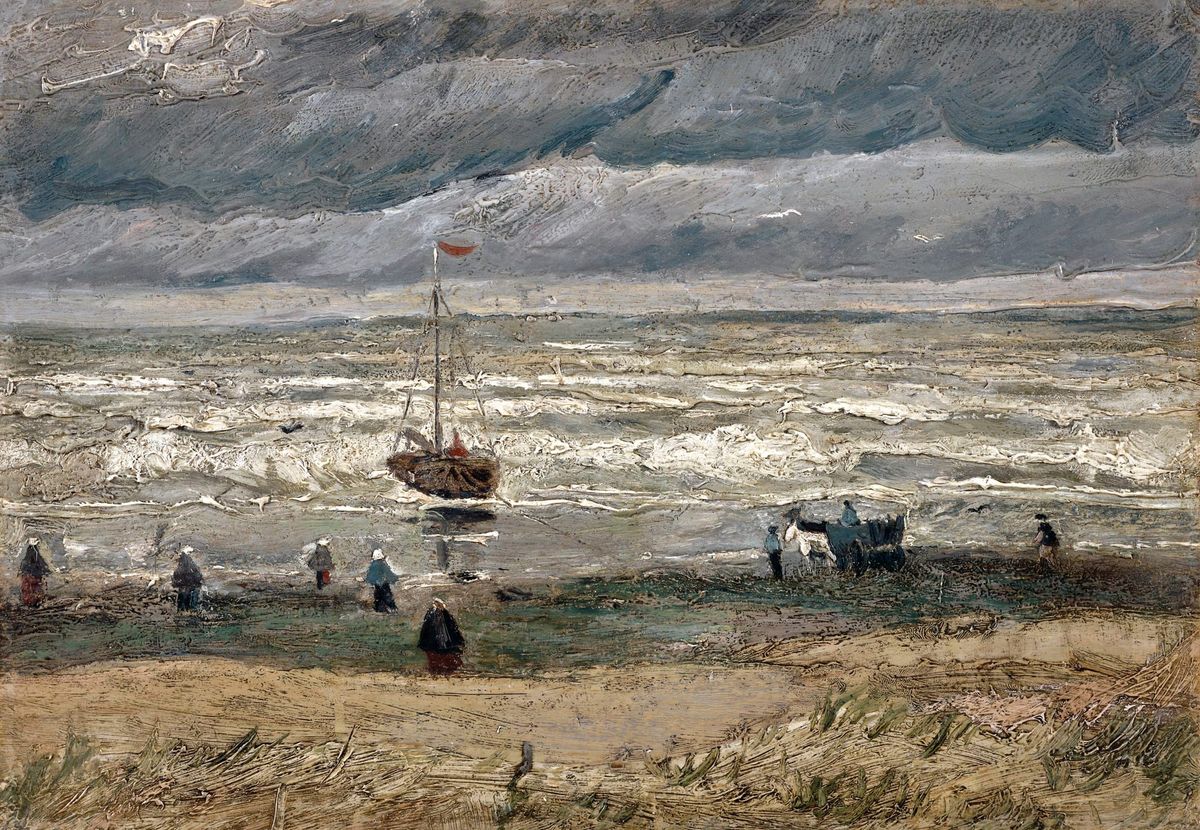
빈센트 반 고흐(Vincent van Gogh, 1853–1890)가 화가로서의 길을 걷기 시작한 초기 시절인 1882년 8월 말 네덜란드 헤이그 근교 스헤베닝겐(Scheveningen) 해변에서 완성한 '스헤베닝겐의 바다 풍경(View of the Sea at Scheveningen)'은 캔버스에 유채(Oil on canvas)로 제작된 해경화입니다. 작품의 실제 규격은 세로 34.5cm, 가로 51.0cm이며, 현재 네덜란드 암스테르담의 반 고흐 미술관(Van Gogh Museum)에 영구 소장되어 있습니다.
고흐는 이 작품에서 먹구름이 낮게 깔린 북해의 음울하고 거친 기후를 묵직한 회색조와 암갈색, 짙은 바다 녹색의 톤으로 포착했습니다. 사납게 포말을 일으키며 밀려오는 파도는 팔레트 나이프와 두터운 붓으로 물감을 짓이기듯 발라 올리는 거친 임파스토(Impasto) 기법으로 조각하듯 질감화했으며, 하늘의 휘몰아치는 먹구름 층과 백사장의 모래 언덕은 거칠고 빠른 붓놀림을 통해 폭풍우 직전의 팽팽한 대기압을 화면 위에 생생하게 구현했습니다.
이 그림에는 화가 지망생 고흐의 무모할 정도로 뜨거웠던 현장 사생 열정과 훗날 21세기 전 세계를 발칵 뒤집어놓은 미술품 도난 사건이라는 기막힌 비하인드 스토리가 얽혀 있습니다. 1882년 8월, 유화 물감을 다루기 시작한 지 불과 몇 주밖에 되지 않았던 고흐는 북해의 폭풍우 소식을 듣고 비바람이 몰아치는 스헤베닝겐 해안가로 무작정 달려나갔습니다.
거센 돌풍에 이젤이 쓰러지지 않도록 온몸으로 누른 채 캔버스에 물감을 바르던 고흐는, 바람에 날려 온 모래알들이 젖은 유화 물감 위로 사정없이 박히는 고초를 겪었습니다. 그는 동생 테오에게 보낸 편지에서 "바람이 너무 심해 간신히 발을 디디고 서 있었다. 거친 파도와 하늘을 그리느라 모래를 한 움큼이나 삼켰고, 캔버스 위에 모래가 잔뜩 박혀버려 집에 돌아와 물감이 마르기 전에 모래알을 긁어내느라 붓을 두 개나 망가뜨렸다"며 치열했던 당시의 사투를 생생하게 털어놓았습니다. 실제로 오늘날 반 고흐 미술관의 정밀 분석 결과, 이 그림의 물감 표면 층위에는 1882년 여름 스헤베닝겐 해변에서 날아든 실제 북해의 모래알갱이들이 고스란히 박힌 채 굳어 있는 것이 확인되었습니다.
이 작품은 21세기 현대 미술사에서 가장 드라마틱한 범죄 실화의 주인공이 되기도 했습니다. 2002년 12월 7일 밤, 암스테르담 반 고흐 미술관 지붕에 사다리를 놓고 창문을 깨고 침입한 전문 절도범들에 의해 '뉘넌 교회를 떠나는 신도들'과 함께 이 그림이 도난당했습니다. 네덜란드 경찰과 인터폴의 끈질긴 추적에도 14년간 행방이 묘연했던 이 불멸의 명작은, 2016년 9월 이탈리아 나폴리 인근 카스텔람마레 디 스타비아에 위치한 마피아 조직 '카모라(Camorra)' 두목의 은신처 비밀 금고 안에서 벽돌 사이에 천으로 둘러싸인 채 기적적으로 발견되었습니다. 14년 만에 고국으로 돌아와 보존 처리를 거친 이 작품은 이제 전 세계 관람객들에게 고흐의 꺾이지 않는 예술혼과 불멸의 생명력을 증명하는 전설적인 상징이 되었습니다.
후대의 미술사학자들과 평단은 이 작품을 반 고흐가 헤이그 화파(Hague School)의 회색빛 전통을 흡수하면서도, 이미 훗날 폭발할 독창적인 질감과 감정의 에너지를 뿜어내기 시작한 초기 유화의 기념비적인 출발점으로 평가합니다. 거친 파도 속에서도 묵묵히 어선을 끌어올리고 해변을 지키는 어부와 여인들의 실루엣을 통해, 고흐는 자연의 거대한 위력 앞에서도 굴하지 않는 인간의 노동과 숭고한 삶의 진실을 깊이 있게 웅변하고 있습니다.
관람자의 시선은 가장 먼저 화면 중앙에서 거친 흰 파도를 뚫고 백사장으로 다가오는 작은 돛단배의 붉은 깃발과 검은 선체에 머뭅니다. 이어 해안선 부근에서 마차를 몰며 배를 맞이하는 어부들과 흰 모자를 쓴 어촌 여인들의 옹기종기 모인 실루엣으로 이동한 뒤, 캔버스 좌우로 끝없이 펼쳐지는 사나운 북해의 하얀 포말 층을 따라 시선이 확장됩니다. 마지막으로 화면 상단을 묵직하게 짓누르며 소용돌이치는 짙은 먹구름의 어두운 결을 따라 화면 전체로 유려하게 순환하게 됩니다.
심리적으로 관람자는 거칠게 몰아치는 폭풍우와 파도의 긴장감 속에서도 대지에 발을 딛고 선 사람들의 묵묵한 일상에서 깊은 정서적 안정감과 숭고한 생명력을 경험하게 됩니다. 북해의 세찬 바람과 파도를 온몸으로 뚫고 나아가는 풍경의 원초적 에너지는 현대인의 마음에 쌓인 답답한 스트레스와 무기력함을 시원하게 씻어내며, 거친 비바람 속에서도 결코 흔들리지 않는 내면의 단단한 용기와 회복의 힘을 풍성하게 채워줍니다.
View of the Sea at Scheveningen
Painted by Vincent van Gogh (1853–1890) in late August 1882 on the coast near The Hague, View of the Sea at Scheveningen is an iconic oil on canvas seascape measuring 34.5 cm in height and 51.0 cm in width. This historic masterwork is permanently preserved in the renowned collection of the Van Gogh Museum in Amsterdam, Netherlands.
Van Gogh captured the turbulent, overcast atmosphere of the North Sea through a dramatic palette of storm grays, deep umbers, and oceanic greens. The churning surf is sculpted with heavy, expressive impasto using bold brushwork and palette knives, while the sweeping storm clouds and windswept dunes are rendered with rapid, tactile strokes that register the intense barometric pressure immediately preceding a coastal squall.
The canvas holds an extraordinary history of relentless physical grit alongside one of the most famous art heist sagas of the twenty-first century. In August 1882, having picked up oil paints only a few weeks prior, Van Gogh heard of an approaching tempest and rushed directly onto the shores of Scheveningen to paint en plein air.
Battling fierce squalls that threatened to overturn his easel, Van Gogh worked directly amidst flying coastal sand. In a letter to his brother Theo, he wrote: "The wind blew so hard that I could barely stay on my feet... The sea was wildly turbulent, and I had to wipe sand off the canvas twice while painting." Modern scientific analysis conducted by the Van Gogh Museum confirmed that genuine grains of sand blown from the Scheveningen beach in 1882 remain permanently embedded within the deep paint layers to this day.
In modern times, the painting became the centerpiece of an international criminal mystery. On the night of December 7, 2002, thieves broke into the Van Gogh Museum via a ladder on the roof and escaped with this canvas and Congregation Leaving the Reformed Church in Nuenen. After remaining missing for fourteen years, the masterpiece was dramatically recovered in September 2016 by Italian police inside a concealed safe belonging to an international drug lord associated with the Camorra mafia near Naples, wrapped carefully in cloth behind a bathroom wall.
Art historians and scholars celebrate this painting as a pivotal milestone marking Van Gogh’s earliest mastery of oil pigments. By synthesizing the somber tonalism of the Hague School with his own visceral emotional velocity, Van Gogh transformed a stormy coastline into a profound visual hymn honoring the quiet endurance of coastal fishing communities and the majestic power of nature.
A viewer’s gaze instinctively settles upon the small fishing boat with its reddish pennant braving the white-crested waves near the shore. The eyes then follow the shoreline to trace the figures of local women in traditional white bonnets and the fishermen with their draft horses, before expanding across the wide, churning currents of the North Sea foam. Finally, the gaze ascends into the dark, rolling mass of tempest clouds dominating the upper canvas, circulating effortlessly through the dramatic composition.
Psychologically, the juxtaposition of the tempestuous sea with the steadfast presence of human laborers induces an immediate sense of grounded fortitude and cathartic release. Confronting the raw elemental power of the windswept ocean dissolves internal stagnation and mental fatigue, invigorating the observer with enduring courage, emotional resilience, and a profound appreciation for life's unyielding strength.
본 리뷰에서 작품을 제외한 컨텐츠의 저작권은 팔렛트제주에 있습니다.
"퍼블릭도메인 고전명화"를 제외한 모든 창작 콘텐츠는 저작권법 제4조 및 제10조에 의거하여 보호됩니다. 무단 도용시 저작권법 제136조(벌칙)에 의거, 당사의 사전 서면 승인 없는 저작권 침해 행위를 금지합니다.