선한 사마리아인이 있는 풍경 -Landscape with the Good Samaritan
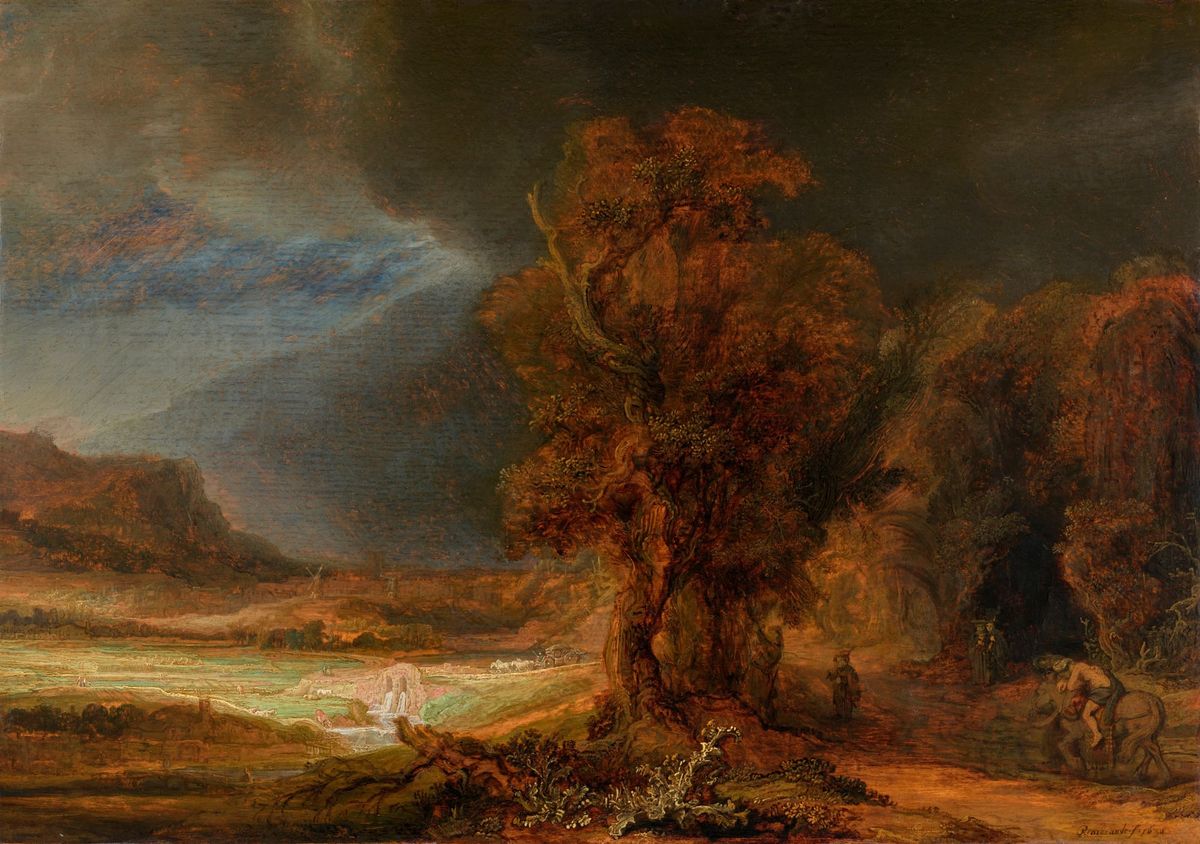
1638년 17세기 네덜란드 황금기를 대표하는 거장 렘브란트 반 레인(Rembrandt van Rijn)이 제작한 유화 작품 《선한 사마리아인이 있는 풍경》은 패널에 유채로 그려진 종교 풍경화로, 현재 폴란드 크라쿠프 차르토리스키 미술관(Czartoryski Museum)에 소장되어 있으며 실제 크기는 약 46.5 × 66 cm입니다.
이 화면은 신약성경 루카복음 10장에 나오는 '선한 사마리아인'의 비유를 대자연의 장엄함 속에 녹여낸 수작입니다. 렘브란트는 강도를 맞아 쓰러진 이웃을 노새에 태우고 길을 떠나는 사마리아인의 모습을 화면 우측 하단 어둠 속에 조용히 배치하고, 그 위로 거대하게 솟구친 고목과 먹구름, 그리고 어둠을 가르고 화면 좌측 들판으로 쏟아지는 초자연적인 한 줄기 빛을 극적인 키아로스쿠로(명암대비법)로 연출해 냈습니다.
작품 속에는 렘브란트가 남긴 극히 희귀한 유화 풍경화이자, 신성한 서사와 대자연의 역동성을 조화시킨 비하인드 스토리가 흐릅니다. 렘브란트는 단순한 자연 사경에 그치지 않고 대기의 진동과 폭풍우가 몰아치는 하늘의 기학학을 캔버스 위에 담아냈습니다. 배경 멀리 보이는 풍차와 다리, 마차 등의 세부 요소는 당대 네덜란드의 일상적 풍경을 반영하는 동시에, 빛을 향해 열려 있는 좌측 대지와 짙은 음영에 싸인 우측 숲길의 대조를 통해 자비와 구원이라는 성서적 주제의 깊이를 한층 높여줍니다.
후대 평단과 관객들은 이 작품을 바로크 풍경화 예술이 도달한 연극적 스펙터클과 극적 명암법의 정수로 평가합니다. 대지를 지배하는 장엄한 고목의 붉은빛 잎사귀들과 하늘을 가르는 따스한 빛의 광채는 관객에게 시대를 초월한 서정적 감동과 숭고한 안식의 느낌을 선물합니다.
이 그림을 마주하는 관람객의 무의식적 시선은 화면 중앙, 웅장하게 뿌리를 내리고 붉고 황금빛 잎사귀를 피워낸 거대한 고목의 줄기와 윤곽으로 가장 먼저 끌려갑니다. 화면 전체를 받치는 고목의 압도적인 존재감은 관람객의 마음에 묵직한 시각적 중심과 정숙한 평온함을 안겨줍니다.
이어 시선은 고목 뒤편 우측 하단의 어두운 흙길로 내려가, 강도당한 부상자를 노새에 싣고 조심스럽게 걸어가는 선한 사마리아인의 정성 어린 포즈와, 화면 좌측으로 눈부시게 퍼져 나가는 들판의 밝은 반사광으로 자연스럽게 이동합니다. 먹구름 사이로 스며드는 하늘의 빛과 어두운 산길의 대비는 화면 전체에 팽팽한 서사적 긴장감과 차분한 온기를 더해줍니다.
마지막으로 시선은 화면 상단을 묵직하게 덮고 있는 먹구름의 어두운 음영과, 우측 하단에 조용히 새겨진 작가의 서명(Rembrandt f. 1638) 속으로 낙하하여 정착합니다. 이러한 무의식적 시선의 흐름은 대자연과 인간의 자비가 만나는 고요한 내면의 안식처로 감상자를 자연스럽게 인도하며, 마음에 닿는 차분하고 정갈한 여운을 오래도록 남깁니다.
In 1638, Rembrandt van Rijn, one of the paramount masters of the Dutch Golden Age, created the dramatic oil painting titled "Landscape with the Good Samaritan." Preserved in the renowned Czartoryski Museum in Kraków, Poland, this original panel measures approximately 46.5 × 66 cm. This artwork finely captures the sacred parable from the Gospel of Luke set within a wild, romantic landscape through an extraordinary application of chiaroscuro.
The painting visually manifests the compassionate Samaritan tending to the wounded traveler, leading his laden donkey along a shadowed forest path, while a sudden shaft of sunlight breaks through thunderous clouds to illuminate the distant plains. Historical context highlights this work as one of only a handful of independent landscape paintings executed by Rembrandt. By integrating biblical narrative into an atmospheric landscape filled with gnarled oaks, windmills, and a distant horse-drawn carriage, Rembrandt elevated nature into an active participant in divine mercy.
Art historians and critics continuously extol this masterwork for its theatrical grandeur and painterly energy, celebrating Rembrandt's ability to balance sweeping atmospheric effects with intimate human drama. The striking contrast between the radiant light bathing the valley on the left and the dense, velvety shadows of the ancient forest on the right creates an enduring atmosphere of quiet sanctuary and emotional permanence.
The moment an observer encounters this artwork, their gaze is subconsciously drawn straight to the towering, amber-leaved oak tree dominating the center of the composition. Its heroic, twisting form immediately diffuses tension, instilling a comforting sense of elemental permanence and quiet awe.
Next, the eye glides smoothly down along the shadowed road in the lower right, tracing the humble figure of the Samaritan guiding his donkey, before sweeping leftward toward the brilliantly illuminated meadow and river valley. The dramatic diagonal thrust of light piercing through the dark storm clouds lends kinetic energy and structural depth to the expanse.
Finally, the viewer's gaze drifts into the deep, turbulent sky above before coming to rest upon Rembrandt's signature and the date 1638 in the lower right corner. This natural visual journey guides the spectator into a state of quiet contemplation, leaving a lasting impression of grace, nature, and timeless peace.
본 리뷰에서 작품을 제외한 컨텐츠의 저작권은 팔렛트제주에 있습니다.
"퍼블릭도메인 고전명화"를 제외한 모든 창작 콘텐츠는 저작권법 제4조 및 제10조에 의거하여 보호됩니다. 무단 도용시 저작권법 제136조(벌칙)에 의거, 당사의 사전 서면 승인 없는 저작권 침해 행위를 금지합니다.