선한 사마리아인 The Good Samaritan
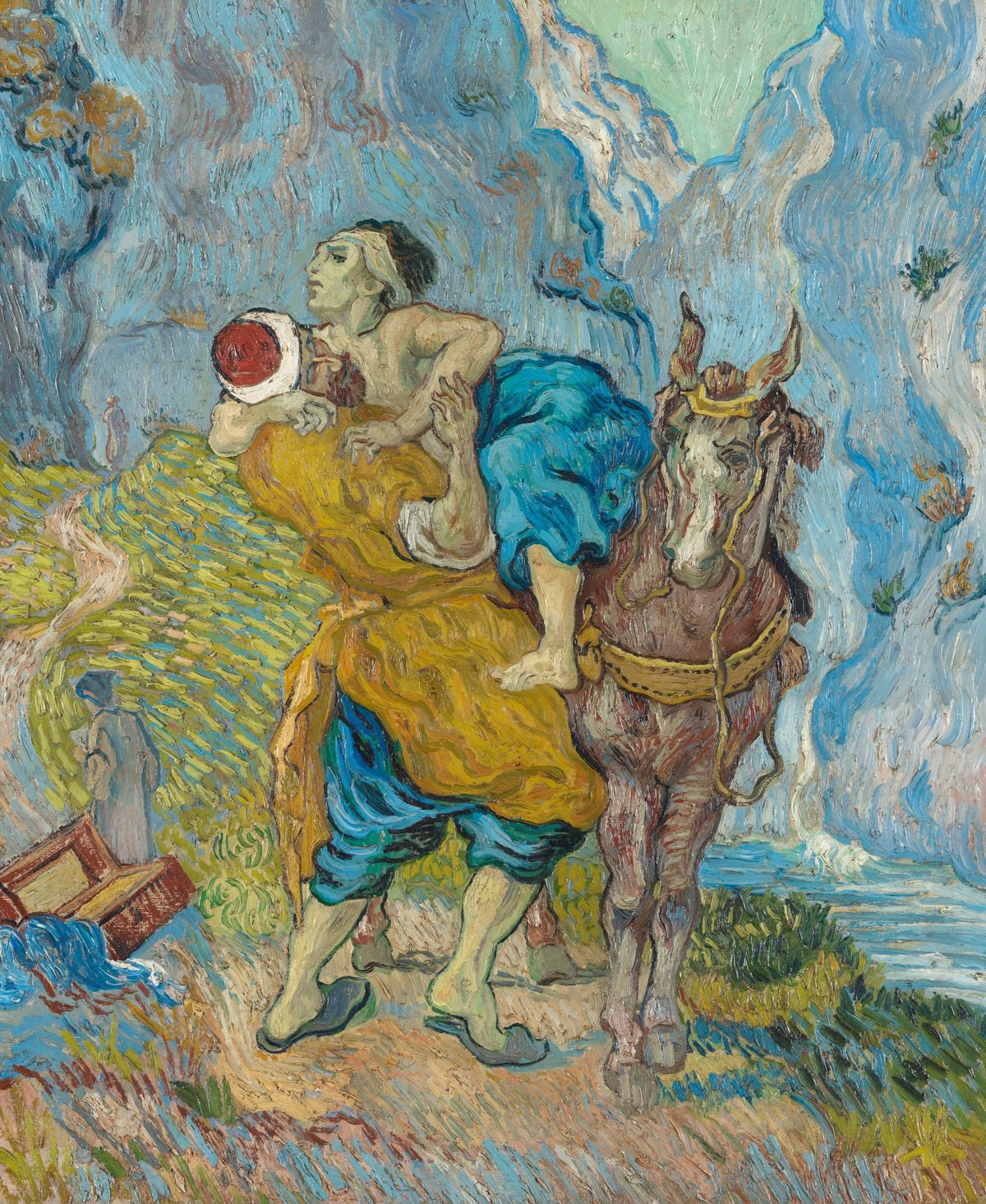
빈센트 반 고흐(Vincent van Gogh, 1853–1890)는 1890년 5월 생레미 드 프로방스의 생폴 드 모솔 요양원에 체류하던 시기에 외젠 들라크루아의 판화를 바탕으로 고통받는 인간을 향한 구원과 자비의 메시지를 자신만의 독창적인 색채와 필치로 재해석하는 모스 릴레이션 작업을 진행했습니다.
이 작품은 1890년 5월 초에 제작된 유채화로, 야콥 바르트 드 라 파이유의 전작 도록 기준 공식 등록번호는 F633이며 실제 작품의 실측 규격은 73.0 × 60.0 cm입니다.
현재 네덜란드 오테를로에 위치한 크롤러 뮐러 미술관에서 소장하고 있습니다.
작가의 고뇌와 비하인드
작품을 제작할 당시 생레미의 차갑고 음울한 요양원 방안에는 발작의 공포와 끝이 보이지 않는 정신적 고통이 짓누르고 있었으며, 외부 세계와 단절된 채 고독 속에서 허덕이던 화가의 마음은 지칠 대로 지쳐 있었습니다.
거친 병마의 습격과 좁은 방이라는 물리적 감금 속에서도 그는 에밀 베르나르가 보내준 들라크루아의 복제품을 바라보며, 상처 입은 이웃을 들어 올려 구원의 손길을 내미는 사마리아인의 모습 속에서 자신이 갈구하던 절대적인 위안과 인간애를 찾고자 눈물을 삼키며 붓을 들었습니다.
화면 전면에는 노란색 외투를 걸친 사마리아인이 부상당한 상 남자의 상체를 힘겹게 감싸 안은 채 말에 태우려 안간힘을 쓰는 역동적인 동작이 거친 붓질로 표현되어 있습니다.
중경에는 갈색 털을 지닌 당나귀가 고개를 숙인 채 의젓하게 서서 부축을 돕는 중심축을 이루고 있으며, 화면 왼쪽 아래에는 여행자의 짐이 담긴 열린 상자와 옷가지들이 널브러져 당시의 긴박한 상황을 전해줍니다.
원경의 배경에는 차갑고 거친 파란색 바위산과 소용돌이치는 대기가 험준한 골짜기의 풍경을 이루며, 인간의 고난을 에워싼 세상의 엄숙한 대기감을 묵직하게 완성합니다.
무의식 속 시선 및 심리 흐름
관람객의 시선은 가장 먼저 화면 중앙에서 부상자를 힘껏 들어 올리는 사마리아인의 선명한 노란색 옷자락과 고통을 참아내는 환자의 허연 얼굴에 닿으며 깊은 긴장감을 느끼게 됩니다.
이어지는 시선은 오른쪽에서 묵묵히 버티고 서 있는 당나귀의 단단한 체구와 갈색 털의 결을 거쳐, 왼쪽 아래의 열린 가방과 바닥의 풍경으로 자연스럽게 이동합니다.
마지막으로 화면을 뒤덮은 거칠고 소용돌이치는 푸른빛 바위산의 웅장한 대기감 속으로 시선이 넓게 퍼져나가며, 절망의 깊은 골짜기에서 피어나는 구원과 헌신의 숭고한 감정적 카타르시스를 체감하게 됩니다.
미술계의 평가와 조형미
미술사학계에서는 이 작품을 두고 고흐가 요양원의 극한 고립 속에서 거장 들라크루아의 구도를 차용하되, 자신만의 타오르는 듯한 보색 대비와 역동적인 붓질을 결합하여 인간 구원의 서사를 영적인 예술로 승화시킨 위대한 역작으로 평가합니다.
화면 전체를 지배하는 강렬한 노란색과 푸른색의 대비는 고통과 구원의 감정적 충돌을 극대화합니다.
눈에 보이는 성경 구절의 재현을 넘어, 화가가 생명의 벼랑 끝에서 마주한 치열한 구원의 열망을 캔버스 위에 뜨거운 영혼의 호흡으로 아로새긴 불후의 명작입니다.
The Good Samaritan
Vincent van Gogh reinterpreted the profound themes of mercy and salvation from Eugène Delacroix's prints, channeling his deep empathy for human suffering through his own visionary brushwork while confined to the asylum at Saint-Rémy-de-Provence in May 1890.
Created in early May 1890, this oil on canvas is cataloged as F633 in J.B. de la Faille's catalogue raisonné and measures 73.0 × 60.0 cm.
The painting is currently housed in the Kröller-Müller Museum in Otterlo, Netherlands.
During the period of its creation, a bleak and suffocating isolation weighed heavily upon the artist within the sterile walls of the asylum, where the haunting terror of recurring mental attacks and profound loneliness pressed relentlessly against his spirit.
Amidst the severe physical confinement and the heavy despair of his illness, he looked to a black-and-white print after Delacroix sent by Émile Bernard, finding deep psychological refuge and a desperate yearning for human compassion in the selfless act of the Good Samaritan lifting a wounded traveler.
The foreground is anchored by the Samaritan in his striking yellow tunic, straining his muscles to hoist the pale, injured man onto the back of a waiting beast of burden with powerful, expressive brushstrokes.
In the middle ground, a sturdy brown donkey stands patiently to support the rescue effort, while an open travel chest and discarded garments rest on the lower left, heightening the narrative tension.
In the distant background, swirling blue cliffs and turbulent rock formations establish a rugged, confined valley that envelops the dramatic scene in a somber, emotional atmosphere.
The viewer's gaze is initially drawn toward the vivid yellow robes of the Samaritan and the pale, suffering face of the wounded traveler at the center of the canvas.
The perspective then follows the sturdy form of the donkey on the right before drifting downward toward the open chest and textured earth in the lower register.
Finally, the eye ascends into the turbulent, swirling blue cliffs at the upper borders, allowing the observer to experience a profound psychological transition from physical struggle to an overwhelming sense of spiritual transcendence.
Art historians regard this canvas as a masterwork of Van Gogh's Saint-Rémy period, where his homage to Delacroix is transformed into an intensely personal vision through bold complementary colors and agitated brushwork.
The striking contrast between the warm yellow garments of the rescuer and the cool, swirling blue background generates an exceptional optical vibration and emotional power.
It stands as an enduring artistic monument that immortalizes the artist's desperate prayer for healing and his unyielding belief in the redemptive power of empathy amidst the depths of personal suffering.
본 컨텐트의 저작권은 팔렛트제주에 있습니다. 허가없는 무단전제를 금지합니다.
Copyright © Palette Jeju. All rights reserved. Unauthorized reproduction or redistribution is strictly prohibited.