선한 사마리아인 The Good Samaritan (after Francesco Bassano)
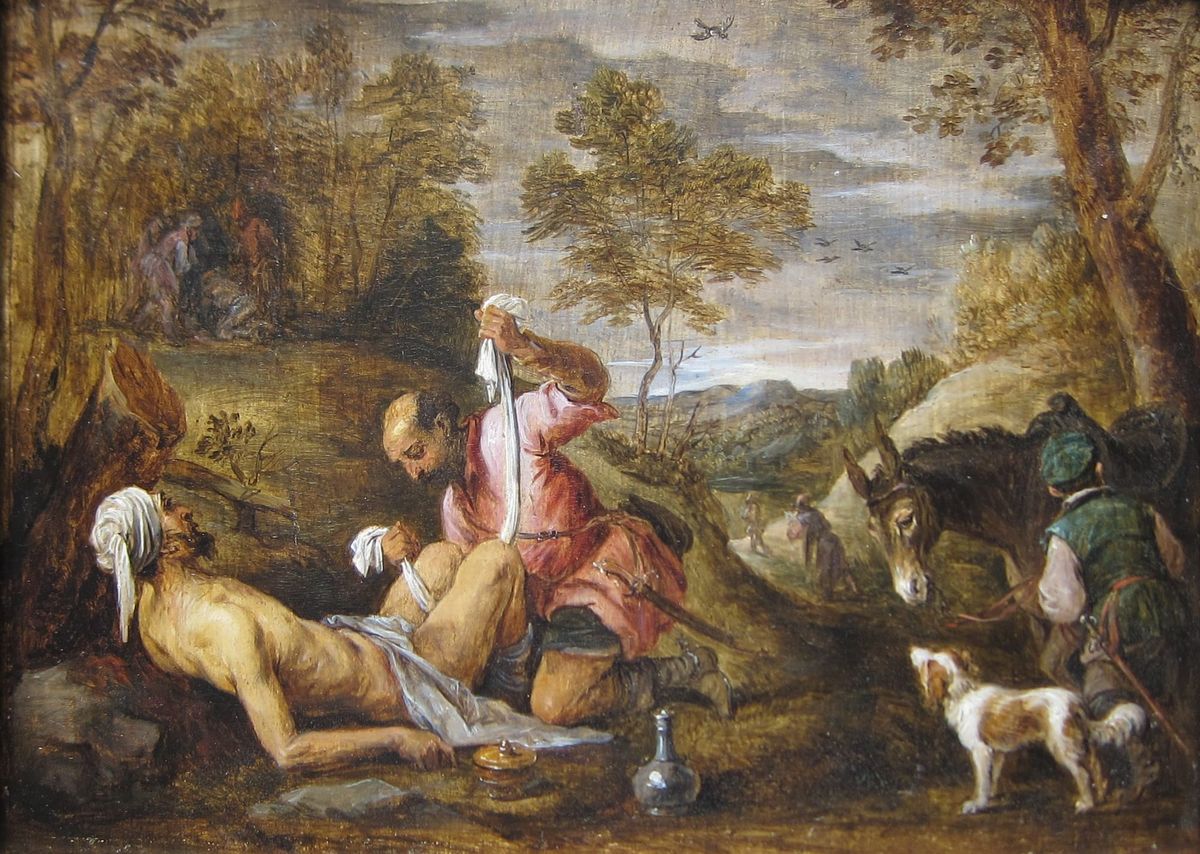
17세기 플랑드르 바로크 회화의 거장 소 다비드 테니어르스(David Teniers the Younger, 1610–1690)가 1651년에서 1656년 사이에 완성한 기념비적 소형 캐비닛 유화 선한 사마리아인(The Good Samaritan, 원작자 프란체스코 바사노의 작품 모사 및 테아트룸 픽토리움 판화 제작용 모델, 공식 소장품 등록번호: 89.15.25)은 17.1 cm × 22.9 cm 크기의 아담한 가로형 오크 목판(Oil on wood)에 유채로 그린 대표적인 북유럽 성경 우화 회화 최고 걸작입니다.
미국 뉴욕의 헨리 G. 마르콴드(Henry G. Marquand)의 유서 깊은 기증을 통해 메트로폴리탄 미술관(The Metropolitan Museum of Art, New York)에 영구 소장되어 보존되어 오고 있습니다.
베네치아 거장 바사노의 재해석과 판화 화보집 테아트룸 픽토리움을 향한 화가의 고뇌
1650년대 스페인령 네덜란드 총독 레오폴트 빌헬름 대공의 궁정 화가이자 컬렉션 관리자로 활동하던 테니어르스는, 대공이 소장한 방대한 이탈리아 회화 걸작들을 유럽 전역에 알리기 위한 대규모 판화 화보집 테아트룸 픽토리움(Theatrum Pictorium, 1658년 안트베르펜 발행) 프로젝트를 기획하며 극심한 책임감 속에 작업에 몰두했습니다.
화가는 베네치아의 거장 프란체스코 바사노(Francesco Bassano)가 1575년경에 제작한 원작 회화의 구도와 인물의 동세를 그대로 살리면서도, 북유럽 미술 특유의 정교한 목판 유화 기법을 통해 원작의 색채와 질감을 어떻게 완벽하게 축소 재현할지 치열하게 번민했습니다.
메트로폴리탄 미술관의 공식 소장 도록에 따르면, 이 작품은 당시 빈 미술사박물관에 소장되어 있던 바사노의 원작 회화를 바탕으로 제작된 판화의 실물 모델 목판화 중 하나이며, 강도 만난 자의 상처를 치유하는 사마리아인의 손길과 오른쪽 짐승을 이끄는 시종의 모습은 자비와 구원의 성경적 메시지를 담은 도상학적 핵심 장치로 분석됩니다.
화가는 야외 숲속 길가에서, 강도를 만나 쓰러진 부상자의 상처에 기름과 포도주를 부어 치료하는 사마리아인의 거룩한 순간을 화폭에 담았습니다.
화면 왼쪽 전면 바닥에는 흰 두건을 두르고 쓰러진 부상자가 고통스러운 표정으로 비스듬히 누워 있으며, 그 곁에서 분홍빛 옷을 입은 사마리아인이 무릎을 꿇은 채 흰 천을 치켜들고 상처를 세심하게 어루만지고 있습니다.
화면 오른쪽 전면에는 짐을 가득 실은 나귀의 고삐를 잡은 초록빛 옷의 시종 소년과 그 발치에서 고개를 돌려 주인들을 바라보는 충직한 사냥개가 자리하고 있습니다.
화면 배경의 왼쪽 언덕 위 멀리서는 강도 현장을 지나쳐 가는 제사장과 레위인의 모습이 희미하게 스쳐 지나가고, 오른쪽 원경의 굽이치는 언덕과 하늘을 가르는 앙상한 나무들은 성경 속 자비의 비유를 생생한 현장감으로 웅변합니다.
치료하는 사마리아인의 손길에서 나귀와 시종 소년, 그리고 원경의 언덕으로, 시선의 심리적 여정
그림을 마주하는 순간 관람객의 무의식적 시선은 화면 중앙에서 번쩍이는 빛을 받아 붉은 상의와 하얀 붕대 장식을 치켜들고 부상자를 돌보는 사마리아인의 역동적인 팔 동작으로 가장 먼저 빨려 들어갑니다.
타인의 고통에 깊이 공감하며 헌신적으로 치료를 베푸는 사마리아인의 진지한 눈빛은 보는 이에게 깊한 시각적 몰입감과 함께 가슴 따뜻한 감동을 선사합니다.
이어 시선은 바닥에 놓인 은빛 물병과 향유 옥스, 그리고 화면 오른쪽에서 나귀의 고삐를 쥐고 서 있는 시종 소년과 꼬리를 흔드는 사냥개의 생동감 넘치는 몸짓으로 이동합니다.
여행의 여독과 긴장감이 감도는 짐승과 인물의 자태를 확인하는 순간, 관람객은 숲속의 서늘한 공기와 17세기 목판화 특유의 세밀한 붓질이 숨 쉬는 현장 속으로 온몸이 빨려 들어가게 됩니다.
마지막으로 시선은 화면 왼쪽 배경 언덕 위에서 지나쳐 가는 인물들의 실루엣을 지나, 화면 중앙의 웅장한 가로수와 굽이치는 언덕, 그리고 저 멀리 은빛으로 빛나는 구름 낀 하늘에 멈춥니다.
전면 인류애의 감동적인 순간과 후면 이탈리아풍 풍경의 조화가 빚어내는 완벽한 공간적 깊이를 마주하며, 관람객은 거장 테니어르스가 복원해 낸 르네상스 명화의 찬란한 유산과 깊은 예술적 경건함을 가슴 깊이 마주하게 됩니다.
17세기 플랑드르 모사 회화의 정점과 조형미, 미술계의 평가
미술계와 메트로폴리탄 미술관 공식 소장 도록은 선한 사마리아인을 테니어르스가 이탈리아 대가들의 거대한 회화 유산을 손바닥만 한 소형 목판 위에 완벽한 비례와 색채로 압축해 낸 최고봉 마스터피스로 평가합니다.
단순한 판화 제작을 위한 밑그림을 넘어 원작이 지닌 극적인 명암법과 인물의 해부학적 동선을 완벽하게 자기화했을 뿐만 아니라, 붉은 의상의 부드러운 주름, 나귀 털의 결, 바위와 나무 껍질의 거친 질감, 숲속의 대기 원근법을 극도로 섬세한 북유럽 캐비닛 유화 기법으로 완벽하게 구현했기 때문입니다.
과거의 위대한 예술을 현대적 감각의 정교한 정수로 되살려낸 테니어르스의 이 소중한 화폭은, 오늘날까지도 전 세계 수많은 감상자들에게 깊은 감탄과 잊을 수 없는 시각적 전율을 전해주는 불멸의 명작으로 손꼽히고 있습니다.
The Good Samaritan
Painted between 1651 and 1656 by the master of Flemish Baroque painting David Teniers the Younger (1610–1690), The Good Samaritan (created as a painted model after the c. 1575 original by Francesco Bassano for publication in the Theatrum Pictorium, Accession No. 89.15.25) is an exquisite cabinet masterpiece in oil on wood measuring 17.1 cm × 22.9 cm (6 3/4 in × 9 in).
Acquired through the generous Marquand Collection gift in 1889, it is preserved today in the distinguished permanent collection of The Metropolitan Museum of Art in New York, United States.
Translating Venetian Masterpieces for Archduke Leopold Wilhelm's Theatrum Pictorium
During the 1650s, while serving as court painter and gallery curator to Archduke Leopold Wilhelm, governor of the Spanish Netherlands, David Teniers the Younger orchestrated the monumental Theatrum Pictorium (published in Antwerp in 1658), the first illustrated printed catalog of an Italian master painting collection.
Moving beyond direct original invention, the master meditated deeply on how to translate Francesco Bassano’s vibrant Venetian Renaissance composition into a reduced cabinet format on wood panel, capturing the dramatic figural grouping and luminous Venetian palette through his refined Northern European technique.
According to curatorial records in The Metropolitan Museum of Art collection catalogue, this intimate panel served as the direct model for the engraved plate in Teniers's great catalog, capturing the timeless parable of mercy as the Samaritan tenderly binds the wounds of the beaten traveler.
Teniers staged the biblical narrative along a rustic woodland path.
In the lower-left foreground, the half-dead traveler wearing a white turban lies propped against a rocky ledge, while the Samaritan, garbed in a warm rose-pink tunic, kneels beside him to carefully dress his wounds with a white cloth.
In the right foreground, a young page in green holds the tether of a laden pack donkey, accompanied by a loyal hound turning its head toward the viewer.
In the distant left background, the figures of the indifferent priest and Levite pass by on the hillside, while the rolling landscape and atmospheric trees complete the panoramic moral allegory.
Subconscious Trajectory of the Gaze: From the Healing Samaritan to the Distant Hillside
The observer's subconscious gaze is immediately magnetized by the center foreground, drawn to the luminous rose-red tunic and the dynamic gesture of the Samaritan raising a white linen cloth to tend the injured man.
His compassionate posture, focused expression, and the vulnerable form of the reclining traveler establish an instant focal point of deep human empathy, psychological gravity, and narrative tension.
The visual path then shifts toward the lower right, following the metallic vessels on the ground and the patient pack animal tended by the young page.
Taking in the rich textures of the animal's hide and the attentive dog, the viewer directly experiences the quiet, rustic intimacy of a 17th-century woodland scene.
Finally, the visual trajectory sweeps toward the distant left background to observe the passing travelers on the hill, before lifting upward along the prominent tree trunk toward the luminous, cloud-streaked sky.
Observing the harmonious equilibrium between foreground figural compassion, masterful scale reduction, and precise Netherlandish draftsmanship, the spectator perceives the timeless nobility of mercy and the profound aesthetic brilliance Teniers embedded within the wood panel.
The Monument of Flemish Cabinet Translation: Critical Legacy
Art historians revere the Metropolitan Museum Good Samaritan as an exceptional milestone in Teniers’s career, illustrating his consummate ability to distill grand Venetian Renaissance compositions into intimate cabinet models of breathtaking precision.
By orchestrating delicate textural contrasts between smooth wood grain, soft drapery folds, metallic polish, and atmospheric foliage within a unified tonal space, Teniers transformed an Italian prototype into an exquisite aesthetic treatise on charity and artistic translation.
This precious historical panel endures as an inspiring testament to the master's creative fortitude, celebrating the quiet poetry of everyday existence and the transformative grace of living art.
본 컨텐트의 저작권은 팔렛트제주에 있습니다. 허가없는 무단전제를 금지합니다.
Copyright © Palette Jeju. All rights reserved. Unauthorized reproduction or redistribution is strictly prohibited.