성모 마리아에게 나타나신 부활하신 그리스도 The Risen Christ Appearing to the Virgin Mary
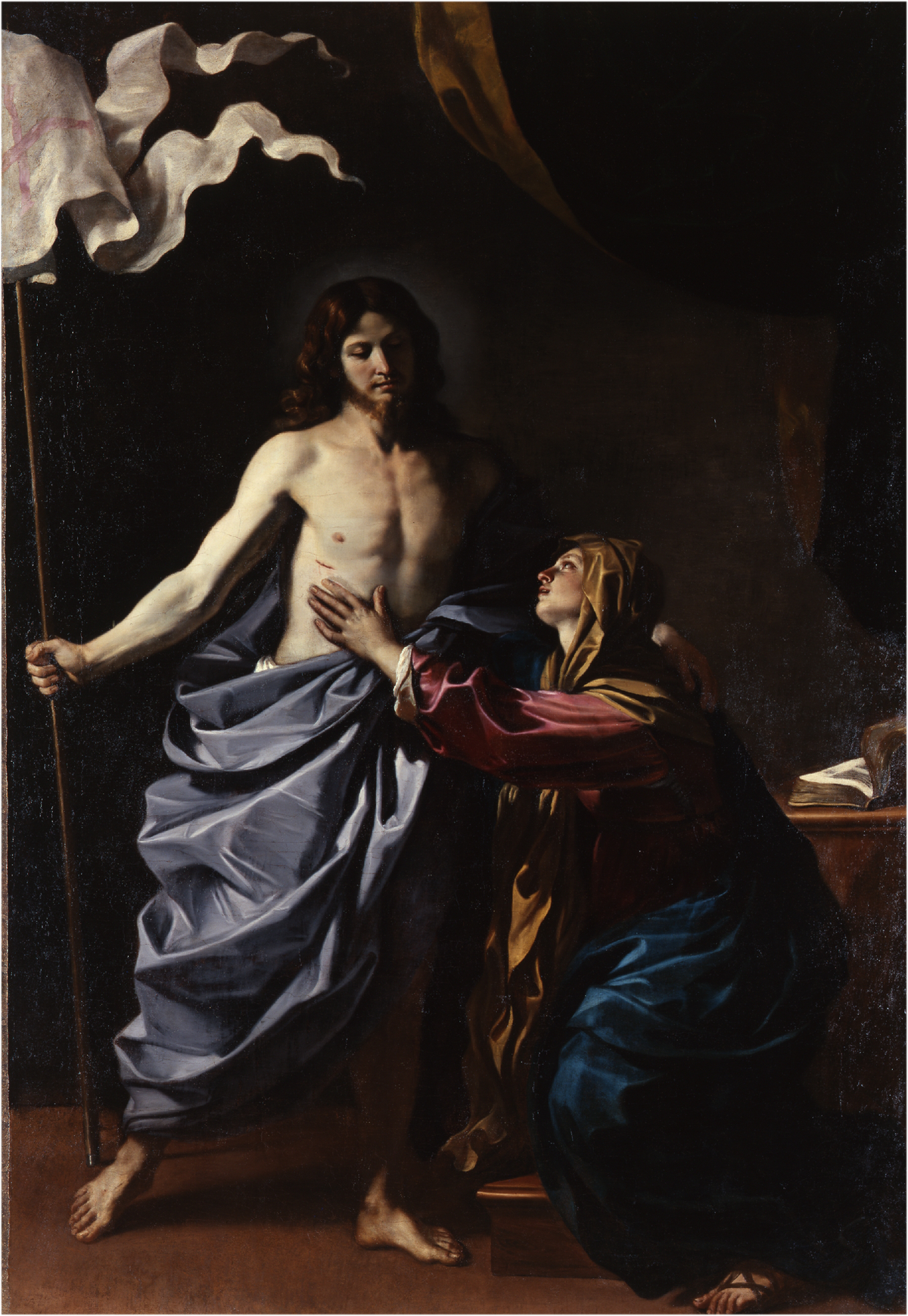
17세기 이탈리아 바로크 회화의 거장 조반니 프란체스코 바르비에리, 널리 귀에르치노(Guercino, 1591–1666)로 불리는 화가가 1629년에서 1630년경 청년기에서 원숙기로 넘어가는 시기에 완성한 대작 유화 성모 마리아에게 나타나신 부활하신 그리스도(The Risen Christ Appearing to the Virgin Mary, 또는 Christ Appearing to His Mother, 이탈리아어: Cristo risorto appare alla Vergine)는 260.0 cm × 179.5 cm 크기의 웅장한 캔버스에 유채로 그린 대표적인 제단화 종교화 최고 걸작입니다. 현재 이탈리아 첸토의 시립미술관(Pinacoteca Civica di Cento)에 소장되어 있습니다.
부활의 깃발과 성모의 무릎 아래로 굴러떨어진 기도서 소동
1620년대 후반 고향 첸토와 볼로냐를 오가며 활약하던 귀에르치노는 십자가의 참혹한 죽음을 이겨내고 부활하신 예수 그리스도가 가장 먼저 어머니 성모 마리아를 찾아가 깊은 슬픔을 위로하는 거룩한 순간을 제단화로 그려달라는 주문을 받았습니다. 화가는 죽음의 공포를 이겨낸 신성한 영광과, 아들의 죽음 앞에서 피눈물을 흘렸던 어머니의 절절한 모성애가 한 공간에서 벅차오르는 감격으로 만나는 숭고한 재회의 순간을 화폭에 담고자 깊은 고뇌에 빠졌습니다. 화가는 화실에 무릎 꿇는 나무 기도대를 놓고, 부활의 승리를 상징하는 붉은 십자가 깃발을 든 청년과 짙은 보랏빛 옷을 입은 여인 모델을 마주 보게 세웠습니다.
이 그림을 준비하던 날, 화실에서는 뭉클하면서도 웃음이 절로 나오는 소동이 벌어졌습니다. 그리스도 역할을 맡은 모델이 한 손으로 펄럭이는 부활의 흰 깃발을 쥐고 다른 손으로 성모의 어깨를 감싸 안으려는 역동적인 포즈를 취하고 있던 중이었습니다. 성모 역할을 맡은 여인이 눈물을 글썽이며 그리스도의 옆구리 상처로 떨리는 손을 뻗는 순간, 기도대 모서리에 올려두었던 두꺼운 양장본 기도서가 기우뚱하더니 바닥으로 툭 떨어져 데굴데굴 굴렀습니다. 책장들이 부스스 소리를 내며 펼쳐지자, 엄숙하게 몰입해 있던 두 모델이 깜짝 놀라 서로를 바라보며 풋 웃음을 터뜨리고 말았습니다.
그 모습을 지켜보던 귀에르치노는 껄껄 웃음을 터뜨리며 화실 바닥에 떨어진 기도서와 활짝 펼쳐진 책장이야말로 예언이 성취되었음을 보여주는 가장 자연스러운 흔적이라며 모델들을 격려했습니다. 화가는 그리스도의 부활한 몸에서 뿜어져 나오는 눈부신 광채와 부드러운 옆구리 상처, 성모의 촉촉한 눈망울과 애절하게 뻗은 손가락 마디, 그리고 바람에 날리는 깃발의 생생한 주름과 푸른빛 천의 묵직한 질감까지 맹렬한 속도로 캔버스에 담아냈습니다. 평생 사시라는 신체적 약점을 안고 살면서도 빛과 어둠의 완벽한 조화를 통해 깊은 인간애와 신앙의 기쁨을 구현해 낸 거장의 뜨거운 예술혼이 이 웅장한 화폭 속에 고스란히 살아 숨 쉬고 있습니다.
자애로운 그리스도의 눈빛에서 성모의 떨리는 손길과 펄럭이는 부활의 깃발로, 시선의 심리적 여정
그림을 마주하는 순간 관람객의 무의식적 시선은 화면 중앙 짙은 어둠 속에서 환한 천상의 빛을 받아 눈부시게 밝게 빛나는 예수 그리스도의 자애로운 얼굴과 성스러운 상체 근육으로 가장 먼저 빨려 들어갑니다. 고난을 이겨내고 어머니를 묵묵히 내려다보는 주님의 따스하고 그윽한 눈빛은 보는 이에게 깊은 시각적 감동과 함께 마음 깊은 곳을 어루만지는 평안을 선사합니다.
이어 시선은 화면 오른쪽에서 무릎을 꿇은 채 고개를 들고 있는 성모 마리아의 붉은 옷소매와, 그리스도의 오른쪽 옆구리 상처를 향해 조심스럽게 다가가는 그녀의 떨리는 오른손으로 이동합니다. 아들의 살아 있는 살결을 직접 어루만지며 부활의 기적을 확인하려는 어머니의 간절한 손짓과 벅찬 감격에 젖은 옆모습을 확인하는 순간, 관람객은 슬픔이 찬란한 기쁨으로 바뀌는 성스러운 위로의 현장 속으로 온몸이 빨려 들어가게 됩니다.
마지막으로 시선은 그리스도의 하체를 풍성하게 감싸고 있는 은회색과 푸른빛이 감도는 비단 천의 유려한 주름을 지나, 화면 왼쪽 위에서 힘차게 휘날리는 부활의 붉은 십자가 깃발과 오른쪽 탁자 위에 펼쳐진 기도서에 멈춥니다. 칠흑 같은 어둠을 뚫고 솟아오른 영원한 생명의 빛과 모자간의 거룩한 사랑을 마주하며, 관람객은 유한한 죽음을 초월한 신앙의 위대한 승리와 귀에르치노가 건네는 묵직한 영적 감동을 가슴 깊이 마주하게 됩니다.
17세기 볼로냐 바로크 제단화의 정점과 조형적 완성도, 미술계의 평가
미술계는 성모 마리아에게 나타나신 부활하신 그리스도를 귀에르치노가 카라바조의 강렬한 테네브리즘 명암법과 볼로냐 고전주의의 장엄한 서정성을 가장 완벽한 대작 제단화 형식으로 완성한 대표적인 걸작으로 평가합니다.
서 있는 그리스도의 당당한 신성과 무릎 꿇은 성모의 인간적인 애절함을 완벽한 높낮이 균형으로 조화시켰을 뿐만 아니라, 부활한 인체의 해부학적 사실성, 펄럭이는 깃발과 실크 옷감의 풍성한 질감, 그리고 어두운 배경 속에서 번져 나오는 빛의 조율을 극도로 섬세한 명암법으로 완벽하게 구현했기 때문입니다. 비극을 거룩한 승리와 화해로 승화시킨 귀에르치노의 이 기념비적인 화폭은, 오늘날까지도 전 세계 수많은 감상자들에게 깊은 전율과 잊을 수 없는 시각적 감동을 전해주는 불멸의 명작으로 손꼽히고 있습니다.
The Risen Christ Appearing to the Virgin Mary
Painted around 1629–1630 in Cento by the preeminent Italian Baroque master Giovanni Francesco Barbieri, universally celebrated as Guercino (1591–1666), The Risen Christ Appearing to the Virgin Mary (also titled Christ Appearing to His Mother, Italian: Cristo risorto appare alla Vergine) is a monumental oil on canvas measuring 260.0 cm × 179.5 cm (102.4 in × 70.7 in), preserved in the distinguished permanent collection of the Pinacoteca Civica di Cento in Cento, Italy.
The Resurrected Banner and the Dropped Prayer Book Commotion in the Studio
During the late 1620s in Cento, Guercino undertook a monumental altarpiece commission depicting the unrecorded biblical yet cherished devotional moment when the resurrected Christ first appears to His grieving mother Mary, transforming her profound sorrow into overwhelming joy. Guercino sought to bypass rigid liturgical formality, aiming to capture the intimate emotional tenderness between mother and son against the cosmic victory over mortality. The master arranged a prie-dieu prayer desk and heavy velvet drapes in his atelier, staging a tall model holding the white resurrection standard with a red cross alongside a kneeling woman draped in deep rose and blue textiles.
A delightfully memorable and moving incident occurred during the preparatory sitting. As the model posing as Christ held the tall wooden staff and lowered his head in tender compassion, the model portraying the Virgin reached her trembling right hand toward his pierced side. Overcome with the emotional tension of the pose, her knee accidentally nudged the wooden prayer desk, causing a heavy leather-bound prayer book to slip from the ledge and tumble across the stone floor with a loud slap.
The abrupt noise startled both models, who exchanged a brief, warm chuckle before resuming their deeply reverent postures. Guercino laughed heartily from behind his easel, praising how the unscripted tumble of the book emphasized the sudden, breathtaking arrival of the divine encounter. The master worked with extraordinary speed, recording the sunlit alabaster contours of Christ's torso, the delicate spear wound upon his ribs, the tearful warmth in Mary’s upturned profile, and the billowing folds of the white silk banner against the dark interior. Overcoming his lifelong strabismus to achieve visionary command over dramatic chiaroscuro, Guercino imbued this monumental altarpiece with profound spiritual resonance.
Subconscious Trajectory of the Gaze: From Resurrected Savior to the Reaching Palm
The observer's subconscious gaze is immediately magnetized by the upper-central register, drawn to the luminous, gently bowed countenance of the Risen Christ illuminated by celestial light against the enveloping dark background. His calm downcast eyes, dark curls, and the warm modeling of his bare chest and shoulders establish an instant focal point of sovereign divinity and tender filial love.
The visual path then descends diagonally along his outstretched arm toward the right, meeting the radiant profile of the Virgin Mary kneeling in rapt adoration. Taking in her upturned eyes, her yellow veil, and her trembling right hand extended toward the sacred wound in His side, the viewer directly experiences the profound emotional release of a mother witnessing the miracle of the Resurrection.
Finally, the visual trajectory sweeps across the voluminous, sculptural folds of Christ's lavender and ultramarine waist drapery, ascending along the wooden pole to the sweeping white banner in the upper left before resting upon the open devotional text on the table. Observing the dramatic harmony between enveloping tenebrism, tactile anatomical realism, and transcendent emotional tenderness, the spectator perceives the timeless nobility of sacred faith and the profound aesthetic solace Guercino embedded within the monumental canvas.
The Monument of Bolognese Sacred Realism: Critical Legacy
Art historians revere The Risen Christ Appearing to the Virgin Mary as a supreme pinnacle of Guercino’s mature career, illustrating his flawless synthesis of Caravaggesque chiaroscuro with the classical harmony and emotional depth of the Bolognese school.
By orchestrating delicate textural contrasts between sunlit skin, crisp banner silk, heavy woolen mantles, and polished timber within a unified lighting scheme, Guercino elevated a sacred devotional vision into an exquisite aesthetic symphony. This grand altarpiece endures as an inspiring testament to the master's enduring creative genius, celebrating the victory of divine grace and the transformative power of living art.
본 컨텐트의 저작권은 팔렛트제주에 있습니다. 허가없는 무단전제를 금지합니다.
Copyright © Palette Jeju. All rights reserved. Unauthorized reproduction or redistribution is strictly prohibited.