성배의 예배당 앞 랜슬롯 경의 실패, 묵직한 고재 프레임과 라파엘 전파 태피스트리의 조우
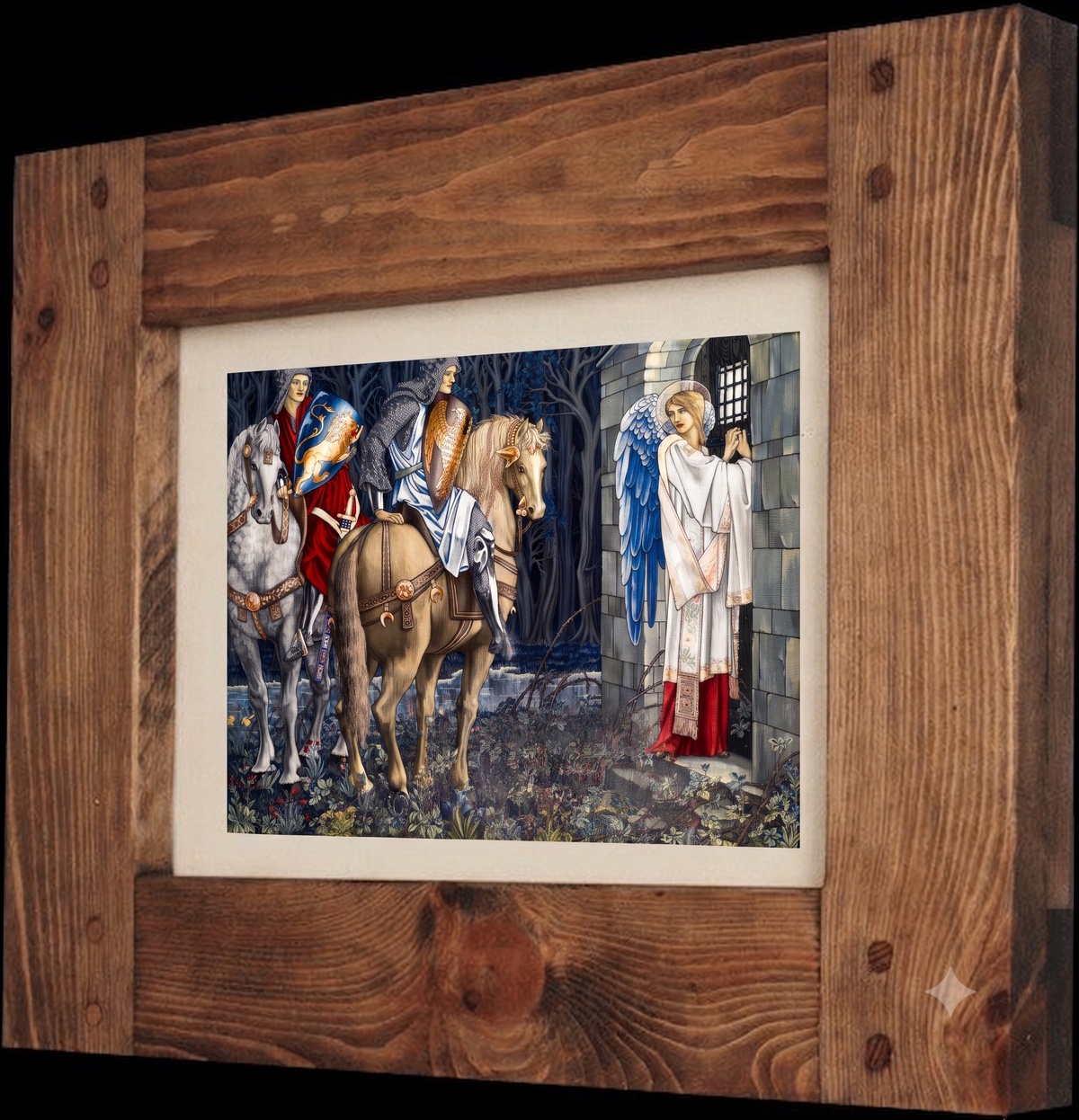
라파엘 전파의 거장 에드워드 번존스(Edward Burne-Jones)와 윌리엄 모리스(William Morris)의 합작 태피스트리 연작, 성배의 예배당 앞 랜슬롯 경의 실패(The Failure of Sir Lancelot at the Chapel of the Holy Grail, 1895-1896)와 수제 러스틱 원목 프레임을 매칭한 아트 프레이밍 큐레이션입니다.
닫힌 문과 구원의 단절
아서 왕 전설을 바탕으로 제작된 이 작품은 성배 탐색 연작(Holy Grail Tapestries) 중 가장 비극적이고 묵직한 서사를 담고 있습니다. 기사도와 무용을 겸비한 원탁의 으뜸 기사 랜슬롯은 기네비어 왕비와의 금지된 사랑으로 인한 원죄 때문에 성배가 안치된 예배당 문턱턱을 넘지 못한 채 깊은 영적 잠에 빠져듭니다.
화면 우측의 푸른 날개를 지닌 천사는 예배당 문을 굳게 닫으며 랜슬롯의 진입을 거부하고 있습니다. 천사의 단호하면서도 연민 어린 시선과, 갑주를 입은 채 말 위에서 무기력하게 고개를 떨군 랜슬롯의 대비는 거역할 수 없는 운명과 도덕적 좌절을 처연하게 시각화합니다. 중세 고딕풍의 울창한 숲과 바닥에 얽혀 있는 엉겅퀴 가시덤불은 랜슬롯의 발을 묶은 죄책감과 내면의 고뇌를 상징적으로 은유합니다.
우리가 미처 의식하지 못하는 시선의 흐름
감상자가 이 작품을 볼 때 느끼는 서늘한 긴장감 이면에는 치밀한 공간 분할과 시선의 차단 장치가 작동하고 있습니다. 시선은 자연스럽게 말의 둔부와 기사의 화려한 문장에서 출발하여 화면 우측의 수직 석조 건축물로 이동하지만, 문을 닫는 천사의 날개와 수직선에 부딪혀 강제로 정지하게 됩니다.
이 차단된 시선은 다시 말발굽 아래 빽빽하게 얽힌 가시덤불의 복잡한 텍스처로 굴절되며 빠져나갈 곳 없는 폐쇄적인 공간감을 형성합니다. 천사의 푸른 날개와 날카로운 흰 로브, 그리고 랜슬롯과 보스 경의 붉은 망토와 방패 문양이 이루는 차가움과 뜨거움의 색채 대비는 망막에 강렬한 잔상을 남기며 비극적 내러티브의 심리적 무게를 증폭시킵니다.
DIY 우든 아트 프레임과 명화의 물성적 콜라보레이션
목공예가의 정교한 손길로 직접 가공하고 장부 맞춤한 DIY 원목 프레임은 중세 태피스트리가 지닌 깊은 직조감과 완벽한 물성적 일체감을 이룹니다. 기계적인 재단 대신 원목의 거친 결, 옹이, 그리고 묵직한 볼트 체결 디테일을 그대로 살린 프레이밍은 중세 성채의 육중한 고목 문을 연상시킵니다.
화이트 매트 보드를 덧대어 시각적 숨을 틔워주는 동시에, 두터운 다크 브라운 프레임이 화면의 어두운 숲 배경과 맞물려 시선을 흩뜨리지 않고 중심 인물들의 비극적인 구도로 강하게 수렴시킵니다.
인위적인 광택을 배제한 수제 원목의 질감은 윌리엄 모리스의 미술공예운동(Arts and Crafts Movement)이 추구했던 장인 정신과 수공예적 가치를 현대적인 리빙 오브제로 계승합니다.
The Failure of Sir Lancelot: Where Heavy Artisan Timber Meets Pre-Raphaelite Tapestry
This bespoke framing curation unites The Failure of Sir Lancelot at the Chapel of the Holy Grail (1895-1896)—the monumental Pre-Raphaelite tapestry designed by Sir Edward Burne-Jones and woven by William Morris's workshop—with a robust, handcrafted rustic timber frame.
A Closed Portal and Broken Redemption
Rooted in Arthurian myth, this piece captures the most tragic inflection point of the Holy Grail tapestry cycle. Sir Lancelot, the paragon of chivalric prowess, finds himself barred from entering the sacred sanctuary and falls into a heavy, cursed slumber, weighed down by his illicit devotion to Queen Guinevere.
On the right, a resplendent angel with cobalt-blue wings firmly shuts the wooden door, denying the knight entrance. The angel's impassive yet sorrowful gaze contrasts sharply with Lancelot’s listless posture atop his warhorse, crystallizing a profound moment of spiritual devastation. The claustrophobic backdrop of gothic woodland and the thorny brambles coiling across the forest floor serve as visceral metaphors for the moral labyrinth and guilt that entrap him.
The Subconscious Choreography of Gaze
The subtle unease evoked by this composition stems from a meticulously calculated architecture of visual obstruction. The viewer's gaze instinctively follows the muscular contours of the steed and the ornate heraldry, traveling rightward toward the vertical stone entrance, only to be abruptly halted by the sheer vertical threshold of the angel and the shut door.
Denied entry, the eye ricochets downward into the intricate, suffocating carpet of wild thistles and thorns, establishing a profound sense of confinement. The stark chromatic tension—the celestial, icy blue of the wings vibrating against the rich crimsons and heraldic golds of the armor—leaves an indelible mark on the retina, amplifying the gravity of Lancelot's divine exclusion.
The Tactile Alchemy of Handcrafted Wood and Masterpiece
Joined with deliberate joinery and exposed dowel details by an artisan woodworker, this custom timber frame mirrors the dense, structural integrity of late-Victorian textile craft. By preserving the raw grain, natural knots, and tactile fissures of the lumber, the frame evokes the weathered portcullises and timber doors of medieval fortresses.
The crisp off-white mat creates essential negative space, while the dark, aged patina of the surrounding wood echoes the deep shadows of the enchanted forest, locking the viewer's focus directly onto the dramatic narrative core.
Eschewing industrial veneers in favor of tactile authenticity, this handcrafted presentation pays homage to the core tenets of William Morris's Arts and Crafts movement, elevating historical tapestry art into an architectural statement.