성 요한과 성 바오로의 순교 The Martyrdom of Saints John and Paul
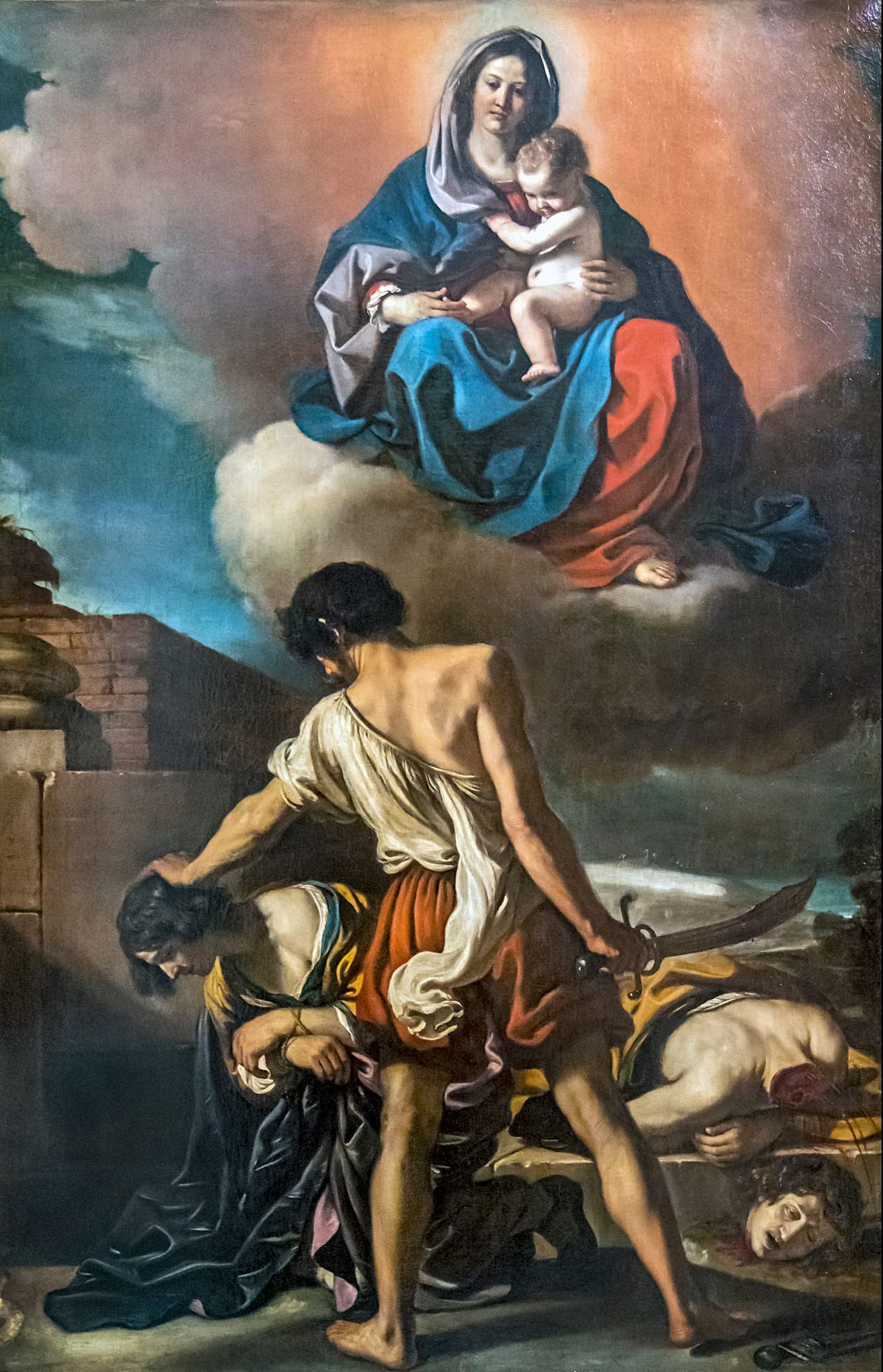
17세기 이탈리아 바로크 회화의 거장 조반니 프란체스코 바르비에리, 널리 귀에르치노(Guercino, 1591–1666)로 불리는 화가가 1632년에 완성한 제단화 대작 유화 성 요한과 성 바오로의 순교(The Martyrdom of Saints John and Paul, 프랑스어: Le Martyre de saint Jean et saint Paul, 이탈리아어: Il martirio dei santi Giovanni e Paolo)는 310.0 cm × 205.0 cm 크기의 거대한 캔버스에 유채로 그린 대표적인 제단화 종교화 걸작입니다. 현재 프랑스 툴루즈의 오귀스탱 미술관(Musée des Augustins, Toulouse)에 소장되어 있습니다.
사형 집행인의 번쩍이는 칼날과 화실의 소품 칼 소동
1630년대 초반 이탈리아 볼로냐와 첸토에서 종교 제단화의 대가로 칭송받던 귀에르치노는 초기 기독교 로마 제국 시절 황제의 박해에 맞서 신앙을 지키다 참수형을 당한 두 형제 성인 요한과 바오로의 장엄한 순교를 그려달라는 거대한 주문을 받았습니다. 화가는 지상에서 벌어지는 잔혹한 피의 비극과 천상에서 내려다보는 성모자의 자비로운 구원을 한 화면에 대비시키며, 인간의 유한한 고통을 뛰어넘는 영원한 생명의 환희를 시각적으로 완성하고자 깊은 번민에 빠져 있었습니다. 화가는 화실에 건장한 석공을 불러 사형 집행인 모델로 세우고 나무로 깎은 모조 곡도를 쥐여주었습니다.
이 그림을 준비하던 날, 화실에서는 긴장감이 감돌면서도 유쾌한 소동이 벌어졌습니다. 건장한 모델이 근육을 바짝 곤두세우며 무릎 꿇은 성인의 머리채를 잡고 칼을 내리치려는 역동적인 포즈를 취하고 있던 중이었습니다. 너무 힘을 준 나머지 손에 쥐고 있던 모조 나무 칼자루가 우지끈 부러지며 바닥에 뒹굴었고, 칼날 끝이 참수당한 성인 역할을 하던 모델의 발등을 툭 쳤습니다. 바닥에 엎드려 있던 제자가 깜짝 놀라 펄쩍 뛰며 소리를 질렀고, 화실은 한순간에 아수라장이 되었습니다.
그 모습을 지켜보던 귀에르치노는 껄껄 웃음을 터뜨리며 화실 구석에 보관해 두었던 무쇠 칼을 직접 가져와 집행인의 손에 쥐여주었습니다. 화가는 사형 집행인의 단단한 등 근육과 붉은 바지, 목이 잘려 바닥에 누운 성인의 차가운 몸, 그리고 먹구름을 가르고 솟아오른 솜털 같은 구름 위에 앉아 계신 성모 마리아와 아기 예수의 눈부신 광채를 압도적인 크기의 화폭에 담아냈습니다. 평생 사시라는 신체적 약점을 안고 살면서도 빛과 어둠의 완벽한 율동으로 비극을 거룩한 승리로 바꾸어 낸 거장의 굳건한 신앙과 열정이 이 웅장한 대작 속에 영원히 살아 숨 쉬고 있습니다.
성모자의 자비로운 시선에서 집행인의 굽은 칼날과 순교자의 머리로, 시선의 심리적 여정
그림을 마주하는 순간 관람객의 무의식적 시선은 화면 상단 붉은 노을빛과 흰 구름 속에서 환하게 빛나는 성모 마리아의 자애로운 얼굴과 품에 안긴 포동포동한 아기 예수의 성스러운 광채로 가장 먼저 빨려 들어갑니다. 지상의 피비린내 나는 비극을 조용히 굽어살피며 구원의 손길을 내미는 성모자의 거룩하고 평온한 모습은 보는 이에게 깊은 시각적 안도감과 함께 숭고한 영적 위로를 선사합니다.
이어 시선은 화면 중앙 짙은 그림자 속에서 근육질의 등을 드러낸 채 서 있는 사형 집행인의 다부진 어깨와, 그가 오른손에 서슬 퍼렇게 쥐고 있는 날카로운 곡도로 이동합니다. 이미 바닥에 쓰러진 첫 번째 성인을 참수하고 이제 두 번째 성인의 머리채를 거칠게 움켜쥔 채 칼날을 겨누는 집행인의 살기 어린 긴장감을 확인하는 순간, 관람객은 숨 막히는 순교의 현장 속으로 순식간에 빨려 들어가며 심장이 멎을 듯한 공포와 전율을 온몸으로 체감하게 됩니다.
마지막으로 시선은 무릎을 꿇고 묵묵히 기도를 올리며 죽음을 받아들이는 성인의 굳은 얼굴을 지나, 화면 오른쪽 돌계단 위에 차갑게 뒹굴고 있는 잘려 나간 성인의 머리와 피 흘리는 시신, 그리고 바닥에 떨어진 칼집에 멈춥니다. 지상의 참혹한 핏빛 고통과 천상의 영원한 영광이 만들어내는 장엄한 구원의 서사를 마주하며, 관람객은 목숨을 바쳐 지켜낸 신앙의 숭고한 가치와 귀에르치노가 건네는 묵직한 구원의 울림을 가슴 깊이 마주하게 됩니다.
17세기 이탈리아 바로크 제단화의 정점과 극적 조형미, 미술계의 평가
미술계는 성 요한과 성 바오로의 순교를 귀에르치노가 카라바조의 강렬한 테네브리즘과 볼로냐 고전주의의 우아한 구성을 가장 완벽한 대작 형식으로 구현해 낸 바로크 제단화의 대표적인 걸작으로 평가합니다.
지상의 폭력적인 동세와 천상의 정적인 거룩함을 상하 2단 구도로 완벽하게 조화시켰을 뿐만 아니라, 인체 근육의 해부학적 사실성, 흩날리는 옷 주름, 구름과 하늘의 색채 변화를 극도로 정교한 명암법으로 구현했기 때문입니다. 죽음의 공포를 신앙의 거룩한 승리로 승화시킨 귀에르치노의 이 기념비적인 캔버스는, 오늘날까지도 전 세계 수많은 이들의 마음에 깊은 감동과 잊을 수 없는 시각적 전율을 전해주는 불멸의 명작으로 손꼽히고 있습니다.
The Martyrdom of Saints John and Paul
Painted in 1632 in Cento by the preeminent Italian Baroque master Giovanni Francesco Barbieri, universally celebrated as Guercino (1591–1666), The Martyrdom of Saints John and Paul (French: Le Martyre de saint Jean et saint Paul, Italian: Il martirio dei santi Giovanni e Paolo) is a monumental oil on canvas measuring 310.0 cm × 205.0 cm (122.0 in × 80.7 in), preserved in the permanent collection of the Musée des Augustins in Toulouse, France.
The Flashing Scimitar and the Wooden Studio Blade Commotion
During the early 1630s, at the height of his reputation across Cento and Bologna, Guercino received a prestigious commission to depict the heroic sacrifice of Saint John and Saint Paul, Roman brothers and fourth-century imperial officers who were secretly decapitated for refusing to sacrifice to pagan idols under Emperor Julian the Apostate. Guercino wrestled with the challenge of staging the brutality of earthly execution against the serene salvation of the heavenly realm, seeking to show that mortal death was immediately swallowed up in eternal glory. The painter brought a muscular stonecutter into his atelier to pose as the executioner, placing a carved wooden practice scimitar in his hand.
A memorable and lively commotion occurred during the preparatory sitting. As the executioner flexed his back muscles to demonstrate the sweeping downward arc of his sword, his intense grip snapped the wooden prop at the hilt, sending the blunt blade clattering across the floor where it struck the foot of the apprentice modeling as the fallen martyr. The apprentice leaped up in surprise with a loud yell, throwing the entire studio into sudden uproar.
Guercino burst into hearty laughter, immediately retrieving a heavy forged iron sword to place in the executioner’s hands to ensure genuine physical tension in the pose. The master worked with extraordinary speed, recording the sinewy anatomy of the executioner's back, the severed head of the first martyr resting on the stone step, and the glowing radiance of the Virgin and Child seated on soft celestial clouds above the smoke. Channeling his mastery over dynamic chiaroscuro, Guercino transformed this scene of imperial persecution into a triumphant hymn of spiritual courage.
Subconscious Trajectory of the Gaze: From Heavenly Madonna to the Raised Blade
The observer's subconscious gaze is immediately magnetized by the luminous upper register, drawn to the serene visage of the Virgin Mary wrapped in a deep lapis-lazuli mantle and the radiant, cherubic figure of the Christ Child perched upon billowing clouds. Their compassionate downward glance toward the mortal struggle below establishes an instant atmosphere of heavenly protection and eternal spiritual victory.
The visual path then plunges downward into the dramatic shadows of the lower register, drawn to the muscular, sunlit back of the executioner clad in a rust-red tunic. Following the sweeping arc of his right arm brandishing a curved steel scimitar and his left hand gripping the hair of the kneeling saint, the viewer directly experiences the physical shock and imminent peril of the martyrdom.
Finally, the visual trajectory sweeps past the devout kneeling posture of the second brother to the stone platform on the right, resting upon the severed head and lifeless body of the first martyr before taking in the discarded scabbard on the dark flagstones. Observing the powerful contrast between violent earthly reality and tranquil heavenly grace, the spectator perceives the enduring nobility of faith and the transcendent solace Guercino embedded within the monumental canvas.
The Monument of Bolognese Baroque Grandeur: Critical Legacy
Art historians celebrate The Martyrdom of Saints John and Paul as a consummate masterpiece of Guercino’s mature career, demonstrating his masterful synthesis of Caravaggesque tenebrism with the monumental clarity of the Bolognese classical school.
By organizing the composition into an effective two-tier hierarchy that balances dynamic diagonal tension below with harmonious celestial equilibrium above, and rendering anatomical realism with unmatched painterly bravura, Guercino elevated a violent historical narrative into a timeless visual prayer. This grand altarpiece endures as an inspiring testament to the master's enduring humanism, celebrating the sacred courage of spiritual conviction and the transformative power of living art.
본 컨텐트의 저작권은 팔렛트제주에 있습니다. 허가없는 무단전제를 금지합니다.
Copyright © Palette Jeju. All rights reserved. Unauthorized reproduction or redistribution is strictly prohibited.