성 라우렌시오와 작별하는 식스토스 2세 교황 Pope Sixtus II Bidding Farewell to Saint Lawrence
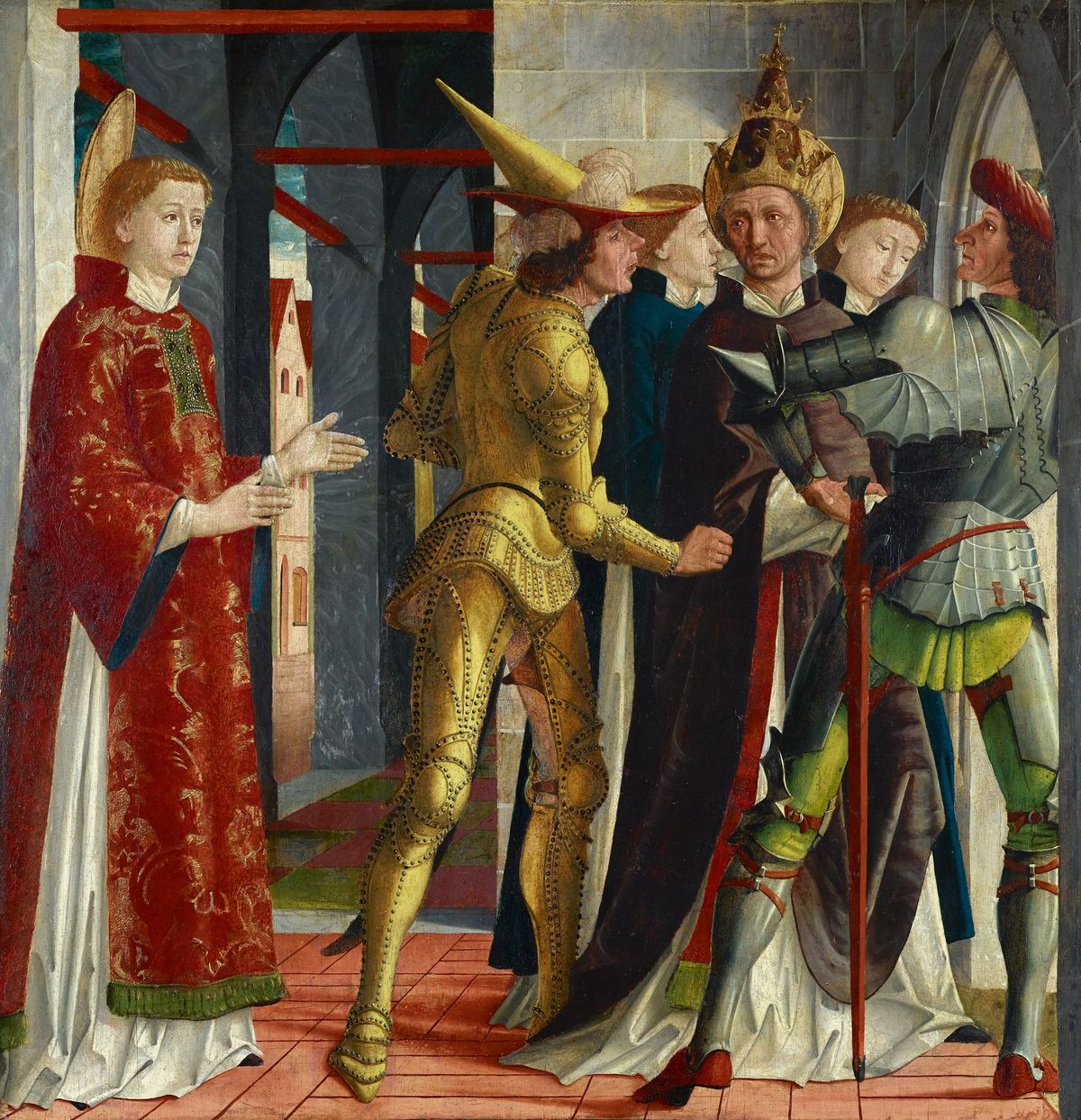
15세기 후반 오스트리아 티롤 지방의 공방에서 미하엘 파허(Michael Pacher)가 제작한 이 작품은, 권력의 폭력 앞에 속수무책으로 찢겨나가는 종교적 연대의 비극과 이별의 순간이 지닌 처절한 실상을 투영합니다.
오스트리아 빈의 빈 미술사 박물관(Kunsthistorisches Museum, Vienna)에 소장된 이 작품의 공식 소장품 등록번호는 GG 4836이며, 실제 작품의 실측 규격은 높이 99 cm, 너비 93 cm의 목판 유채 및 템페라 패널입니다.
작가의 고뇌/비하인드
작품의 전면 좌측에는 화려한 붉은색 달마시카 제복을 입은 성 라우렌시오가 슬픈 눈빛으로 손을 뻗어 마지막 작별을 고하고 있으며, 그의 시선 끝에는 병사에 의해 강제로 끌려가는 식스토스 2세 교황이 묵묵히 붙잡혀 있습니다.
중앙과 우측에는 번쩍이는 황금빛 갑옷을 입은 병사들과 뾰족한 모자를 쓴 인물이 교황의 앞길을 가로막은 채 무자비한 압력을 행사하고 있어, 부당한 권력이 비집고 들어온 공간의 서늘한 긴장감을 증폭시킵니다.
원경의 아치형 회랑과 창밖으로 보이는 북유럽 가옥의 풍경은 이 이별의 비극성이 현세의 구체적인 삶의 현장에서 벌어지고 있음을 차갑게 증명합니다.
무의식 속 시선 및 심리 흐름
관람객의 시선은 가장 먼저 화면 좌측에서 애절한 손짓을 건네는 성 라우렌시오의 붉은 예복과 흔들리는 눈빛으로 자연스럽게 집중됩니다.
이어 시선은 화면 중앙을 가로지르는 황금빛 갑옷의 번쩍이는 질감과 교황을 압박하는 병사들의 폭력적인 실루엣으로 무겁게 이동합니다.
마지막으로 시선은 배경의 차가운 건축 구조물과 바깥의 회색빛 대기로 확장되며, 피할 수 없는 박해와 이별 앞에서 짓밟히는 영혼의 고통과 숙연함을 깊이 있게 체감하게 됩니다.
미술계의 평가 및 조형미
미술사학계는 이 작품을 15세기 후반 티롤 고딕 미술의 정점이자, 북유럽의 사실적 묘사와 이탈리아 르네상스의 공간감이 완벽하게 결합된 수작으로 평가합니다.
목판 위에 겹겹이 쌓아 올린 템페라와 유채는 갑옷의 금속성 반짝임과 사제 복식의 섬세한 직조감을 생생하게 살아나게 만듭니다.
권력의 잔혹한 폭력 속에서도 결코 끊어지지 않는 인간의 고결한 유대를 예술의 경지로 승화시킨 이 작품은, 영원토록 미술사에서 묵직한 울림을 지니는 가치를 지니고 있습니다.
영문 번역본 구성
Pope Sixtus II Bidding Farewell to Saint Lawrence
Produced in the late fifteenth century within the workshop of Michael Pacher in the Tyrol region of Austria, this work reflects the tragedy of severed religious bonds and the brutal reality of parting under the crushing weight of systemic violence.
Housed in the Kunsthistorisches Museum in Vienna, Austria, this piece bears the official inventory number GG 4836, and the actual physical dimensions of the oil and tempera wood panel measure 99 cm in height and 93 cm in width.
The Artist's Struggle and Behind-the-Scenes
In the immediate foreground on the left, Saint Lawrence appears clad in a magnificent red dalmatic, extending his hands with a sorrowful gaze to bid a final farewell to Pope Sixtus II, who is forcibly dragged away by soldiers.
At the center and right, guards in gleaming golden armor and figures in pointed hats block the path of the pontiff, exercising merciless pressure that amplifies the chilling tension of a space invaded by raw power.
In the distance, the arched corridors and glimpses of northern European houses through the window coldly verify that this tragic separation unfolds within the concrete reality of secular life.
Subconscious Gaze and Psychological Flow
The viewer's gaze is initially drawn directly to the striking red vestments and vulnerable expression of Saint Lawrence reaching out from the left side of the composition.
The eye then shifts across the gleaming metallic textures of the golden armor and the aggressive silhouettes of the soldiers bearing down on the pope.
Finally, the gaze drifts backward into the cold architectural framework and exterior atmosphere, evoking a profound sense of solemn grief before the suffering of souls crushed by inescapable persecution.
Art World Evaluation and Formal Beauty
Art historians evaluate this work as a high point of late fifteenth-century Tyrolean Gothic art, successfully fusing northern realism with the spatial geometry of the Italian Renaissance.
The layered application of tempera and oil on wood brings the metallic sheen of the armor and the delicate textile details of the ecclesiastical garments to vivid life.
Elevating the unyielding human bond enduring the cruelty of political power to the pinnacle of visual mastery, this creation retains an enduring and haunting value in art history.
본 컨텐트의 저작권은 팔렛트제주에 있습니다. 허가없는 무단전제를 금지합니다.
Copyright © Palette Jeju. All rights reserved. Unauthorized reproduction or redistribution is strictly prohibited.