성 피나에게 죽음을 알림 세부 묘사 Announcement of Death to St Fina Detail
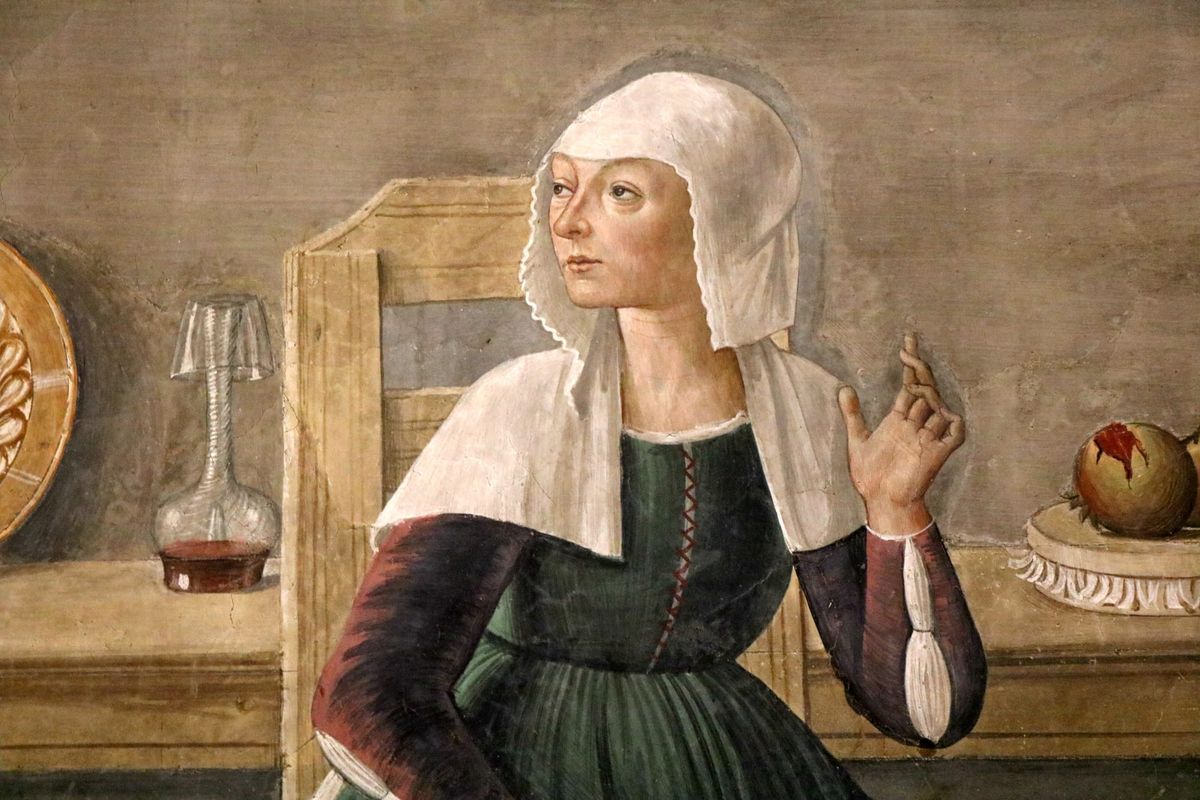
15세기 이탈리아 르네상스의 거장 도메니코 기를란다요(Domenico Ghirlandaio, 1448–1494)가 1473년부터 1475년에 걸쳐 완성한 기념비적 프레스코 벽화 성 피나에게 죽음을 알림 작품의 세부 인물 화면(Announcement of Death to St Fina Detail, 소장처: 이탈리아 산 지미냐노 콜레자타 성당 산타 피나 예배당)은 전체 벽화 속 등장인물의 표정과 소품을 포착한 대표적인 초기 르네상스 프레스코 부분화이다.
이탈리아 토스카나 지방 산 지미냐노의 수호성인인 성 피나의 임종 일화를 담은 원본 벽화의 일부로서, 오랜 세월 동안 산 지미냐노의 콜레자타 성당(Collegiata di Santa Maria Assunta) 산타 피나 예배당에 영구 보존되어 오고 있다.
작가의 고뇌/비하인드
1470년대 초반 이탈리아 토스카나 지역에서 활동하던 도메니코 기를란다요는, 비극적인 질병 속에서도 독실한 신앙을 지키다 세상을 떠난 어린 성녀 피나의 마지막을 지키는 주변 인물들의 인간적 고뇌와 감정을 벽화 속에 생생하게 담고자 깊은 몰두에 빠졌다.
화가는 단순한 종교적 군상의 재현을 넘어, 거동이 불편한 성녀를 돌보며 두려움과 경건함이 교차하는 간호사 벨디아와 이웃 여인의 표정을 프레스코 매체의 투명한 질감 속에 어떻게 녹여낼지 치열하게 번민했다.
성 피나 예배당의 공식 학술 기록에 따르면, 이 세부 화면 속 여인은 천상에서 내려온 교황 그레고리오 1세의 현림을 마주하고 놀라움과 절제된 두려움을 손동작과 시선으로 표현하고 있으며, 그녀의 뒤편 벤치 위에 놓인 금빛 그릇과 와인 병, 그리고 잘 익은 석류 등의 소품은 성서적 상징과 지상의 유한함을 나타내는 도상학적 핵심 장치로 분석된다.
화가는 회백색 벽면과 소박한 실내를 배경으로, 신성한 계시 앞 인물의 극적인 순간을 화폭에 담았다.
화면 중앙에는 하얀 두건을 두르고 초록색 의복을 입은 여인이 몸을 돌린 채 하늘을 향해 손가락을 들어 올리며 놀라움을 표하는 동작이 정교하게 묘사되어 있다.
몸에는 단정한 암녹색 드레스와 흰색 숄을 걸치고 긴장한 표정으로 시선을 던지는 모습이 깊은 인상을 자아낸다.
화면 왼쪽의 세공된 접시와 투명한 유리병, 그리고 오른쪽 상자에 놓인 쪼개진 석류는 화가가 추구했던 15세기 르네상스의 정물적 사실주의를 생생하게 웅변한다.
무의식 속 시선 및 심리 흐름
그림을 마주하는 순간 관람객의 무의식적 시선은 화면 중앙에서 경외감과 함께 놀라움을 표하며 시선을 던지는 여인의 하얀 두건과 긴장된 얼굴 표정의 섬세한 프레스코 묘사로 가장 먼저 빨려 들어간다.
초자연적인 현상을 마주하고 멈춰 선 인물의 생생한 제스처는 보는 이에게 강렬한 시각적 몰입감과 함께 팽팽한 긴장감을 선사한다.
이어 시선은 그녀의 손끝을 따라 화면 뒤편 벤치에 정갈하게 놓인 금빛 접시와 붉은 와인이 담긴 투명한 유리병, 그리고 쪼개진 석류의 텍스처로 자연스럽게 이동한다.
신성한 계시가 내려앉는 성소의 서늘하고도 숙연한 공기를 체감하는 순간, 관람객은 15세기 이탈리아의 경건한 예배당 속으로 온몸이 빨려 들어가게 된다.
마지막으로 시선은 인물의 의복을 감싸는 부드러운 주름선을 거쳐, 화면 전체를 묵직하게 받쳐주는 회백색 벽면의 차분한 대기감으로 멈춘다.
전면 인물의 매혹적인 심리적 반응과 후면 상징적 정물들의 조화를 마주하며, 관람객은 성녀의 임종이라는 비극적 서사를 생생한 예술로 승화시킨 거장 기를란다요의 압도적인 조형 의지를 가슴 깊이 마주하게 된다.
미술계의 평가 및 조형미
미술계와 산 지미냐노 성당 공식 도록은 이 작품을 기가란다요가 초기 프레스코 벽화 작업에서 이뤄낸 가장 극적이고 심리적 사실주의가 뛰어난 대표적인 세부 마스터피스로 평가한다.
단순한 배경 인물의 묘사를 넘어 15세기 후반 토스카나 회화가 지닌 극도의 형상적 세밀함과 북유럽 회화풍의 정물 표현력을 가장 완벽한 벽화 기법으로 융합해 냈기 때문이다.
인간의 영원한 경외감과 신성한 구원의 순간을 가장 격조 높은 시각 예술로 승화시킨 이 소중한 화폭은, 오늘날까지도 전 세계 수많은 감상자들에게 깊은 감탄과 잊을 수 없는 시각적 전율을 전해주는 불멸의 명작으로 손꼽히고 있다.
Announcement of Death to St Fina Detail
Painted between 1473 and 1475 by the early Renaissance master Domenico Ghirlandaio (1448–1494), Announcement of Death to St Fina (Detail) is a monumental masterpiece executed in fresco on the right wall of the Santa Fina Chapel in the Collegiate Church of Santa Maria Assunta in San Gimignano, Italy.
Preserved as a key figural segment of the wider mortuary cycle commissioned for the town's beloved patron saint, it remains housed today in its original permanent location within the Collegiata of San Gimignano.
Historic Context & Arcadian/Genre Depth
During the early 1470s in Tuscany, Domenico Ghirlandaio drew profound inspiration from the hagiographic accounts of Saint Fina, seeking to capture the human reactions of awe and hesitation among her attendants as divine revelation entered the room.
Moving beyond conventional religious fresco painting, the master meditated deeply on how to portray the psychological shock of the miraculous event using luminous fresco pigments and precise still-life details to achieve striking realism.
According to official art historical records, this exquisite detail incorporates rich symbolic elements such as the female neighbor gesturing in startled reverence, a delicate decanter covered with an inverted glass, a shining golden bowl, and pomegranates resting on a box, serving as powerful iconographic emblems of spiritual awakening, the sacrament, and mortal transience.
Ghirlandaio staged the composition against a stark domestic interior framed by whitewashed walls.
In the foreground, the attentive woman is depicted turning away from the bed, her hand raised in a gesture of restrained fright and astonishment.
She is rendered with warm, earthy tones, wearing a dark green dress and a white coif.
The meticulous rendering of domestic objects on the rear bench completes a solemn visual allegory of sacred intrusion into everyday life.
Subconscious Trajectory of the Gaze
The observer's subconscious gaze is immediately magnetized by the central register, drawn to the woman's expressive complexion, her luminous eyes, and her poignant gesture of surprise.
Her profound vulnerability and striking visage establish an instant focal point of psychological intensity, raw realism, and dramatic narrative weight.
The visual path then shifts outward toward the meticulously arranged still-life objects on the bench behind her, including the glass decanter and the split pomegranate.
Taking in the tactile qualities of the rich fresco paint, delicate drapery folds, and soft flesh tones, the viewer directly experiences the opulent, meditative atmosphere of Quattrocento Tuscany.
Finally, the visual trajectory moves toward the neutral background wall, before absorbing the expansive atmospheric framing of the chapel.
Observing the harmonious equilibrium between religious symbolism, figural emotion, and precise Renaissance draftsmanship, the spectator perceives the timeless poetry of devotion and the profound aesthetic brilliance Ghirlandaio embedded within the wall.
Critical Legacy
Art historians revere the Collegiata's Announcement of Death to St Fina (Detail) as a supreme milestone in Ghirlandaio’s early oeuvre, illustrating his consummate ability to unite complex narrative allegory with breathtaking fresco mastery on wall.
By orchestrating delicate textural contrasts between domestic still-life elements, expressive human gestures, soft flesh tones, and shifting tonal density within a unified format, Ghirlandaio transformed a hagiographic tale into an exquisite aesthetic treatise on faith, memory, and spiritual endurance.
This magnificent historical fresco detail endures as an inspiring testament to the master's creative fortitude, celebrating the quiet poetry of human existence and the transformative grace of living art.
본 컨텐트의 저작권은 팔렛트제주에 있습니다. 허가없는 무단전제를 금지합니다.
Copyright © Palette Jeju. All rights reserved. Unauthorized reproduction or redistribution is strictly prohibited.