성 카타리나와 성 바르바라와 함께 있는 성모자와 성화 Madonna and Child with Sts Catherine and Barbara
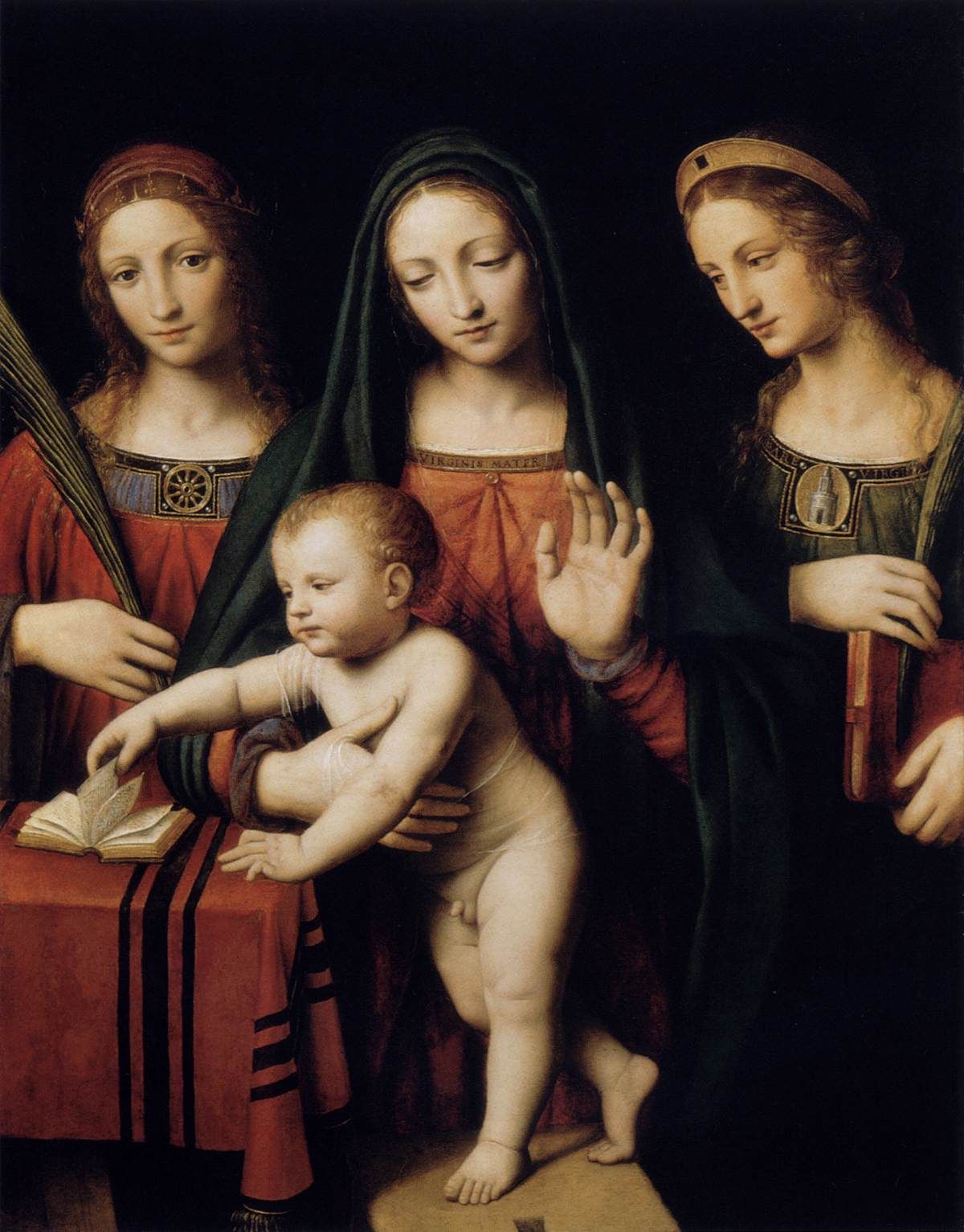
16세기 전반에 이탈리아의 화가 베르나르디노 루이니(Bernardino Luini)가 제작한 이 작품은, 르네상스 시기 북이탈리아 회화가 지닌 고요한 종교적 경건함과 성인들의 기품 있는 교감을 차분하게 투영합니다.
이탈리아 밀라노의 폴디 페쫄리 미술관(Museo Poldi Pezzoli, Milan)에 소장된 이 작품의 공식 소장품 등록번호는 1558이며, 실제 작품의 실측 규격은 높이 94 cm, 너비 79 cm의 패널 유채화입니다.
작가의 고뇌/비하인드
작품의 전면에는 중앙의 성모 마리아가 품에 안은 아기 예수를 받치고 있으며, 그 양옆으로 순교자의 상징을 지닌 성 카타리나와 성 바르바라가 에워싼 모습이 묘사되어 거룩한 신성과 인간적 유대의 실상을 고스란히 드러냅니다.
성모의 온화한 눈빛과 아기 예수의 천진난만한 동작, 그리고 성인들의 차분한 표정은 성스러운 구원의 신비를 화면 위에 우아하게 구현하려는 작가의 예술적 구상을 가감 없이 보여줍니다.
특히 중경에는 인물들의 다채로운 붉은색과 녹색 의복이 선명한 색채 대비를 이루어 입체적인 볼륨감을 형성하고 있으며, 원경의 완전히 어두운 배경을 통해 인물들의 형상과 표정에 시선을 집중시키는 대기감을 자아냅니다.
무의식 속 시선 및 심리 흐름
관람객의 시선은 가장 먼저 화면 중앙에서 부드러운 눈길로 아기 예수를 내려다보는 성모 마리아의 온화한 얼굴과 어두운 두건 장식으로 자연스럽게 꽂힙니다.
이어 시선은 마리아의 품에서 앞으로 몸을 기울이며 책을 만지는 아기 예수의 생동감 넘치는 자태를 거쳐, 화면 양옆에 자리한 성 카타리나와 성 바르바라의 차분한 표정으로 부드럽게 이동한다.
마지막으로 시선은 인물들을 감싸는 묵직하고 어두운 배경 공간으로 확장되며, 거룩한 성모자 중심의 경건한 질서가 주는 깊은 평온함의 울림을 체감하게 된다.
미술계의 평가 및 조형미
미술사학계는 이 작품을 16세기 롬바르디아 르네상스 종교화의 정수이자, 레오나르도 다 빈치 화풍의 부드러운 명암 대조와 인물의 섬세한 심리 묘사를 뛰어난 패널 회화 기법으로 포착한 수작으로 평가합니다.
패널 위에 겹겹이 쌓아 올린 유채 물감은 성모의 부드러운 피부 톤, 의복의 깊은 직물 질감, 그리고 아기 예수의 매끄러운 신체 라인을 생생하게 살아나게 만듭니다.
신성한 은혜와 인간적인 따뜻함을 예술의 경지로 조화롭게 녹여낸 이 작품은, 오랜 시간이 지나도 변함없는 미술사적 가치를 지니고 있다.
Madonna and Child with Sts Catherine and Barbara
Created in the early sixteenth century by the Italian master Bernardino Luini, this work quietly reflects the serene religious piety and the graceful connection among holy figures characteristic of North Italian Renaissance painting.
Housed in the Poldi Pezzoli Museum in Milan, Italy, this piece bears the official inventory number 1558, and the actual physical dimensions of the oil on panel measure 94 cm in height and 79 cm in width.
The Artist's Struggle and Behind-the-Scenes
In the immediate foreground, the Virgin Mary is depicted at the center supporting the Christ child, flanked by Saint Catherine and Saint Barbara bearing the attributes of martyrdom, vividly exposing the tangible reality of sacred divinity and holy fellowship.
The Virgin's gentle gaze, the lively posture of the Christ child, and the composed expressions of the accompanying saints unsparingly reveal the artist's creative ambition to embody the mystery of divine grace within a harmonious composition.
In the middle ground, a strong volumetric presence is established through the vibrant red and green garments contrasting against one another, while the deep, unadorned background in the distance generates an atmospheric depth that focuses attention squarely upon the figures.
Subconscious Gaze and Psychological Flow
The viewer's gaze is initially drawn directly to the gentle face and dark veil of the Virgin Mary at the center as she looks down upon the Christ child with tender affection.
The eye then shifts smoothly past the lively form of the infant Jesus leaning forward to touch a book down toward the calm and composed expressions of Saint Catherine and Saint Barbara flanking the scene.
Finally, the gaze drifts outward into the enveloping dark space of the background, evoking a profound sense of peace and the resonant weight of a sacred devotional gathering.
Art World Evaluation and Formal Beauty
Art historians evaluate this work as a masterpiece of sixteenth-century Lombard Renaissance religious painting, successfully capturing Leonardo da Vinci's legacy of sfumato lighting and the nuanced emotional depth of the sitters through exceptional panel painting techniques.
The layered application of oil paint on panel brings the smooth flesh tones of the Virgin, the rich fabric textures of the garments, and the lifelike form of the Christ child to breathtaking life.
Successfully fusing divine grace and human warmth into the pinnacle of artistic mastery, this creation retains an enduring value in art history.
본 컨텐트의 저작권은 팔렛트제주에 있습니다. 허가없는 무단전제를 금지합니다.
Copyright © Palette Jeju. All rights reserved. Unauthorized reproduction or redistribution is strictly prohibited.