성 히에로니무스의 광야 Saint Jerome in the Wilderness
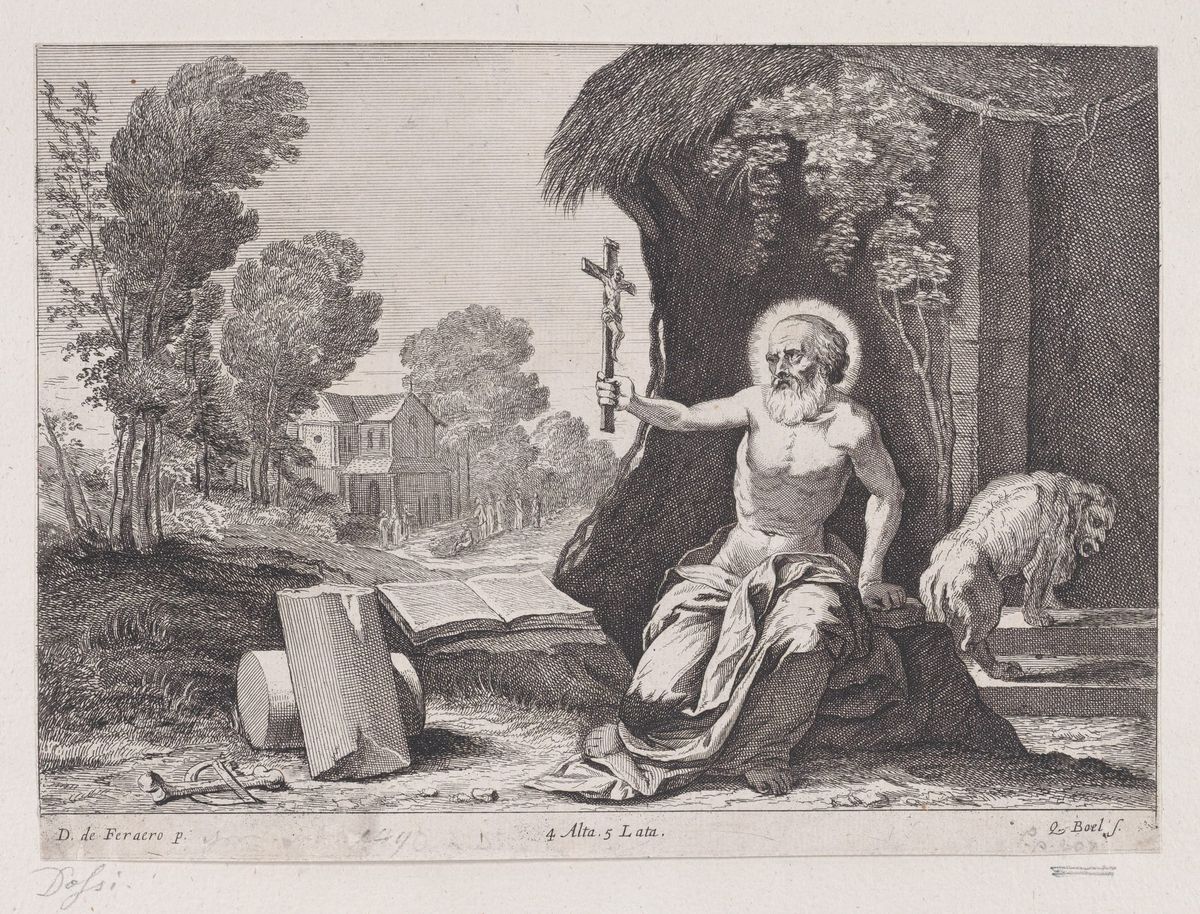
16세기 이탈리아 페라라 화파의 거장 도소 도시가 제작한 원작 회화를 바탕으로, 17세기 플랑드르의 판화가 퀴랭 보엘이 1660년에 에칭 기법으로 완성한 판화 작품 성 히에로니무스의 광야는 벨기에 브뤼셀 등에서 발행된 역사적인 판화 화보집 테아트룸 픽토리움에 수록된 높이 16.7 cm, 너비 23.1 cm 크기의 북유럽 에칭 최고 걸작입니다.
원작 회화를 소장했던 대공 레오폴트 빌헬름의 미술관 소장품 목록과 출판인 다비드 테니르스 2세의 판화집 기록을 거쳐 전해져 내려오고 있으며, 현재까지 다양한 유럽의 판화 컬렉션과 미술관 기록에 안전하게 보존되어 오고 있습니다.
이 작품은 독립된 완성형 에칭 판화로서 화면 전체의 경건한 성자 인물 군상과 주변 자연의 세밀한 묘사를 온전하게 감상할 수 있는 작품입니다.
작가의 고뇌/비하인드
16세기 전반 페라라 궁정에서 활동하던 도소 도시는 광야에서 참회하는 성 히에로니무스의 거룩한 모습을 화폭에 담으면서 인물과 자연의 조화를 효과적으로 풀어내고자 했고, 17세기 판화가 퀴랭 보엘은 원작의 깊이 있는 명암과 구성을 에칭 선으로 정교하게 옮기는 데 집중했습니다.
관련 미술관 및 판화 도록 기록에 따르면 이 작품은 십자가를 높이 들고 바위에 앉은 성 히에로니무스, 발치에 놓인 책과 부러진 기둥, 뼈 조각, 그리고 동굴 뒤로 다가오는 사자와 원경의 교회 풍경 등의 도상학적 요소를 통해 성자의 고행과 구원의 메시지를 상징하는 장치로 분석됩니다.
화가는 얽힌 나뭇가지와 초가 형태의 동굴을 배경으로 성자의 고요하면서도 경건한 순간을 판화 화면에 담았습니다. 화면 전면에는 상반신을 드러낸 채 십자가를 쥐고 있는 성 히에로니무스의 모습이 돋보이며, 그 곁에서 조용히 다가오는 사자와 바닥에 놓인 성서 및 유물의 실루엣이 묵직하게 배치되어 있습니다.
인물과 사물들은 당시의 상징적 묘사와 자연스러운 자세를 갖추고 서로 차분한 긴장감을 자아냅니다. 화면 왼쪽 배경의 아스라이 보이는 교회와 사람들이 모인 풍경은 원작 회화가 지닌 16세기 북이탈리아의 공간감을 충실히 드러냅니다.
무의식 속 시선 및 심리 흐름
그림을 마주하는 순간 관람객의 무의식적 시선은 화면 전면에서 높이 치켜들린 십자가와 성 히에로니무스의 강인한 윤곽선, 그리고 빛을 받는 상반신의 텍스처로 가장 먼저 향합니다. 신앙의 깊이를 전하는 성자의 자태는 시각적 몰입감을 불러일으킵니다.
성자 발치에 펼쳐진 거대한 성서와 부러진 기둥, 그리고 우측 어두운 동굴 입구에서 다가오는 사자의 묵직한 실루엣으로 자연스럽게 이동합니다. 현장의 경건하면서도 묵상적인 기운을 체감하는 순간 관람객은 17세기 플랑드르 판화가 재해석한 르네상스의 종교적 공간으로 빠져들게 됩니다.
마지막으로 화면 좌측의 무성한 나무들과 원경의 풍경 속으로 멈춥니다. 이로써 인물들의 심리적 안정감과 자연의 조화를 통해 관람객은 성자의 거룩한 참회 서사를 담아낸 거장의 조형 감각을 마주하게 됩니다.
미술계의 평가 및 조형미
미술계와 관련 판화 도록은 이 작품을 도소 도시의 원작 회화가 지닌 조형적 완성도를 세밀한 에칭 기법으로 완벽하게 되살려낸 대표적인 복제 판화 작품으로 평가합니다. 종교적 주제 속에서도 인물의 고뇌를 세밀하게 포착하고, 정교한 선의 묘사와 명암 대비를 통해 입체감을 탁월하게 살려냈기 때문입니다. 경건한 신앙의 한 단면을 생생하게 담아낸 이 판화 화폭은 오늘날까지도 감상자들에게 깊한 인상을 남기는 명작으로 손꼽힙니다.
Saint Jerome in the Wilderness
Created in 1660 by the Flemish printmaker Quirin Boel based on an original painting by the High Renaissance master Dosso Dossi, Saint Jerome in the Wilderness is an exquisite etching housed in esteemed European print collections, measuring 16.7 cm in height and 231 mm in width.
Published in Brussels as part of the historic publication series Theatrum Pictorium under the auspices of Archduke Leopold Wilhelm and David Teniers the Younger, it stands as a compelling graphic masterpiece of the 17th century.
This independent print presents the complete original composition in its entirety, reflecting the refined artistic sensibilities of northern European printmaking.
Historic Context & Arcadian/Genre Depth
During the 17th century in the Southern Netherlands, Quirin Boel drew deep inspiration from Italian masterworks, capturing the serene and ascetic devotion of Saint Jerome within a focused, highly detailed etching composition.
The printmaker portrayed the psychological nuances of penance by utilizing precise engraved lines and delicate tonal hatching to unify the central figure with his rugged natural surroundings.
According to official print documentation and museum records, this sheet incorporates key iconographic elements such as Saint Jerome holding a crucifix aloft while seated on a rock, an open book, a broken column, scattered bones, and his faithful lion approaching from the cave, serving together as powerful emblems of Christian devotion, mortality, and divine grace.
Boel staged the composition against a dark, rustic cave entrance that immediately accentuates the spiritual tension and quiet isolation of the scene.
In the foreground, the saint is depicted in penitent solitude holding the cross, while the lion steps quietly near the threshold.
The meticulous rendering of his expressive features, the surrounding symbols of mortality, and the distant church landscape visible on the left reflects the peak of reproductive printmaking and spatial mastery.
Subconscious Trajectory of the Gaze
The observer's subconscious gaze is immediately magnetized by the raised crucifix in the foreground and the precise, luminous handling of line work over the saint's torso.
Their profound psychological resonance and ascetic presence establish an immediate focal point of deep spiritual contemplation and emotional stillness.
The visual path then shifts outward along the fine, tactile textures of the open Bible, the broken column, and the approaching lion emerging from the shadowed cave.
The viewer directly experiences the atmospheric intimacy and meditative silence of a 17th-century devotional space.
Finally, the visual trajectory moves toward the solid contours of the trees before absorbing the distant landscape and architectural elements on the horizon.
Observing this seamless equilibrium between character study, internal mood, and narrative depth, the spectator perceives the timeless poetry of sacred graphic art.
Critical Legacy
Art historians and curators revere Saint Jerome in the Wilderness as a vital milestone in the tradition of interpretive printmaking, illustrating the consummate ability to translate complex Italian Renaissance paintings into masterful graphic plates.
By orchestrating delicate textural contrasts between linear hatching, organic forms, and deep shadowed areas, Boel transformed a classical composition into an exquisite aesthetic treatise on faith and human endurance.
This magnificent print endures as an inspiring testament to the master printmaker's vision, celebrating the quiet poetry of spiritual existence and the enduring beauty of print art.
본 컨텐트의 저작권은 팔렛트제주에 있습니다. 허가없는 무단전제를 금지합니다.
Copyright © Palette Jeju. All rights reserved. Unauthorized reproduction or redistribution is strictly prohibited.