성 게오르기우스 축일의 키르메스 Kermis on St George's Day
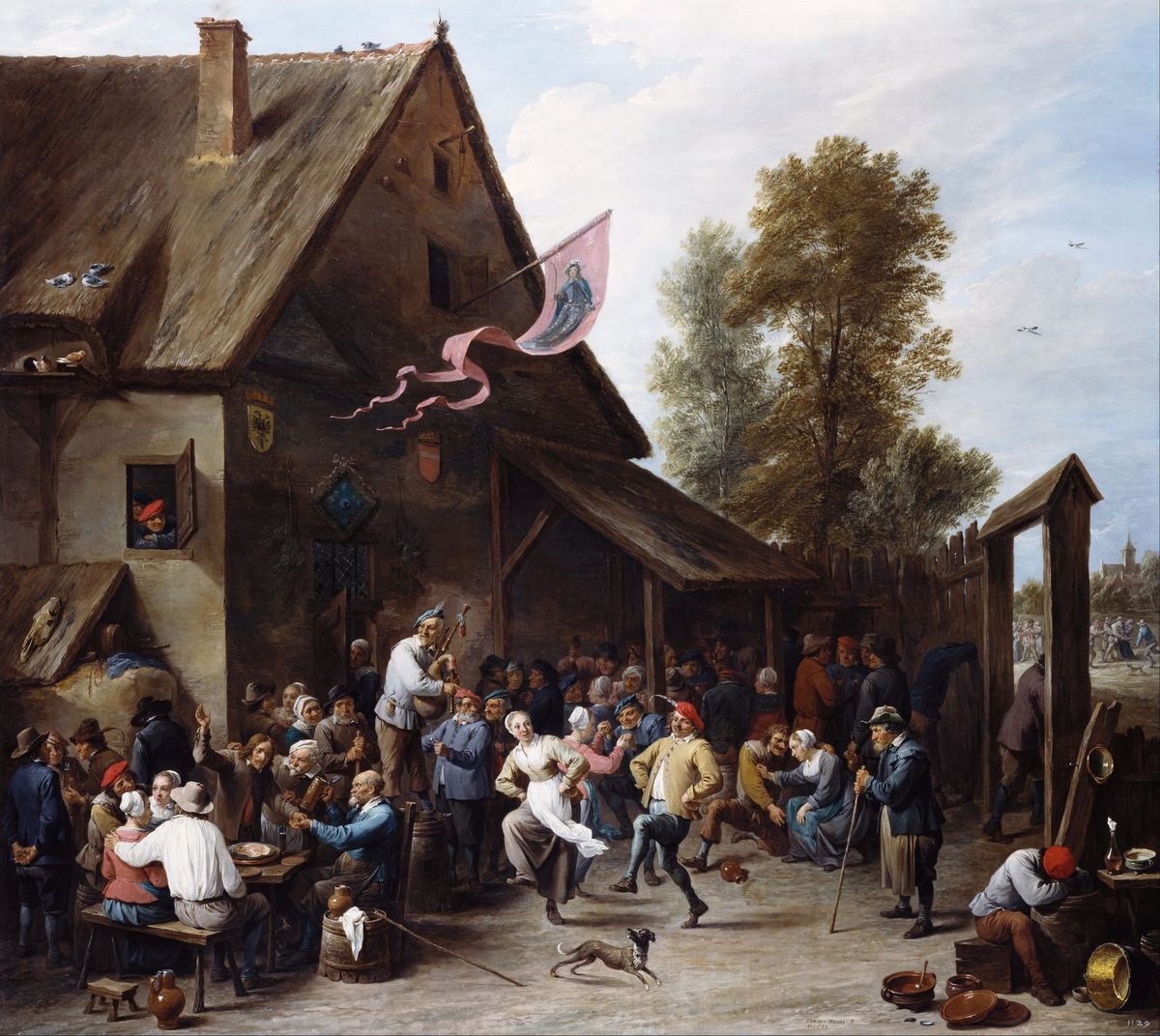
17세기 플랑드르 바로크 풍속화 및 농민 축제화의 거장 소 다비드 테니어르스(David Teniers le Jeune, 1610–1690)가 1649년 안트베르펜에서 완성한 기념비적 야외 축제 대작 유화 성 게오르기우스 축일의 키르메스(Kermis on St George's Day, 또는 성 조지의 날 마을 축제, 스페인어: Fiesta campestre el día de San Jorge, 소장품 번호: P001797 / 1129)는 80.0 cm × 109.0 cm 크기의 웅장한 가로형 캔버스에 유채로 그린 대표적인 북유럽 민속 축제화 최고 걸작입니다.
현재 스페인 마드리드의 프라도 미술관(Museo del Prado, Madrid)에 소장되어 있습니다.
수호성인 깃발 아래 피어난 평화와 민중의 웃음을 향한 화가의 고뇌
1648년 오랜 80년 전쟁이 끝나고 플랑드르 땅에 평화가 찾아왔을 때, 서른아홉 살의 테니어르스는 전란의 상처를 딛고 일어선 서민들의 벅찬 환희를 화폭에 영구히 남기고자 했습니다.
화가는 플랑드르 미술의 거장 피터르 브뤼헐 1세의 농민 축제 전통을 계승하면서도, 선배 화가들이 자주 그리던 거칠고 폭력적인 주점 난투극 대신 마을 주민 모두가 한마음으로 춤추고 노래하며 삶의 위로를 나누는 따뜻한 축제의 풍경을 어떻게 우아한 은빛 대기(Silvery manner) 속에 담아낼지 치열하게 번민했습니다.
성 게오르기우스는 용을 무찌른 성 기사로, 플랑드르 궁술 길드와 농민 공동체를 지켜주는 대표적인 수호성인입니다.
화가는 주막 지붕 높이 성 게오르기우스의 초상이 그려진 분홍빛 축제 깃발이 바람에 휘날리는 가운데, 수십 명의 마을 사람들이 마당에 모여 성대한 잔치를 벌이는 활기찬 순간을 화폭에 담았습니다.
화면 중앙 마당 한가운데에서는 깃털 모자를 쓰고 밝은 황토색 겉옷을 입은 청년과 흰 앞치마를 두른 여인이 서로 마주 보며 경쾌하게 스텝을 밟으며 춤을 추고 있습니다.
그들의 발치에서는 귀여운 얼룩 사냥개가 꼬리를 흔들며 뛰놀고 있고, 주막 문 앞 높은 나무통 위에 올라선 백파이프 악사는 볼을 빵빵하게 부풀려 신명 나는 춤곡을 연주하고 있습니다.
화면 왼쪽 긴 나무 탁자에서는 술잔을 높이 들고 건배를 외치는 농부들과 음식을 나누는 이웃들이 가득하고, 오른쪽 울타리 구석에서는 술에 취해 나무통에 기대어 잠든 사내와 비틀거리는 취객을 부축하는 여인의 모습이 정겹게 펼쳐져 있어, 소박한 축제 속에 깃든 인간미를 손에 잡힐 듯 생생하게 웅변합니다.
춤추는 남녀의 발걸음에서 백파이프 악사와 축제 깃발로, 시선의 심리적 여정
그림을 마주하는 순간 관람객의 무의식적 시선은 화면 중앙 흙마당에서 밝은 햇살을 받아 화사하게 빛나는 춤추는 청년의 황토색 상의와 붉은 모자, 그리고 그와 마주 선 여인의 흰 앞치마로 가장 먼저 빨려 들어갑니다.
허리에 손을 얹고 장난기 어린 표정으로 다리를 들어 올리는 남자의 익살스러운 춤사위와 사뿐사뿐 발을 맞추는 여인의 미소는 보는 이에게 깊은 시각적 활력과 함께 잔칫집 특유의 경쾌한 흥을 선사합니다.
이어 시선은 마당을 가로지르는 사냥개를 지나, 주막 문 앞 통나무 위에 우뚝 서서 백파이프를 불고 있는 흰 옷의 악사에게로 이동합니다.
어깨에 악기를 메고 흥겹게 가락을 뽑아내는 악사의 열정적인 모습과 그 곁에서 박수를 치며 호응하는 사람들을 확인하는 순간, 관람객은 웃음소리와 음악이 울려 퍼지는 17세기 플랑드르 마을 축제 한복판 속으로 온몸이 빨려 들어가게 됩니다.
마지막으로 시선은 왼쪽 탁자에서 맥주잔을 부딪치는 농부들의 유쾌한 얼굴들을 지나, 주막 지붕 위에서 바람을 타고 펄럭이는 분홍빛 성 게오르기우스 깃발과 저 멀리 푸른 하늘에 떠 있는 뭉게구름, 그리고 성문 너머로 이어지는 활쏘기 축제 행렬에 멈춥니다.
수평으로 넓게 펼쳐진 마당의 군중과 수직으로 솟아오른 주막의 짚단 지붕이 빚어내는 완벽한 공간적 조화를 마주하며, 관람객은 노동의 고단함을 잊게 하는 진정한 삶의 평온과 거장 테니어르스가 건네는 묵직한 서민적 위로를 가슴 깊이 마주하게 됩니다.
17세기 플랑드르 민속 축제화의 정점과 조형미, 미술계의 평가
미술계는 프라도 미술관의 성 게오르기우스 축일의 키르메스를 테니어르스가 야외 대형 군상 연출과 투명한 대기 원근법을 최고조의 원숙미로 결합해 완성한 대표적인 최고봉 걸작으로 평가합니다.
수십 명에 이르는 인물들의 춤과 대화, 음주와 휴식을 산만함 없이 유기적인 삼각형 구도 속에 배치했을 뿐만 아니라, 초가지붕의 까슬까슬한 질감, 바람에 날리는 깃발의 비단 광택, 흙바닥에 놓인 토기 그릇과 구리 냄비의 금속성 물질감을 극도로 섬세한 북유럽 사실주의 유화 기법으로 완벽하게 구현했기 때문입니다.
전란의 상처를 딛고 일어선 민중의 순수한 기쁨을 가장 따뜻하고 품격 높은 시각 교향곡으로 완성해 낸 테니어르스의 이 걸작 화폭은, 오늘날까지도 전 세계 수많은 감상자들에게 깊은 감탄과 잊을 수 없는 시각적 안식을 전해주는 불멸의 명작으로 손꼽히고 있습니다.
Kermis on St George's Day
Painted in 1649 in Antwerp by the master of Flemish Baroque genre and festive crowd painting David Teniers the Younger (1610–1690), Kermis on St George's Day (also titled Country Feast on Saint George's Day, Spanish: Fiesta campestre el día de San Jorge, Inventory No. P001797 / 1129) is a monumental festive genre masterpiece in oil on canvas measuring 80.0 cm × 109.0 cm (31.5 in × 42.9 in).
It is preserved in the distinguished permanent collection of the Museo del Prado in Madrid, Spain.
The Patron Saint Banner, Post-War Resurgence, and the Joy of the Kermesse
In 1649, immediately following the historic Peace of Münster (1648) that restored tranquility to the Southern Netherlands, David Teniers the Younger captured the collective spiritual relief and communal vitality of the Flemish peasantry.
The master meditated deeply on the celebrated kermesse tradition pioneered by Pieter Bruegel the Elder, seeking to transform the rustic village festival away from coarse brawl scenes into an elegant, sun-drenched monument of social harmony, innocent merriment, and restored peace.
Saint George, the dragon-slaying holy knight, served as the venerable patron saint of the crossbow archers' guild and rural farming communities.
Teniers staged an expansive village festival before a thatched country tavern, crowned by a long rose-pink banner bearing the image of Saint George fluttering from the upper gable.
In the center of the sunlit yard, an animated peasant couple dances a lively reel: a man in a feathered bonnet and ochre jacket kicks up his heels opposite a woman lifting her white apron in rhythm.
Beside them, a spotted greyhound darts across the ground, while atop a wooden cask by the porch, an energetic bagpiper fills the air with joyful folk tunes.
To the left, villagers feast and toast with foaming ceramic steins along wooden trestle tables, while to the right, a tired drinker slumbers against a beer barrel, celebrating the earthy warmth and authentic communal solidarity of Flemish life.
Subconscious Trajectory of the Gaze: From the Dancing Couple to the Saint George Banner
The observer's subconscious gaze is immediately magnetized by the central foreground, drawn to the luminous white apron of the dancing maiden and the spirited kick of her partner in his ochre doublet and red cap.
Their buoyant motion, uninhibited smiles, and rhythmic coordination create an instant focal point of physical vitality, holiday cheer, and narrative delight.
The visual path then shifts past the bounding terrier toward the porch, arriving at the robust figure of the bagpiper elevated upon the wooden cask.
Taking in his puffed cheeks, steady fingers, and the rhythmic clapping of the surrounding onlookers, the viewer directly experiences the acoustic charm and infectious laughter of an authentic 17th-century village fair.
Finally, the visual trajectory ascends past the boisterous drinking tables on the left to the billowing rose-pink standard of Saint George floating against the thatched roof, before sweeping across the open fields where villagers gather for archery games under sunlit clouds.
Observing the harmonious equilibrium between rotational crowd dynamics, deep aerial recession, and precise Netherlandish draftsmanship, the spectator perceives the timeless nobility of communal joy and the profound aesthetic solace Teniers embedded within the canvas.
The Monument of Flemish Festival Painting: Critical Legacy
Art historians revere the Prado Kermis on St George's Day as an absolute masterpiece of Teniers’s outdoor narrative art, illustrating his complete mastery of multi-figure choreography and atmospheric perspective.
By orchestrating delicate textural contrasts between weathered straw thatch, floating silk banners, glazed stoneware jugs, polished copper cauldrons, and radiant moisture-filled clouds within a unified perspectival space, Teniers elevated a seasonal celebration into an exquisite aesthetic treatise on peace and human vitality.
This grand historical canvas endures as an inspiring testament to the master's creative fortitude, celebrating the triumph of community spirit and the transformative grace of living art.
본 컨텐트의 저작권은 팔렛트제주에 있습니다. 허가없는 무단전제를 금지합니다.
Copyright © Palette Jeju. All rights reserved. Unauthorized reproduction or redistribution is strictly prohibited.