성 알렉시오 Saint Alexius
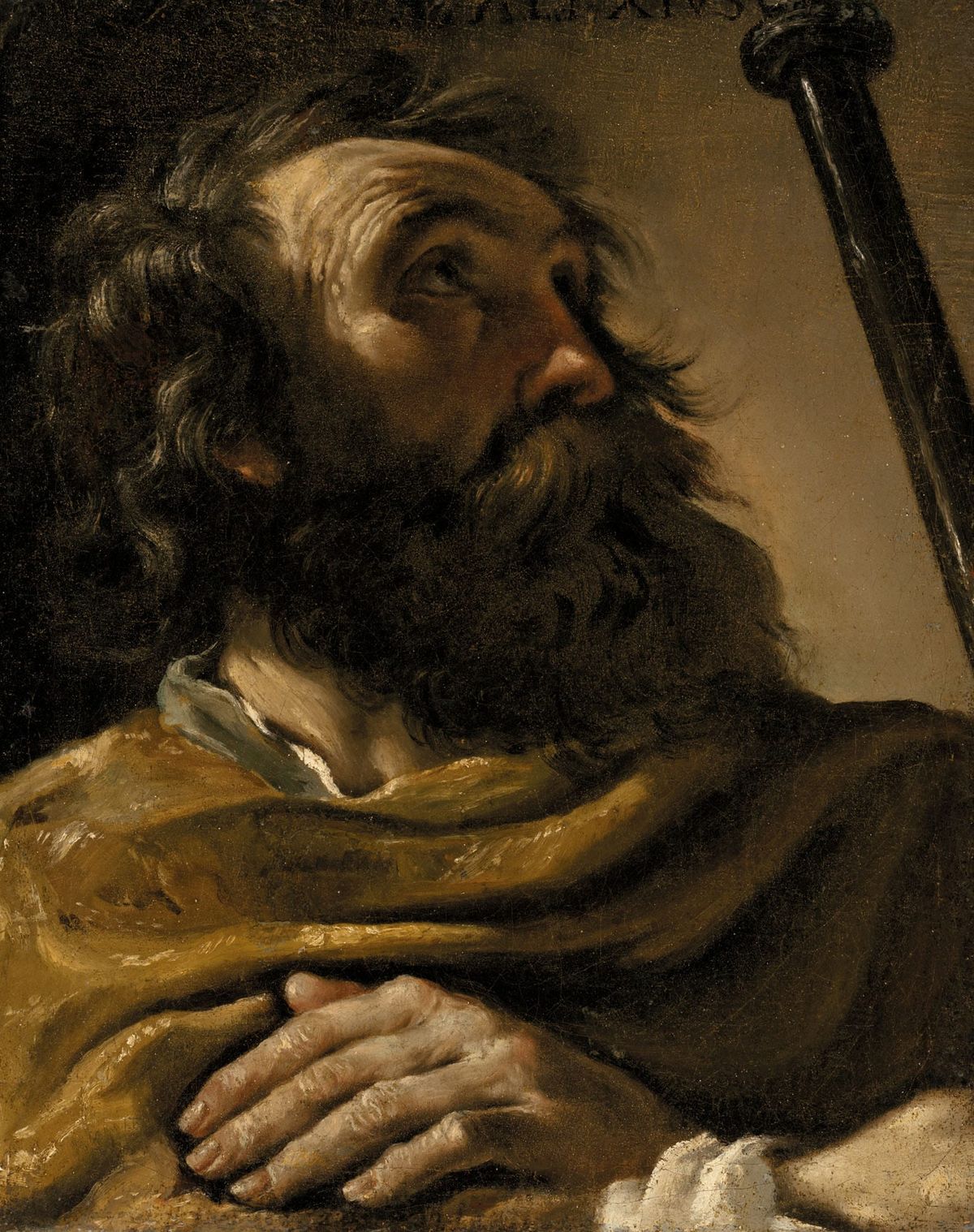
17세기 이탈리아 바로크 회화의 거장 조반니 프란체스코 바르비에리, 널리 귀에르치노(Guercino, 1591–1666)로 알려진 화가가 1619년에서 1620년경 청년 시절에 완성한 유화 성 알렉시오(Saint Alexius, 이탈리아어: Sant'Alessio)는 64.5 cm × 51.5 cm 크기의 캔버스에 유채로 그린 대표적인 초기 종교화 걸작입니다. 현재 런던의 개인 소장 또는 유럽 주요 컬렉션에 소장되어 있습니다.
천상을 향한 눈빛과 화실에서 지팡이를 떨어뜨린 순례자 소동
1610년대 후반 이탈리아 볼로냐와 첸토에서 이름을 떨치던 젊은 귀에르치노는 카라바조의 강렬한 명암법과 루도비코 카라치의 서정적인 감수성을 결합하여 독창적인 예술 세계를 열어가고 있었습니다. 귀에르치노는 귀족 가문의 부귀영화를 모두 버리고 평생을 가난한 순례자로 살며 하느님만을 바라보았던 성 알렉시오의 숭고한 믿음을 화폭에 담고자 깊은 고뇌에 빠졌습니다. 화가는 화실에 동네에서 신앙심 깊고 인자하기로 소문난 턱수염 난 노인을 초대해 거친 모직 순례복을 입히고 긴 지팡이를 쥐여주었습니다.
이 그림을 준비하던 날, 화실에서는 뭉클하면서도 웃음이 절로 나오는 소동이 벌어졌습니다. 모델이 된 노인이 성자의 황홀경을 표현하기 위해 가슴에 오른손을 얹고 고개를 번쩍 들어 천장을 응시하던 중이었습니다. 너무 진지하게 기도를 드리며 하늘을 올려다보다가 그만 손에 힘이 빠져 짚고 있던 무거운 나무 지팡이를 바닥으로 툭 떨어뜨리고 말았습니다. 지팡이가 쿵 소리를 내며 구르자 깜짝 놀란 노인이 고개를 숙이려 했지만, 귀에르치노는 얼른 달려가 지팡이를 다시 손에 쥐여주며 지금 그 간절한 눈빛을 절대 잃지 말라고 부탁했습니다.
노인이 눈가에 살짝 눈물을 글썽이며 다시 하늘을 향해 시선을 던지자, 귀에르치노는 캔버스 앞에서 맹렬한 속도로 붓을 휘둘렀습니다. 화가는 성자의 주름진 이마와 깊은 눈동자에 맺힌 천상의 빛, 부드러운 수염의 질감, 그리고 가슴에 얹은 손가락 마디마디의 굳은살까지 놀라운 사실성으로 캔버스에 얹어갔습니다. 사시라는 신체적 약점을 뛰어넘어 빛과 어둠의 완벽한 조화를 추구했던 젊은 거장의 뜨거운 예술혼과 성스러운 신앙심이 이 어두운 화폭 속에 영롱하게 빛나고 있습니다.
하늘을 우러르는 성자의 눈망울에서 가슴에 얹은 손과 순례자의 지팡이로, 시선의 심리적 여정
그림을 마주하는 순간 관람객의 무의식적 시선은 화면 상단 짙은 어둠 속에서 천상의 빛을 받아 화사하게 빛나는 성 알렉시오의 이마와 위를 향한 깊은 눈망울로 가장 먼저 빨려 들어갑니다. 세상의 모든 고통과 번뇌를 초월한 채 오직 신의 자비를 간구하는 성자의 맑고 간절한 시선은 보는 이에게 숨 막히는 숙연함과 깊은 영적 전율을 선사합니다.
이어 시선은 성자의 풍성하고 짙은 갈색 턱수염을 지나, 가슴 위에 경건하게 얹혀 있는 오른손의 섬세한 손가락 마디로 이동합니다. 험난한 순례의 길을 걸어오며 거칠어진 손끝과 옷깃을 부드럽게 쥐고 있는 손짓을 확인하는 순간, 관람객은 성자의 가슴속에서 벅차오르는 뜨거운 기도와 신앙의 숨결을 온몸으로 체감하게 됩니다.
마지막으로 시선은 성자의 어깨를 감싼 황토색 모직 겉옷의 두터운 주름을 지나, 화면 오른쪽 위에 길게 솟아 있는 순례자의 나무 지팡이와 어두운 배경에 멈춥니다. 칠흑 같은 어둠을 뚫고 내려오는 거룩한 은총의 빛과 한 인간의 고결한 헌신을 마주하며, 관람객은 유한한 삶을 넘어선 영원한 구원의 가치와 귀에르치노가 건네는 묵직한 영혼의 위로를 가슴 깊이 마주하게 됩니다.
초기 바로크 테네브리즘의 정점과 조형적 숭고미, 미술계의 평가
미술계는 성 알렉시오를 귀에르치노가 청년 시절에 보여준 폭발적인 명암 대비와 감정적 깊이가 완벽하게 응축된 대표적인 초기 종교화 명작으로 평가합니다.
카라바조식 강렬한 조명 효과를 활용하여 인물의 뼈대와 근육, 수염의 결을 극적인 촉각성으로 구현했을 뿐만 아니라, 성자의 내면적 황홀경과 종교적 숭고함을 과장 없이 진솔한 인간미로 승화시켰기 때문입니다. 어둠 속에서 영혼의 빛을 건져 올린 귀에르치노의 이 기념비적인 화폭은, 오늘날까지도 수많은 감상자들에게 깊은 감동과 잊을 수 없는 시각적 울림을 전해주는 불멸의 명작으로 손꼽히고 있습니다.
Saint Alexius
Painted around 1619–1620 in Cento by the preeminent Italian Baroque master Giovanni Francesco Barbieri, universally celebrated as Guercino (1591–1666), Saint Alexius (Italian: Sant'Alessio) is an oil on canvas measuring 64.5 cm × 51.5 cm (25.4 in × 20.3 in), preserved in a distinguished European private collection.
The Ecstatic Gaze and the Pilgrim Staff Commotion in the Studio
During the late 1610s in Cento and Bologna, the young Guercino emerged as a leading innovator of the early Baroque style, fusing Caravaggesque chiaroscuro with the lyrical naturalism of the Carracci academy. Guercino sought to portray Saint Alexius of Rome, the noble-born fifth-century ascetic who renounced his worldly riches and family to live in anonymous poverty and contemplation. To capture the authentic physical and spiritual gravity of a devoted pilgrim, the painter invited a pious elder from the town to pose in his atelier, clad in a coarse tunic and holding a wooden pilgrim staff.
A deeply moving and humorous incident occurred during the preparatory sitting. As the elderly model placed his right hand upon his chest and tilted his head upward toward the raking studio light, he became so absorbed in his posture that his grip loosened, causing the heavy wooden staff to tumble across the stone floor with a loud clatter. Startled by the sound, the sitter began to look down apologetically, but Guercino immediately stepped forward to reposition the staff, urging him to maintain that exact spontaneous, transcendent expression.
With tears of devotion glistening in the old man’s eyes as he resumed his upward gaze, Guercino worked with fiery speed across the canvas. The master meticulously recorded the deep furrowed brow catching the divine illumination, the soft texture of the dark curls, the weathered knuckles of the hand, and the heavy folds of the ochre cloak. Overcoming his own strabismus to achieve visionary mastery over dramatic lighting, Guercino imbued this sacred devotional work with profound emotional resonance.
Subconscious Trajectory of the Gaze: From Ecstatic Vision to the Pious Palm
The observer's subconscious gaze is immediately magnetized by the upper register, drawn to the radiant, upturned visage of Saint Alexius emerging dramatically against the enveloping black background. His wide, tear-filled eyes gazing into heavenly light and his parted lips establish an instant atmosphere of spiritual ecstasy and profound humility.
The visual path then descends through the thick, flowing curls of his dark beard toward his chest, arriving at the weathered right hand resting upon his heart. Taking in the tactile realism of his calloused knuckles and the delicate tension in his fingers grasping his collar, the viewer directly experiences the physical reality of the saint’s ascetic journey and the inward fervor of his prayer.
Finally, the visual trajectory sweeps across the heavy ochre and brown drapery enveloping his shoulders, ascending toward the turned wooden head of the pilgrim staff in the upper-right corner before resting in the atmospheric shadows. Observing the dramatic harmony between tenebristic lighting, tactile material realism, and spiritual devotion, the spectator perceives the enduring nobility of faith and the transcendent solace Guercino embedded within the canvas.
The Monument of Early Baroque Chiaroscuro: Critical Legacy
Art historians celebrate Saint Alexius as a supreme example of Guercino’s early mature period, demonstrating his virtuosic command of dramatic illumination (il chiaroscuro guercinesco) and psychological truth.
By rendering intense contrasts of light and shadow, differentiating between coarse wool, weathered flesh, and aged timber, Guercino transformed a traditional devotional icon into an intimate psychological meditation. This magnificent canvas stands as an inspiring testament to the master's enduring humanism, celebrating the sacred power of spiritual faith and the transformative grace of living art.
본 컨텐트의 저작권은 팔렛트제주에 있습니다. 허가없는 무단전제를 금지합니다.
Copyright © Palette Jeju. All rights reserved. Unauthorized reproduction or redistribution is strictly prohibited.