석고 토르소와 장미, 두 권의 소설 Still Life with Plaster Torso, a Rose and Two Novels
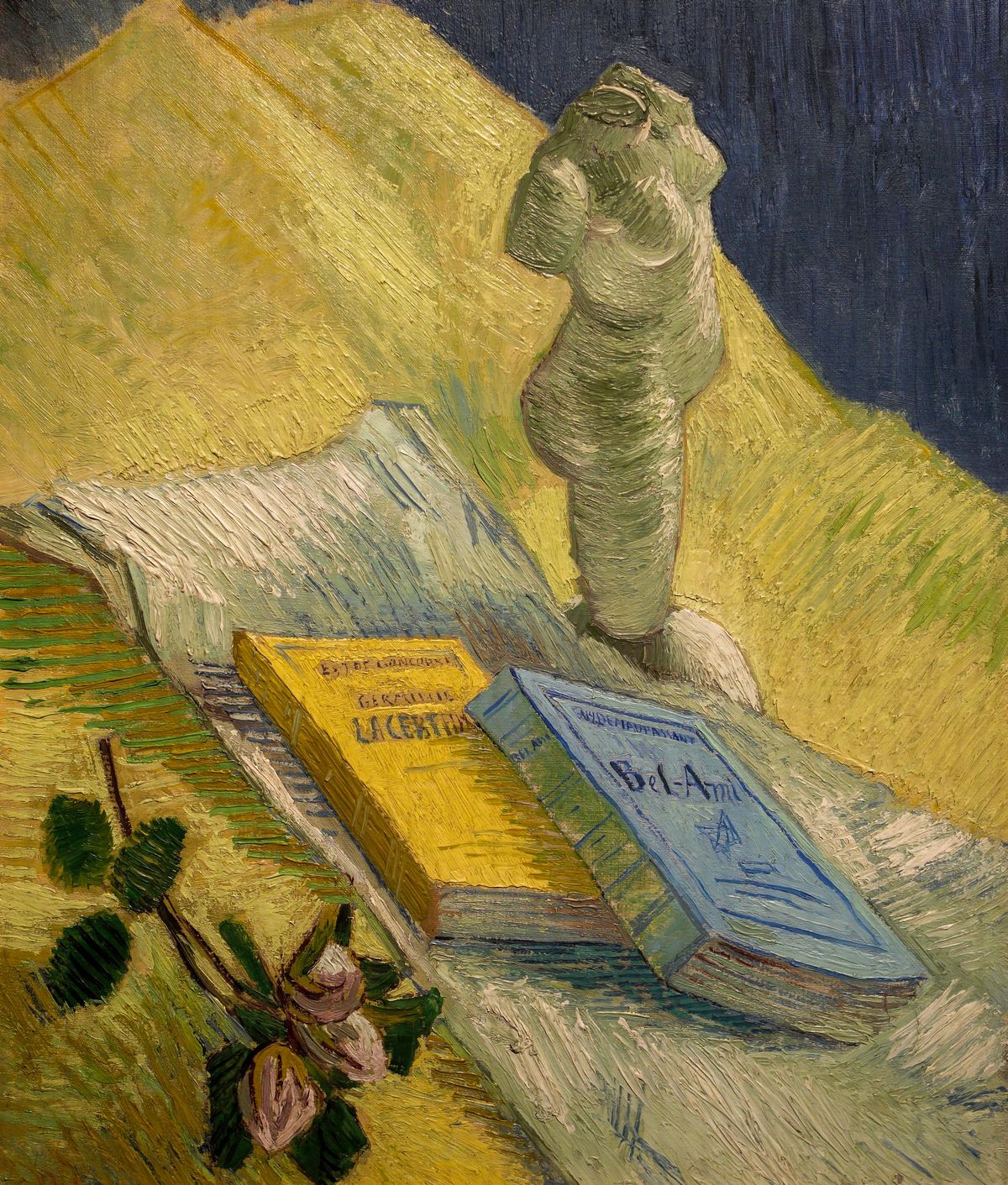
이 작품은 네덜란드의 후기 인상주의 거장 빈센트 반 고흐가 1887년 겨울 프랑스 파리 체류 시기에 제작한 유화입니다. 공식 소장품 등록번호는 F335이며, 캔버스 위에 유채로 그려진 실제 실측 규격은 46.5 x 38 cm입니다. 현재 이 작품은 네덜란드 암스테르담에 위치한 반 고흐 미술관에 공식적으로 소장되어 있으며, 빈센트 반 고흐 재단의 관리 아래 전 세계 관람객들을 만나고 있습니다.
작가의 고뇌와 창작 비하인드
파리 체류 시절 반 고흐는 아카데미 미술 교육의 전통적인 소재였던 석고상을 자신의 작업실로 들여와, 현대적인 문학 작품과 생명력 있는 자연물을 함께 배치하는 파격적인 정물화를 구상했습니다. 당시 그는 에밀 졸라나 기 드 모파상 같은 당대 사실주의 작가들의 소설을 탐독하며 예술과 문학이 나아갈 길을 치열하게 고민했고, 차가운 석고 조각에 인간적인 생기를 불어넣고자 하는 조형적 실험에 몰두했습니다.
작품 전경에는 시든 듯 꺾인 줄기에 매달린 연분홍빛 장미 한 송이가 놓여 있어 덧없는 삶의 아름다움을 소박하게 전해줍니다. 중경에는 노란색 표지의 에드몽 드 공쿠르 소설인 제르미니 라세르퇴와 푸른색 표지의 기 드 모파상 소설인 벨 아미가 펼쳐진 신문 위에 나란히 놓여 있고, 그 뒤로 목과 팔이 잘린 석고 여성 토르소가 묵직하게 솟아 있습니다.
배경으로는 대담한 황금빛 노란색 면과 오른쪽 상단의 어두운 푸른빛이 대조를 이루며, 실내 공간을 넘어 환상적인 예술의 대기감을 묵직하게 자아냅니다.
무의식 속 시선 및 심리 흐름
관람객의 시선은 가장 먼저 화면 왼쪽 아래에 덩그러니 놓인 꺾인 장미와 초록색 잎사귀로 향하며, 침묵 속에 감춰진 애잔한 생명의 소멸을 마주하게 됩니다. 이어지는 시선은 대각선으로 놓인 두 권의 소설책 표지와 중앙에 우뚝 솟은 하얀 석고 토르소의 중경으로 이동하여, 문학과 예술이 지닌 견고한 지적 실존을 체감하게 됩니다.
시선이 다시 배경을 가득 채운 강렬한 황금빛과 어두운 밤하늘 같은 푸른빛의 대기로 확장될 때, 관람객은 복잡한 예술적 번뇌 속에서도 아름다움을 갈구했던 작가의 치열한 내면세계에 온전히 동화됩니다. 이 일련의 시선 이동은 단순한 사물의 배치를 넘어, 문학과 예술, 그리고 인간의 생명이 교차하는 거장의 깊은 정신적 사유 속으로 우리를 이끕니다.
미술계의 평가 및 조형미
미술사학계와 평단은 본 작품을 고흐가 파리 시기에 도달한 문학적·예술적 사유의 결정체로 평가하며, 전통적인 정물 화법에서 벗어나 현대적 감각과 상징성을 성공적으로 결합한 걸작으로 인정합니다. 캔버스 위에 거칠고 두껍게 얹어진 임파스토 기법은 석고상의 입체적 질감, 책장의 페이지, 그리고 장미의 결을 손에 잡힐 듯 생생하게 살아나게 완성했습니다.
화면 전반을 지배하는 황금빛 노란색과 푸른색의 대담한 보색 대비는 시각적인 생동감과 뛰어난 조형적 균형을 동시에 선사합니다. 사물들을 통해 자신의 지적 취향과 예술적 고뇌를 완벽하게 담아낸 이 작품은, 시대를 초월해 관람객의 마음에 깊은 울림을 전하는 불멸의 가치를 지닙니다.
Still Life with Plaster Torso, a Rose and Two Novels
Executed in the winter of 1887 during his pivotal stay in Paris, this oil painting is a profound and intellectually rich still life by the Dutch Post-Impressionist master Vincent van Gogh. Officially cataloged under inventory number F335 and measuring 46.5 x 38 cm on canvas, the work is housed in the permanent collection of the Van Gogh Museum in Amsterdam under the management of the Vincent van Gogh Foundation.
The Artist's Turmoil and Creative Background
During his vibrant years in Paris, Van Gogh immersed himself deeply in modern French literature and academic traditions, bringing a plaster cast into his studio to experiment with unconventional juxtapositions of high art, literature, and nature. Reflecting his avid reading of contemporary realist authors like Émile Zola and Guy de Maupassant, he sought to bridge the gap between classical antiquity and modern intellectual life by combining sculptural form with the ephemeral beauty of everyday objects.
The foreground features a delicate, drooping rose with pale pink petals resting on a textured surface, symbolizing the fragile transience of life. In the middle ground, two distinct novels—Edmond de Goncourt's Germinie Lacerteux with its yellow cover and Guy de Maupassant's Bel-Ami in blue—lie open upon crumpled paper alongside a headless, limbless plaster female torso that rises starkly against the background.
The background contrasts a brilliant, golden-yellow planar expanse with a patch of deep royal blue in the upper right corner, charging the compressed interior space with dramatic symbolic resonance.
Psychological Flow and the Unconscious Gaze
The viewer's gaze is initially drawn to the solitary, drooping rose in the lower-left foreground, establishing an immediate contemplative mood centered on vulnerability and decay. The eye then migrates diagonally across the colorful covers of the two novels toward the central vertical mass of the white plaster torso, absorbing the solid, intellectual weight of the artistic objects.
As the gaze expands outward into the vibrant golden background and the contrasting blue corner, the observer is enveloped in a stimulating atmosphere of creative energy and introspection. This deliberate visual progression moves the viewer from an intimate encounter with a fragile blossom into an expansive meditation on literature, art, and existence.
Critical Acclaim and Formal Analysis
Art historians and critics widely celebrate this painting as a brilliant testament to Van Gogh's intellectual evolution in Paris, recognizing it as a triumph of infusing traditional still life with modern psychological depth. The vigorous application of paint through a heavy impasto technique imparts a tangible, sculptural reality to the plaster surface, the textured paper of the books, and the delicate petals of the rose.
The sophisticated orchestration of warm golden tones against cool blue and green accents generates a balanced visual harmony charged with artistic tension. Transmuting humble studio props into an immortal emblem of literary passion and creative striving, this masterpiece endures as an essential monument to Van Gogh's visionary genius.
본 컨텐트의 저작권은 팔렛트제주에 있습니다. 허가없는 무단전제를 금지합니다.
Copyright © Palette Jeju. All rights reserved. Unauthorized reproduction or redistribution is strictly prohibited.