나무 세 그루 - The Three Trees (Landscape with Three Trees)
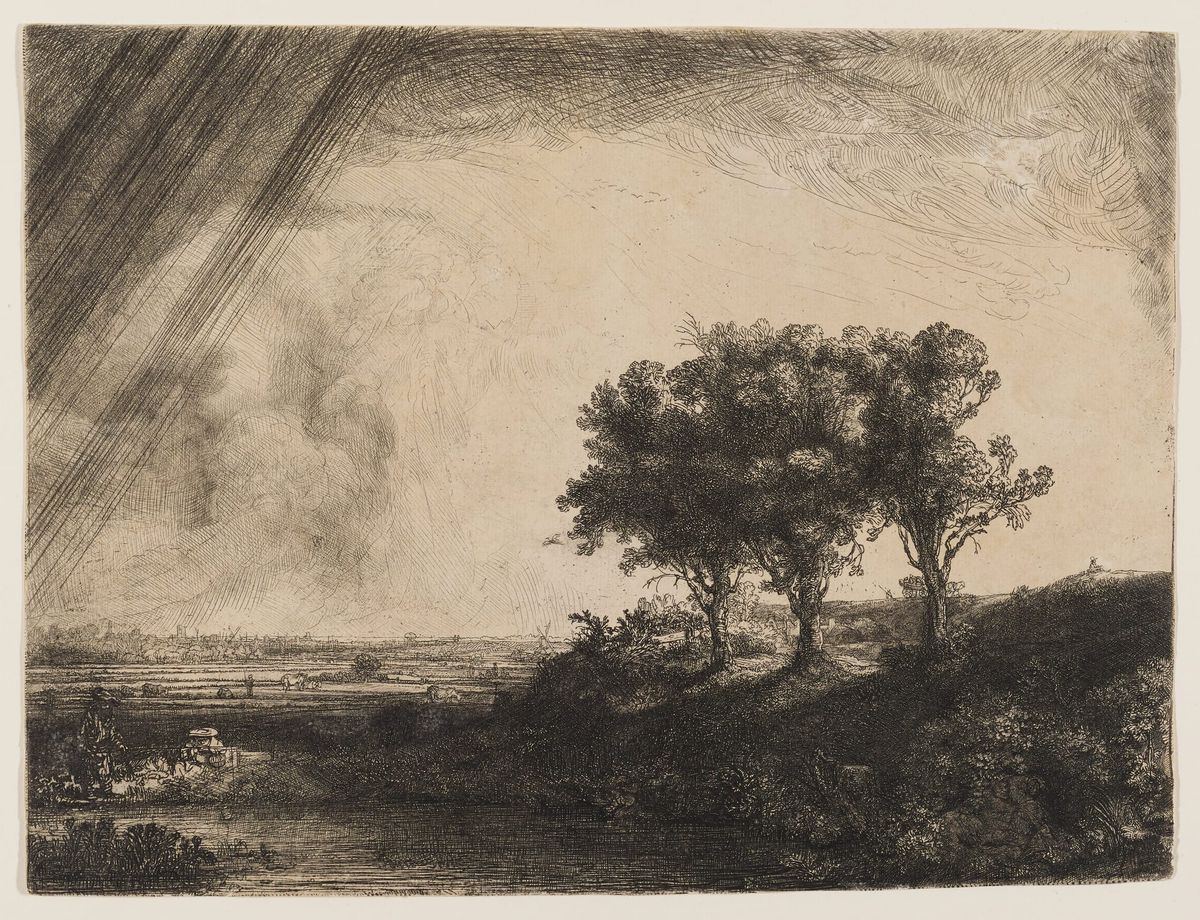
1643년 17세기 네덜란드 미술의 거장 렘브란트 반 레인(Rembrandt van Rijn)이 제작한 판화 작품 《세 나무》는 에칭과 드라이포인트, 뷰랭 기법으로 완성된 풍경 판화 역사상 최고의 걸작 중 하나로, 현재 암스테르담 국립미술관(Rijksmuseum)과 런던 대영박물관(British Museum), 뉴욕 메트로폴리탄 미술관(The Metropolitan Museum of Art) 등에 원본 판화가 소장되어 있으며 실제 크기는 약 21.3 × 27.9 cm입니다.
이 화면은 언덕 위에 무리지어 우뚝 선 세 그루의 고목과, 먹구름을 뚫고 빗줄기와 함께 쏟아지는 극적인 먹구름 하늘, 그리고 멀리 펼쳐진 암스테르담 외곽의 아득한 지평선을 렘브란트 특유의 강렬한 명암대비법(키아로스쿠로)으로 포착해 낸 명작입니다. 화가는 화면 우측의 언덕과 세 나무에 빽빽하고 어두운 해칭 선을 집약시켜 압도적인 조형적 무게감을 실어주고, 좌측 하늘에서 대각선으로 사정없이 내리꽂히는 먹구름과 빗줄기의 사선, 그 너머로 번지는 빛의 정교한 대조를 통해 네덜란드 대자연의 변덕스럽고 장엄한 대기감을 생생하게 부각시켰습니다.
작품 속에는 렘브란트가 남긴 가장 크고 야심 찬 풍경 판화로서의 비하인드 스토리와 상징주의가 흐릅니다. 1642년 아내 사스키아를 잃은 직후 제작된 이 대형 풍경 판화는 단순한 전원 풍경을 넘어 기독교 도상학적 상징을 품고 있습니다. 언덕 위에 우뚝 선 세 그루의 나무는 골고다 언덕 위에 서 있는 그리스도와 두 죄수의 세 십자가를 상징하며, 폭풍우가 몰아친 뒤 하늘이 트이며 스며드는 빛은 수난 뒤의 구원과 희망을 의미합니다. 또한 자세히 살펴보면 풀숲 속에 숨어 있는 연인들, 언덕 위에서 스케치하는 화가, 언덕 너머의 수레와 마을 풍경 등 세밀한 삶의 순간들이 대자연의 서사 속에 정교하게 녹아들어 있습니다.
후대 평단과 관객들은 이 판화를 렘브란트 풍경 판화 예술이 도달한 최고의 정점이자, 동판화 매체가 도달할 수 있는 가장 압도적인 드라마와 깊은 서정성의 결정체로 평가합니다. 화면을 가득 채운 먹구름과 빗줄기의 역동적인 진동, 그리고 언덕 위 세 나무가 자아내는 정숙하고 웅장한 자태는 관객에게 시대를 초월한 숭고한 감동과 깊은 정서적 울림을 선사합니다.
이 그림을 마주하는 관람객의 무의식적 시선은 화면 우측, 어두운 언덕 위에 묵직한 실루엣을 드러내며 웅장하게 서 있는 세 그루의 고목과 풍성한 나뭇잎 윤곽으로 가장 먼저 끌려갑니다. 거센 바람과 폭풍우 속에서도 단단히 뿌리내린 세 나무의 존재감은 관람객의 마음에 묵직한 시각적 중심과 숭고한 평온함을 안겨줍니다.
이어 시선은 화면 좌측 상단으로 이동하여, 먹구름을 가르며 대각선으로 거세게 내리꽂히는 먹구름 빗줄기의 사선들과, 그 너머로 빛이 스며들며 아득하게 트이는 지평선 및 암스테르담 마을의 미세한 윤곽으로 자연스럽게 이동합니다. 강렬한 빗줄기의 동세와 빛의 스펙트럼은 화면 전체에 팽팽한 서사적 긴장감과 광활한 공간감을 더해줍니다.
마지막으로 시선은 세 나무 아래 풀숲과 언덕 기슭의 어두운 해칭 음영, 그리고 화면 전경의 물가 잔물결 속으로 낙하하여 정착합니다. 이러한 무의식적 시선의 흐름은 대자연의 위엄과 구원의 빛이 교차하는 거룩한 현장으로 감상자를 자연스럽게 인도하며, 마음에 닿는 차분하고 정갈한 여운을 오래도록 남깁니다.
In 1643, Rembrandt van Rijn, one of the paramount masters of the Dutch Golden Age, created the monumental landscape etching titled "The Three Trees" (universally celebrated as Landscape with Three Trees). Preserved in world-renowned collections such as the Rijksmuseum in Amsterdam, the British Museum in London, and the Metropolitan Museum of Art in New York, this original print measures approximately 21.3 × 27.9 cm. This artwork finely captures the dramatic grandeur of a passing storm over the Dutch countryside through an extraordinary, unmatched synthesis of etching, drypoint, and burin work.
The print visually manifests three prominent trees standing atop a dark dike on the right, silhouetted against a dramatic sky where heavy rain-laden clouds burst into diagonal streaks of storm lines while sunlight breaks through over the distant horizon of Amsterdam. Historical context highlights the profound symbolic and personal weight of this sheet, executed shortly after the death of Rembrandt's beloved wife Saskia in 1642. The three trees on the elevated mound are widely interpreted as an allusion to the three crosses at Calvary, turning a panoramic Dutch view into a majestic, universal meditation on suffering, redemption, and nature. Hidden within the dense foliage and distant fields are intimate genre details—a painter sketching on the hill, lovers tucked into the dark bank, and fishermen along the water.
Art historians and critics continuously extol this sheet as the absolute climax of Rembrandt's landscape printmaking, celebrating his unmatched ability to evoke atmospheric turbulence and spatial depth upon paper. The striking contrast between the heavily cross-hatched, dark silhouettes of the trees and the vast, radiant sky sweeping across the flat terrain creates an enduring atmosphere of sacred awe and emotional permanence.
The moment an observer encounters this artwork, their gaze is subconsciously drawn straight to the dark, majestic cluster of the three trees standing resolutely on the elevated ground on the right. Their solid, enduring silhouette immediately diffuses tension, instilling a comforting sense of spiritual fortitude and quiet composure.
Next, the eye glides smoothly leftward toward the sky to trace the fierce, diagonal hatching lines representing torrential rain, before sweeping down across the flat, sunlit horizon dotted with windmills and distant church towers. The intense variation in line technique endows the sweeping landscape with profound physical weight and atmospheric drama.
Finally, the viewer's gaze drifts along the dark, grassy foreground bank and water's edge before coming to rest upon the shadowed perimeter of the composition. This natural visual journey guides the spectator into a state of quiet, reverent reflection, leaving a lasting impression of power, grace, and timeless peace.
본 리뷰에서 작품을 제외한 컨텐츠의 저작권은 팔렛트제주에 있습니다.
"퍼블릭도메인 고전명화"를 제외한 모든 창작 콘텐츠는 저작권법 제4조 및 제10조에 의거하여 보호됩니다. 무단 도용시 저작권법 제136조(벌칙)에 의거, 당사의 사전 서면 승인 없는 저작권 침해 행위를 금지합니다.