세 개의 십자가 - The Three Crosses (Christ Crucified Between the Two Thieves)
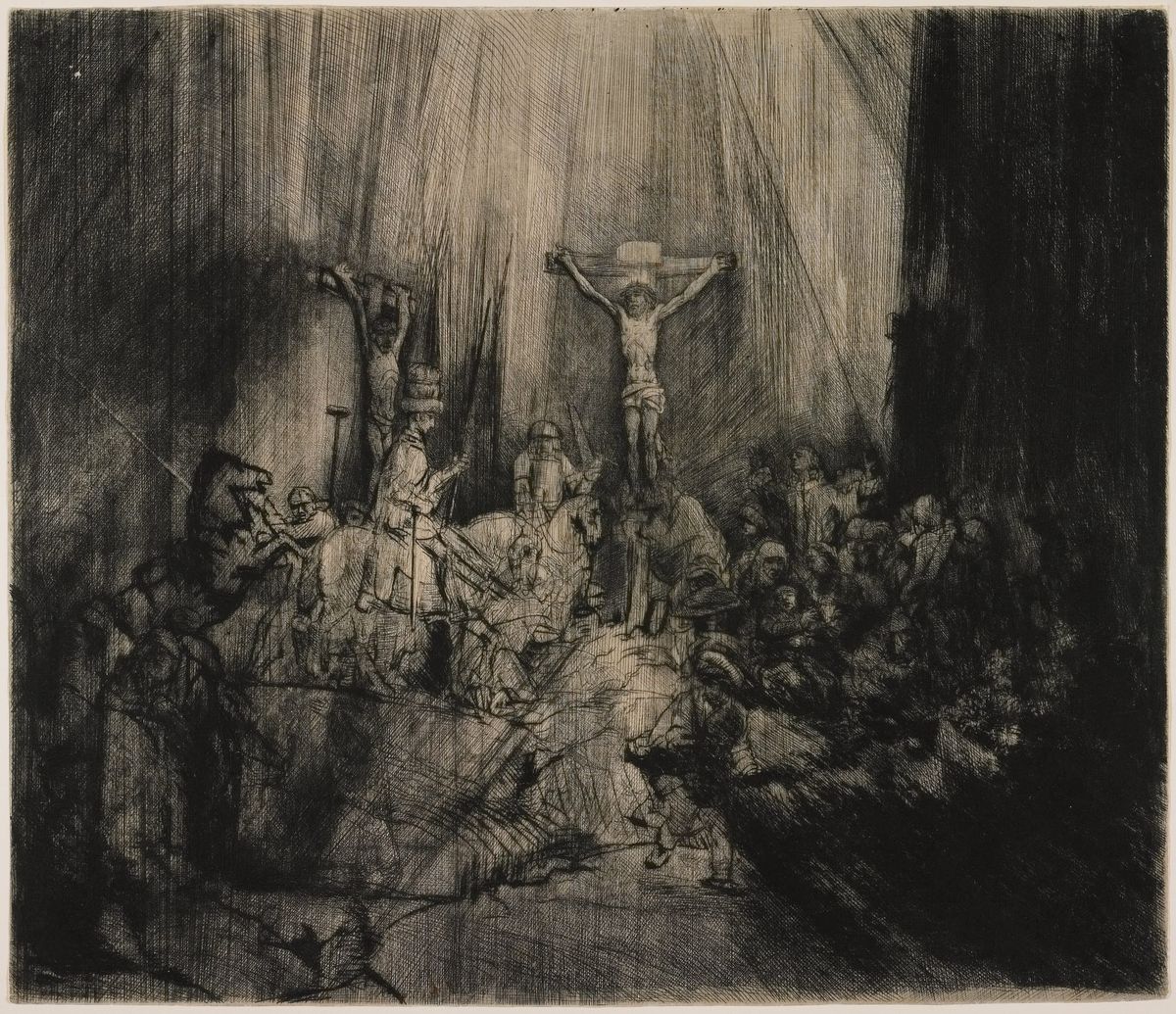
1653년 17세기 네덜란드 미술의 거장 렘브란트 반 레인(Rembrandt van Rijn)이 제작한 판화 작품 《세 개의 십자가》는 드라이포인트와 에칭 기법으로 완성된 종교 역사화의 불멸의 걸작으로, 현재 암스테르담 국립미술관(Rijksmuseum)과 런던 대영박물관(British Museum), 뉴욕 메트로폴리탄 미술관(The Metropolitan Museum of Art) 등에 원본 판화가 소장되어 있으며 실제 크기는 약 38.5 × 45.0 cm입니다.
이 화면은 신약성경 복음서에 기록된 십자가 처형의 가장 극적인 순간, 즉 골고다 언덕 위에서 예수 그리스도가 두 죄수 사이에서 십자가에 못 박혀 숨을 거두는 순간에 대지가 어두워지고 하늘에서 신성한 빛의 줄기가 쏟아지는 광경을 렘브란트 특유의 대담하고 묵직한 드라이포인트 선으로 포착해 낸 수작입니다. 화가는 화면 중앙에 높게 달린 그리스도의 신체 위로 천상에서 쏟아지는 눈부신 빛의 기둥을 격렬한 수직 해칭 선으로 재현하고, 그 주변을 에워싼 기병들과 슬픔에 찌든 관중, 그리고 백부장의 경외감을 명암의 극적 대조 속에서 부각시켰습니다.
작품 속에는 판화사에서 보기 드문 렘브란트의 대담한 재작업 과정과 판화 수식(State)의 변화가 담긴 비하인드 스토리가 흐릅니다. 렘브란트는 이 대형 판화를 오직 드라이포인트 뷰랭을 주로 사용하여 동판 위에 직접 긁어 표현했으며, 제작 수년 후인 1660년경 판화 동판을 완전히 재작업(제4상, 4th State)하여 구도상의 인물들을 과감히 삭제하거나 스크래치를 더해 어둠의 깊이를 한층 심화시켰습니다. 예수 그리스도가 숨을 거두는 순간 우주적 차원의 어둠과 구원의 광채가 교차하는 영적 서사는 판화라는 매체가 도달할 수 있는 극치의 표현력을 보여줍니다.
후대 평단과 관객들은 이 판화를 렘브란트 후기 판화 예술이 자랑하는 압도적인 연극적 명암법과 드라이포인트의 버(Burr, 긁힌 금속 잔여물)가 만들어내는 벨벳 같은 어둠이 정점에 달한 인류의 보물로 평가합니다. 하늘을 가르고 폭포수처럼 내리꽂히는 빛의 줄기와, 어둠 속으로 스며드는 군상의 슬픔은 관객에게 시대를 초월한 숭고한 감동과 압도적인 긴장감을 선사합니다.
이 그림을 마주하는 관람객의 무의식적 시선은 화면 상단 어둠을 가르고 수직으로 강렬하게 분출하는 천상의 빛 줄기와, 그 빛의 한복판에 높이 매달린 예수 그리스도의 수난하는 신체 윤곽으로 가장 먼저 끌려갑니다. 어둠 속에서 오롯이 빛을 받는 그리스도의 자태는 관람객의 마음에 묵직한 시각적 중심과 숭고한 숙연함을 안겨줍니다.
이어 시선은 빛의 줄기를 따라 아래로 내려와, 십자가 발치에 무릎을 꿇고 손을 모아 고백하는 백부장의 동세와, 좌우의 두 죄수 십자가, 그리고 경악과 슬픔에 휩싸여 스러지는 마리아와 제자들의 어두운 윤곽으로 자연스럽게 이동합니다. 거친 수직·사선 해칭이 만드는 깊은 음영은 화면 전체에 팽팽한 서사적 긴장감과 묵직한 무게감을 더해줍니다.
마지막으로 시선은 화면 좌우와 하단을 대담하게 가로막고 있는 묵직하고 거친 어둠의 장막, 그리고 말을 탄 군사들의 그늘진 실루엣 속으로 낙하하여 정착합니다. 이러한 무의식적 시선의 흐름은 신성한 구원과 우주적 고독이 교차하는 거룩한 수난의 현장으로 감상자를 자연스럽게 인도하며, 마음에 닿는 차분하고 정갈한 여운을 오래도록 남깁니다.
In 1653, Rembrandt van Rijn, one of the paramount masters of the Dutch Golden Age, created the monumental drypoint print titled "The Three Crosses" (Christ Crucified Between the Two Thieves). Preserved in distinguished global collections such as the Rijksmuseum in Amsterdam, the British Museum in London, and the Metropolitan Museum of Art in New York, this original print measures approximately 38.5 × 45.0 cm. This artwork finely captures the cosmic tragedy and divine light of the Crucifixion through an extraordinary, highly expressive matrix of drypoint and etching lines.
The print visually manifests the biblical climax recorded in the Gospels, depicting Christ suspended between the two thieves on Golgotha as dark shadows engulf the earth and a sudden ray of heavenly light pierces through the sky. Historical context reveals Rembrandt's revolutionary printmaking technique; working primarily with a drypoint needle directly on the large copper plate, he continually reworked the composition across multiple states—most radically in c. 1660—darkening the scene with intense cross-hatching to heighten the apocalyptic drama of Christ's death.
Art historians and critics continuously extol this sheet as one of the absolute pinnacles of Western graphic art, celebrating Rembrandt's ability to manipulate the rich, velvety burr of drypoint to create visceral atmospheric gloom. The striking contrast between the blinding diagonal shafts of light bathing the Central Cross and the surrounding dense, shadowy crowds creates an enduring atmosphere of sacred awe and monumental power.
The moment an observer encounters this artwork, their gaze is subconsciously drawn straight to the brilliant, vertical torrent of celestial light illuminating the central figure of the crucified Christ. His pale, agonizing form immediately diffuses tension, instilling a comforting sense of spiritual redemption and reverent stillness.
Next, the eye glides smoothly down along the path of light toward the kneeling Roman centurion acknowledging Christ's divinity at the foot of the cross, tracing the weeping figures of Mary and the disciples collapsing in shadow. The intense, slashing drypoint strokes defining the flanking thieves and terrified onlookers add immense physical weight and emotional depth to the scene.
Finally, the viewer's gaze drifts into the impenetrable, dark borders framing the lower corners and side perimeters before coming to rest upon the surrounding spatial field. This natural visual journey guides the spectator into a state of quiet, reverent reflection, leaving a lasting impression of sacrifice, majesty, and timeless peace.
본 리뷰에서 작품을 제외한 컨텐츠의 저작권은 팔렛트제주에 있습니다.
"퍼블릭도메인 고전명화"를 제외한 모든 창작 콘텐츠는 저작권법 제4조 및 제10조에 의거하여 보호됩니다. 무단 도용시 저작권법 제136조(벌칙)에 의거, 당사의 사전 서면 승인 없는 저작권 침해 행위를 금지합니다.