사냥꾼의 선물 The Hunter's Gift
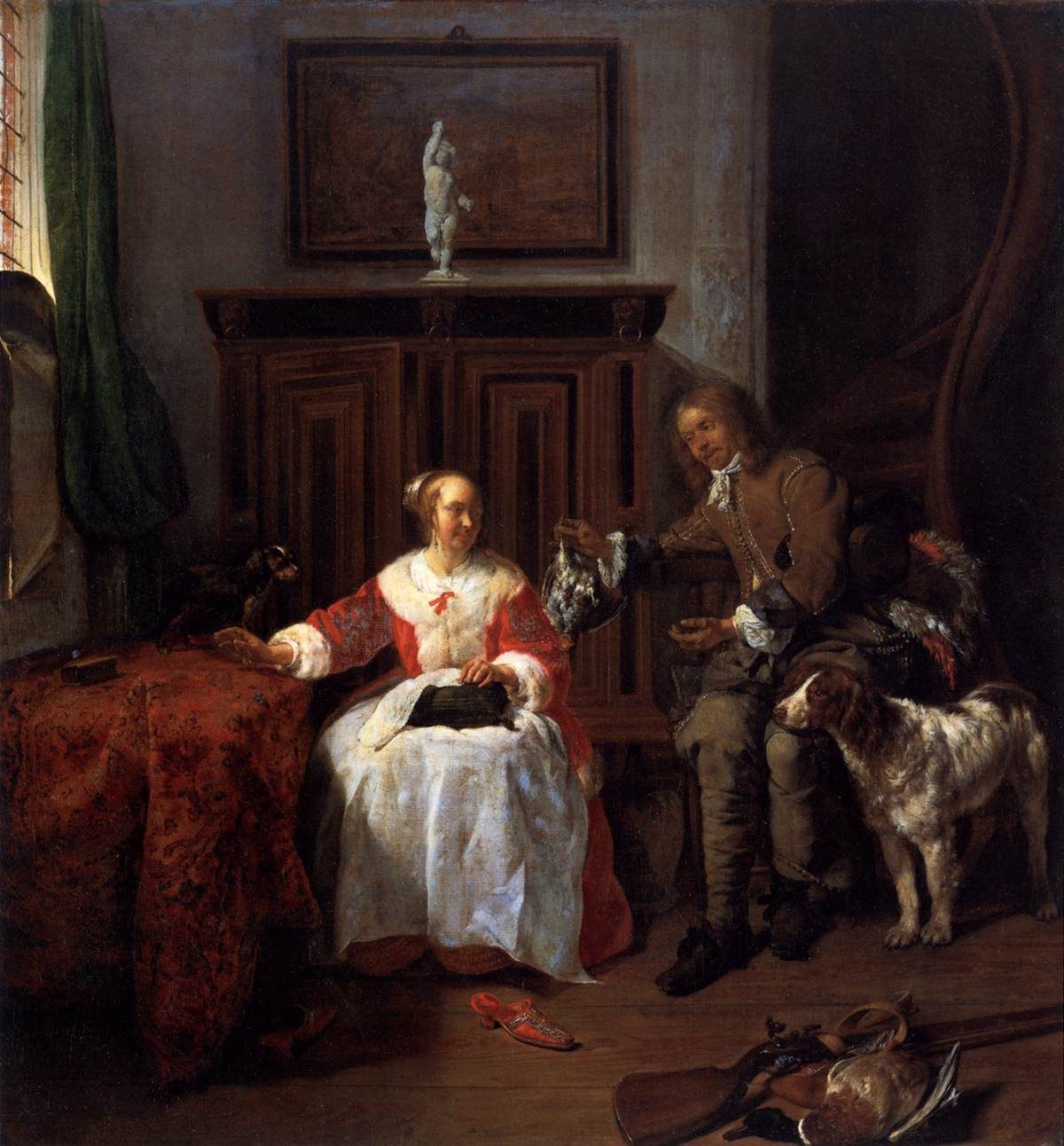
17세기 네덜란드 황금시대의 풍속화 거장 가브리엘 메추(Gabriel Metsu, 1629–1667)가 1658년에서 1660년경 암스테르담 시절에 완성한 유화 사냥꾼의 선물(The Hunter's Gift, 네덜란드어: Het jagersgeschenk)은 51.0 cm × 48.0 cm 크기의 캔버스에 유채로 그린 대표적인 실내 구애 풍속화 걸작입니다. 현재 네덜란드 암스테르담의 국립미술관(Rijksmuseum, Amsterdam) 및 이탈리아 피렌체의 우피치 미술관(Galleria degli Uffizi, Florence) 등에 소장되어 있습니다.
사냥해 온 죽은 자고새와 화실 바닥에 뒹군 붉은 실내화 소동
1650년대 후반 암스테르담의 부유한 시민 사회에서는 사냥을 다녀온 남성이 여성에게 야생 조류를 선물하며 마음을 전하는 은밀한 구애 풍습이 널리 퍼져 있었습니다. 당시 네덜란드어로 새를 사냥한다는 표현은 이성을 유혹하고 사랑을 고백한다는 중의적인 뜻을 품고 있었기에, 메추는 겉으로는 단정하고 품위 있어 보이지만 속으로는 팽팽한 설렘이 오가는 남녀의 미묘한 심리전을 화폭에 담고자 깊이 고민했습니다. 화가는 화실에 고급 원목 가구와 동양 카펫을 깔고, 사냥 복장을 한 친구와 아내 이사벨라를 모델로 세운 뒤 사냥총과 사냥감들을 배치했습니다.
이 그림을 준비하던 날, 화실에서는 유쾌하면서도 웃음이 절로 나오는 소동이 벌어졌습니다. 사냥꾼 역할을 맡은 남자가 무릎을 굽히고 죽은 자고새를 조심스럽게 내밀며 포즈를 취하는 동안, 의자에 앉아 바느질 쿠션을 쥐고 있던 여인이 살짝 발을 움직이다가 그만 신고 있던 붉은 비단 슬리퍼 한 짝을 바닥으로 툭 벗어던지고 말았습니다. 그 순간 사냥꾼 곁에 얌전히 엎드려 있던 큰 사냥개가 바닥에 떨어진 붉은 신발을 장난감으로 착각하고 킁킁거리며 다가갔고, 테이블 위에서 작은 반려견을 쓰다듬던 여인은 웃음을 터뜨리며 손을 내저었습니다.
남자는 능청스러운 미소를 지으며 여인의 눈을 지그시 바라보았고, 화실은 한바탕 웃음바다가 되었습니다. 메추는 벗겨진 붉은 슬리퍼와 테이블 위의 작은 강아지, 그리고 사냥개가 어우러진 이 절묘한 순간이야말로 남녀 간의 은밀한 유혹과 사랑의 긴장감을 보여주는 최고의 상징임을 직감했습니다. 화가는 여인이 입은 진홍빛 벨벳 재킷의 하얀 깃털 장식과 눈부신 백색 실크 치마, 벽장 위에 놓인 사랑의 신 에로스 조각상, 그리고 바닥에 놓인 사냥총과 청둥오리의 깃털까지 놀라운 정밀함으로 캔버스에 담아냈습니다. 잦은 병마 속에서도 젊은 날의 찬란한 사랑과 인간의 진솔한 감정을 따뜻한 시선으로 포착하려 했던 메추의 섬세한 예술혼이 이 화려한 화폭 속에 고스란히 살아 숨 쉬고 있습니다.
붉은 벨벳 재킷의 여인에서 내민 자고새와 붉은 슬리퍼로, 시선의 심리적 여정
그림을 마주하는 순간 관람객의 무의식적 시선은 화면 왼쪽 창가에서 쏟아지는 부드러운 자연광을 받아 밝게 빛나는 여인의 우아한 옆모습과 화사한 진홍빛 벨벳 재킷, 그리고 순백의 실크 치맛자락으로 가장 먼저 빨려 들어갑니다. 손에 검은 벨벳 쿠션을 얹은 채 사냥꾼을 지그시 응시하는 여인의 온화하면서도 미묘한 눈빛은 보는 이에게 깊은 시각적 매혹과 함께 은근한 설렘을 선사합니다.
이어 시선은 화면 오른쪽에서 정중하게 몸을 굽힌 사냥꾼의 깃털 달린 모자와 다정한 미소를 지나, 그의 손끝에 들려 여인에게 건네지는 죽은 자고새로 이동합니다. 사냥의 성공을 과시하며 여인의 환심을 사려는 남자의 적극적인 구애와 이를 흥미롭게 바라보는 여인의 반응을 확인하는 순간, 관람객은 실내를 감도는 은밀한 사랑의 밀어와 낭만적인 긴장감을 공감각적으로 느끼게 됩니다.
마지막으로 시선은 바닥에 아무렇게나 벗겨져 놓인 매혹적인 붉은색 슬리퍼 한 짝과 바닥에 누워 있는 사냥총, 깃털을 늘어뜨린 청둥오리를 지나, 주인을 충직하게 올려다보는 커다란 사냥개와 벽장 위 에로스 조각상에 멈춥니다. 고급스러운 실내의 정적과 그 안에서 피어나는 남녀의 달콤한 연애 감정을 마주하며, 관람객은 17세기 네덜란드 상류사회의 품격 있는 낭만과 메추가 건네는 다정하고 위트 넘치는 예술적 위로를 가슴 깊이 마주하게 됩니다.
네덜란드 상류 풍속화의 정점과 상징적 조형미, 미술계의 평가
미술계는 사냥꾼의 선물을 가브리엘 메추가 얀 베르메르, 제라르 테르보르흐, 가브리엘 메추 자신으로 이어지는 네덜란드 상류 장르화의 황금기를 대표하는 불멸의 걸작으로 평가합니다.
사냥감, 벗겨진 신발, 에로스 조각상 등 당대 네덜란드 문화의 정교한 연애적 상징 체계를 완벽하게 녹여냈을 뿐만 아니라, 벨벳, 실크, 모피, 목재, 금속 총기, 깃털 등 다양한 물질의 질감을 빛의 마술과도 같은 세밀화 기법으로 재현했기 때문입니다. 일상의 은밀하고 사랑스러운 순간을 고귀한 예술적 시로 승화시킨 메추의 이 서정적인 화폭은, 오늘날까지도 전 세계 수많은 감상자들에게 깊은 미소와 잊을 수 없는 시각적 감동을 선사하고 있습니다.
The Hunter's Gift
Painted around 1658–1660 in Amsterdam by the preeminent Dutch Golden Age master Gabriel Metsu (1629–1667), The Hunter's Gift (Dutch: Het jagersgeschenk) is an oil on canvas measuring 51.0 cm × 48.0 cm (20.1 in × 18.9 in), preserved in the permanent collection of the Rijksmuseum in Amsterdam, Netherlands.
The Partridge Offering and the Slipper Commotion in the Studio
During the late 1650s in Amsterdam, hunting wild game and presenting the catch to a lady was a widely understood cultural metaphor for romantic pursuit and courtship. In contemporary Dutch vernacular, the term for bird-hunting was commonly used as a playful pun for amorous conquest. Keen to capture the subtle psychological dynamic and romantic tension between the sexes beneath a veneer of polite domestic etiquette, Gabriel Metsu arranged fine oak furniture, an imported Persian carpet, and hunting gear in his studio, inviting his wife Isabella and a close friend to model.
A delightfully humorous incident occurred while preparing the sittings for this canvas. As the young huntsman bowed with courtly grace to present a freshly shot partridge, the seated lady shifted her posture, causing her delicate crimson silk slipper to slip from her foot and tumble onto the floorboards. The large hunting hound lying beside the gentleman immediately trotted forward to sniff the fallen shoe, while the lady stroked her small lapdog and laughed with charming composure.
The huntsman maintained his knowing, affectionate smile as the studio dissolved into warm laughter. Metsu instantly realized that this unscripted detail—the cast-off red slipper, the contrasting dogs, and the offering of the bird—constituted the perfect allegorical framework for unspoken romance. The master meticulously recorded the plush scarlet jacket trimmed in white ermine, the fluid folds of the white satin gown, the classical statuette of Cupid crowning the linen cupboard, and the cold steel mechanism of the fowling piece on the floor. Despite battling chronic physical ailments, Metsu captured the vitality of Dutch courtship, infusing the panel with enduring warmth and affectionate wit.
Subconscious Trajectory of the Gaze: From Radiant Mistress to the Fallen Slipper
The observer's subconscious gaze is immediately magnetized by the left register, drawn to the luminous, elegant profile of the seated lady bathed in natural daylight from the tall window. Her vibrant crimson jacket edged with white fur, her pristine white skirt, and her calm, knowing gaze directed toward the suitor establish an instant focal point of refined poise and romantic anticipation.
The visual path then shifts rightward to the kneeling huntsman clad in a brown leather doublet and feathered cap, focusing upon his extended hand offering the limp grey partridge. Absorbing the gentleman's earnest, flattering expression and the metaphorical weight of the gift, the viewer directly experiences the gentle theater of courtship and the subtle erotic undercurrents of the domestic interior.
Finally, the visual trajectory descends toward the cast-off red mule resting upon the bare floorboards, sweeping past the discarded shotgun and mallard duck to the attentive hunting dog and the small statuette of Cupid atop the dark wooden cabinet. Observing the harmonious balance between rich domestic textures, nuanced chiaroscuro, and playful symbolic cues, the spectator perceives the timeless nobility of everyday romance and the enduring spiritual solace Metsu embedded within the home.
The Monument of Dutch High-Genre Realism: Critical Legacy
Art historians revere The Hunter's Gift as a consummate masterpiece of Metsu’s mature period, rivaling the refined domestic narratives of Johannes Vermeer and Gerard ter Borch.
By integrating sophisticated allegorical motifs of love with virtuosic textural descriptions across silk, fur, feathers, polished wood, and cold metal within a balanced lighting scheme, Metsu elevated a domestic courtship vignette into an exquisite aesthetic symphony. This captivating cabinet picture stands as an inspiring testament to the master's enduring humanism, celebrating the sacred charm of everyday romance and the transformative power of living art.
본 컨텐트의 저작권은 팔렛트제주에 있습니다. 허가없는 무단전제를 금지합니다.
Copyright © Palette Jeju. All rights reserved. Unauthorized reproduction or redistribution is strictly prohibited.