상처 입은 인간 영혼을 향한 가장 거룩한 비가, 슬픔 Sorrow
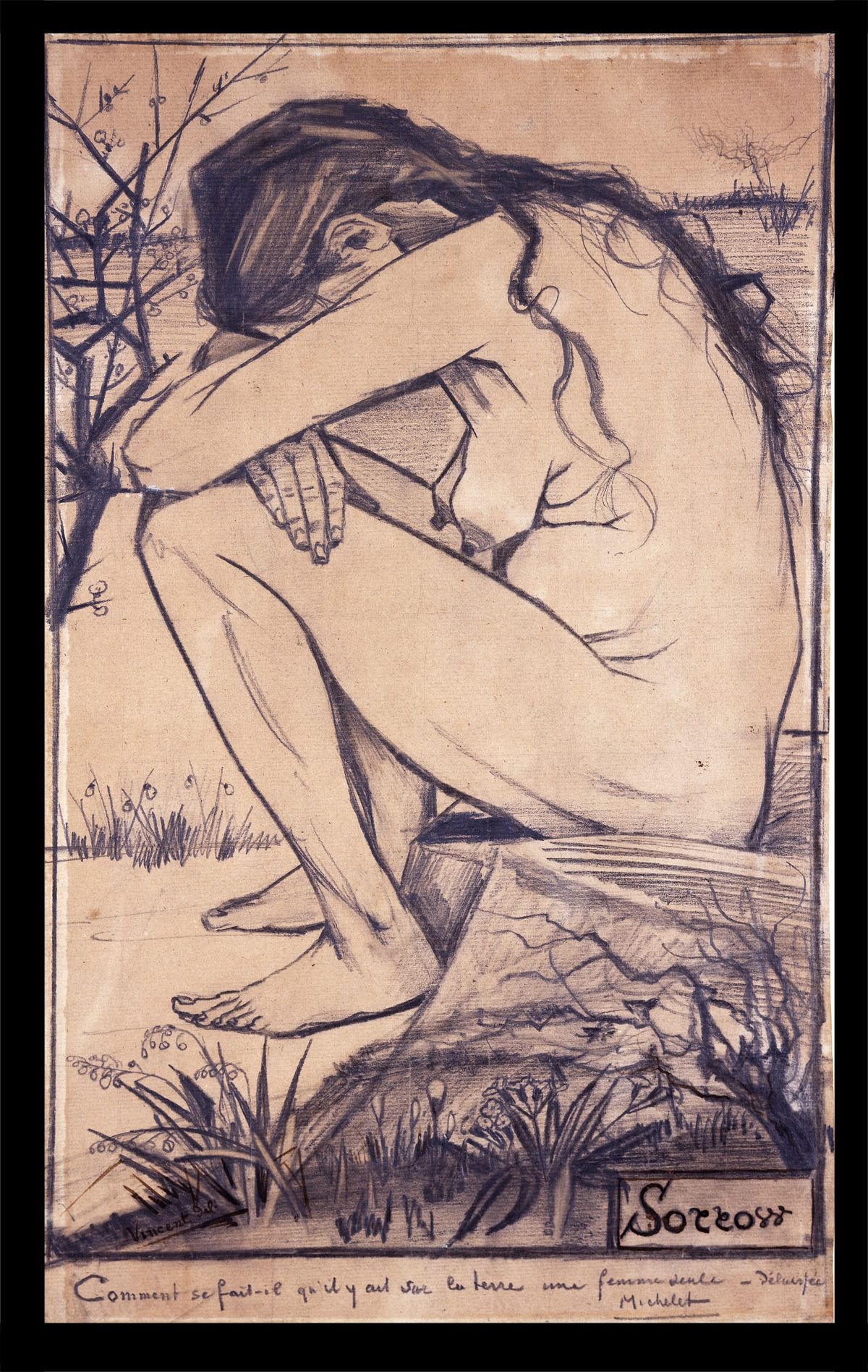
후기 인상주의의 거장 빈센트 반 고흐(Vincent van Gogh, 1853–1890)가 화가로서의 길을 걷기 시작하던 초기 헤이그 체류 시절인 1882년 4월에 완성한 흑백 드로잉 슬픔(Sorrow)은 44.5 cm × 27.0 cm 크기의 종이에 분필과 잉크, 수채 워시로 그린 기념비적인 초기 걸작으로, 현재 영국 런던의 이스트본 타우너 갤러리 및 네덜란드 반 고흐 미술관 등에 여러 판본으로 보존되어 있습니다.
버림받은 여인 시엔과의 만남과 인간애의 기록
1882년 초 헤이그에서 그림 공부를 이어가던 고흐는 길거리에서 임신한 채 극심한 굶주림과 알코올 중독, 폐결핵에 시달리던 미혼모 클라시나 마리아 호르닉(Clasina Maria Hoornik, 애칭 '시엔')을 만나 자신의 거처로 데려와 함께 생활했습니다. 가족과 주변 화가들의 극심한 반대와 경멸에도 불구하고, 고흐는 시엔과 그녀의 어린 딸을 돌보며 진정한 가족의 안식을 꿈꾸었습니다.
고흐는 삶의 거친 풍파에 짓밟힌 시엔의 쇠약하고 메마른 육체를 성스러운 예술의 대상으로 끌어올렸습니다. 그는 여인이 무릎을 꿇고 얼굴을 파묻은 채 오열하는 자세를 섬세하면서도 힘 있는 목탄 선으로 포착했습니다. 화면 하단에는 프랑스 역사학자 쥘 미슐레의 저서 여성에서 발췌한 "어찌하여 이 땅 위에 이토록 버림받고 홀로된 여인이 존재하는가(Comment se fait-il qu'il y ait sur la terre une femme seule - délaissée)"라는 글귀를 직접 적어 넣었습니다. 동생 테오에게 보낸 편지에서 그는 "이 그림은 내가 지금까지 그린 인물화 중 가장 뛰어난 성과이며, 내 예술의 진정한 출발점"이라고 고백하며 깊은 애착을 드러냈습니다.
무의식 속 시선의 공간 침잠과 실존적 비애
감상자의 시선은 화폭 상단에서 양팔에 얼굴을 깊숙이 파묻은 채 흐느끼는 여인의 웅크린 어깨와 헝클어진 머리칼로 가장 먼저 이끌립니다. 뼈마디가 도드라진 등줄기와 야윈 팔의 굵고 날카로운 윤곽선은 보는 이의 무의식 속에 숨 막힐 듯한 고통과 연민의 감정을 즉각적으로 촉발합니다.
이어 시선은 여인의 앙상한 가슴과 둥글게 굽은 배를 지나, 차가운 바위 위에 힘없이 닿아 있는 메마른 다리와 맨발로 무겁게 하강합니다.
그 후 시선은 바위 틈새에서 돋아난 가시덤불과 들꽃들의 거친 필치를 스쳐, 화면 우측 하단에 고딕 양식으로 새겨진 슬픔(Sorrow)이라는 글자와 미슐레의 인용문으로 이동합니다. 헐벗은 여인의 앙상한 육체와 황량한 대지가 이루는 먹먹한 조화 속에서, 관람자는 의식하지 못하는 사이 인간 존재가 짊어진 근원적인 고독과 이를 끌어안으려는 화가의 숭고한 휴머니즘에 깊이 동화됩니다.
사실주의 휴머니즘과 현대 표현주의의 잉태, 미술사적 평가
미술계는 슬픔을 반 고흐가 초기 네덜란드 시절에 도달한 가장 완벽한 드로잉이자, 그의 평생 예술관을 관통하는 '인간에 대한 무한한 자비와 연민'이 응축된 결정적 작품으로 평가합니다.
아카데미의 미화된 이상주의 누드를 단호히 거부하고, 상처 입고 왜곡된 육체의 진실을 굵은 선묘의 표현력으로 승화시켰기 때문입니다. 가난하고 소외된 영혼들의 고통에 온전히 동참하고자 했던 화가의 뜨거운 심장이 빚어낸 이 작품은, 훗날 20세기 사회주의 리얼리즘과 표현주의 판화 예술의 위대한 사상적 모태로 칭송받고 있습니다.
A Sacred Elegy for the Wounded Human Spirit, Sorrow
Created in April 1882 during his foundational Hague period by Vincent van Gogh (1853–1890), Sorrow is a seminal master drawing in graphite, black chalk, and ink wash on paper measuring 44.5 cm × 27.0 cm (17.5 in × 10.6 in), preserved in notable collections including the Towner Art Gallery in Eastbourne, United Kingdom, and the Van Gogh Museum in Amsterdam.
The Haven of Compassion: Sien and the Sanctity of Suffering
In early 1882 in The Hague, Van Gogh encountered Clasina Maria Hoornik (famously known as 'Sien'), an abandoned, destitute pregnant woman battling illness and profound hardship. Defying the harsh social prejudices of his contemporaries and the severe disapproval of his family, Vincent provided shelter for Sien and her young child, creating a domestic sanctuary grounded in pure empathy.
Transforming Sien’s weathered, fragile frame into a monumental icon of human suffering, Vincent asked her to pose in an attitude of desolation, with her head buried in her folded arms. Beneath the drawing, Vincent carefully inscribed a passage from the French historian Jules Michelet’s treatise La Femme: "How is it that there is on earth a woman alone—abandoned?" Writing to his brother Theo, Vincent declared this drawing the finest figure study he had ever produced, considering it the true moral and emotional cornerstone of his artistic calling.
Psychological Trajectory of the Gaze and Subconscious Descents
The observer’s subconscious gaze is immediately arrested by the sharp, angular contours of the folded arms and bowed head dominating the upper register. The raw, exposed curvature of the spine and the stark hatching of the shoulder blades establish an instantaneous psychological gravity, awakening profound feelings of empathy and grief.
From this tense, introverted crest, visual perception descends along the gaunt torso and swollen belly, following the heavy, downward pull of gravity to rest upon the bare, weathered feet planted on the stone ledge.
The gaze then travels across the sparse, thorny vegetation clinging to the foreground earth, before settling upon the Gothic lettering of Sorrow and Michelet's poignant inscribed question. Navigating the unsparing truth of the desolate figure, the viewer subconsciously internalizes the crushing weight of mortal isolation and the redeeming warmth of the artist’s unconditional compassion.
Unvarnished Humanism and the Roots of Expressionism: Critical Legacy
Art historians revere Sorrow as the ultimate triumph of Van Gogh’s early draughtsmanship, embodying the foundational ethos that guided his entire life’s work.
By resolutely rejecting the idealized conventions of academic studio nudes in favor of visceral, unadorned emotional truth, Vincent elevated personal sorrow into a universal human lament. The muscular, expressive line work foretold the psychological intensity of modern Expressionism. Standing as an immortal monument to empathy and human dignity, this masterwork bears witness to an artist who sought the divine within the most vulnerable and broken lives of his time.
Copyright © Palette Jeju. All rights reserved. Unauthorized reproduction or redistribution is strictly prohibited.
본 컨텐트의 저작권은 팔렛트제주에 있습니다. 허가없는 무단전제를 금지합니다.