사마리아 여인과 함께 있는 그리스도(Christ and the Woman of Samaria Among Ruins)
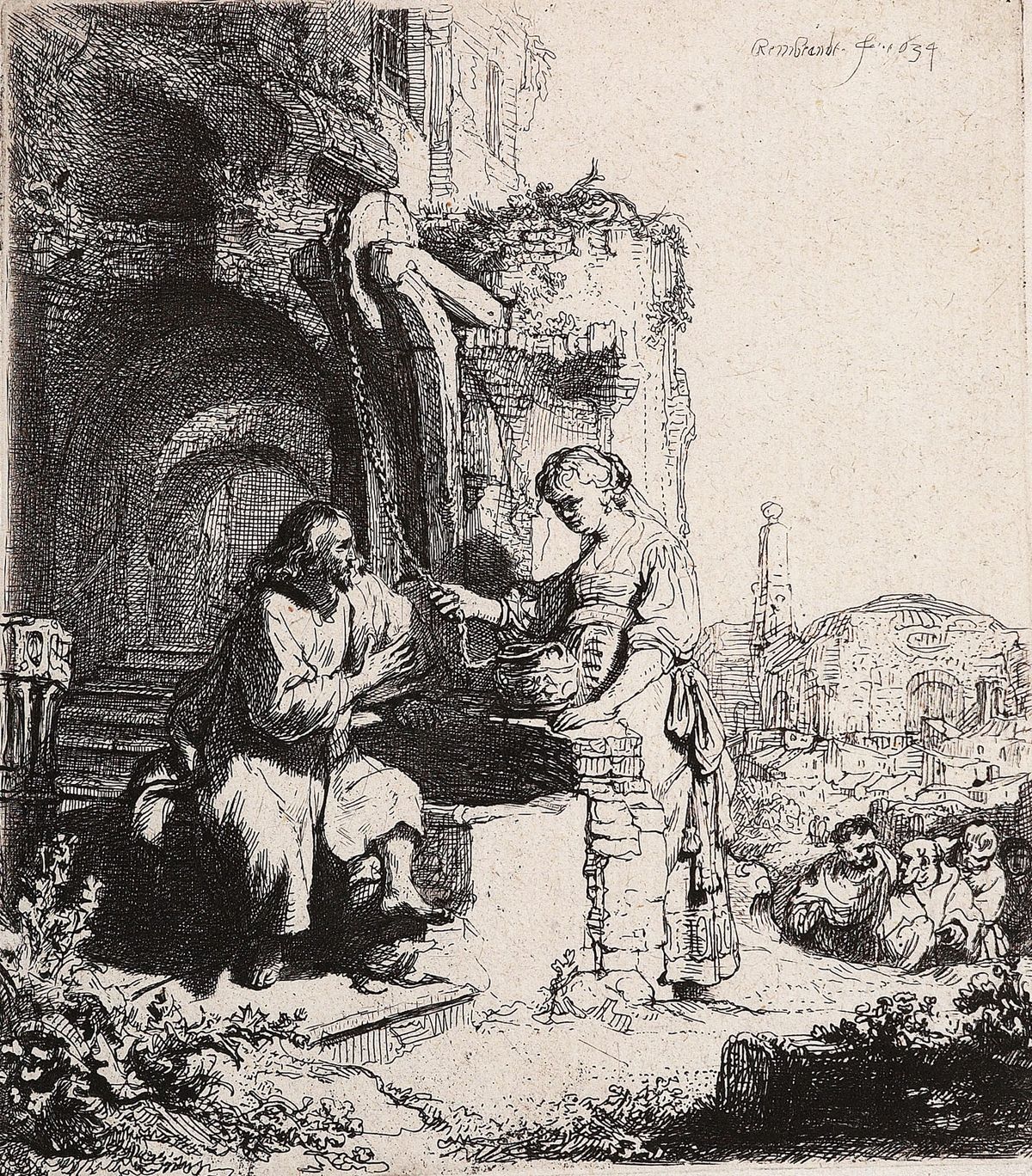
사마리아 여인과 함께 있는 그리스도 - Christ and the Woman of Samaria Among Ruins
1634년 17세기 네덜란드 미술의 거장 렘브란트 반 레인(Rembrandt van Rijn)이 제작한 판화 작품 《사마리아 여인과 함께 있는 그리스도》는 에칭 기법으로 완성된 종교 주제의 걸작으로, 현재 암스테르담 국립미술관(Rijksmuseum)과 런던 대영박물관(British Museum) 등에 원본 판화가 소장되어 있으며 실제 크기는 약 12.3 × 10.6 cm입니다.
이 화면은 요한복음 4장에 등장하는 야곱의 우물가에서 예수와 사마리아 여인이 나누는 친밀한 대화의 순간을 정교한 동판화 선으로 포착해 낸 작품입니다. 렘브란트는 오래된 석조 유적의 거친 질감과 우물 도르래의 정밀한 구조, 그리고 인물들의 손짓을 겹겹이 쌓인 에칭 선으로 표현하여 고요하면서도 신성한 대화의 분위기를 생생하게 재현했습니다.
작품 속에는 당대의 관습을 넘어서는 비하인드 스토리가 담겨 있습니다. 당시 유대인과 사마리아인 사이의 깊은 배척 관계에도 불구하고, 예수가 사마리아 여인에게 먼저 물을 청하며 영원히 목마르지 않는 '생수'에 대해 이야기하는 성서적 사건을 렘브란트는 지극히 평온하고 인간적인 교감의 장면으로 구성했습니다. 어둡고 입체적인 유적 건축물 아래 앉아 있는 예수와 우물 줄을 잡고 서서 고개를 기울인 여인의 모습은 참된 구원과 포용의 메시지를 시각적으로 보여줍니다.
후대 평단과 관객들은 이 판화를 렘브란트가 성서 속 대화를 가장 깊이 있고 따뜻한 분위기로 해석해 낸 수작으로 평가합니다. 빛이 들어오는 오른쪽 여백과 깊은 음영이 가득한 왼쪽 유적 배경의 대비를 통해, 짧은 순간의 대화 속에 담긴 종교적 숭고함을 밀도 높게 표현했습니다.
이 그림을 마주하는 관람객의 무의식적 시선은 밝은 빛을 받으며 우물가에 서 있는 사마리아 여인과 그 맞은편에서 손을 내밀고 있는 그리스도의 상체로 가장 먼저 끌려갑니다. 서로를 향해 부드럽게 기울어진 두 인물의 포즈와 대화하는 듯한 손짓은 관람객의 마음에 정서적 온기와 심리적 안도감을 불러일으킵니다.
이어 시선은 두 사람 사이에 위치한 야곱의 우물 구조물과 위로 연결된 굵은 줄, 그리고 왼쪽 배경을 묵직하게 채우고 있는 아치형 석조 유적의 해칭 음영으로 이동합니다. 촘촘하게 교차하는 선들이 만든 묵직한 질감은 공간에 시각적 안정감과 정숙한 무게를 부여합니다.
마지막으로 시선은 우측 먼 배경에 옅은 선으로 그려진 도성의 풍경과 넓고 깨끗한 여백으로 낙하하여 정착합니다. 이러한 무의식적 시선의 흐름은 대화가 지닌 깊은 의미를 고요히 음미하게 만들며, 관람객의 마음속에 평온하고 차분한 정서적 여운을 오래도록 남깁니다.
In 1634, Rembrandt van Rijn, one of the paramount masters of the Dutch Golden Age, created the poignant etching titled "Christ and the Woman of Samaria Among Ruins." Preserved in distinguished global collections such as the Rijksmuseum in Amsterdam and the British Museum in London, this original print measures approximately 12.3 × 10.6 cm. This artwork finely captures the quiet spiritual encounter at Jacob's Well through an intricate matrix of etched line work.
The print visually articulates the narrative from the Gospel of John, recording the moment Christ engages in dialogue with the Samaritan woman. Historical context highlights Rembrandt's ability to transcend cultural boundaries, depicting the sacred exchange with approachable human warmth. Set against crumbling classical ruins, the interaction balances the physical reality of the ancient well with the symbolic offer of living water.
Art historians and critics continuously extol this sheet as a masterpiece of narrative intimacy, praising Rembrandt's adept handling of chiaroscuro to emphasize the spiritual connection between the figures. The stark contrast between the shadowed archway on the left and the luminous atmosphere on the right continues to evoke quiet contemplation among viewers.
The moment an observer encounters this artwork, their gaze is subconsciously drawn straight to the illuminated figure of the Samaritan woman and the receptive gesture of Christ seated opposite her. Their gentle physical alignment immediately diffuses tension, instilling a comforting sense of emotional resolution and peaceful dialogue.
Next, the eye glides across the rustic masonry of the well and ascends along the rope mechanism toward the heavily shadowed stone arches on the left. The varying density of cross-hatching imparts structural weight and spatial depth to the ancient setting.
Finally, the viewer's gaze drifts toward the softly rendered distant town on the right before coming to rest upon the open paper tone. This natural visual journey guides the spectator into a state of quiet reflection, leaving a lasting impression of grace, compassion, and timeless serenity.
본 리뷰에서 작품을 제외한 컨텐츠의 저작권은 팔렛트제주에 있습니다.
"퍼블릭도메인 고전명화"를 제외한 모든 창작 콘텐츠는 저작권법 제4조 및 제10조에 의거하여 보호됩니다. 무단 도용시 저작권법 제136조(벌칙)에 의거, 당사의 사전 서면 승인 없는 저작권 침해 행위를 금지합니다.