사이프러스가 있는 밀밭 Wheat Field with Cypresses
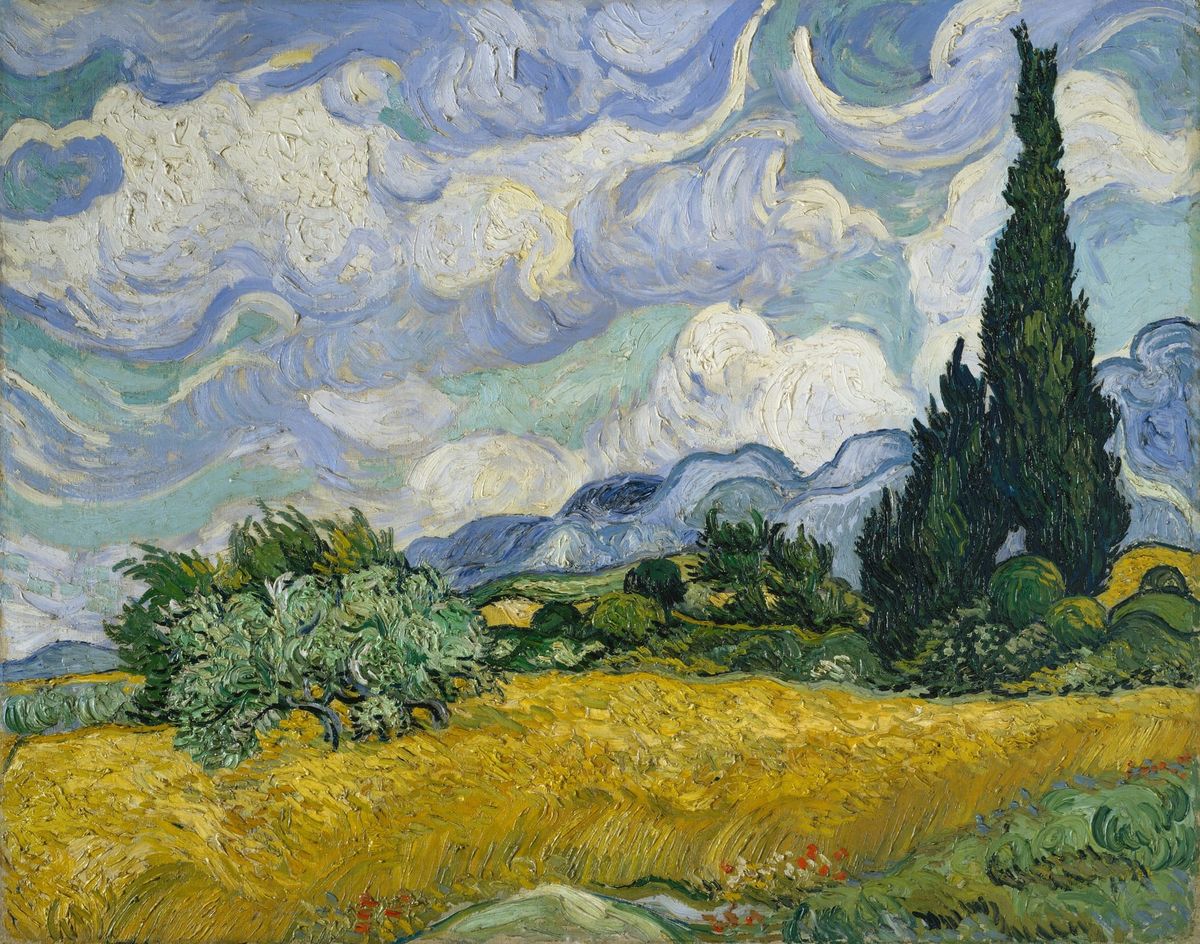
이 작품은 네덜란드의 후기 인상주의 거장 빈센트 반 고흐가 1889년 7월 프랑스 생레미드프로방스 지역에 머물며 제작한 유화입니다. 공식 소장품 등록번호는 F717이며, 캔버스 위에 유채로 그려진 실제 실측 규격은 73 x 93.4 cm입니다. 현재 이 작품은 미국 뉴욕에 위치한 메트로폴리탄 미술관에 공식적으로 소장되어 있으며, 작가의 동생 테오 반 고흐의 소장 이력을 거쳐 오늘날 전 세계 미술 사랑들에게 큰 감동을 전하고 있습니다.
작가의 고뇌와 창작 비하인드
생레미 요양원 시절 반 고흐는 프로방스의 뜨거운 태양 아래 끝없이 펼쳐진 농지와 우뚝 솟은 나무들의 모습에서 강렬한 생명력을 발견하고 이를 화폭에 담아내는 데 몰두했습니다. 그는 평소 동생에게 보낸 편지에서 사이프러스 나무의 아름다움에 매료되었다고 언급하며, 이 거대하고 어두운 나무가 마치 타오르는 불꽃처럼 대지 위로 솟아오르는 형상에 깊은 영감을 받았다고 토로했습니다.
작품 전경에는 금빛으로 익어가는 황금색 밀밭이 부드럽고 거친 물결처럼 너울거리며 화면 전체를 풍요롭게 채우고 있습니다. 중경의 왼쪽에는 싱그러운 녹색 빛을 뿜어내는 올리브 나무가 낮게 자리 잡고 있고, 오른쪽에는 화면의 수직적 균형을 압도적으로 잡아주는 짙고 어두운 녹색의 거대한 사이프러스 나무들이 하늘을 향해 치솟아 있습니다.
배경으로는 프로방스의 험준한 보라빛 산맥이 부드럽게 펼쳐져 있으며, 그 위로 몰아치는 역동적인 소용돌이 형태의 구름과 하늘이 대지 위로 거대한 기운을 불어넣고 있습니다.
무의식 속 시선 및 심리 흐름
관람객의 시선은 가장 먼저 화면 전경을 가득 채운 황금빛 밀밭의 역동적인 물결로 향하며, 뜨거운 여름날의 열기와 자연의 거대한 숨결을 고스란히 체감하게 됩니다. 이어지는 시선은 중경의 오른쪽에 우뚝 솟은 웅장한 사이프러스 나무로 자연스럽게 이동하며, 어둡고 깊은 초록빛이 자아내는 묘한 신비감과 엄숙한 긴장감에 사로잡히게 됩니다.
시선이 다시 배경의 완만한 산맥과 거침없이 휘몰아치는 하늘의 소용돌이 구름으로 확장될 때, 관람객은 대자연의 거대한 에너지를 마주하며 깊은 경외심에 휩싸이게 됩니다. 이 일련의 시선 흐름은 평온한 농촌의 풍경을 넘어, 작가가 내면에서 겪었던 치열한 감정의 소용돌이와 자연을 향한 뜨거운 갈망을 온전히 느끼게 만듭니다.
미술계의 평가 및 조형미
미술사학계와 평단은 본 작품을 고흐가 생레미 시기에 달성한 풍경화의 정점 중 하나로 평가하며, 자연의 외양을 단순히 재현하는 것을 넘어 주관적 정서를 가장 강렬하게 투영한 걸작으로 인정합니다. 두껍고 거친 붓터치인 임파스토 기법을 사용하여 바람의 결, 나무의 잎사귀, 밀밭의 질감을 입체적이고 촉각적으로 살아나게 완성했습니다.
화면을 지배하는 노란색과 초록색, 그리고 차가운 푸른빛 하늘의 대담한 색채 대비는 시각적 생동감과 극적인 긴장감을 동시에 유발합니다. 수평으로 넓게 펼쳐진 밀밭과 수직으로 강하게 솟구친 사이프러스의 조형적 구도는 완벽한 균형을 이루며, 영원히 바래지 않는 자연의 위대한 생명력과 예술적 가치를 증명합니다.
Wheat Field with Cypresses
Executed in July 1889 during his stay in Saint-Rémy-de-Provence, this oil painting is a monumental masterpiece by the Dutch Post-Impressionist master Vincent van Gogh. Officially cataloged under inventory number F717 and measuring 73 x 93.4 cm on canvas, the work is currently housed in the permanent collection of The Metropolitan Museum of Art in New York, having originally belonged to the artist's brother, Theo van Gogh.
The Artist's Turmoil and Creative Background
During his time at the Saint-Rémy asylum, Van Gogh found profound inspiration in the sweeping agricultural fields and striking flora under the blazing Provençal sun. In his correspondence, he frequently expressed his fascination with cypresses, noting their noble stature and describing them as resembling dark flames licking upward into the sky.
The foreground is dominated by a golden wheat field that undulates like rolling waves, rich with the heavy bounty of a summer harvest. In the middle ground to the left, a vibrant green olive tree rests low against the earth, while to the right, a cluster of towering, dark-green cypress trees anchors the composition with an assertive vertical thrust.
In the background, the rugged purple hills of Provence stretch gently across the horizon, surmounted by a dynamic, swirling sky of pale blues and whites that charges the entire atmosphere with kinetic energy.
Psychological Flow and the Unconscious Gaze
The viewer's gaze is initially captured by the turbulent sea of golden wheat in the foreground, inducing an immediate sense of the intense afternoon heat and natural vitality. The eye then migrates toward the monumental cypress trees on the right, whose dark, imposing presence evokes a striking solemnity and visual gravity.
As the gaze extends upward and outward into the rolling distant mountains and the swirling, wind-swept sky, the observer is enveloped in a powerful feeling of cosmic scale and awe. This deliberate visual journey moves the viewer from physical observation into an emotional resonance with the artist's passionate connection to the natural world.
Critical Acclaim and Formal Analysis
Art historians and critics widely celebrate this painting as a high-water mark of Van Gogh's landscape oeuvre, recognizing it as a triumph of projecting subjective emotion onto external reality. The vigorous application of paint through a heavy impasto technique gives tactile reality and sculptural depth to the wind, foliage, and crops.
The daring orchestration of warm yellows against cool blues and deep greens generates a dynamic visual harmony filled with vibrant tension. By balancing the sweeping horizontal expanse of the fields with the soaring verticality of the cypresses, Van Gogh achieved an immortal masterpiece that testifies to the enduring vitality of nature and his unmatched artistic genius.
본 컨텐트의 저작권은 팔렛트제주에 있습니다. 허가없는 무단전제를 금지합니다.
Copyright © Palette Jeju. All rights reserved. Unauthorized reproduction or redistribution is strictly prohibited.