사하라의 저녁 기도 Evening Prayer in the Sahara
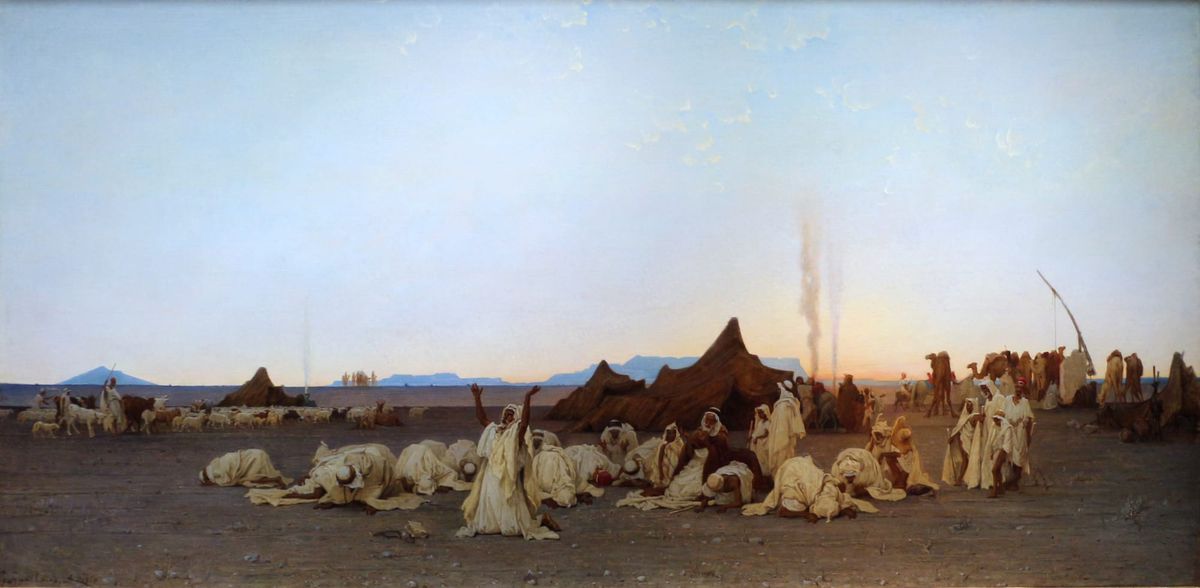
19세기 프랑스 오리엔탈리즘 리얼리즘 풍경화의 독보적인 거장 귀스타브 기요메(Gustave Guillaumet, 1840–1887)가 1863년 파리 살롱전에 출품하여 화단에 거대한 충격을 안겨준 유화 사하라의 저녁 기도(Evening Prayer in the Sahara, 프랑스어: La Prière du soir dans le Sahara)는 142.0 cm × 285.0 cm 크기의 웅장한 대형 캔버스에 유채로 그린 대표적인 북아프리카 종교 풍속화 최고 걸작입니다. 현재 프랑스 파리의 오르세 미술관(Musée d'Orsay, Paris)에 소장되어 있습니다.
1863년 살롱전의 대성공과 사하라 사막 한가운데서 마주한 영혼의 전율
1862년 스물두 살의 젊은 기요메는 로마 대상 낙선의 좌절을 겪고 무작정 알제리로 떠났다가 혹독한 말라리아에 걸려 군 병원에서 죽음의 문턱까지 다녀왔습니다. 간신히 기력을 회복하고 사하라 사막의 관문인 비스크라 주변을 여행하던 기요메는, 해 질 무렵 끝없이 펼쳐진 모래벌판 위에서 유목민들이 일제히 무릎을 꿇고 메카를 향해 저녁 기도를 올리는 장엄한 광경을 목격하고 온몸에 전율을 느꼈습니다. 당시 파리의 부유한 귀족들은 동양을 화려한 보석과 관능적인 무희들이 가득한 환상의 세계로만 소비하고 있었기에, 사막의 적막 속에서 울려 퍼지는 이 순수한 신앙의 광경은 젊은 화가의 영혼을 송두리째 뒤흔들어 놓았습니다.
기요메는 파리로 돌아와 가로 길이가 3미터에 달하는 거대한 캔버스를 펼치고, 자신이 사막에서 목격한 침묵과 거룩한 숭고함을 화폭에 담기 위해 밤낮으로 매달렸습니다. 화면 중앙에는 두 팔을 하늘 높이 치켜들고 알라를 향해 간절히 기도하는 이맘의 우뚝 선 모습을 배치하고, 그 곁에는 흰 옷을 뒤집어쓰고 모래바닥에 이마를 대며 엎드린 유목민 무리를 정교하게 묘사했습니다. 유목민들의 텐트 뒤로 솟아오르는 저녁 연기 두 줄기와 지평선 너머로 저물어가는 노을빛, 그리고 화면의 절반 이상을 덮고 있는 투명하고 광활한 사막 하늘은, 인간의 모든 번뇌를 품어 안는 대자연의 위대함과 흔들리지 않는 신앙의 숭고함을 눈물겹도록 아름답게 웅변합니다. 이 작품은 1863년 파리 살롱전에 전시되자마자 나폴레옹 3세 정부에 의해 국가 소장품으로 전격 매입되며 기요메를 단숨에 프랑스 최고의 오리엔탈리즘 거장 반열에 올려놓았습니다.
두 팔을 치켜든 이맘의 기도에서 엎드린 신도들과 저녁 노을빛으로, 시선의 심리적 여정
그림을 마주하는 순간 관람객의 무의식적 시선은 화면 중앙 아래 황량한 사막 대지 위에서 두 팔을 번쩍 치켜들고 무릎을 꿇은 이맘의 당당하면서도 간절한 실루엣으로 가장 먼저 빨려 들어갑니다. 저무는 태양을 마주하며 천상을 향해 온몸으로 신의 은총을 구하는 기도자의 고결한 몸짓은 보는 이에게 깊은 시각적 경건함과 함께 숨이 멎을 듯한 영적 침묵을 선사합니다.
이어 시선은 이맘의 좌우로 넓게 퍼져 나가는 유목민 신도들의 흰색 옷자락으로 이동하여, 메마른 모래바닥에 엎드려 절을 올리는 사람들의 둥근 등판과 가만히 서서 순서를 기다리는 어린아이들의 발걸음으로 옮겨갑니다. 모래밭 위에 가지런히 벗어놓은 가죽 신발과 베두인 텐트 곁에 묵묵히 멈춰 선 낙타 무리를 확인하는 순간, 관람객은 바람 소리조차 잦아든 사하라 사막의 서늘한 저녁 공기 한복판 속으로 온몸이 빨려 들어가게 됩니다.
마지막으로 시선은 유목민 야영지 뒤편에서 하늘을 향해 곧게 피어오르는 두 줄기의 하얀 연기를 지나, 화면 상단을 압도적으로 감싸고 있는 거대한 에메랄드빛 하늘과 저 멀리 푸른빛으로 물든 아틀라스 산맥의 능선에 멈춥니다. 서쪽 지평선에서 은은하게 타오르는 황금빛 저녁노을과 대자연의 무한한 공간감을 마주하며, 관람객은 유한한 인간 존재를 초월하는 영원한 평온의 가치와 기요메가 건네는 묵직한 영혼의 위로를 가슴 깊이 마주하게 됩니다.
19세기 프랑스 오리엔탈리즘 종교 서사화의 정점과 조형미, 미술계의 평가
미술계는 사하라의 저녁 기도를 기요메가 스물세 살의 젊은 나이에 완성한 불멸의 걸작이자, 19세기 오리엔탈리즘 회화 전체를 통틀어 가장 깊은 종교적 숭고미를 성취한 기념비적 명작으로 평가합니다.
가로로 광활하게 펼쳐진 파노라마 화면 속에서, 투명하게 물든 사막 하늘의 대기 원근법, 흙먼지 이는 모래벌판의 촉각적 질감, 수십 명의 신도들이 만들어내는 조화로운 수평 구도를 완벽한 명암법으로 구현했을 뿐만 아니라, 이슬람 유목민들의 기도를 이국적인 호기심이 아닌 인간 본연의 고결한 영적 의식으로 승화시켰기 때문입니다. 타오르는 사하라의 황혼 아래 펼쳐진 침묵의 기도를 위대한 시각 교향곡으로 완성해 낸 기요메의 이 장엄한 화폭은, 오늘날까지도 전 세계 수많은 감상자들에게 깊은 감동과 잊을 수 없는 시각적 전율을 전해주는 불멸의 명작으로 손꼽히고 있습니다.
Evening Prayer in the Sahara
Painted in 1863 by the preeminent nineteenth-century French Orientalist realist master Gustave Guillaumet (1840–1887), Evening Prayer in the Sahara (French: La Prière du soir dans le Sahara) is a monumental horizontal oil on canvas measuring 142.0 cm × 285.0 cm (55.9 in × 112.2 in), preserved in the distinguished permanent collection of the Musée d'Orsay in Paris, France.
The 1863 Salon Triumph, the Algerian Epiphany, and Sacred Desert Solitude
Following his devastating setback in the Prix de Rome and a harrowing near-fatal bout with malaria in an Algerian military hospital in 1862, twenty-two-year-old Gustave Guillaumet traveled south toward Biskra at the northern threshold of the Sahara. At sunset across the boundless arid wasteland, the young painter was profoundly moved by the spectacle of nomadic Bedouins prostrating themselves toward Mecca in absolute silence. Rejecting the opulent, sensual fantasies that populated typical Parisian Salon Orientalism, Guillaumet dedicated himself to capturing the authentic spiritual dignity and austere reality of desert life.
Upon returning to Paris, Guercino's successor in honest observation executed this vast three-meter canvas. In the center, an imam kneels with arms raised in earnest supplication toward the heavens, surrounded by robed nomads bowing their foreheads into the dust. Beyond the low woven tents of the encampment, two thin plumes of smoke rise vertically into the still evening air against the distant silhouette of the mountains and the warm glow of dusk. The sheer vertical expansion of the pale, luminous sky occupying over two-thirds of the canvas underscores the infinite solitude of the desert and the humility of mortal devotion. Acquired by the French State directly from the Salon of 1863, this landmark masterwork instantly established Guillaumet’s international reputation as the definitive painter of North African realism.
Subconscious Trajectory of the Gaze: From the Raised Arms of the Imam to the Sunset Sky
The observer's subconscious gaze is immediately magnetized by the central foreground, drawn to the luminous figure of the praying imam kneeling with upturned palms raised toward the open heavens. His solitary, upright posture against the horizontal terrain and the pure white folds of his burnous establish an instant focal point of sacred reverence, spiritual leadership, and profound human humility.
The visual path then radiates outward to the clusters of faithful worshipers, following the rhythmic sequence of prostrating bodies with foreheads touching the sand. Taking in the discarded leather babouches near their feet, the standing youths waiting quietly, and the resting camel caravans silhouetted beside the dark tents, the viewer directly experiences the profound communal stillness and reverent cadence of evening prayer in the wilderness.
Finally, the visual trajectory sweeps past the two delicate vertical plumes of hearth smoke into the colossal, tranquil expanse of the pale blue sky stretching over the distant mountain range. Observing the harmonious equilibrium between monumental horizontal perspective, golden sunset illumination, and spiritual truth, the spectator perceives the timeless nobility of sacred devotion and the profound aesthetic solace Guillaumet embedded within the canvas.
The Monument of French Orientalist Spiritualism: Critical Legacy
Art historians revere Evening Prayer in the Sahara as a supreme pinnacle of Guillaumet’s oeuvre, illustrating his revolutionary transcendence of theatrical exoticism in favor of pure atmospheric naturalism and deep human empathy.
By orchestrating delicate textural contrasts between sun-baked earth, coarse woolen burnouses, resting dromedaries, and the vast ethereal dome of the Saharan sky within a unified panoramic scheme, Guillaumet elevated an Islamic daily ritual into an exquisite aesthetic symphony. This grand historical canvas endures as an inspiring testament to the master's creative fortitude, celebrating the unyielding nobility of the human spirit and the transformative grace of living art.
본 컨텐트의 저작권은 팔렛트제주에 있습니다. 허가없는 무단전제를 금지합니다.
Copyright © Palette Jeju. All rights reserved. Unauthorized reproduction or redistribution is strictly prohibited.