사과 수확 - Apple Harvest
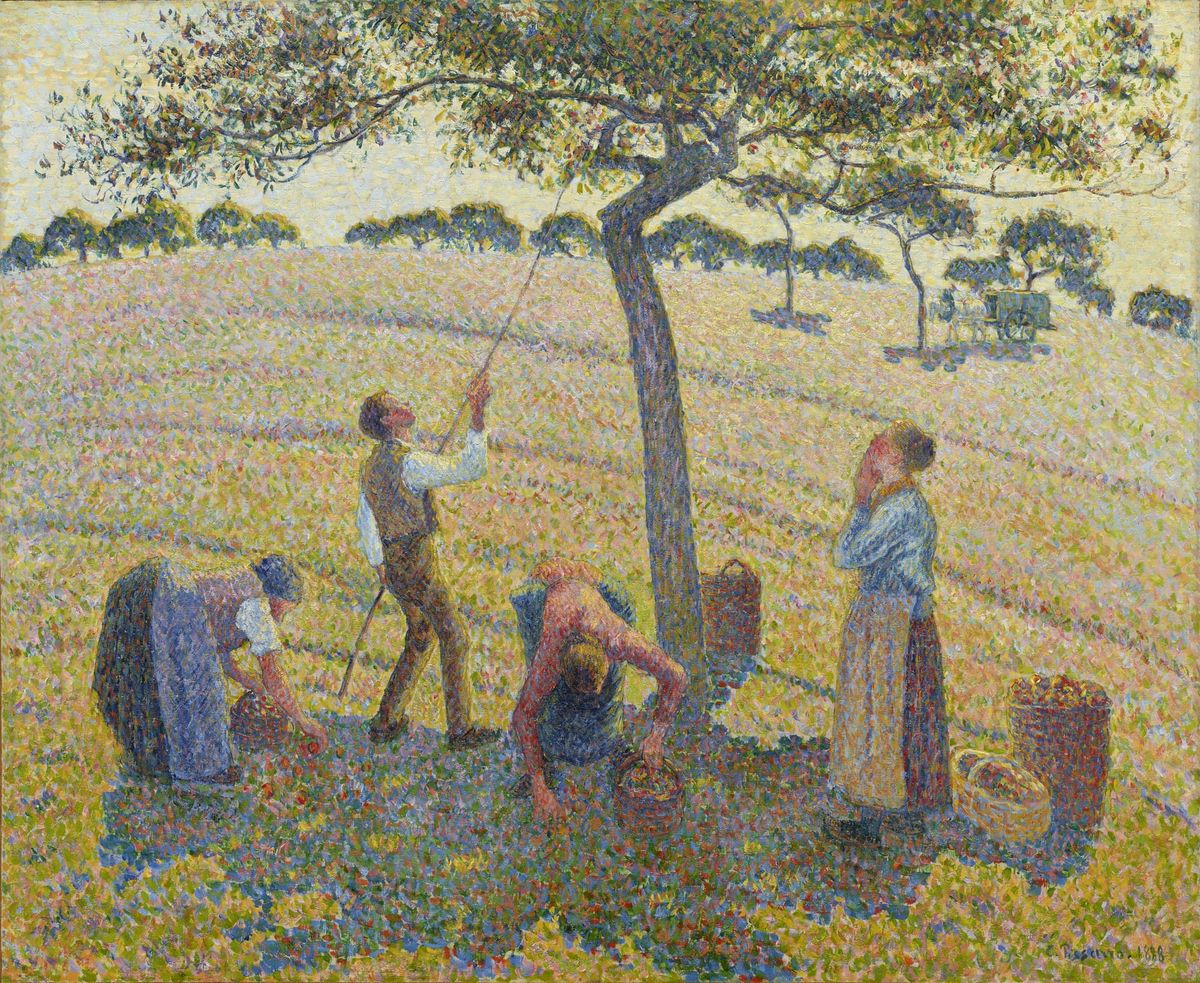
프랑스 인상주의의 든든한 맏형이자 정신적 지주였던 카미유 피사로(Camille Pissarro)가 1888년에 완성한 '사과 수확(La Récolte des pommes à Éragny)'은 캔버스에 유채(Oil on canvas)로 그려진 명작입니다. 가로 73.98cm, 세로 60.96cm 크기의 이 작품은 현재 미국 댈러스 미술관(Dallas Museum of Art)에 소장되어 있습니다.
피사로가 프랑스 북부의 한적한 시골 마을 에라니 쉬르 엡트에 정착해 자연과 호흡하며 작업하던 시기의 대표작으로, 팔레트에서 물감을 미리 섞지 않고 순수 원색의 미세한 점들을 캔버스 위에 촘촘하게 찍어 병치하는 신인상주의 점묘 기법을 정교하게 구사하고 있습니다.
이 그림 뒤에는 피사로의 남다른 예술적 용기와 인간적인 고뇌가 깊게 깃들어 있습니다. 당시 50대 후반의 거장이었던 그는 과거의 명성에 안주하지 않고, 30세나 어린 조르주 쇠라와 폴 시냐크 등 젊은 후배들이 주도하던 새로운 광학 이론과 점묘법을 과감하게 수용했습니다.
오랜 후원 화상이었던 폴 뒤랑 뤼엘은 점묘로 그린 그림들이 지나치게 급진적이라 팔리지 않는다며 거래를 꺼렸고, 절친한 동료인 클로드 모네와 오귀스트 르누아르는 그가 미쳤다며 등을 돌렸습니다. 심지어 모네는 인상주의 전시회에서 신인상주의자들과 함께 걸 수 없다며 출품을 거부해 피사로를 깊은 배신감과 극심한 생활고로 몰아넣기도 했습니다.
하지만 피사로는 아들 뤼시앵 피사로에게 편지를 보내 "예술이란 사물의 단순한 모방이 아니라 종합이어야 하며, 약간의 광기가 필요하다"고 고백하며 신념을 굽히지 않았습니다. 그는 에라니 집 앞 과수원에서 농민들과 함께 흙을 밟으며 사계절 나무의 변화를 직접 관찰했고, 1881년부터 수년에 걸쳐 구도를 수없이 고쳐 그린 끝에 이 걸작을 완성했습니다.
훗날 이 작품은 1889년 브뤼셀 20인회(Les XX) 전시에서 찬사를 받으며 신인상주의의 교본으로 인정받았고, 평단은 노동의 숭고함과 대지의 생명력을 가장 따뜻하고 서정적인 시각 언어로 승화시킨 기념비적 성취로 높이 평가했습니다.
작품을 마주할 때 관람자의 시선은 중앙에서 부드러운 곡선을 그리며 뻗어 올라간 사과나무 줄기를 따라 자연스럽게 위로 향합니다. 장대를 높이 들어 나뭇가지를 흔드는 남성의 역동적인 몸짓을 거쳐 잎사귀 사이로 반짝이는 붉은 사과에 시선이 머물고, 이내 아래로 떨어지는 열매의 궤적을 쫓아 부드럽게 하강합니다.
허리를 숙여 바구니에 사과를 주워 담는 인물들의 유기적인 움직임과 오른쪽에서 잠시 숨을 고르는 여인의 정적인 자세로 이어지며, 화면 전체에는 편안하고 조화로운 순환의 리듬이 흐릅니다.
이러한 시각적 흐름은 관람자의 무의식 속에 깊은 심리적 안정감과 정서적 치유를 불러일으킵니다. 화면을 가득 채운 황금빛과 따스한 초록, 푸른빛의 점들이 시각을 통해 자연스럽게 융합되면서 늦여름의 부드러운 햇살과 자연의 온기를 고스란히 전해줍니다.
대지와 인간이 완벽한 조화를 이루며 결실을 나누는 풍경은 일상의 피로와 불안을 누그러뜨리고, 관람자의 마음속 깊은 곳에 단단한 평온과 풍요로운 위로를 선사합니다.
Apple Harvest - La Récolte des pommes
Created in 1888 by Camille Pissarro, the revered mentor and foundational pillar of French Impressionism, Apple Harvest (La Récolte des pommes à Éragny) is an oil on canvas masterpiece measuring 60.96 by 73.98 cm, proudly housed in the permanent collection of the Dallas Museum of Art.
Painted during the artist's peaceful residency in Éragny-sur-Epte, this work exemplifies the heights of Neo-Impressionist Pointillism, where microscopic dots of unmixed, luminous color are systematically placed side by side to create a shimmering optical fusion of pure daylight.
Beneath the radiant surface lies an inspiring tale of artistic courage and profound dedication. Even in his late fifties, Pissarro wholeheartedly embraced the radical optical theories introduced by his young colleagues Georges Seurat and Paul Signac, refusing to remain complacent in his established career.
His longtime art dealer Paul Durand-Ruel balked at the marketability of these dot-laden canvases and refused to purchase them, while close companions like Claude Monet and Pierre-Auguste Renoir openly criticized his new path. Monet went so far as to boycott the final Impressionist exhibition if the young Neo-Impressionists were included, leaving Pissarro deeply isolated and in severe financial distress.
Yet Pissarro remained undeterred, writing passionately to his son Lucien that true art requires "a synthesis of the thing and a little craziness." Observing his own orchard through every season at Éragny and reworking this composition over several years since 1881, he painstakingly laid down hundreds of thousands of pure color dots with unwavering patience.
The completed masterpiece was exhibited to great acclaim at the 1889 Les XX exhibition in Brussels. Today, art historians universally celebrate it as a triumphant milestone that elevated humble agrarian labor and natural harmony into a timeless, light-drenched monument of human dignity.
Upon viewing the canvas, the spectator's gaze is unconsciously drawn upward along the graceful, leaning trunk of the central apple tree. Following the dynamic silhouette of the man reaching high with his pole, our attention travels into the sun-dappled canopy of red fruit and gently descends with the falling harvest toward the earth.
The eye then glides across the curved figures collecting the bounty into woven baskets and rests on the upright woman taking a calm breath, completing a harmonious circular rhythm of shared endeavor.
This visual journey evokes a profound sense of psychological grounding and serene reassurance. The juxtaposed points of soft gold, meadow greens, and lavender shadows coalesce seamlessly in the mind, letting the viewer absorb the restorative warmth of late-summer sunshine.
Witnessing humanity in harmonious balance with the land softens everyday tension, filling the subconscious with the grounded comfort of abundance, collective purpose, and enduring peace.
본 리뷰에서 작품을 제외한 컨텐츠의 저작권은 팔렛트제주에 있습니다.
"퍼블릭도메인 고전명화"를 제외한 모든 창작 콘텐츠는 저작권법 제4조 및 제10조에 의거하여 보호됩니다. 무단 도용시 저작권법 제136조(벌칙)에 의거, 당사의 사전 서면 승인 없는 저작권 침해 행위를 금지합니다.