사과 깎는 소녀 A Girl Peeling Apples
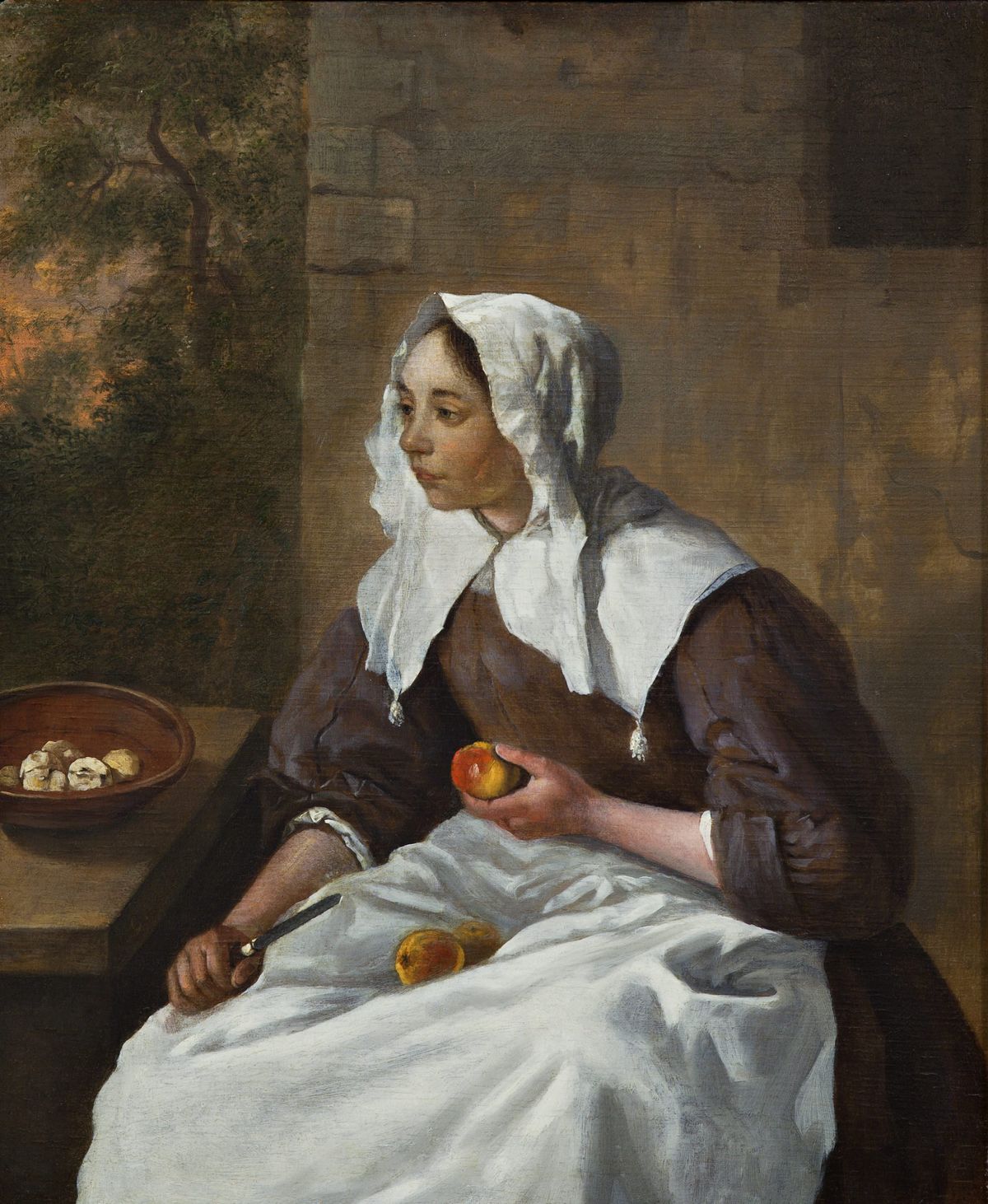
17세기 네덜란드 황금시대의 풍속화 거장 가브리엘 메추(Gabriel Metsu, 1629–1667)가 1660년대 초반에 완성한 유화 사과를 깎는 소녀(A Girl Peeling Apples, 덴마크어: En pige der skræller æbler)는 37.0 cm × 31.0 cm 크기의 패널에 유채로 그린 대표적인 야외 실내 연결형 일상 풍속화 소품 걸작입니다. 현재 덴마크 코펜하겐의 국립미술관(Statens Museum for Kunst, SMK)에 소장되어 있습니다.
뒤뜰 담벼락 아래 향긋한 사과 향기와 굴러떨어진 사과 소동
1660년대 초반 암스테르담의 가브리엘 메추는 귀족들의 굳어 있는 초상화 주문에 큰 피로를 느끼며, 햇살이 잘 드는 주택 뒤뜰에서 소박하게 일하는 서민들의 정직한 쉼에 깊이 빠져 있었습니다. 당시 메추는 집안일을 하다가 문득 고개를 들어 먼 곳을 바라보며 깊은 생각에 잠기는 인간의 자연스럽고 순수한 내면을 화폭에 담아내고 싶어 했습니다. 화가는 화실과 연결된 작은 뒤뜰 돌담 아래에 목재 탁자를 놓고, 하얀 두건과 정갈한 앞치마를 두른 하녀에게 잘 익은 사과와 작은 과도를 쥐여주며 포즈를 부탁했습니다.
이 그림을 준비하던 날, 뒤뜰에서는 유쾌하면서도 웃음이 절로 나오는 소동이 벌어졌습니다. 모델이 된 여인이 무릎 위에 하얀 린넨 앞치마를 넓게 펼치고 사과를 깎던 중, 왼손에 쥔 붉고 노란 사과 하나가 미끄러져 바닥으로 데굴데굴 굴러갔습니다. 그 순간 담장 밑 풀숲에서 낮잠을 자던 고양이가 굴러온 사과를 장난감으로 착각하고 툭툭 건드리자, 깜짝 놀란 여인이 사과를 뺏기지 않으려 허둥지둥 손을 뻗는 아찔한 상황이 벌어졌습니다.
여인이 사과를 겨우 집어 들고 쑥스러운 듯 살짝 미소를 지으며 먼 하늘을 바라보자, 메추는 껄껄 웃으며 그 자연스럽고 수줍은 눈빛이야말로 그림의 영혼이라며 붓질을 시작했습니다. 화가는 맑은 바람에 흩날리는 듯한 하얀 린넨 두건의 뾰족한 끝단, 보랏빛 감도는 겉옷의 부드러운 천 주름, 그리고 탁자 위 나무 그릇에 담긴 껍질 벗긴 사과들의 뽀얀 속살을 정성껏 캔버스에 담아냈습니다. 잦은 병마 속에서도 삶의 맑고 깨끗한 순간을 놓치지 않으려 했던 화가의 따스한 시선이 이 고즈넉한 화폭 속에 포근하게 살아 숨 쉬고 있습니다.
맑은 눈망울의 옆모습에서 왼손에 쥔 붉은 사과와 하얀 앞치마로, 시선의 심리적 여정
그림을 마주하는 순간 관람객의 무의식적 시선은 화면 상단 고풍스러운 석조 벽면을 배경으로 부드러운 자연광을 받아 밝게 빛나는 여인의 하얀 린넨 두건과 맑은 옆얼굴로 가장 먼저 빨려 들어갑니다. 칼질을 잠시 멈춘 채 살포시 먼 곳을 응시하는 여인의 차분하고 순박한 눈빛은 보는 이에게 깊은 시각적 평온과 함께 아늑한 마음의 안식을 선사합니다.
이어 시선은 여인이 가슴 앞에 소중하게 받쳐 들고 있는 붉고 노란빛의 탐스러운 사과와, 오른손에 가볍게 쥔 작은 쇠칼로 이동합니다. 손가락 끝으로 사과를 감싸 쥔 조심스러운 움직임과 앞치마 위에 얌전히 놓인 또 다른 사과들을 확인하는 순간, 관람객은 정성스럽게 과일을 손질하는 정갈한 손길과 코끝을 스치는 상큼한 사과 향기를 온몸으로 체감하게 됩니다.
마지막으로 시선은 여인의 무릎을 풍성하게 덮고 있는 순백의 린넨 앞치마 주름을 지나, 화면 왼쪽 목재 탁자 위에 놓인 나무 그릇 속 껍질 벗긴 사과들과 배경 너머로 은은하게 비치는 정원의 초록 잎사귀에 멈춥니다. 고요한 돌담 아래를 채우는 맑은 공기와 성실한 일상 속에서 누리는 소박한 휴식을 마주하며, 관람객은 평범한 하루 속에 깃든 진실한 아름다움과 메추가 건네는 다정한 생의 위로를 가슴 깊이 마주하게 됩니다.
17세기 네덜란드 소박한 일상 장르화의 정점과 조형미, 미술계의 평가
미술계는 사과를 깎는 소녀를 가브리엘 메추가 레이던의 정밀한 세밀화 전통과 암스테르담의 부드러운 자연광 묘사를 가장 자연스럽게 융합해 낸 대표적인 소품 걸작으로 평가합니다.
흰 린넨 천의 투명한 질감, 과일 껍질의 윤기, 거친 돌벽의 촉각적 입체감을 절제된 명암 대비로 완벽하게 조화시켰을 뿐만 아니라, 노동과 사색이 교차하는 인물의 내면 심리를 따스하게 포착했기 때문입니다. 화려한 과시 없이 오직 평범한 일상의 정직한 아름다움을 찬양했던 메추의 이 서정적인 화폭은, 오늘날까지도 수많은 사람들에게 깊은 감동과 잊을 수 없는 시각적 평온을 전해주는 불멸의 명작으로 손꼽히고 있습니다.
The Gentle Grace of the Courtyard, A Girl Peeling Apples
Painted in the early 1660s in Amsterdam by the preeminent Dutch Golden Age master Gabriel Metsu (1629–1667), A Girl Peeling Apples (Danish: En pige der skræller æbler) is an oil on wood panel measuring 37.0 cm × 31.0 cm (14.6 in × 12.2 in), preserved in the permanent collection of the National Gallery of Denmark (Statens Museum for Kunst) in Copenhagen, Denmark.
The Scent of Fresh Fruit and the Rolling Apple Commotion in the Courtyard
During the early 1660s in Amsterdam, Gabriel Metsu turned his creative attention away from the rigid posturing of aristocratic commissions to embrace the quiet, unvarnished dignity of domestic routines. The master found profound emotional solace in the honest labor of young women preparing meals by the soft daylight of a private courtyard. Arranging a wooden side table against an ancient brick and stone wall, Metsu asked a household maid to sit with a lap full of ripe apples and a paring knife, staging an intimate scene of quiet concentration.
A delightfully humorous incident occurred while preparing the sitting. As the young woman spread her white linen apron across her lap, a golden-red apple slipped from her hand and bounced across the flagstones. A curious tabby cat resting beneath the garden shrubbery immediately pounced toward the rolling fruit, prompting the startled model to reach out quickly with a quiet laugh to rescue the apple before it was scratched.
As she retrieved the fruit and settled back into her seat, casting a thoughtful, slightly amused glance into the distance, Metsu smiled warmly, declaring that this natural, unguarded expression was the exact emotional core the panel required. The master meticulously recorded the crisp linen cap with its decorative points, the soft woolen folds of her muted purple bodice, and the peeled white apples resting inside the turned wooden bowl on the table. Despite battling chronic physical frailty, Metsu captured the comforting rhythm of ordinary life, imbuing this small panel with enduring warmth.
Subconscious Trajectory of the Gaze: From Thoughtful Visage to the Golden Apple
The observer's subconscious gaze is immediately seized by the upper register, drawn to the luminous, delicate profile of the seated maiden framed by a crisp white linen cap against the warm masonry wall. Her calm, distant gaze looking away from her task establishes an instant atmosphere of quiet contemplation and modest domestic grace.
The visual path then descends along the soft white collar and muted plum-colored bodice to her left hand, which gently cradles a ripe, unpeeled apple. Taking in the small paring knife poised in her right hand and the fresh apples resting upon her lap, the viewer directly experiences the sensory pleasure of the task and the rhythmic stillness of the afternoon.
Finally, the visual trajectory sweeps across the voluminous, sculptural folds of her pure white linen apron toward the left, resting upon the turned wooden dish filled with peeled apples and the leafy foliage framing the open sky. Observing the harmonious balance between rich textural nuances, clear ambient daylight, and the serene dignity of the solitary laborer, the spectator perceives the timeless nobility of everyday life and the enduring spiritual solace Metsu embedded within the home.
The Monument of Dutch Domestic Intimacy: Critical Legacy
Art historians revere A Girl Peeling Apples as a consummate masterpiece of Metsu’s mature period, illustrating his rare gift for uniting tactile realism with deep psychological warmth.
By harmonizing the crisp white highlights of linen with subtle earthen shadows, and rendering delicate distinctions across porous stone, fruit peels, rough wood, and soft wool, Metsu transformed an ordinary domestic chore into a timeless visual poem. This captivating cabinet picture stands as an inspiring testament to the master's enduring humanism, celebrating the quiet sanctity of ordinary existence and the restorative grace of living art.
본 컨텐트의 저작권은 팔렛트제주에 있습니다. 허가없는 무단전제를 금지합니다.
Copyright © Palette Jeju. All rights reserved. Unauthorized reproduction or redistribution is strictly prohibited.