사과 따기 - Apple Picking
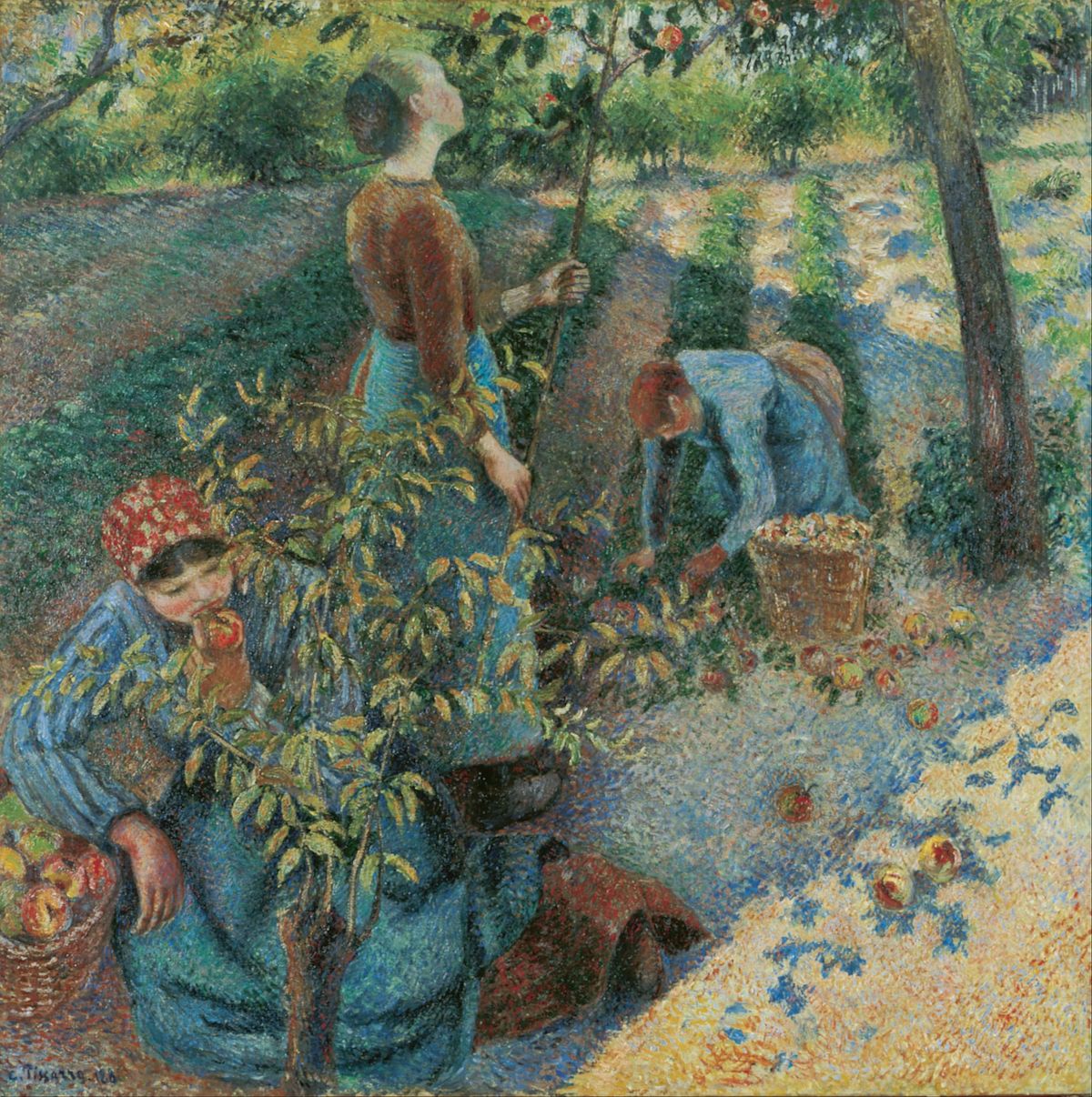
프랑스 인상주의의 든든한 맏형이자 빛과 색채의 혁신가였던 카미유 피사로(Camille Pissarro)가 1886년에 완성한 '사과 따기(La Cueillette des pommes / Apple Picking)'는 캔버스에 유채(Oil on canvas)로 제작된 신인상주의 시기의 대표 걸작입니다. 가로 128cm, 세로 125.8cm 크기의 웅장한 정방형 캔버스에 담긴 이 작품은 현재 일본 구라시키의 오하라 미술관(Ohara Museum of Art)에 영구 소장되어 있습니다.
이 그림에는 당시 50대 중반을 넘긴 거장 피사로의 파격적인 예술적 모험과 인간적인 고뇌가 깊숙이 배어 있습니다. 1885년 피사로는 서른 살이나 어린 젊은 화가 조르주 쇠라와 폴 시냐크를 만나 그들의 과학적 색채 분할 이론에 깊은 충격을 받았습니다. 그는 이미 확고하게 자리 잡은 인상주의의 성공에 안주하지 않고, 팔레트에서 색을 미리 섞지 않은 채 순수 원색의 미세한 점들을 캔버스 위에 촘촘히 병치하는 점묘 기법을 과감하게 수용했습니다.
이러한 화풍의 변화는 오랜 후원자였던 거상 폴 뒤랑 뤼엘의 거센 반발을 샀고, 클로드 모네와 르누아르 등 오랜 동료들마저 등을 돌리게 만들어 피사로를 극심한 재정난과 고립 속에 빠뜨렸습니다. 하지만 피사로는 1886년 열린 역사적인 '제8회 마지막 인상주의 전시회'에서 자신의 방을 따로 마련해 쇠라의 '그랑드 자트 섬의 일요일 오후'와 함께 이 '사과 따기'를 나란히 전시하며 새로운 미술 사조의 시작을 세상에 당당히 선언했습니다. 훗날 미술사학자들은 이 작품을 두고 과학적 광학 이론과 농촌 공동체의 따스한 서정성이 가장 완벽한 조화를 이룬 신인상주의의 불멸의 정점이라고 극찬하고 있습니다.
작품을 마주할 때 우리의 시선은 화면 좌측 하단에서 붉은 두건을 쓰고 탐스러운 붉은 사과를 한 입 베어 무는 소녀의 사랑스러운 모습에 가장 먼저 가닿습니다. 과실의 달콤함을 맛보는 소녀의 표정을 확인한 시선은, 중앙에서 장대를 높이 뻗어 나뭇가지를 올려다보는 여인의 늘씬한 실루엣을 타고 상단의 풍성한 사과나무 가지와 붉은 열매들로 시원하게 상승합니다.
이어 나뭇가지 사이로 쏟아지는 눈부신 햇살의 조각들을 지나, 우측 중경에서 허리를 숙여 바구니 가득 사과를 주워 담는 농부의 노동으로 하강하며, 전면 바닥에 흩뿌려진 사과들과 황금빛 흙길의 포근한 리듬 속으로 시선이 부드럽게 순환합니다.
이러한 시각적 흐름은 관람자의 무의식 속에 깊은 정서적 충만함과 평온한 안도감을 불러일으킵니다. 화면 전체를 수놓은 미세한 푸른빛과 따스한 황금빛, 연둣빛 점들이 눈의 망막 속에서 스스로 융합되면서 늦여름 과수원의 싱그러운 공기와 따스한 온기를 생생하게 체감하게 합니다. 대지가 베푸는 풍요로운 결실을 함께 나누며 휴식과 노동이 아름답게 어우러진 정경은, 일상의 스트레스와 불안을 말끔히 씻어내고 관람자의 내면에 깊은 심리적 안정과 따뜻한 위로를 채워줍니다.
Apple Picking - La Cueillette des pommes
Painted in 1886 by Camille Pissarro, the revered mentor and fearless innovator of French Impressionism, Apple Picking (La Cueillette des pommes) is a monumental oil on canvas masterpiece measuring 125.8 by 128 cm. Displayed in an exquisite, nearly square format, this radiant work is permanently preserved in the Ohara Museum of Art in Kurashiki, Japan.
Beneath the shimmering surface lies an inspiring tale of artistic courage and profound humility. In his mid-fifties, Pissarro met the much younger Georges Seurat and Paul Signac, becoming utterly captivated by their scientific division of color. Refusing to rest on his established Impressionist fame, he boldly revolutionized his style, meticulously applying tiny dots of unmixed, complementary pigments to achieve an optical vibration of pure natural light.
This radical shift provoked outrage from his longtime art dealer Paul Durand-Ruel, while close comrades like Claude Monet and Pierre-Auguste Renoir distanced themselves in disbelief, plunging Pissarro into deep financial distress. Undeterred by isolation, Pissarro championed this new direction at the historic Eighth and Final Impressionist Exhibition in 1886, proudly hanging Apple Picking alongside Seurat's A Sunday on La Grande Jatte. Today, art historians universally celebrate this canvas as an absolute milestone of Neo-Impressionism, where rigorous optical science effortlessly unites with the timeless poetry of rural labor.
Upon viewing the canvas, the spectator's gaze instinctively alights on the charming figure in the lower left, wearing a patterned red kerchief as she bites into a freshly picked red apple. From this delightful moment of sensory pleasure, our attention climbs the elegant, upright posture of the central woman reaching into the canopy with her long pole, directing our eyes toward the fruit-laden branches glowing above.
The gaze then descends naturally with the falling apples toward the middle ground, where another worker bends diligently to gather the harvest into a woven basket, before circulating softly across the golden, sun-dappled ground strewn with scattered red fruits.
This harmonious visual progression evokes a profound sense of emotional fulfillment and serene grounding within the subconscious. As the countless juxtaposed points of cerulean blue, golden amber, and meadow green fuse within the human eye, the mind subconsciously absorbs the rejuvenating warmth of late-summer daylight. Witnessing humanity in peaceful communion with the generous earth gently dissolves mental anxiety, nurturing the soul with timeless abundance, collective harmony, and enduring pastoral peace.
본 리뷰에서 작품을 제외한 컨텐츠의 저작권은 팔렛트제주에 있습니다.
"퍼블릭도메인 고전명화"를 제외한 모든 창작 콘텐츠는 저작권법 제4조 및 제10조에 의거하여 보호됩니다. 무단 도용시 저작권법 제136조(벌칙)에 의거, 당사의 사전 서면 승인 없는 저작권 침해 행위를 금지합니다.