새우를 잡는 어부 - Fisherman at Sea
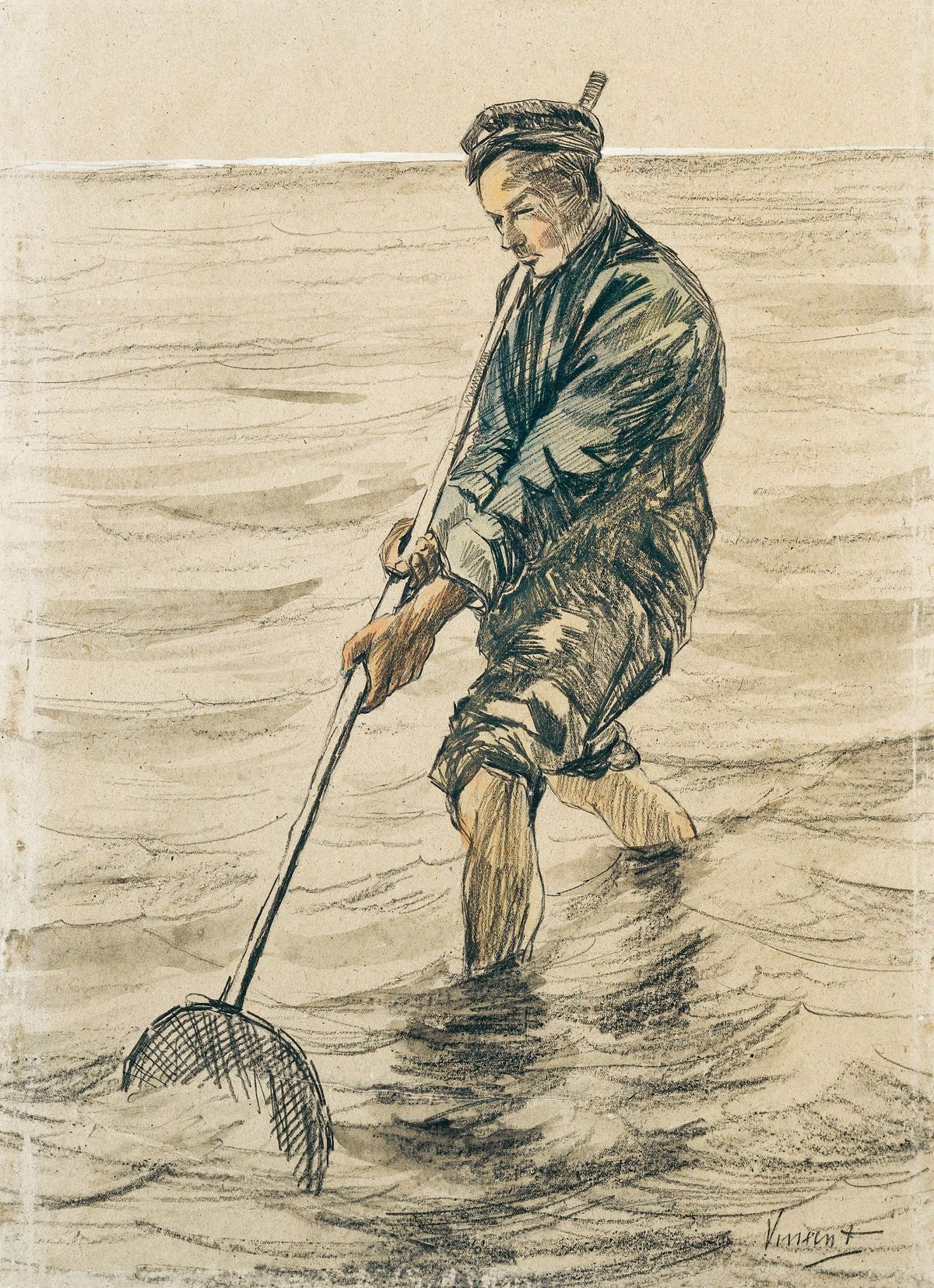
빈센트 반 고흐(Vincent van Gogh)가 헤이그에 머물던 1883년 여름(7~8월경)에 완성한 대표적인 소묘 및 수채 인물화입니다. 현재 네덜란드 암스테르담의 크뢸러 뮐러 미술관 및 유관 컬렉션 등에서 중요하게 다루어지고 있으며, 종이 위에 연필, 흑연, 수채, 과슈 및 잉크로 제작된 이 작품의 실제 사이즈는 약 52.0 × 33.5 cm(대형 스케치 페이퍼 규격)입니다. 바닷물 속에 무릎까지 몸을 담근 채 새우잡이 그물을 다루는 네덜란드 어부의 단단한 노동의 순간을 강렬한 흑백의 선묘와 은은한 색채 워시 기법으로 묵직하게 담아냈습니다.
고흐는 연필과 흑연으로 어부의 옷감 주름과 굳은살 박인 팔근육, 거친 파도의 물결을 조각하듯 밀도 높게 구축했습니다. 인물의 작업복을 덮은 짙은 청회색과 피부의 따뜻한 살구빛 톤은 배경을 이루는 담백한 모래빛 바다와 부드러운 대비를 이루며, 화면 우측 하단에는 화가의 당당한 서명(Vincent)이 새겨져 있습니다. 투박하면서도 힘찬 윤곽선과 수면 아래로 잠겨 들어가는 인물의 동세는 정적인 평면 위에 묵직한 실존적 긴장감과 생동감을 불어넣습니다.
1883년 헤이그 시절 고흐는 스헤베닝겐 해변과 인근 어촌 마을을 수시로 찾아가 거친 파도와 비바람에 맞서 살아가는 어부들의 일상을 관찰했습니다. 고흐에게 바다에 발을 딛고 묵묵히 그물을 미는 어부의 모습은, 자연의 거대한 힘 앞에서도 꺾이지 않는 인간의 숭고한 생명력이자 정직한 육체노동이 지닌 거룩한 성실함의 상징이었습니다. 그는 가난하고 고단한 노동자들의 삶에 깊은 경의를 표하며 이들의 모습을 기념비적인 조형 언어로 승화시키고자 했습니다.
화면 전체를 지배하는 간결한 수평 구도와 그물을 쥔 어부의 역동적인 대각선 축은 인간과 자연의 팽팽한 교감을 증명합니다. 미술사에서는 고흐가 네덜란드 사실주의 전통과 영국 판화의 사회적 리얼리즘을 흡수하여, 노동하는 인간의 존엄성을 독창적인 소묘 기법으로 완성해낸 헤이그 시기의 결정적인 초기 걸작으로 평가합니다.
관람객의 무의식적인 시선은 화면 상단에서 파도를 등진 채 굳게 다문 입술과 아래를 향한 어부의 집중된 눈매, 그리고 머리에 쓴 투박한 어부 모자에서 자연스럽게 출발합니다. 거친 바닷바람을 온몸으로 받아내는 어부의 진솔하고 단단한 표정에 시선이 머무는 순간, 보는 이는 찰나의 침묵과 함께 깊은 바다의 정적과 노동의 무게 속으로 단숨에 몰입하게 됩니다.
이어 시선은 어부의 구릿빛 팔과 긴 나무 자루를 타고 비스듬한 사선을 그리며 수면 아래로 내려가, 둥근 철제 프레임에 촘촘하게 엮인 반원형 새우잡이 그물에 도달합니다. 물살을 가르며 해저 바닥을 긁어모으는 그물의 정교한 질감과 찰랑이는 물결의 흑연 붓 터치를 마주하며, 삶을 지탱하는 정직한 노동의 숭고한 온기를 깊이 체감하게 됩니다.
이후 시선은 어부의 다리를 적시는 잔잔한 파도의 수평선을 지나, 아스라이 펼쳐진 바다와 하늘의 경계선을 훑은 뒤, 우측 하단의 서명을 거쳐 다시금 어부의 다부진 어깨와 등줄기로 유연하게 확장됩니다.
거친 바다와 인간의 굳건한 의지가 빚어내는 고요한 조화를 따라 순환한 시선이 편안히 안착할 때, 관람객의 내면에는 복잡한 일상의 번뇌와 피로가 정돈되고, 묵묵히 삶을 일구는 노동의 순수함이 건네는 깊은 위로와 함께 흔들리지 않는 심리적 안도감이 가득 차오르게 됩니다.
Fisherman at Sea
Created by Vincent van Gogh in the summer of 1883 during his formative residence in The Hague, this powerful work on paper is preserved in the collections studying his master drawings, including the Kröller-Müller Museum and Van Gogh Museum holdings. Executed in pencil, graphite, watercolor, and ink on paper, the actual size of the work is approximately 52.0 × 33.5 cm. The composition depicts a Dutch fisherman wading knee-deep into the coastal waters with his push-net, realized through vigorous linear hatching, subtle washes, and an unflinching dedication to honest human labor.
Van Gogh combined heavy graphite lines and lithographic crayon strokes to sculpt the dense folds of the fisherman's coarse garments and the rippling texture of the shallow sea. The muted blue-grey wash of the coat and the warm ochre tones of the skin stand out against the pale, sandy expanse of the calm ocean horizon. Van Gogh’s bold signature in the lower right corner grounds the drawing with personal conviction, while the sharp diagonal tilt of the net-pole introduces a dynamic mechanical tension against the natural water currents.
During his Hague period, Van Gogh frequently visited the nearby fishing community of Scheveningen to sketch coastal workers in their natural environment. To him, the lone fisherman battling the elements was not merely a picturesque subject, but a profound symbol of existential resilience, humility, and the sacred dignity of physical work. Drawing inspiration from 19th-century English social realism and Dutch graphic traditions, he sought to monumentalize the everyday struggles of working-class people with absolute sincerity.
The balance between the wide, tranquil horizon and the muscular, diagonal stance of the worker captures the timeless struggle and coexistence between mankind and nature. Art historians celebrate this composition as one of the definitive triumphs of his early draftsmanship, demonstrating his remarkable ability to translate human empathy into a sculptural, expressive graphic form.
A viewer's subconscious gaze is intuitively anchored first upon the weathered countenance of the fisherman, whose downward gaze and focused profile convey deep concentration beneath his traditional woolen cap. Lingering upon this resolute expression of quiet endurance, the observer is drawn into an immediate atmosphere of solemn dignity, focus, and emotional authenticity.
The gaze is then carried downward along the weathered arms and the long diagonal shaft of the wooden handle, arriving at the semi-circular push-net submerged in the foaming water. Absorbing the textured, cross-hatched mesh and the delicate graphite ripples around the fisherman's legs, the viewer experiences a visceral sense of physical exertion and rustic craftsmanship.
The eye continues outward across the soft, muted expanse of the shallow sea toward the distant horizontal shoreline, taking in the open marine atmosphere before ascending smoothly back along the sturdy curve of the fisherman's shoulders.
Completing this visual and emotional circulation, the observer feels a profound release of modern tension. The quiet nobility of honest labor leaves the viewer restored with a lasting sense of grounding fortitude, clarity, and enduring psychological peace.
본 리뷰에서 작품을 제외한 컨텐츠의 저작권은 팔렛트제주에 있습니다.
"퍼블릭도메인 고전명화"를 제외한 모든 창작 콘텐츠는 저작권법 제4조 및 제10조에 의거하여 보호됩니다. 무단 도용시 저작권법 제136조(벌칙)에 의거, 당사의 사전 서면 승인 없는 저작권 침해 행위를 금지합니다.