생트마리 드 라 메르의 바닷가에 있는 배들 - Fishing Boats on the Beach at Saintes-Maries-de-la-Mer
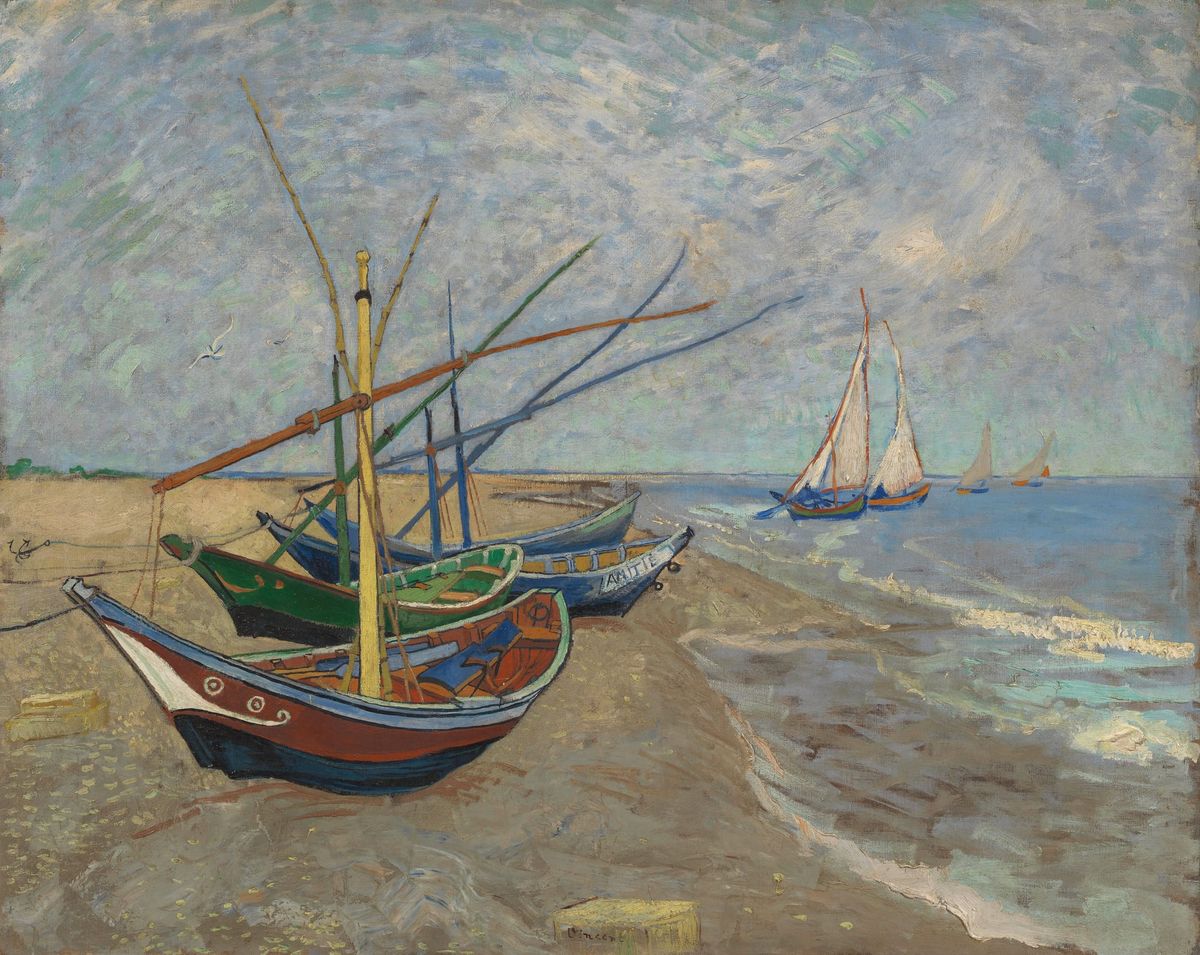
빈센트 반 고흐(Vincent van Gogh)가 남프랑스 아를에 머물던 중 지중해 연안을 방문하여 1888년 6월에 완성한 대표적인 유화 명작입니다. 현재 네덜란드 암스테르담의 반 고흐 미술관(Van Gogh Museum)에 소장되어 있으며, 캔버스 위에 유채로 제작된 이 작품의 실제 사이즈는 약 65.0 × 81.5 cm입니다. 백사장에 나란히 정박해 있는 소박한 어선들의 날렵한 곡선과 돛대의 기하학적 선묘, 그리고 지중해의 눈부신 에메랄드빛 바다와 하늘을 두텁고 역동적인 임파스토(Impasto) 기법으로 담아냈습니다.
고흐는 물감을 두껍게 얹어 어선의 매끄러운 목재 선체와 모래사장의 거친 질감, 그리고 파도의 하얀 포말을 조각하듯 입체감 있게 묘사했습니다. 화면 전경을 차지하는 배들의 강렬한 붉은색, 초록색, 군청색 원색 대비는 뒤편의 맑은 코발트블루 바다와 따뜻한 모래빛 해변과 어우러져 경쾌하고 생동감 넘치는 보색 조화를 이룹니다. 일본 판화(우키요에)의 영향을 받은 대담하고 유려한 외곽선과 하늘을 찌를 듯 사선으로 뻗은 돛대들의 율동감은 정적인 바닷가 풍경에 살아 숨 쉬는 조형적 리듬을 불어넣습니다.
1888년 5월 말에서 6월 초, 고흐는 지중해의 강렬한 빛과 색채를 직접 체험하기 위해 아를에서 마차를 타고 남쪽의 작은 어촌 마을 생트마리 드 라 메르로 향했습니다. 그는 지중해의 끝없는 수평선과 이른 아침 출항을 앞둔 어선들의 이국적인 모습에 깊은 영감을 받았습니다. 고흐에게 바닷가에 굳건히 닻을 내린 작은 배들은 거친 파도를 헤치고 나아가는 인간의 용기이자, 하루의 고된 항해 끝에 안식처로 돌아오는 순수한 삶의 쉼을 상징했습니다.
동생 테오에게 보낸 편지에서 고흐는 "지중해의 색채는 고등어처럼 변화무쌍하다. 초록인지 보라인지 모를 오묘한 푸른빛을 매 순간 뿜어낸다"며 바다의 경이로운 광채에 감탄했습니다. 미술사에서는 고흐가 파리 시기의 인상주의적 탐구를 넘어 순수 원색의 해방과 장식적 선묘를 완벽하게 결합시킨 아를 시절의 결정적 이정표이자, 남프랑스 빛의 정수를 담아낸 서정적 풍경화의 걸작으로 평가합니다.
관람객의 무의식적인 시선은 화면 좌측 전면에 단단하게 닻을 내리고 있는 붉은색과 흰색 장식이 돋보이는 목조 어선의 매끄러운 뱃머리와 노란 돛대에서 자연스럽게 출발합니다. 경쾌한 붓 터치로 빚어낸 배의 우아한 곡선과 생생한 색채에 시선이 머무는 순간, 보는 이는 찰나의 침묵과 함께 상쾌한 지중해의 바닷바람과 햇살 속으로 단숨에 몰입하게 됩니다.
이어 시선은 배들의 길게 뻗은 돛대와 밧줄이 그리는 시원한 사선 리듬을 타고 화면 우측의 탁 트인 바다로 이동하여, 잔잔한 수평선 위를 유유히 미끄러져 나아가는 흰 돛단배들의 평화로운 항해에 도달합니다. 푸른 파도를 가르며 아스라이 떠 있는 돛단배들의 자태를 마주하며, 대자연이 품은 끝없는 자유와 벅찬 해방감을 깊이 체감하게 됩니다.
이후 시선은 은은한 물결을 일으키며 모래사장을 적시는 잔잔한 흰 파도의 포말을 지나, 캔버스 상단을 푸르고 다채로운 구름 결로 가득 채운 지중해의 맑은 하늘을 훑은 뒤, 다시금 전경의 따뜻한 백사장과 정박한 어선들로 유연하게 내려앉습니다.
바다의 시원한 푸른빛과 배들의 따스한 원색이 빚어내는 장엄한 순환을 따라 순환한 시선이 편안히 안착할 때, 관람객의 내면에는 복잡한 일상의 번뇌와 피로가 씻겨 내려가고, 잔잔한 지중해가 건네는 맑은 위로와 함께 흔들리지 않는 깊은 심리적 안도감이 가득 차오르게 됩니다.
Fishing Boats on the Beach at Saintes-Maries-de-la-Mer
Painted by Vincent van Gogh in June 1888 during his inspired journey to the Mediterranean coast from Arles, France, this celebrated seascape resides in the permanent collection of the Van Gogh Museum in Amsterdam, Netherlands. Executed in oil on canvas, the actual size of the work is approximately 65.0 × 81.5 cm. Capturing the graceful forms of rustic fishing boats resting on the sandy shore against the open azure sea, the composition orchestrates a brilliant harmony of luminous color contrasts, graphic contours, and rhythmic impasto.
Van Gogh applied pure, unmixed paint with sculptural precision, carving out the clean wooden curves of the hulls, the granular texture of the sand, and the frothing surf along the shoreline. The radiant primaries of the beached vessels—combining deep ultramarine, emerald green, and earthy reds—stand out in vivid vibration against the warm tones of the beach and the cool turquoise expanse of the Mediterranean. Strongly influenced by the linear clarity of Japanese woodblock prints, the sharp diagonal thrust of the wooden masts infuses the tranquil coastal scene with dynamic vitality.
In late May 1888, Van Gogh traveled south through the Camargue to the small fishing village of Saintes-Maries-de-la-Mer to immerse himself directly in the Mediterranean light and sea. Captivated by the elegant geometry of the local boats resting on the sand, he recognized in them a timeless symbol of honest labor and quiet refuge following the perils of the sea. In his letters to his brother Theo, he marveled at the ever-shifting colors of the water, noting how it transformed continuously between shimmering greens, purples, and radiant blues.
Art historians celebrate this iconic painting as a major turning point in his Provençal period, demonstrating his mastery in unifying decorative linear rhythms with pure chromatic liberation to capture the elemental vitality of nature.
A viewer's subconscious gaze is intuitively anchored first by the crisp, red-and-white painted hull of the foreground boat resting on the shore, its upright yellow mast cutting decisively into the upper sky. Absorbing the clean geometry and tactile impasto of the resting craft, the observer is drawn into an immediate atmosphere of coastal freshness, quiet shelter, and emotional clarity.
The eye is then carried along the dynamic diagonal angles of the masts and rigging toward the open waters on the right, arriving at the tiny, graceful silhouettes of sailboats gliding smoothly across the horizon. Lingering upon these distant vessels catching the offshore breeze, the viewer experiences an expansive sense of wanderlust, tranquility, and natural peace.
The gaze continues along the gentle froth of the surf rolling onto the damp sand before sweeping upward across the sweeping, textured brushwork of the pale blue sky and returning smoothly to the warm embrace of the beached boats.
Completing this visual and emotional circulation, the observer feels a profound release of modern tension. The timeless harmony of sea and shore leaves the viewer restored with a lasting sense of inner clarity, emotional renewal, and enduring psychological peace.
본 리뷰에서 작품을 제외한 컨텐츠의 저작권은 팔렛트제주에 있습니다.
"퍼블릭도메인 고전명화"를 제외한 모든 창작 콘텐츠는 저작권법 제4조 및 제10조에 의거하여 보호됩니다. 무단 도용시 저작권법 제136조(벌칙)에 의거, 당사의 사전 서면 승인 없는 저작권 침해 행위를 금지합니다.