생레미 요양원 정원의 삼나무 - Cypresses in the Garden of the Asylum at Saint-Rémy
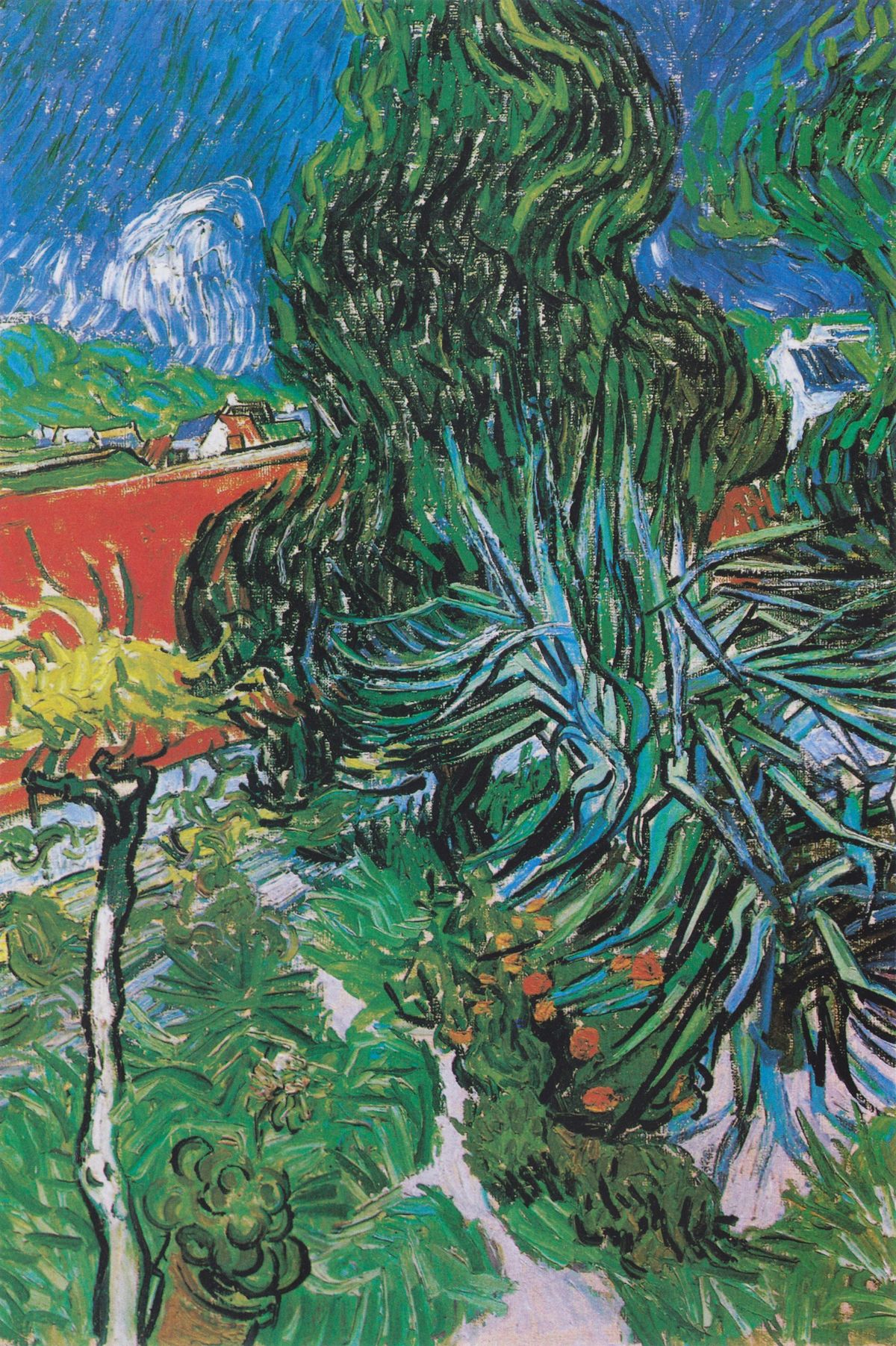
빈센트 반 고흐(Vincent van Gogh, 1853~1890)가 1889년 10월 프랑스 생레미의 생폴 드 모졸 요양원에서 완성한 유화(Oil on canvas) 작품입니다. 규격은 약 92 x 73 cm 크기이며, 현재 네덜란드 오테를로의 크뢸러 뮐러 미술관(Kröller-Müller Museum)에 소장되어 있습니다. 이 작품은 물감을 캔버스 위에 튜브째 짜 넣듯 두껍게 쌓아 올린 특유의 임파스토 기법과 역동적으로 휘몰아치는 붓터치를 통해, 정원의 고요한 풍경을 불꽃처럼 타오르는 생명력의 현장으로 탈바꿈시킨 후기 인상주의의 걸작입니다.
1889년 봄 자신의 귀를 자르는 사건 이후 스스로 요양원에 들어간 고흐는 언제 또다시 발작이 찾아올지 모른다는 극심한 공포와 싸워야 했습니다. 담당 의사였던 테오필 페롱 박사는 처음에는 고흐가 물감을 삼키거나 자해할까 봐 그림 도구를 모두 압수하려 했습니다. 하지만 그림을 그리지 못하면 완전히 미쳐버릴 것 같다는 고흐의 간절한 애원에 못 이겨, 정원 안에서만 그림을 그릴 수 있다는 조건부 허락을 내렸습니다.
이 때문에 고흐에게 정원은 유일하게 숨을 쉴 수 있는 해방구였습니다. 그는 정원에 털썩 주저앉아 하루 종일 삼나무만 뚫어지게 바라보았습니다. 동생 테오에게 보낸 편지에서 그는 삼나무의 초록빛은 그 어떤 물감으로도 흉내 내기 힘든 묘한 어둠과 신비로움을 품고 있으며, 그 완벽한 비율은 마치 이집트의 오벨리스크를 닮았다고 아이처럼 감탄했습니다. 당시 고흐는 물감이 떨어질 때마다 테오에게 편지로 물감을 더 보내달라고 떼를 썼고, 물감이 도착하면 밥을 먹는 것도 잊은 채 며칠 밤낮을 삼나무 잎사귀에 매달렸습니다.
정원에서 그림을 그릴 때 요양원 안에서는 웃지 못할 풍경이 벌어지곤 했습니다. 넋이 나간 다른 환자들이 다가와 고흐가 팔레트에 듬뿍 짜놓은 노란색과 초록색 물감을 신기한 듯 만져보거나 심지어 입에 넣으려 해 실랑이가 벌어지기도 했습니다. 그럴 때마다 고흐는 환자들을 쫓아내며 자신의 소중한 물감과 캔버스를 온몸으로 지켜냈습니다. 헝클어진 붉은 머리에 물감 범벅이 된 옷을 입고 칼바람 속에서 캔버스를 붙든 채 미친 듯이 붓을 휘두르는 고흐를 보며, 요양원 사람들은 저 화가야말로 이곳에서 가장 지독한 환자라고 수군거렸습니다. 하지만 정작 고흐는 캔버스 앞에서 붓을 쥐고 있을 때만큼은 그 누구보다 명철하고 평온했습니다.
후대 미술사는 이 작품을 가장 비극적인 환경 속에서 피워낸 위대한 생명력의 찬가이자 모더니즘의 정수로 평가합니다. 서양 문화에서 삼나무는 전통적으로 묘지에 심어 죽음과 영원한 잠을 상징하는 나무였습니다. 그러나 고흐는 이 죽음의 상징을 하늘을 향해 용솟음치는 거대한 초록빛 불꽃이자, 삶에 대한 꺼지지 않는 집념의 상징으로 완전히 뒤바꿔 놓았습니다. 짙은 에메랄드빛 나뭇잎과 붉은 담장, 그리고 소용돌이치는 코발트블루 하늘의 강렬한 보색 대비는 시대를 앞서간 표현주의의 시작을 알렸습니다.
작품을 마주하는 관람객의 시선은 화면 아래쪽의 소박한 오솔길과 붉은빛 화단에서 출발합니다. 이어 부드럽게 굽이치는 길의 흐름을 따라 거대한 삼나무의 뿌리와 몸통으로 시선이 자연스럽게 빨려 들어갑니다. 곧이어 나뭇가지들이 하늘을 향해 불길처럼 휘몰아치며 뻗어나가는 리듬을 타게 되고, 저 멀리 푸른 산과 역동적인 하늘의 구름으로 시선이 확장됩니다. 이러한 시선의 상승과 역동적인 리듬은 관람자의 무의식 속에 쌓여 있던 답답한 감정과 일상의 무기력함을 시원하게 씻어내며, 척박한 환경 속에서도 끝내 피어나는 강인한 생명력과 단단한 정서적 안도감을 선물합니다.
Cypresses in the Garden of the Asylum at Saint-Rémy
Painted in October 1889 by Vincent van Gogh (1853–1890), this profound oil on canvas measures approximately 92 by 73 centimeters and is proudly housed in the Kröller-Müller Museum in Otterlo, the Netherlands. Created during his voluntary confinement at the Saint-Paul-de-Mausole asylum in Saint-Rémy-de-Provence, the artwork exemplifies Van Gogh's expressive impasto technique, where thick layers of paint are passionately sculpted onto the canvas, transforming an asylum courtyard into a soaring testament to human vitality.
Following his devastating breakdown and ear mutilation in Arles, Vincent committed himself to the asylum, paralyzed by the fear of recurring madness. Dr. Théophile Peyron was initially terrified that the unstable painter might ingest his toxic pigments and considered confiscating his art supplies entirely. It was only through Vincent's desperate pleading—insisting that painting was his sole defense against insanity—that he was granted permission to paint strictly within the asylum grounds.
Confined within these stone walls, the untamed garden became Vincent's sacred haven. He spent hours mesmerized by the towering cypresses, writing passionately to his brother Theo that their deep greens were unlike any pigment known to man and possessed the monumental elegance of an Egyptian obelisk. Vincent was so consumed by their majesty that he repeatedly pleaded with Theo to ship massive batches of paint tubes, completely skipping meals whenever a new shipment arrived to work tirelessly on capturing the spirit of the trees.
The painting sessions were filled with touching and chaotic encounters. Bewildered patients frequently wandered over, attempting to touch the thick mounds of yellow and emerald paint or even swallow them, forcing Vincent to physically shield his work like a protective guardian. With disheveled red hair and clothes permanently stained with oil paint, Vincent painted with an almost possessed ferocity against the howling Provençal winds. The staff and inmates whispered that he was perhaps the most eccentric man among them, yet it was precisely in those intense moments at the easel that Vincent found his deepest clarity and inner peace.
Art historians recognize this piece as an extraordinary monument to resilience and modern expressionism. While cypresses had long been associated with cemeteries, mourning, and death, Van Gogh completely inverted their meaning, depicting them as roaring green flames reaching toward the heavens in an absolute celebration of life. The dramatic contrast between the swirling viridian foliage, the fiery terracotta walls, and the churning cobalt sky shattered the conventional boundaries of landscape painting.
The viewer's gaze instinctively begins at the humble garden path and warm blossoms at the bottom, following the winding ground upward directly into the surging core of the cypress tree. As the eyes ride the flame-like branches twisting skyward into the clouds, an unconscious release of emotional weight occurs. This dynamic upward momentum revitalizes the spirit, offering modern viewers profound catharsis, immense psychological reassurance, and an enduring sense of hope.
본 리뷰에서 작품을 제외한 컨텐츠의 저작권은 팔렛트제주에 있습니다.
"퍼블릭도메인 고전명화"를 제외한 모든 창작 콘텐츠는 저작권법 제4조 및 제10조에 의거하여 보호됩니다. 무단 도용시 저작권법 제136조(벌칙)에 의거, 당사의 사전 서면 승인 없는 저작권 침해 행위를 금지합니다.