생 폴 요양원의 정원 The Garden of the Asylum at Saint-Rémy
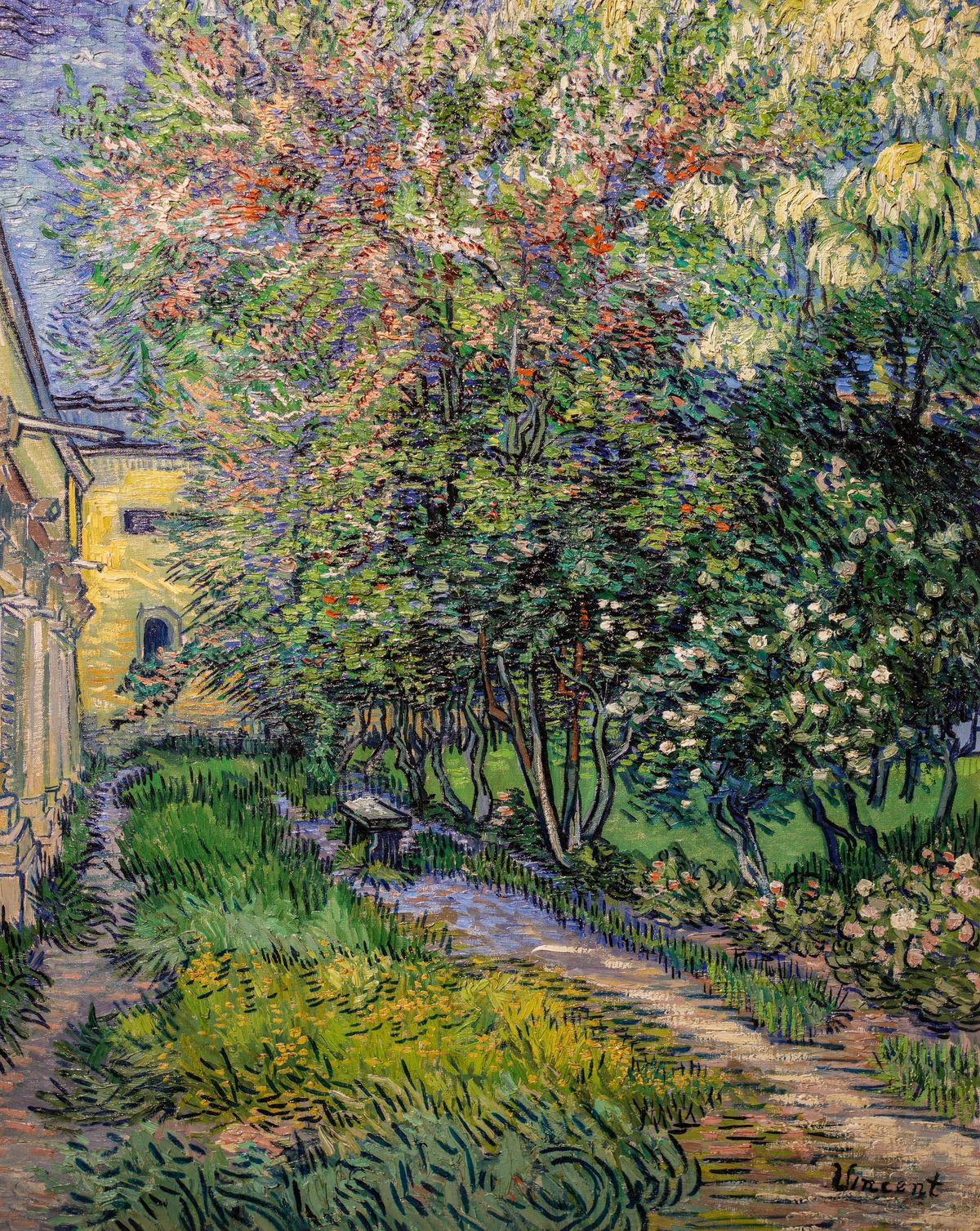
빈센트 반 고흐(Vincent van Gogh, 1853–1890)는 아를의 황색 집에서 극단적인 정신적 파국을 겪은 뒤, 1889년 5월 8일 자발적으로 생레미드프로방스의 생 폴 드 모솔(Saint-Paul-de-Mausole) 정신요양원에 입원했습니다. 이 작품은 그가 요양원에 들어간 직후인 1889년 5월에 그려진 유채화로, 야콥 바르트 드 라 파이유(J.B. de la Faille)의 전작 도록 기준 공식 등록번호는 F734입니다. 실제 작품의 실측 규격은 91.5 × 72 센티미터이며, 현재 네덜란드 오테를로의 크롤러 뮐러 미술관(Kröller-Müller Museum)에 소장되어 있습니다.
작가의 고뇌와 비하인드
입원 초기 고흐에게 허락된 세계는 극도로 제한적이었습니다. 발작의 재발을 두려워한 병원 측은 그의 외출을 엄격히 통제했고, 그는 요양원 안쪽에 방치된 무성한 정원과 안뜰만을 겨우 거닐 수 있었습니다. 당시 그가 동생 테오에게 보낸 편지를 보면, 원내를 거닐 때 눈에 들어오는 정원의 풍경은 마치 악몽 속의 광경 같다고 고백하며 거친 소나무와 잡초가 뒤엉킨 폐쇄된 공간이 안겨주는 공포를 토로했습니다.
화면 왼쪽에 세워진 요양원 건물의 차가운 노란 외벽은 그를 세상으로부터 영구히 격리시킨 차가운 현실을 의미합니다. 그 옆으로 거대하게 솟아오른 소나무와 관목들은 캔버스를 가득 채우며 답답하게 얽혀 있습니다. 고흐는 이 짓누르는 듯한 답답함을 해소하기 위해 두껍고 역동적인 임파스토 기법과 거친 붓질을 사용해 숲 전체가 꿈틀거리는 에너지를 부여했습니다. 이는 단순히 눈앞의 식물을 묘사한 것이 아니라, 발작의 공포에 잠식되면서도 붓을 놓지 않으려 했던 화가의 절박한 생존 투쟁 그 자체였습니다.
무의식 속 시선 및 심리 흐름
관람객의 시선은 가장 먼저 화면 왼쪽 구석의 차가운 산책로에 놓인 작고 외로운 돌벤치에 닿게 됩니다. 이 돌벤치는 격리된 공간 속에서 화가가 매일 마주해야 했던 극심한 적막감과 타인과의 단절에서 오는 고독을 시각적으로 고스란히 대변합니다.
이어지는 대각선 구도의 오솔길을 따라 시선이 자연스럽게 중경으로 이동하면, 붉고 초록빛이 강렬하게 충돌하며 소용돌이치는 거대한 나무 군락의 웅장한 압박감과 마주하게 됩니다. 마지막으로 화면 상단의 푸른 하늘과 원경의 무성한 숲으로 시선이 트이면서, 막힌 울타리 너머의 세상으로 향하고 싶은 강렬한 갈망과 내면의 평온을 찾으려는 복잡 미묘한 심리적 동요가 교차합니다.
미술계의 평가와 조형미
미술사학계에서는 이 작품을 두고 고흐가 후기 인상주의의 조형적 실험을 극한까지 밀어붙여 인간 내면의 심리적 밀도를 시각화한 위대한 성취로 평가합니다. 외형적인 풍경의 객관적 재현을 과감히 포기하고, 굵고 거친 윤곽선과 보색 대비를 이루는 과감한 색채 운용을 통해 화면 전체를 지배했습니다. 눈에 보이는 물리적 세계를 넘어 그 이면에 숨겨진 인간의 뜨거운 생명력과 영혼의 진동을 캔버스 위에 고스란히 각인시킨 영원한 예술적 명작입니다.
The Garden of the Asylum at Saint-Rémy
Vincent van Gogh voluntarily admitted himself to the Saint-Paul-de-Mausole asylum in Saint-Rémy on May 8, 1889, seeking refuge after the devastating psychological crises that marked his final months in Arles. Measuring 91.5 by 72 centimeters and cataloged as F734 in J.B. de la Faille's catalogue raisonné, this oil on canvas captures the turbulent vitality of the enclosed hospital landscape during the very early weeks of his confinement. The painting is currently housed in the Kröller-Müller Museum in Otterlo, Netherlands, standing as a profound testament to the artist's resilience through creative labor.
During the initial months of his hospitalization, when external walks were strictly prohibited, the overgrown and neglected garden of the asylum became his primary physical universe. In letters to his brother Theo, Van Gogh described the garden as a claustrophobic yet mesmerizing space, comparing its wild, untamed growth to a haunting vision born of his isolation.
The composition reveals a deliberate perspective set close to the pale yellow architectural wall of the asylum building on the left, establishing a stark boundary between clinical confinement and untamed nature. Towering pine trees and dense bushes dominate the pictorial space, rendered through thick, writhing impasto strokes that mirror the turbulent emotional currents and psychological claustrophobia experienced by the artist as he fought to anchor his fracturing mind.
The viewer's gaze is initially drawn toward the solitary stone bench resting quietly along the winding path on the left, evoking a poignant sense of isolation and quiet despair that mirrored the artist's daily reality.
The perspective then follows the diagonal trajectory of the walkway deeper into the middle ground, where the dense, interlocking canopy of foliage exerts an overwhelming visual pressure. Finally, the eye elevates toward the upper fringes of the canvas, where glimpses of blue sky break through the branches, creating an intense psychological tension between physical restriction and a desperate spiritual yearning for liberation.
Art historians regard this canvas as a defining masterpiece of Post-Impressionist expressionism, where topography is entirely subordinated to psychological intensity. Van Gogh bypasses mere naturalistic representation, utilizing heavy dark outlines and violently contrasting hues of red, green, and ochre to externalize his inner turmoil. The garden is thus elevated from a clinical courtyard into a vibrant psychological portrait, immortalizing the artist's unmatched capacity to distill raw human agony and enduring vitality into timeless visual forms.
본 컨텐트의 저작권은 팔렛트제주에 있습니다. 허가없는 무단전제를 금지합니다.
Copyright © Palette Jeju. All rights reserved. Unauthorized reproduction or redistribution is strictly prohibited.