새벽안개 속 부활의 거룩한 광채와 경배의 만류, 나를 만지지 마라 Noli me tangere
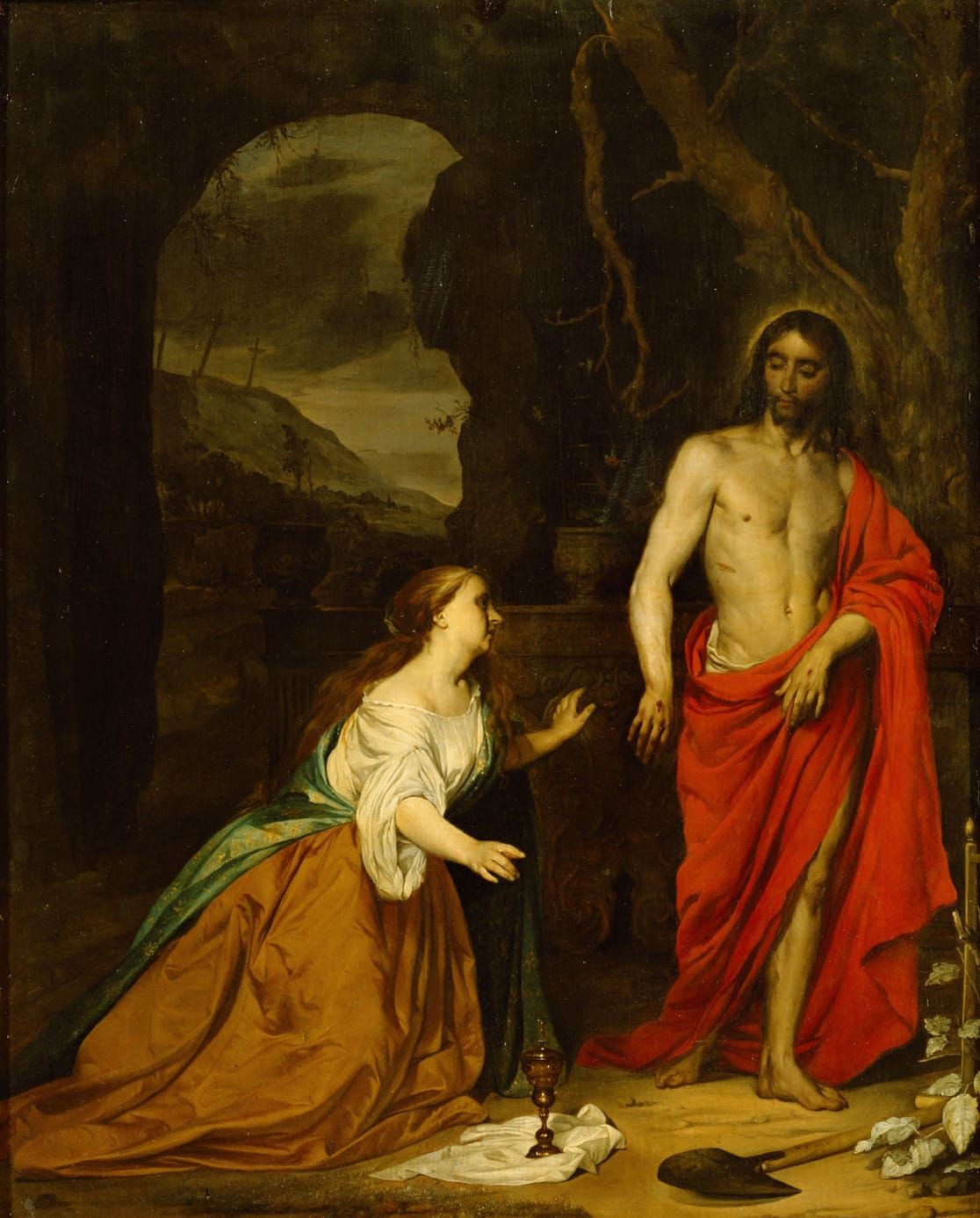
17세기 네덜란드 황금시대의 풍속화 및 역사화 거장 가브리엘 메추(Gabriel Metsu, 1629–1667)가 1667년경 세상을 떠나기 직전에 완성한 대작 유화 나를 만지지 마라(Noli me tangere, 라틴어 원제: Noli me tangere, 네덜란드어: Christus verschijnt aan Maria Magdalena)는 67.0 cm × 52.5 cm 크기의 캔버스에 유채로 그린 대표적인 후기 종교화 명작입니다. 현재 오스트리아 빈의 미술사 박물관(Kunsthistorisches Museum, Vienna)에 소장되어 있습니다.
지병의 고통 속에서 아내와 함께 완성한 생애 마지막 성화와 삽자루 소동
1660년대 후반 암스테르담의 가브리엘 메추는 오랫동안 앓아온 지병이 급격히 악화되면서 육체적으로 극심한 고통 속에 놓여 있었습니다. 당시 개신교가 주류였던 사회적 분위기 속에서도 독실한 가톨릭 신앙을 간직했던 메추는, 죽음의 문턱에서 부활한 그리스도의 기적과 영원한 생명의 희망을 화폭에 담아 신에게 바치기로 결심했습니다. 요한복음 20장에 기록된 대로, 부활한 예수가 무덤가 정원에서 슬피 울던 막달라 마리아에게 나타나 나를 만지지 마라(Noli me tangere)라고 말씀하시며 영적인 승천을 예고하는 거룩한 순간을 주제로 삼았습니다.
이 그림을 준비하던 날, 화실에서는 눈물겨우면서도 따스한 소동이 벌어졌습니다. 메추는 성경에서 마리아가 부활한 예수를 정원사로 착각했던 대목을 실감 나게 표현하기 위해, 화실 구석에 정원용 쇠삽과 나뭇가지를 소품으로 가져다 놓았습니다. 화가가 쇠약해진 손으로 붓을 들고 예수의 붉은 망토 주름을 채색하던 중, 모델로 무릎을 꿇고 있던 아내 이사벨라가 기침하는 남편을 부축하려다 바닥에 놓인 무거운 삽자루를 발로 건드려 쿵 하는 소리가 화실에 울려 퍼졌습니다.
놀란 아내가 남편의 안색을 살피며 걱정스러운 눈물을 글썽이자, 메추는 오히려 아내의 손을 따스하게 잡아주며 미소를 지었습니다. 그는 바닥에 쓰러진 삽이야말로 부활의 영광을 알지 못한 채 슬픔에 잠겨 있던 인간의 착각을 보여주는 완벽한 소품이라며 아내를 안심시켰습니다. 바닥에 놓인 하얀 수의와 향유병, 그리고 붉은 망토를 두른 예수의 손에 선명하게 새겨진 못 자국은, 삶의 마지막 순간까지 온 영혼을 다해 영원한 구원을 증언하고자 했던 거장의 눈물겨운 신앙과 예술혼이 빚어낸 성스러운 결실입니다.
붉은 망토를 두른 그리스도의 성체에서 애절한 마리아의 손끝으로, 시선의 심리적 여정
그림을 마주하는 순간 관람객의 무의식적 시선은 화면 오른쪽 어둠 속에서 천상의 빛을 받아 눈부시게 밝게 빛나는 예수 그리스도의 상체와 선명한 진홍빛 망토로 가장 먼저 빨려 들어갑니다. 머리 뒤편으로 은은하게 퍼져나가는 후광과 슬픔을 초월한 자비로운 눈빛, 그리고 손등에 맺힌 거룩한 성흔은 보는 이에게 숨 막히는 숙연함과 깊은 영적 평온을 선사합니다.
이어 시선은 부활한 주님을 향해 두 손을 뻗으며 바닥에 무릎을 꿇고 있는 막달라 마리아의 황금빛 치맛자락과 그녀의 간절한 표정으로 이동합니다. 주님을 다시 만난 기쁨에 손을 뻗으면서도, 만지지 말라는 거룩한 만류에 멈칫하며 경외감에 젖어 든 마리아의 미묘한 손동작을 확인하는 순간, 관람객은 슬픔이 경이로운 환희로 바뀌는 찰나의 벅찬 감정을 공감각적으로 느끼게 됩니다.
마지막으로 시선은 마리아의 무릎 아래 바닥에 정갈하게 놓인 순백의 린넨 수의와 황금빛 향유병, 그리고 화면 오른쪽 아래 흙바닥에 놓인 정원사용 쇠삽을 지나, 화면 왼쪽 멀리 아침 안개 속에 희미하게 서 있는 골고다 언덕의 세 십자가에 멈춥니다. 어두운 무덤의 침묵을 뚫고 솟아오른 거룩한 부활의 아침과 영원한 생명의 빛을 마주하며, 관람객은 유한한 육체의 고통을 넘어선 불멸의 구원과 메추가 생애 마지막 순간에 남긴 거룩한 예술적 유산을 가슴 깊이 마주하게 됩니다.
네덜란드 바로크 종교화의 정점과 숭고한 영성, 미술계의 평가
미술계는 나를 만지지 마라를 가브리엘 메추가 생애 마지막 해에 도달한 종교적 영성과 이탈리아 바로크의 극적인 명암법이 완벽하게 결합된 불멸의 대표작으로 평가합니다.
어둠과 빛의 강렬한 대조를 통해 부활의 신비로움을 극대화하고, 진홍빛 망토의 실크 광택과 린넨 천의 부드러움, 그리고 인물들의 섬세한 심리 묘사를 완벽한 북유럽 사실주의로 승화시켰기 때문입니다. 죽음의 문턱에서도 흔들리지 않는 신앙으로 영원한 부활의 희망을 화폭에 아로새긴 메추의 이 성스러운 걸작은, 오늘날까지도 전 세계 수많은 이들의 마음에 깊은 영적 위안과 잊을 수 없는 숭고한 감동을 전해주고 있습니다.
The Luminous Dawn of Sacred Resurrection, Noli me tangere
Painted around 1667 in Amsterdam by the preeminent Dutch Golden Age master Gabriel Metsu (1629–1667), Noli me tangere (Latin for Touch Me Not, Dutch: Christus verschijnt aan Maria Magdalena) is an oil on canvas measuring 67.0 cm × 52.5 cm (26.4 in × 20.7 in), preserved in the permanent collection of the Kunsthistorisches Museum in Vienna, Austria.
The Final Devotional Testament and the Garden Spade Commotion
During the late 1660s in Amsterdam, Gabriel Metsu faced severe physical deterioration brought on by a chronic and fatal illness. Despite living in a Calvinist-dominated society where public Catholic commissions were restricted, Metsu remained a devout Catholic and chose to dedicate his final creative energies to a profound biblical meditation on resurrection and spiritual redemption. Drawn from the Gospel of John, the narrative captures the sacred dawn when the risen Christ appears to the weeping Mary Magdalene in the garden, gently commanding her not to cling to his physical form as he prepares to ascend to the Father.
A poignant and memorable incident occurred in the studio during the preparation of this final masterpiece. To authentically convey Mary Magdalene’s initial mistake of confusing Christ for the estate gardener, Metsu placed an iron digging spade and trimmed olive branches on the studio floor. As the weakened painter layered the luminous vermilion glaze onto Christ’s sweeping mantle, his wife Isabella—modeling as the kneeling Magdalene—stepped forward to support her coughing husband, accidentally knocking the heavy spade across the floorboards with a loud clang.
Seeing her eyes fill with tears of concern, Metsu held her hand gently with a comforting smile, reassuring her that the fallen iron spade was the perfect visual metaphor for the earthly sorrow soon to be conquered by divine grace. The pristine linen shroud, the golden ointment jar, and the holy stigmata visible upon Christ’s hand stand as enduring testaments to the master’s unyielding faith and supreme artistic devotion in the shadow of mortality.
Subconscious Trajectory of the Gaze: From Resurrected Corpus to the Reaching Hands
The observer's subconscious gaze is immediately magnetized by the right register, captivated by the radiant, pale torso of Jesus Christ draped in a voluminous scarlet mantle glowing against the deep garden shadows. The ethereal halo radiating behind his head, his compassionate downward glance, and the sacred stigmata upon his outstretched palm establish an instant atmosphere of transcendent majesty and serene solemnity.
The visual path then shifts leftward to the kneeling figure of Mary Magdalene dressed in a glowing amber gown and white chemise. Observing her longing facial expression and the delicate tension in her hands—reaching forward in sudden joy yet hesitating in reverent awe—the viewer directly experiences the emotional shift from inconsolable grief to overwhelming spiritual wonder.
Finally, the visual trajectory sweeps past the pure white linen cloth and the golden anointing vessel resting at her knees, descending to the iron spade in the lower-right corner before traveling into the distant mist where the three empty crosses of Golgotha stand silhouetted on the hill. Confronting the sacred triumph over mortal death and the promise of eternal life, the spectator perceives the profound spiritual solace and artistic devotion Metsu embedded within his final masterpiece.
The Monument of Baroque Spirituality: Critical Legacy
Art historians revere Noli me tangere as the supreme spiritual pinnacle of Metsu’s late career, demonstrating his masterful synthesis of Caravaggesque chiaroscuro, refined Dutch textural realism, and profound psychological nuance.
By orchestrating dramatic contrasts of light and shadow, differentiating between the glossy folds of scarlet silk and coarse stone, and animating sacred history with tender human emotion, Metsu elevated a traditional devotional scene into a timeless visual poem. This magnificent canvas endures as an inspiring testament to the artist's enduring creative courage, celebrating the transformative power of spiritual faith and the sublime beauty of sacred art.
본 컨텐트의 저작권은 팔렛트제주에 있습니다. 허가없는 무단전제를 금지합니다.
Copyright © Palette Jeju. All rights reserved. Unauthorized reproduction or redistribution is strictly prohibited.