류트 연주자 The Lute Player
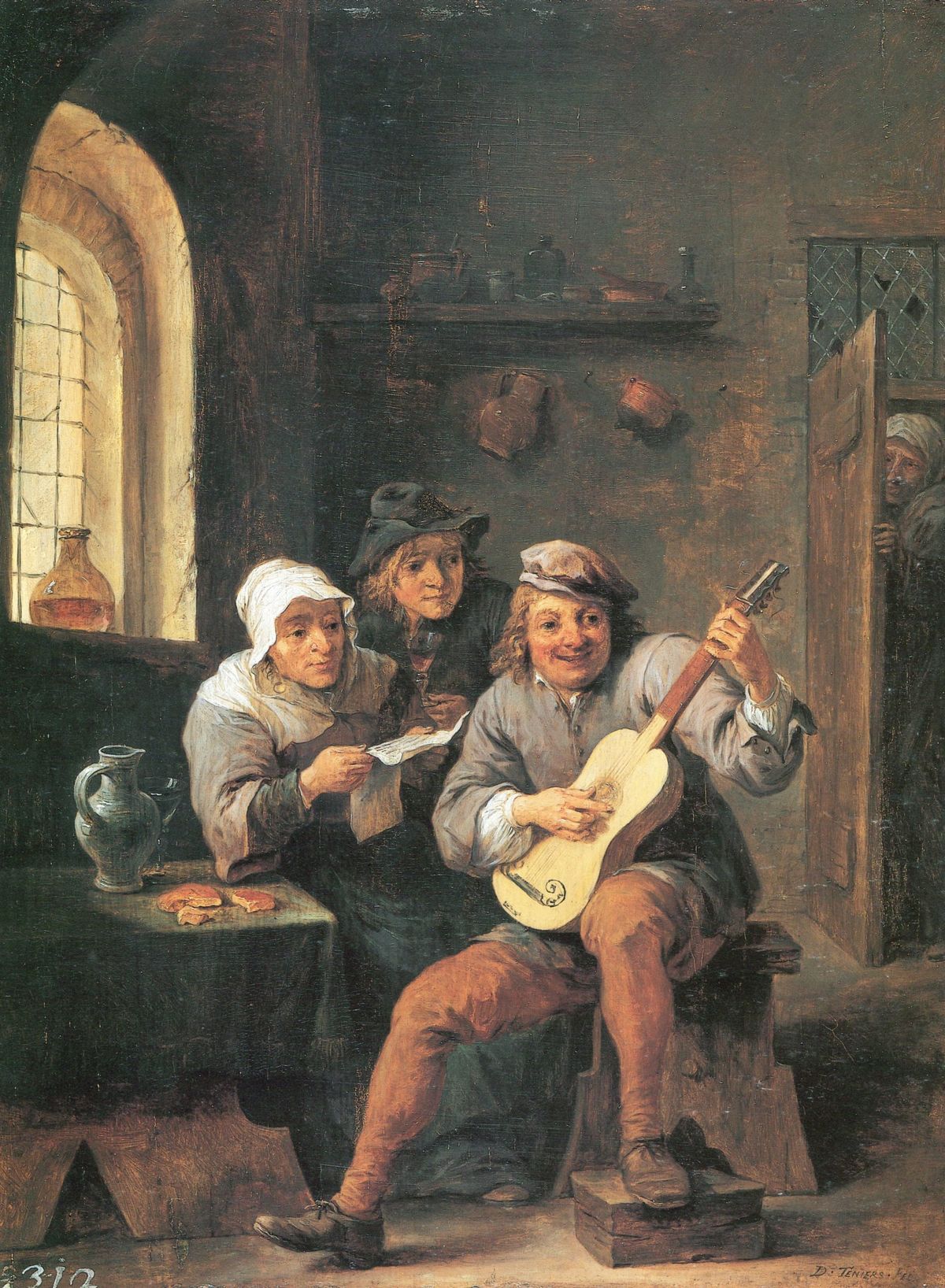
17세기 플랑드르 바로크 풍속화 및 음악 실내화의 거장 소 다비드 테니어르스(David Teniers le Jeune, 1610–1690)가 1640년대 중후반 안트베르펜과 브뤼셀 시기에 완성한 기념비적 실내 음악 풍속화 유화 류트 연주자(The Lute Player, 또는 기타를 치는 사내와 노래하는 노파, 네덜란드어: De luitspeler, 스페인어: El tañedor de guitarra, 소장품 번호: P001793 / 312)는 40.0 cm × 29.0 cm 크기의 아담한 세로형 패널(목판)에 유채로 그린 대표적인 북유럽 선술집 음악화 최고 걸작입니다.
스페인 왕실의 유서 깊은 왕실 컬렉션을 거쳐 현재 스페인 마드리드의 프라도 미술관(Museo del Prado, Madrid)에 영구 소장되어 보존되어 오고 있습니다.
감각의 우의와 서민들의 소박한 선율을 향한 화가의 고뇌
1640년대 플랑드르 화단을 이끌며 유럽 궁정의 주목을 받던 삼십 대의 테니어르스는, 시골 선술집의 투박한 일상 속에 오감(청각, 시각, 미각, 후각, 촉각)의 알레고리를 자연스럽게 녹여내는 작업에 깊이 몰두했습니다.
화가는 선배 화가들이 자주 그리던 거칠고 폭력적인 주점 난투극 대신, 낡은 주막 방 안에서 악기를 조율하고 함께 노래를 부르며 삶의 고단함을 잊는 평범한 이웃들의 진솔한 교감을 어떻게 맑은 은빛 대기(Silvery manner)와 부드러운 빛으로 담아낼지 치열하게 번민했습니다.
당시 북유럽 회화에서 악기를 연주하고 악보를 보는 행위는 청각과 시각의 감각적 즐거움을 뜻하는 동시에, 서로 다른 세대가 하나의 화음을 만들어내는 따뜻한 인간적 유대를 상징했습니다.
화가는 아치형 창문으로 부드러운 아침 햇살이 스며드는 주막 방 안에서, 류트(기타형 현악기)를 신나게 뜯으며 노래하는 청년과 악보를 들여다보는 노파의 정겨운 순간을 화폭에 담았습니다.
화면 오른쪽 나무 의자에 걸터앉은 젊은 사내는 분홍빛 빵모자를 삐딱하게 쓰고 주황빛 바지를 입은 채, 관람객을 바라보며 유쾌한 미소를 지으며 악기의 줄을 퉁기고 있습니다.
그의 곁 탁자 앞에서는 흰 두건을 쓴 늙은 여인이 손에 악보를 쥐고 글자를 들여다보며 음정을 맞추고 있고, 그 뒤편 모자를 쓴 동료는 술잔을 든 채 감탄 어린 눈빛으로 연주를 감상하고 있습니다.
탁자 위에는 갓 구운 빵과 은은한 회색빛 도자기 술병이 놓여 있고, 반쯤 열린 나무 문틈으로는 호기심 많은 노파가 고개를 들이밀며 음악 소리에 귀를 기울이고 있어, 소박한 주막을 가득 채운 맑은 노랫소리를 손에 잡힐 듯 생생하게 웅변합니다.
기타 치는 청년의 환한 미소에서 악보를 든 노파와 문틈의 관객으로, 시선의 심리적 여정
그림을 마주하는 순간 관람객의 무의식적 시선은 화면 오른쪽에서 은은한 창가 햇살을 받아 화사하게 빛나는 밝은색 현악기의 몸통과 연주자의 유쾌하고 환한 미소로 가장 먼저 빨려 들어갑니다.
줄을 튕기며 장난기 가득한 눈빛으로 관람객을 응시하는 청년의 생동감 넘치는 표정과 편안하게 뻗은 다리는 보는 이에게 깊은 시각적 친근함과 함께 경쾌한 음악의 리듬감을 선사합니다.
이어 시선은 연주자의 곁에서 손에 쥔 악보 종이를 뚫어지게 바라보며 입을 웅얼거리는 흰 두건 노파의 진지한 얼굴과, 그 뒤에서 술잔을 쥐고 음악에 흠뻑 빠져든 사내의 얼굴로 이동합니다.
한 음 한 음 정성스럽게 노래를 따라 부르는 이웃들의 순박한 호흡을 확인하는 순간, 관람객은 류트 선율과 맥주 향기가 감도는 17세기 플랑드르 주막 방 한복판 속으로 온몸이 빨려 들어가게 됩니다.
마지막으로 시선은 탁자 위의 빵 조각과 도자기 술병, 그리고 벽 선반에 놓인 작은 항아리들을 지나, 화면 오른쪽 반쯤 열린 문틈으로 얼굴을 빼꼼 내민 이웃 노파의 호기심 어린 눈망울과 아치형 격자창 너머의 은빛 하늘에 멈춥니다.
실내의 아늑한 갈색조 명암과 창문에서 쏟아지는 부드러운 자연광이 빚어내는 완벽한 공간적 조화를 마주하며, 관람객은 평범한 일상 속에 깃든 음악의 순수한 위로와 거장 테니어르스가 건네는 묵직한 서민적 온기를 가슴 깊이 마주하게 됩니다.
17세기 플랑드르 실내 음악 풍속화의 정점과 조형미, 미술계의 평가
미술계는 프라도 미술관의 류트 연주자를 테니어르스가 인물의 생생한 표정 연기와 청각적 분위기를 가장 완벽한 기량으로 결합해 완성한 대표적인 소형 목판 명작으로 평가합니다.
단순한 주점 연주 장면을 넘어 감각의 알레고리와 세대 간의 정겨운 화합을 완벽한 삼각 구도 속에 배치했을 뿐만 아니라, 류트의 매끄러운 나무 결, 도자기 주전자의 은은한 반사광, 구겨진 악보 종이의 바스락거리는 질감, 낡은 벽돌 벽의 표면감을 극도로 섬세한 북유럽 사실주의 유화 기법으로 완벽하게 구현했기 때문입니다.
음악이 주는 소박한 기쁨과 인간미 넘치는 순간을 가장 품격 높은 시각 교향곡으로 승화시킨 테니어르스의 이 걸작 화폭은, 오늘날까지도 전 세계 수많은 감상자들에게 깊은 감탄과 잊을 수 없는 시각적 안식을 전해주는 불멸의 명작으로 손꼽히고 있습니다.
The Lute Player
Painted in the mid-to-late 1640s in Antwerp by the master of Flemish Baroque genre and interior painting David Teniers the Younger (1610–1690), The Lute Player (also titled The Guitar Player, Spanish: El tañedor de guitarra, Inventory No. P001793 / 312) is an intimate interior genre masterpiece in oil on panel measuring 40.0 cm × 29.0 cm (15.7 in × 11.4 in).
Preserved through the historic Spanish Royal Collection, it is housed today in the distinguished permanent collection of the Museo del Prado in Madrid, Spain.
The Allegory of Hearing, Tavern Harmony, and the Music of Common Folk
During the 1640s in Antwerp, David Teniers the Younger refined his celebrated ability to capture the gentle, harmonious leisure of the working class, frequently interpreting the traditional Allegory of the Five Senses (specifically Hearing and Sight) within domestic interiors.
Rather than portraying tavern music as coarse drunkenness or vulgar noise, the master meditated deeply on how to translate the genuine camaraderie, acoustic delight, and heartfelt concentration of ordinary people into a luminous chamber composition bathed in soft, silvery daylight.
Teniers staged an intimate musical gathering inside a stone tavern room illuminated by an arched casement window.
To the right, an animated young musician in a tilted cap and vermilion hose sits upon a rustic bench, resting his foot on a wooden block as he strums a guitar-like lute with an engaging, joyful smile directed toward the viewer.
Beside him at the table, an elderly woman in a white linen bonnet carefully studies a printed sheet of music, singing along to the chords, while a companion behind them listens attentively with a raised glass of wine.
On the table rests a glazed ceramic flagon and bread, while through the ajar wooden door on the right, an inquisitive neighbor woman peeks inside to enjoy the melody, celebrating the unpretentious joy and timeless warmth of Flemish communal life.
Subconscious Trajectory of the Gaze: From the Lutenist's Smile to the Peeking Neighbor
The observer's subconscious gaze is immediately magnetized by the central-right foreground, drawn to the luminous, pale wood soundboard of the string instrument and the cheerful, direct gaze of the smiling player.
His jaunty posture, nimble fingers poised across the strings, and warm facial expression create an instant focal point of physical vitality, acoustic rhythm, and psychological intimacy.
The visual path then shifts toward the left, lingering over the wrinkled hands and earnest profile of the elderly woman reading the sheet music.
Taking in her steady concentration and the companion listening in quiet delight, the viewer directly experiences the melodic cadence and authentic warmth of an afternoon tavern concert.
Finally, the visual trajectory moves toward the perimeter, examining the rustic flagon on the table and the upper wall shelf, before resting upon the weathered face of the woman peeking through the cracked door.
Observing the harmonious equilibrium between focused window chiaroscuro, balanced multi-figure grouping, and precise Netherlandish draftsmanship, the spectator perceives the timeless nobility of simple pleasures and the profound aesthetic solace Teniers embedded within the panel.
The Monument of Flemish Musical Genre: Critical Legacy
Art historians revere the Prado Lute Player as an exemplary masterpiece of Teniers’s cabinet interior style, illustrating his consummate ability to unite still-life accuracy, character psychology, and acoustic atmosphere on an intimate wooden panel.
By orchestrating delicate textural contrasts between polished instrument wood, porous earthenware glaze, crisp sheet music, coarse linen bonnets, and rough plaster masonry within a unified spatial enclosure, Teniers elevated a modest song into an exquisite aesthetic treatise on human harmony.
This precious historical panel endures as an inspiring testament to the master's creative fortitude, celebrating the quiet poetry of everyday existence and the transformative grace of living art.
본 컨텐트의 저작권은 팔렛트제주에 있습니다. 허가없는 무단전제를 금지합니다.
Copyright © Palette Jeju. All rights reserved. Unauthorized reproduction or redistribution is strictly prohibited.