뤽상부르 공원의 오솔길 - A Lane in the Jardin du Luxembourg (Lane in the Luxembourg Gardens)
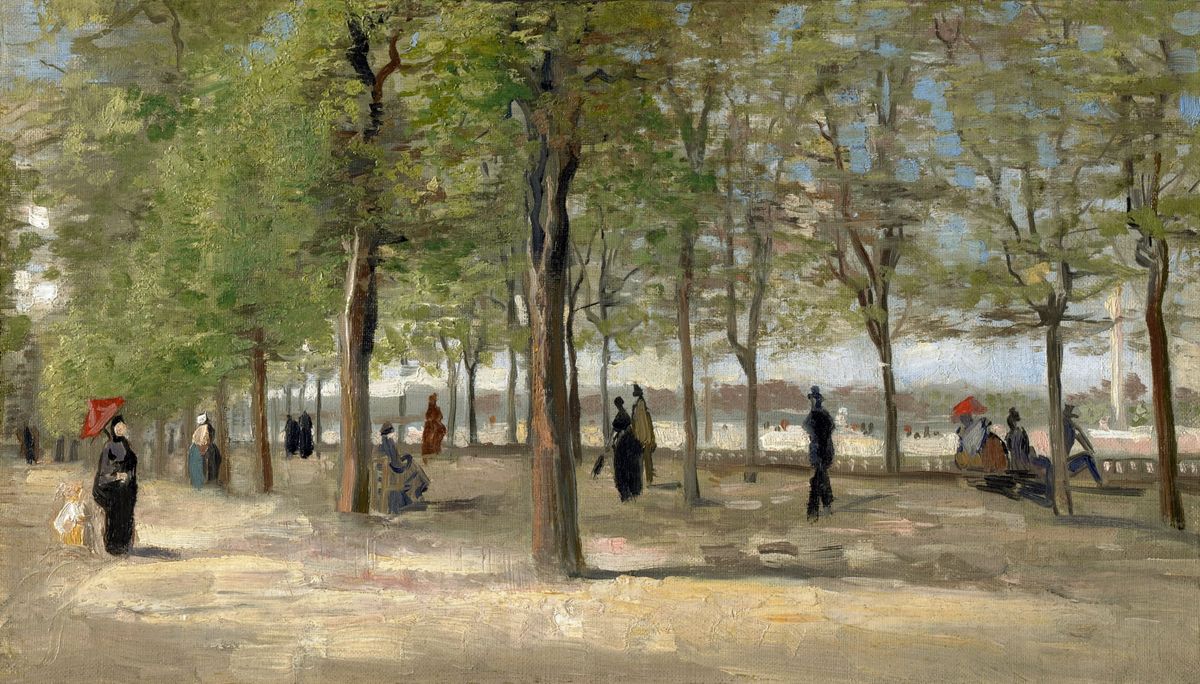
빈센트 반 고흐(Vincent van Gogh, 1853–1890)가 1886년 6월에서 7월 사이 프랑스 파리 체류 시절 완성한 '뤽상부르 공원의 오솔길(A Lane in the Jardin du Luxembourg)'은 캔버스에 유채(Oil on canvas)로 제작된 풍경화입니다. 작품의 실제 규격은 세로 27.2cm, 가로 46.2cm의 아담하고 섬세한 가로형 캔버스이며, 현재 미국 매사추세츠주 윌리엄스타운의 클라크 미술관(Clark Art Institute)에 영구 소장되어 있습니다.
고흐는 이 작품에서 화면을 수직으로 시원하게 분할하는 울창한 가로수들의 리드미컬한 배치와, 나뭇잎 사이로 쏟아져 내리는 초여름 햇살의 산란을 은은하고 감각적인 필치로 구현했습니다. 맑은 연둣빛과 올리브 그린 톤의 나뭇잎 덮개 아래로 산책을 즐기는 파리 시민들의 우아한 실루엣이 펼쳐지며, 화면 좌측과 우측에 포인트로 배치된 붉은 양산의 화사한 다홍빛 악센트는 차분한 녹음 속에서 시각적 생기를 불어넣습니다. 캔버스 전면의 모랫길 위에 드리운 부드러운 그림자와 빛의 얼룩들은 인상주의의 야외광(Plein-air) 감각을 흡수한 고흐의 유려한 붓질로 포착되었습니다.
이 그림에는 어둡고 척박했던 네덜란드를 떠나 파리에 첫발을 디딘 고흐가 대도시의 찬란한 빛과 시민들의 평화로운 일상에 매료되었던 따스한 인간적 에피소드가 깃들어 있습니다. 1886년 봄, 파리 몽마르트르에 살던 동생 테오의 집에 불쑥 찾아온 고흐는, 파리의 미술관과 화랑을 돌며 마네, 모네, 피사로 등 인상주의 대가들의 눈부신 색채를 접하고 깊은 충격을 받았습니다. 고흐는 자신이 써왔던 칙칙하고 무거운 암갈색 흙빛 팔레트를 완전히 벗어던지고, 파리의 맑은 대기와 빛을 온몸으로 체득하기 위해 매일같이 화구 상자를 들고 파리 시내 곳곳을 누볐습니다.
당시 뤽상부르 공원은 파리 남부 라틴 지구의 지식인들과 가족, 연인들이 한가롭게 산책을 즐기던 대표적인 도심 속 휴식처였습니다. 고흐는 고목들이 시원한 그늘을 드리운 테라스 난간 근처에 서서 공원의 고즈넉한 오후 정경을 화폭에 담았습니다. 그는 동생 테오에게 보낸 편지에서 "파리의 공원은 빛과 사람들로 가득 차 있다. 나무 그늘 아래를 거니는 여인들의 드레스와 붉은 양산, 그리고 잎사귀 사이로 부서지는 햇살을 보고 있으면 마음 깊은 곳에서 순수한 기쁨이 차오른다"고 적었습니다.
말끔한 정장을 차려입은 파리 시민들과 화려한 드레스를 입은 귀부인들은, 헝클어진 붉은 머리에 물감이 잔뜩 묻은 낡은 셔츠를 입고 연신 캔버스에 붓을 대며 눈을 반짝이던 이방인 화가 고흐를 호기심 어린 눈빛으로 바라보았습니다. 세상의 냉대와 생활고 속에서도 고흐에게 뤽상부르 공원의 산뜻한 바람과 따스한 햇살은, 고단한 영혼을 부드럽게 감싸 안아주는 가장 다정하고 아름다운 안식처였습니다.
후대의 미술사학자들과 평단은 이 클라크 미술관 소장본을 반 고흐가 파리 도착 초기 인상주의의 빛과 대기 묘사를 성공적으로 흡수하며 화풍의 전환을 이룩한 중요한 기념비적 걸작으로 평가합니다. 19세기 네덜란드 바르비종파풍의 리얼리즘에서 벗어나 색채의 밝기와 붓 터치의 경쾌한 리듬감을 획득한 이 조형적 성취는, 훗날 아를과 생레미에서 만개할 독창적인 회화 양식의 든든한 밑거름이 되었습니다.
관람자의 시선은 가장 먼저 화면 좌측 전면에서 검은 드레스를 입고 선명한 붉은 양산을 든 여인의 실루엣에 머뭅니다. 이어 공원의 모랫길을 가로질러 줄지어 서 있는 웅장한 가로수 기둥들의 수직 리듬을 타고 화면 중앙으로 이동한 뒤, 벤치에 앉아 쉬거나 대화를 나누며 거니는 파리 시민들의 정겨운 모습들을 차례로 훑어봅니다. 마지막으로 나무 캐노피 사이로 은은하게 투과되는 연둣빛 잎사귀들과 우측 너머로 아스라이 비치는 난간 밖 파리의 풍경을 따라 화면 전체로 유려하게 순환하게 됩니다.
심리적으로 관람자는 울창한 나뭇잎 그늘과 부드러운 모랫길 위로 쏟아지는 초여름 햇살의 온기 속에서 깊은 정서적 안정감과 평화로운 휴식을 경험하게 됩니다. 번잡한 일상 속에서도 소박한 산책을 통해 삶의 여유를 포착했던 화가의 따뜻한 시선은 현대인의 마음에 쌓인 피로와 긴장을 맑게 정화해 주며, 지친 영혼에 온화한 쉼과 내면의 깊은 평온을 풍성하게 채워줍니다.
A Lane in the Jardin du Luxembourg (Lane in the Luxembourg Gardens)
Painted by Vincent van Gogh (1853–1890) in Paris between June and July 1886, A Lane in the Jardin du Luxembourg is an iconic oil on canvas landscape measuring 27.2 cm in height and 46.2 cm in width. This delicate early Parisian masterpiece is permanently preserved in the renowned collection of the Clark Art Institute in Williamstown, Massachusetts, United States.
Van Gogh constructed the landscape through a harmonious sequence of slender, vertical tree trunks that create an elegant natural colonnade across a sun-dappled terrace. Beneath the airy canopy of olive greens and chartreuse foliage, Parisian strollers in elegant silhouettes populate the gravel path. Two prominent crimson accents—the red parasol held by the dark-robed woman on the left and a complementary red parasol seated along the promenade on the right—punctuate the muted harmony of earthy ochres and cool foliage, demonstrating Van Gogh's rapid absorption of Impressionist plein-air illumination and Parisian modern life.
The canvas holds an intimate history of creative awakening following Van Gogh's arrival in Paris. In the spring of 1886, moving in with his brother Theo in Montmartre, Van Gogh encountered the radiant masterworks of the Impressionists. Determined to liberate his palette from the heavy, somber umbers of his Dutch period, he routinely took his portable painting box to the city's historic public gardens.
The Jardin du Luxembourg offered an idyllic oasis of greenery and cosmopolitan leisure. Setting up his small easel along the tree-lined terrace overlooking the city, Van Gogh captured the gentle cadence of urban rest. Writing to Theo, he expressed genuine wonder at the luminous clarity of the Parisian atmosphere and the vibrant interplay of light filtering through leafy avenues. Strolling bourgeois families and scholars from the nearby Latin Quarter paused with quiet intrigue to watch the intense, red-haired Dutchman rapidly dabbing pigment with newfound lightness and enthusiasm.
Modern art historians celebrate this Clark Art Institute canvas as an essential turning point in Van Gogh’s artistic trajectory. By shifting from dense, sculptural peasant motifs to fluid, light-filled urban landscapes, Van Gogh mastered atmospheric perspective and optical color harmony, laying the technical foundation for the sun-drenched masterpieces he would later achieve in the south of France.
A viewer’s gaze instinctively locks onto the crisp scarlet parasol and dark figure pausing in the shaded foreground on the left. The eyes then traverse the sunlit gravel path toward the center, following the vertical progression of tree trunks and the interspersed silhouettes of leisurely strollers and resting figures on park benches. Finally, the gaze ascends into the soft, dappled green canopy overhead and drifts past the distant terrace balustrade into the pale blue sky, circulating effortlessly throughout the unified composition.
Psychologically, immersion in this tranquil, sun-dappled parkland induces an immediate sensation of emotional calm, mental refreshment, and gentle nostalgia. The soothing rhythm of the shaded avenue and the unhurried grace of the strollers dissolve modern stress and urban fatigue, enveloping the observer in an enduring atmosphere of peaceful reflection, subtle joy, and restorative serenity.
본 리뷰에서 작품을 제외한 컨텐츠의 저작권은 팔렛트제주에 있습니다.
"퍼블릭도메인 고전명화"를 제외한 모든 창작 콘텐츠는 저작권법 제4조 및 제10조에 의거하여 보호됩니다. 무단 도용시 저작권법 제136조(벌칙)에 의거, 당사의 사전 서면 승인 없는 저작권 침해 행위를 금지합니다.