루브시엔으로 가는 길 - The Road to Louveciennes
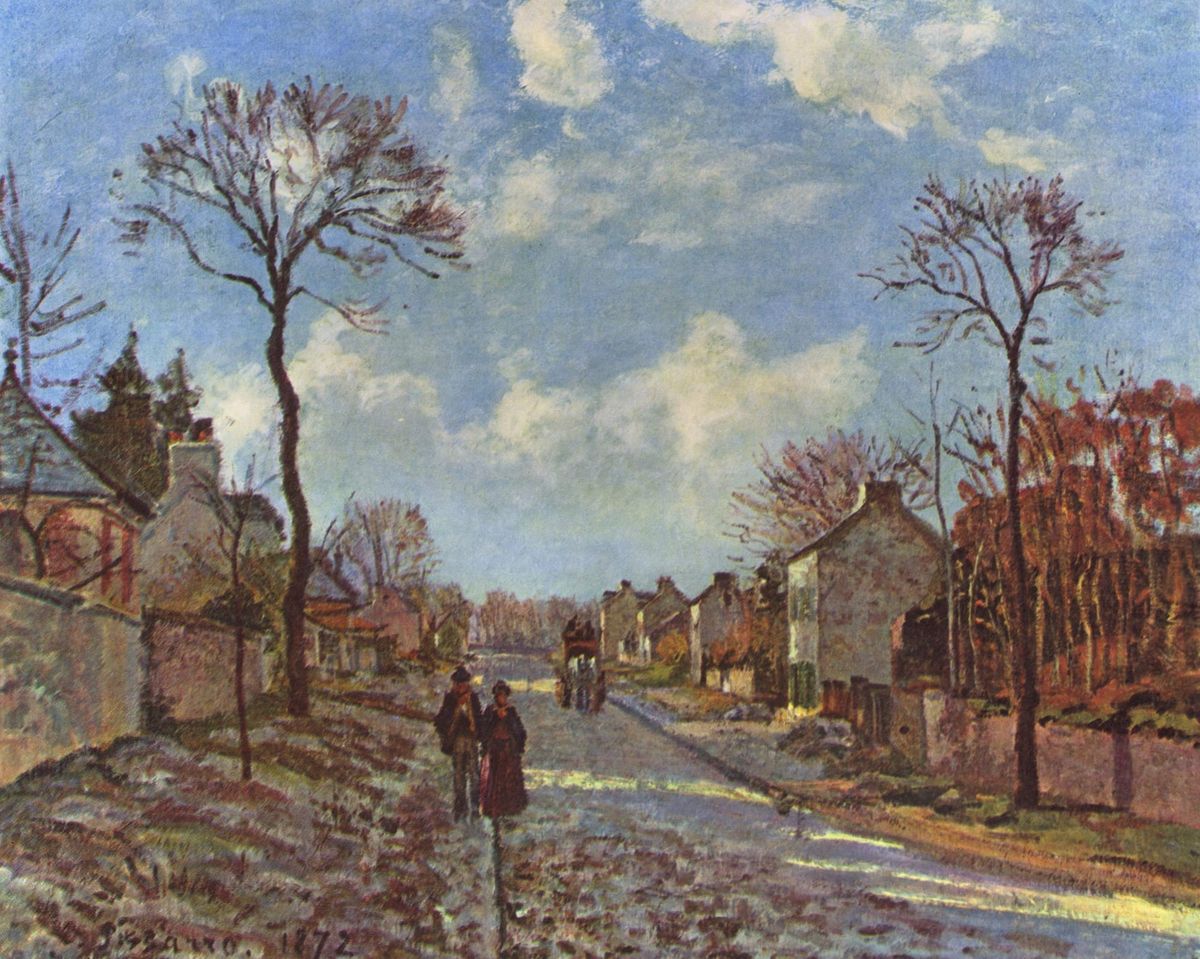
프랑스 인상주의의 위대한 스승이자 빛과 대기의 정직한 관찰자였던 카미유 피사로(Camille Pissarro)가 1872년에 완성한 '루브시엔으로 가는 길(La route de Louveciennes / The Road to Louveciennes)'은 캔버스에 유채(Oil on canvas)로 제작된 기념비적인 풍경화 걸작입니다. 가로 59.8cm, 세로 46cm 크기의 이 작품은 파리 오르세 미술관(Musée d'Orsay)에 영구 소장되어 전 세계 관람객들에게 깊은 감동을 전하고 있습니다.
이 그림에는 프로이센-프랑스 전쟁의 참화를 딛고 일어선 피사로의 끈질긴 예술혼과 눈물겨운 비하인드 스토리가 깃들어 있습니다. 1870년 전쟁 발발 당시 루브시엔에 살던 피사로는 가족과 함께 황급히 런던으로 피난을 떠나야 했습니다. 이듬해 고향 마을로 돌아왔을 때, 그는 자신의 집이 프로이센 군대의 정육점으로 사용되면서 20여 년간 정성껏 그려온 약 1,500여 점의 초기 유화들이 군홧발에 짓밟히고 땔감으로 태워져 단 40여 점만 남았다는 충격적인 비극을 마주했습니다. 그러나 피사로는 절망에 주저앉는 대신 곧바로 이젤을 짊어지고 익숙한 마을 길가로 나가 다시 붓을 들었습니다.
화폭 속 길을 걷는 다정한 마을 사람들과 저 멀리 마차를 타고 이동하는 이웃들의 모습은, 전쟁의 상처를 극복하고 다시 시작된 평화로운 일상을 향한 피사로의 애정 어린 헌사였습니다. 그는 바르비종파의 거장 카미유 코로로부터 물려받은 탄탄한 원근법적 구도 위에, 런던 피난 시절 윌리엄 터너와 존 컨스터블을 연구하며 발전시킨 영롱하고 밝은 인상주의 색채를 결합했습니다. 거친 붓 터치로 길바닥에 길게 드리운 햇살과 그림자의 리듬을 직조해 낸 이 작품은, 훗날 미술사학자들로부터 인상주의 탄생 전야의 가장 찬란한 조형적 승리이자 불굴의 예술가 정신이 깃든 걸작으로 평가받고 있습니다.
작품을 마주할 때 우리의 시선은 햇살과 그림자가 율동감 있게 교차하는 화면 전면의 울퉁불퉁한 자갈길에 가장 먼저 가닿습니다. 길 한가운데를 나란히 걸어오는 다정한 남녀의 소박한 실루엣을 확인한 눈길은, 원근법을 따라 길 저편에서 천천히 다가오는 마차와 마부의 정겨운 움직임으로 자연스럽게 이어집니다.
이어 길목 양옆을 든든하게 지탱하는 소박한 석조 주택들과 담장들을 스치며, 좌우로 곧고 시원하게 솟아오른 앙상한 겨울 나뭇가지들의 역동적인 실루엣을 타고 시선이 위로 상승합니다. 마지막으로 나뭇가지 사이로 환하게 펼쳐진 눈부신 파란 하늘과 부드럽게 흘러가는 흰 구름의 투명한 대기 속으로 시선이 넓게 확장되며, 루브시엔 길가를 감싸 안은 맑고 상쾌한 겨울 공기를 온몸으로 체감하게 됩니다.
이러한 시각적 흐름은 관람자의 무의식 속에 깊은 정서적 안정감과 평온한 안도감을 불러일으킵니다. 화면을 가득 채운 온화한 흙빛과 따스한 햇살, 맑은 하늘빛의 조화는 일상의 번잡한 스트레스와 곤두선 신경을 차분하게 이완시켜 줍니다. 깊은 상처 속에서도 다시 제자리를 찾아 묵묵히 이어지는 소박한 일상의 발걸음은, 바라보는 이의 무의식 깊은 곳에 있는 삶의 불안을 씻어내며 내면의 깊은 쉼과 새로운 희망의 온기를 선물합니다.
The Road to Louveciennes - La route de Louveciennes
Painted in 1872 by Camille Pissarro, the revered patriarch and steadfast soul of French Impressionism, The Road to Louveciennes (La route de Louveciennes) is an oil on canvas masterwork measuring 46 by 59.8 cm. Capturing the crisp atmosphere and enduring resilience of village life, this celebrated canvas is permanently preserved in the renowned collection of the Musée d'Orsay in Paris.
Behind this captivating canvas lies an inspiring narrative of tragic loss and triumphant artistic rebirth. When the Franco-Prussian War erupted in 1870, Pissarro fled his home in Louveciennes for exile in London. Upon his return the following year, he discovered to his devastation that Prussian soldiers had occupied his residence as a butchery, destroying roughly 1,500 of his early paintings for firewood and leaving barely forty intact. Rather than surrendering to despair, Pissarro resolutely stepped onto the village road with his easel, celebrating the indomitable return of everyday peace.
The villagers strolling along the lane and the distant carriage moving gently through the village stand as a quiet testament to domestic continuity and human perseverance. Blending the rigorous linear perspective of Camille Corot with the luminous color vibrations he studied in London from the works of J.M.W. Turner and John Constable, Pissarro captured the crisp winter daylight through broken, textured brushstrokes. Today, art historians revere this painting as a pivotal milestone on the eve of Impressionism, celebrating both its structural brilliance and its profound humanist warmth.
Upon viewing the canvas, the spectator's gaze instinctively alights on the textured foreground road where rhythmic diagonals of winter sunlight and cool shadows animate the gravel. Moving along the path, our attention gently settles upon the rustic couple walking companionably toward us, before traveling deeper into the composition toward the horse-drawn carriage in the distance.
The gaze then sweeps past the charming village cottages and stone walls bordering the lane, rising along the expressive, bare branches of the towering roadside trees that frame the scene. Finally, our attention expands into the radiant blue sky animated by drifting white clouds, taking in the generous clarity and refreshing breath of the open countryside.
This visual journey awakens a profound sense of psychological grounding and serene optimism within the subconscious. The comforting harmony between warm earthen ochres, cool shadow tones, and expansive azure skies naturally dissolves mental fatigue, inviting the mind into a tranquil sanctuary of quiet contemplation. Observing the peaceful resilience of everyday life restored after profound turmoil nurtures the spirit with timeless comfort, simplicity, and enduring pastoral peace.
본 리뷰에서 작품을 제외한 컨텐츠의 저작권은 팔렛트제주에 있습니다.
"퍼블릭도메인 고전명화"를 제외한 모든 창작 콘텐츠는 저작권법 제4조 및 제10조에 의거하여 보호됩니다. 무단 도용시 저작권법 제136조(벌칙)에 의거, 당사의 사전 서면 승인 없는 저작권 침해 행위를 금지합니다.