로마의 성 프란체스카의 환시 La Vision de sainte Françoise Romaine
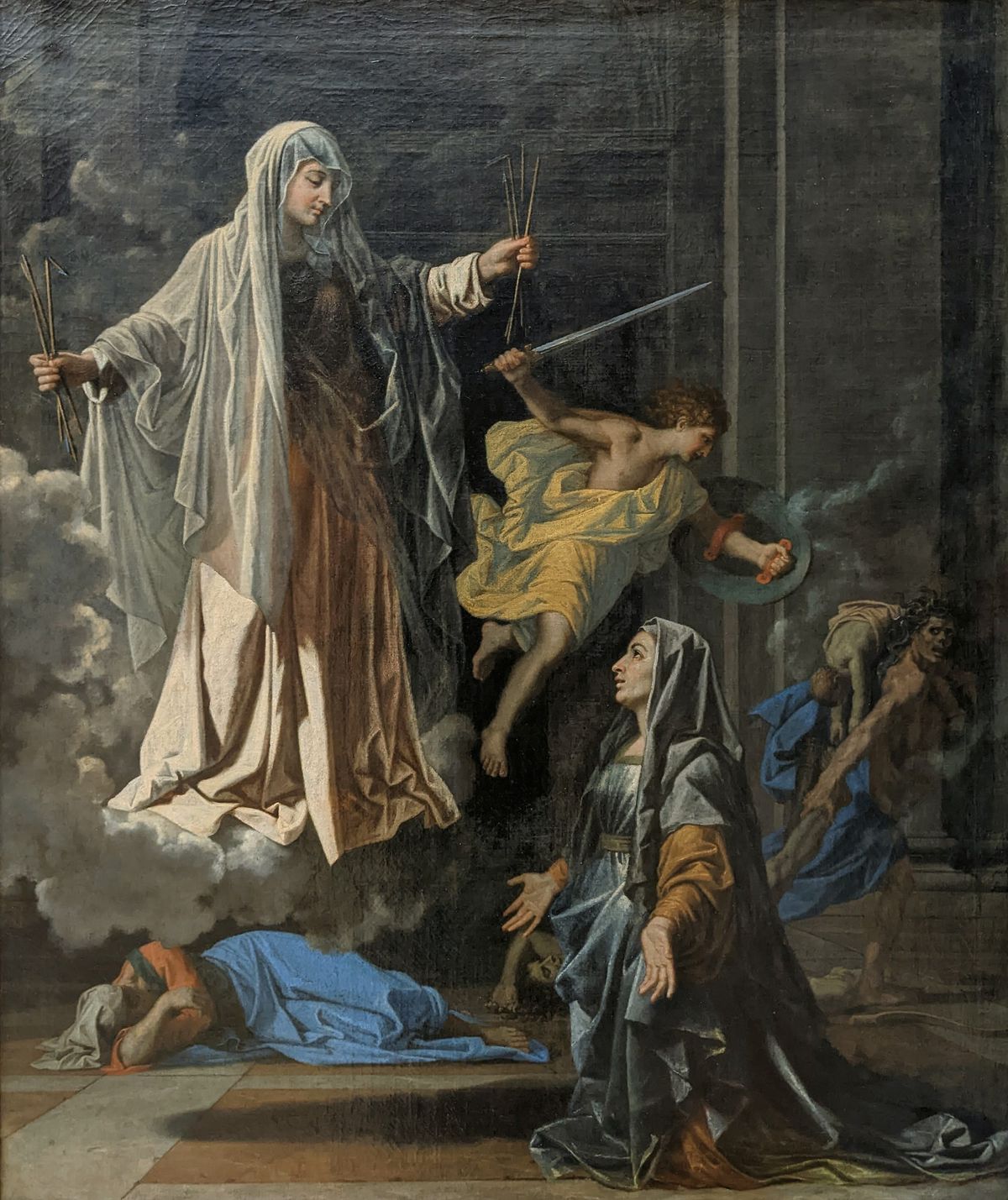
17세기 프랑스 고전주의 회화의 거장 니콜라 푸생(Nicolas Poussin, 1594–1665)이 1657년에 완성한 기념비적 제단화 유화 로마의 성 프란체스카의 환시(The Vision of Saint Frances of Rome, 프랑스어: La Vision de sainte Françoise Romaine, 소장품 번호: RF 1999 1)는 130.0 cm × 101.0 cm 크기의 캔버스에 유채로 그린 대표적인 수호 성인 종교화 최고 걸작입니다.
현재 프랑스 파리의 루브르 박물관(Musée du Louvre, Paris)에 소장되어 있습니다.
로마 흑사병의 종식과 꺾인 화살의 기적을 향한 화가의 고뇌
1656년 이탈리아 전역과 교황령 로마를 참혹하게 휩쓴 흑사병 대유행으로 수많은 시민이 목숨을 잃자, 로마 시민들은 과거 전염병으로부터 도시를 구했던 로마의 수호성인 성 프란체스카 로마나(1384–1440)에게 간절히 기도를 올렸습니다. 기적처럼 전염병이 잦아들자, 로마의 명망 높은 귀족이자 교황청의 고위 관료였던 줄리오 로스필리오시(Giulio Rospigliosi, 훗날 교황 클레멘스 9세) 추기경은 로마를 구원해 준 성녀에게 감사하기 위해 푸생에게 이 제단화를 주문했습니다.
당시 60대의 나이에 접어들어 손 떨림 증세와 노환으로 고통받던 푸생은, 자극적인 공포나 혼란스러운 비극을 그리는 대신 신의 자비와 영적인 치유를 질서정연한 고전주의 양식으로 승화시키고자 깊이 고뇌했습니다.
화가는 성 프란체스카가 기도 중에 목격한 거룩한 환시를 화폭에 담았습니다. 구름을 타고 내려온 성모 마리아는 흑사병의 죽음을 상징하는 부러진 화살 묶음을 양손에 쥐고 있으며, 이는 신의 진노가 멈추고 역병이 완전히 끝났음을 선언하는 상징입니다.
성모의 곁에서는 노란 옷을 입은 수호천사가 번뜩이는 칼을 빼 들고 뱀의 꼬리를 가진 흑사병의 악마를 로마 성벽 밖으로 매섭게 내쫓고 있습니다. 바닥에 엎드려 성모를 올려다보는 성 프란체스카의 감사에 찬 눈빛과, 화면 왼쪽 아래에 쓰러진 희생자의 모습은 전염병의 어둠을 걷어내고 찾아온 신성한 평화를 손에 잡힐 듯 생생하게 웅변합니다.
부러진 화살을 든 성모의 자애로운 눈빛에서 칼을 든 천사와 기도하는 성녀로, 시선의 심리적 여정
그림을 마주하는 순간 관람객의 무의식적 시선은 화면 왼쪽 위 짙은 먹구름을 뚫고 천상의 빛을 받아 눈부시게 밝게 빛나는 성모 마리아의 순백의 베일과 자애로운 얼굴로 가장 먼저 빨려 들어갑니다.
순결한 흰 옷과 붉은 겉옷을 입고 은은한 미소를 머금은 채 인간 세상을 내려다보는 성모의 고결한 자태는 보는 이에게 깊은 시각적 안도감과 함께 모든 상처를 감싸 안는 천상의 위로를 선사합니다.
이어 시선은 성모가 양손에 쥐고 있는 부러진 화살 묶음을 지나 화면 중앙에서 번개처럼 날아오르는 수호천사의 역동적인 몸짓으로 이동합니다.
오른손에 긴 칼을 쥐고 방패를 앞세워 흑사병의 흉측한 괴물을 내리치는 천사의 펄럭이는 노란 옷자락을 확인하는 순간, 관람객은 악과 질병의 세력을 물리치고 도시를 정화하는 거룩한 승리의 한복판 속으로 온몸이 빨려 들어가게 됩니다.
마지막으로 시선은 화면 오른쪽 아래에서 무릎을 꿇고 두 손을 벌려 감격의 눈물을 흘리는 성 프란체스카 로마나의 촉촉한 눈망울을 지나, 왼쪽 바닥에 푸른 천을 덮고 쓰러져 있는 희생자의 메마른 팔다리에 멈춥니다.
어두운 성전의 기둥과 천상의 광채가 빚어내는 장엄한 대조를 마주하며, 관람객은 절망의 끝에서 피어난 믿음의 승리와 노거장 푸생이 건네는 묵직한 영혼의 치유를 가슴 깊이 마주하게 됩니다.
17세기 프랑스 고전주의 종교화의 정점과 조형미, 미술계의 평가
미술계는 루브르 박물관의 로마의 성 프란체스카의 환시를 푸생이 만년에 완성한 가장 우아하고 엄격한 조형미를 성취한 대표적인 제단화 걸작으로 손꼽습니다.
인물들의 격정적인 드라마를 대각선과 수직선의 기하학적 균형 속에 완벽하게 정돈했을 뿐만 아니라, 성모의 부드러운 린넨 베일, 천사의 매끄러운 피부, 석조 기둥의 묵직한 공간감을 극도로 세련된 고전주의 명암법으로 구현했기 때문입니다.
흑사병의 공포를 이겨낸 성스러운 구원의 순간을 품격 높은 시각 언어로 승화시킨 푸생의 이 걸작 화폭은, 오늘날까지도 전 세계 수많은 감상자들에게 깊은 감동과 잊을 수 없는 시각적 평온을 전해주는 불멸의 명작으로 평가받고 있습니다.
The Vision of Saint Frances of Rome
Painted in 1657 in Rome by the founder of French classicism and immortal master Nicolas Poussin (1594–1665), The Vision of Saint Frances of Rome (French: La Vision de sainte Françoise Romaine, Inventory No. RF 1999 1) is an altarpiece in oil on canvas measuring 130.0 cm × 101.0 cm (51.2 in × 39.8 in).
It is preserved in the distinguished permanent collection of the Musée du Louvre in Paris, France.
The Deliverance from the Roman Plague, Cardinal Rospigliosi's Commission, and Broken Arrows
Following the catastrophic plague outbreak that struck Rome and the Papal States in 1656, the Roman populace sought the intercession of their revered civic protector, Saint Frances of Rome (Santa Francesca Romana, 1384–1440). When the epidemic miraculously subsided, Cardinal Giulio Rospigliosi (later elected Pope Clement IX) commissioned this devotional canvas from Poussin as an offering of gratitude.
Now in his sixties and battling physical infirmity and hand tremors, the venerable master deliberately avoided graphic horror, choosing instead to express divine mercy through harmonious classical order and dignified allegory.
Poussin staged the saint's celestial vision with extraordinary architectural clarity. Descending upon a luminous cloud bank, the Virgin Mary holds sheaves of broken, blunted arrows in both hands, symbolizing the cessation of divine wrath and the definitive termination of the contagion.
Beside the Virgin, a guardian angel clad in flowing saffron robes wields a gleaming steel sword, driving the demonic, serpent-tailed personification of pestilence out of the city gates. Below, Saint Frances kneels in profound gratitude, her gaze fixed upon the Madonna while a dead victim lies shrouded in the lower left, creating a solemn visual testament to human vulnerability and divine deliverance.
Subconscious Trajectory of the Gaze: From Compassionate Virgin to the Chastising Angel
The observer's subconscious gaze is immediately magnetized by the upper-left register, drawn to the luminous white veil and serene, downward-looking countenance of the Virgin Mary emerging against the billowing celestial clouds.
Her tranquil, maternal features, pure white robes, and protective mantle establish an instant focal point of celestial grace, divine mercy, and emotional solace.
The visual path then follows the bundles of broken arrows in her hands across to the dynamic airborne figure of the guardian angel swooping down in the center.
Taking in the angel's aloft broadsword, outstretched shield, and fluttering saffron drapery as he expels the fleeing demon carrying a dead child, the viewer directly experiences the dramatic spiritual triumph of sacred light over the dark forces of disease and mortality.
Finally, the visual trajectory sweeps downward to Saint Frances of Rome kneeling in reverent gratitude in the lower-right register, before taking in the shrouded plague victim collapsed upon the stone pavement on the left.
Observing the harmonious equilibrium between classical architectural geometry, delicate chiaroscuro, and emotional stoicism, the spectator perceives the timeless nobility of sacred faith and the profound aesthetic solace Poussin embedded within the monumental canvas.
The Monument of French Classical Devotion: Critical Legacy
Art historians revere The Vision of Saint Frances of Rome as a supreme pinnacle of Poussin’s late devotional style, illustrating his total mastery of grand spiritual orchestration, sculptural balance, and theological clarity.
By orchestrating delicate textural contrasts between luminous linen veils, glistening steel blades, celestial clouds, and cold classical stone within a unified architectural scheme, Poussin elevated a historical plague commemorative into an exquisite philosophical treatise on divine providence.
This grand altarpiece endures as an inspiring testament to the master's creative fortitude, celebrating the victory of sacred love over mortal affliction and the transformative grace of living art.
본 컨텐트의 저작권은 팔렛트제주에 있습니다. 허가없는 무단전제를 금지합니다.
Copyright © Palette Jeju. All rights reserved. Unauthorized reproduction or redistribution is strictly prohibited.